Get

In Your Inbox

Catster is reader-supported. When you buy via links on our site, we may earn an affiliate commission at no cost to you. Learn more.

Why Do Cat Eyes Glow in the Dark? Vet-Reviewed Feline Anatomy Facts

Share

glowing eyes

If you have ever been a cat owner, then you have likely been surprised walking down the hallway and seeing a pair of glowing eyes. In the past, this characteristic has been a reason for their idolization.

No matter whose eyes we are talking about, from dogs to beavers and humans, all of them work very similarly. So, what makes a cat’s eyes glow in the dark? Simply put, cat’s eyes glow because they have a structure called tapetum lucidum at the back of their eyes, which acts like a mirror reflecting light out of them. However, let us continue reading to discover the answers to all of your questions and more!

divider cat paws oct 2024

The History of a Cat’s Glowing Eyes

We have all heard about the idolization of cats in the culture of the ancient Egyptians. They frequently showed up in their writings and artwork, often adorned in jewels and served meals fitting for a king.

There were quite a few reasons that cats were revered in this ancient culture. One of them was their eyes.

The Egyptians believed that a cat managed to capture the sun’s burning, its last glow at dusk, within their eyes. There, cats kept the sun’s rays safe until morning, when they released it back into the sky. They thought cats to be the companions of their favored god, Ra.

In ancient Greek culture, cats were not quite as beloved but were still respected. Greeks thought that cats held a unique power and that the light that came from their eyes was from a gleaming fire behind them.
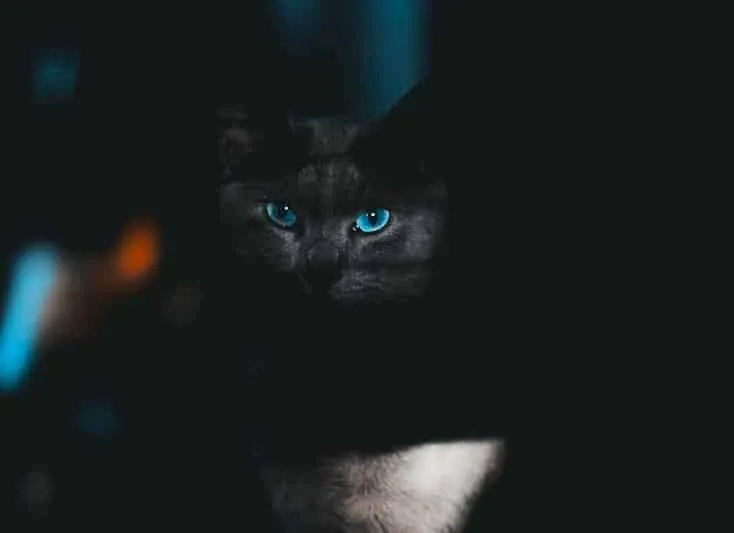
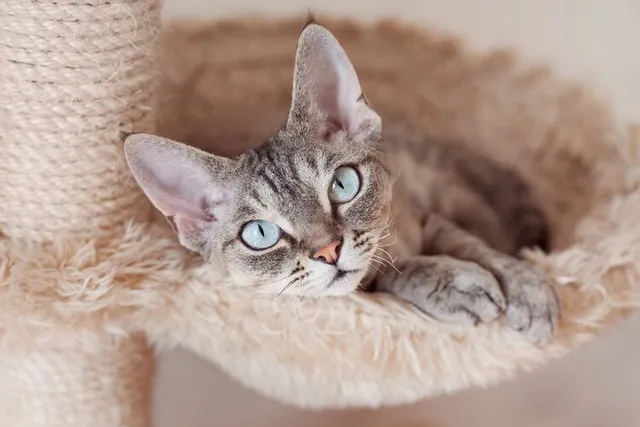
Blue eyes
Image Credit: Dorrell Tibbs, Unsplash

divider cat faces oct 2024

Why Do Cat’s Eyes Glow in the Dark?

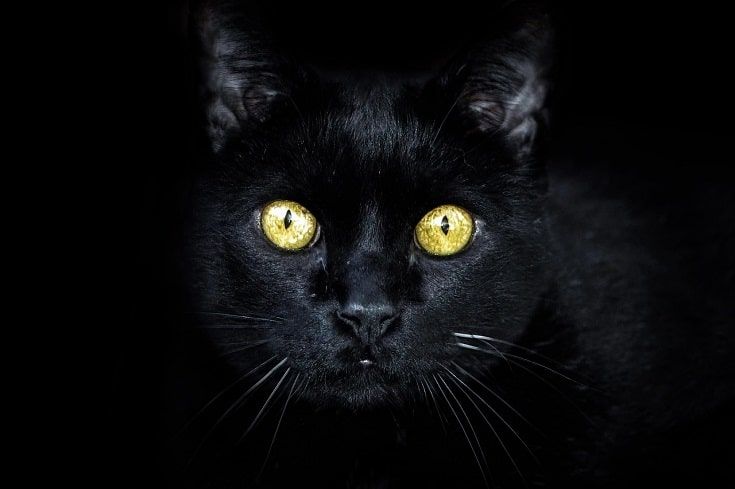
In reality, a cat’s eyes glow because they have a specialized layer in the back of their eyes that reflects light. This structure is called “tapetum lucidum.” The term is Latin for “shining layer.”

The tapetum lucidum essentially acts as a mirror that sits behind the retina. It allows them to make the most of the light available, since the photons that don’t get absorbed get a second chance to reach the light-sensitive cells in the retina. This is one of the reasons why cats see so well at night.

How Does This Phenomenon Work?

As light enters a cat’s eye, it acts very similarly to how a human’s eye does. Some of the light heads directly to their retina. Here, the light sensitive cells called photoreceptors receive the light and transform it into electrical signals that travel to the brain through the optic nerve, forming a visual image.

However, in cats, some of the light that is not used by the photoreceptors reaches the tapetum lucidum. This structure reflects the light back to the retina, stimulating the photoreceptors and enhancing their work.

Finally, what makes cats’ eyes shine is the light reflecting back from the tapetum, missing the retina and reaching our eyes. This reflection, also called tapetal reflex, causes the occurrence of “eyeshine,” or the glow in their eyes.

Spooky cute Halloween cat with glowing eyes ready to pounce
Image Credit: Adventuring Dave, Shutterstock

divider cat paws 2 oct 2024

Are Human’s Eyes the Same?

Humans’ eyes do not have a tapetum lucidum. This is one of the reasons why we cannot see so well in low light conditions, whereas a cat can safely run around your house when everyone else wants to sleep.

There are plenty of other animals with this extra layer in the back of their eyes. Since it is directly related to improving night vision, most crepuscular and nocturnal animals have the tapetum lucidum. These include creatures like owls and deer, as well as other non-nocturnal animals, like horses, cows, and dogs.

Sometimes, humans confuse the appearance of glowing red eyes in photos of people with the tapetum lucidum. Humans do not have a tapetum, and the red-eye shine occurs when a bright light is reflected from the retina. The red color comes from the blood vessels that are present in the layers at the back of the eyes.

If you try to act like a cat and roam around in the dark, you will probably end up being the next thing that goes “bump” in the night.

divider single cat paw oct 2024

Conclusion

A cat’s eyes glow in the dark due to a structure called the tapetum lucidum. The tapetum lucidum reflects some of the light that enters the eye back to the retina. This is what allows them to see so well at night. Cats aren’t the only animals that have this feature though, as many crepuscular and nocturnal animals have it. However, humans do not.


Featured Image Credit: Angeleses, Pixabay

Want content like this delivered to you?

Sign Up For Our Newsletter

News, insights, expert advice, and everything cat

* By submitting, you agree to our Terms & Conditions and Privacy & Cookies Policy.


How useful was this post?

Click on a star to rate (you can leave written feedback after clicking submit)

Help us improve Catster for pet parents!

Your feedback really matters.

What did you like about this post? Also how can we improve it?

Join the conversation

Leave a Reply

You’re very welcome to leave a comment or question. Please know that all comments must meet our community guidelines, and your email address will NOT be published. Let’s have a positive and constructive conversation.


Catster's Digital Magazine is Back!

Vet-approved health & behavior advice

Real cat stories & community features

Weird Cat Behaviors That Actually Make Perfect Sense

We have been sharing our lives with cats for thousands of years, yet we still find ourselves genuinely stumped by what they get...

The Dream of Talking to Cats Just Got Closer to Becoming a Reality

If you’ve ever wished your cat could simply tell you what they wanted, you’re not alone. From the meow that wakes you before...

Kizzy: The Feline Princess With a Purpose

We were first introduced to Miss Kizzy after she won a licky-treat challenge hosted by Professor Fluffovich, our resident feline research specialist. While...

Chatting With Sally About Mission Meow & Helping Cat Rescue Organizations Collaborate | Chatty Cattys, Episode 24

In this episode of Catster’s podcast, Chatty Cattys, Nicole and Dr. Karyn sit down with Sally Williams, the founder of Mission Meow, for...

More related

How to Make a Cat-Friendly Office: 10 Simple Vet-Approved Tips

If there was any silver lining to the COVID-19 pandemic, it’s that many employers continue to allow their staff to work from home...

Cats in Crochet Thinking Caps: How Hats Are Helping Neurological Studies

Without the results of scientific research and experiments, the world would be filled with the ifs and maybes of untested hypotheses. Unfortunately, an...

My Cat Just Threw Up, What Should I Do? (6 Vet-Approved Treatment Tips)

Vomiting is common in all cats, but excessive throwing up is not normal. If your cat is throwing up excessively every few weeks,...

How Cats Help Humans Across the World Get Through Lockdowns & Life

Those of us who are diehard cat lovers already have a good idea of how cats help us. When you have a cat...

Keep reading

There’s a Sudden Behavior Change in My Cat, Is It a Medical Issue? Signs to Watch For

Cats are fairly consistent animals and creatures of habit. While their personalities may change when they age from kittenhood to adulthood, most cats will sustain the same personality all throughout their lives. So, sudden behavioral changes don’t usually happen without...

cat scratching owner

10 Best Ringworm Shampoos for Cats in 2026: Reviews & Top Picks

Ringworm is an annoying fungal infection that our cats may develop from time to time, and even worse, it can spread to us. Getting rid of ringworm is vital to stopping its spread, and that’s where ringworm shampoos come in....

cat bathing in the bathroom

Can Indoor Cats Get Toxoplasmosis? Vet Reviewed Signs & Prevention Tips

As cat owners, we want to keep our cats safe. But we also want to keep our family safe. It seems like when you hear about toxoplasmosis, you have to choose between your cat or your safety. Cat owners everywhere...

tired sick cat lying on bed

Can Cats Eat Jell-O? Vet-Approved Nutrition Advice

Cat parents are always on watch when it comes to what their kitties eat. As a responsible owner, you need to ensure that your feline eats nutritious meals that are intended to keep them happy and healthy. As anyone who’s...

Can Cats Eat Jell-O

Why Is My Cat Biting Her Kittens? Vet-Approved Reasons & FAQ

People with a cat that has had kittens for the first time may find themselves confused by some of the behavior mama cat displays after her babies are born. While watching a cat discover their maternal instincts is often adorable,...

cat carrying its kitten_ightcube, Shutterstock

Do British Shorthair Cats Shed More Than Average? Vet-Reviewed Breed Comparison & Helpful Tips

British Shorthair cats don’t shed more than average. Compared to other shorthair cats, their shedding is about even. Usually, they shed more during the spring and fall, when their coat is adjusting to the shifting seasons. You will probably find...

british shorthair

Why Does My Cat Go into Another Room and Meow? 9 Vet-Reviewed Reasons

Cats meow as a means of communication with others, with us, and to express their internal states, which can make us think that they’re trying to let us know something when they leave the room to meow. The question is,...

cat meowing

My Old Cat Is Peeing Everywhere Suddenly: Vet Verified Causes & Care Tips

When your senior cat (or a cat of any age, for that matter) that is usually fastidious about using their litter box suddenly starts urinating all over your home, it can be worrying, to say the least. Cat pee is...

brown cat peeing

Love Cats? So Do We! Join the Catster Community

Stay informed with expert pet care insights delivered straight to your inbox! Discover professional guidance on animal behavior, feeding tips, trusted product picks, and much more.


Sign up for the Catster Email Newsletter

Stay informed with expert pet care insights delivered straight to your inbox! Discover professional guidance on animal behavior, feeding tips, trusted product picks, and much more.