Get

In Your Inbox

Catster is reader-supported. When you buy via links on our site, we may earn an affiliate commission at no cost to you. Learn more.

Feline Direct Registering: What It Is & Why Do Cats Do It

Share

Scottish-Wildcat-on-a-large-tree-trunk

Cats are some of the most efficient hunters in the world who track and stalk their prey skillfully before pouncing on and killing their targets. Stealth is one of the feline set’s deadliest tools when it comes to hunting, as it gives cats the advantage of surprising their prey.

Unaware targets aren’t likely to take evasive action, such as running off, which makes it far easier for cats to nab dinner. Direct register walking allows cats to move with elegance, grace, and stealth, and it’s a vital part of what makes them such great hunters.

divider cats oct 2024

How Does It Work?

Feline direct registering is a way of walking in which a cat puts down one front paw, which is then replaced by the back paw on the same side of the body. A cat’s gait is called a pace, which essentially involves the legs on one side moving together.

Direct registering has several benefits, including staying quiet and leaving few tracks behind. It also makes it easier for cats to move efficiently through difficult landscapes with confidence. It’s particularly useful when walking through grass and snow.

Animals who direct register produce trails that appear to be single tracks. When cats hunt, they typically spend time looking for prey and stalking it before moving in for the kill. Direct register walking is quiet, and it allows cats to effectively track their prey, which gives them huge advantages when it comes to hunting.

cat hunting mouse
Image Credit: Stefan_Sutka, Shutterstock

divider cats oct 2024

How Do Cats Walk So Quietly?

From speedy Cheetahs to elegant moggies, most cats have more than mastered the art of moving with grace. Domestic cats can walk quietly in part because of their soft, pillowy paw pads, which help absorb sound and make it easy for them to slip through environments unnoticed. They also provide a bit of cushioning during high-impact activities such as jumping.

Domestic cats’ retractable claws contribute to their ability to walk quietly. Cats are technically considered digitigrade mammals, which means they walk on their toes. Their symmetric gaits also contribute to their ability to walk quietly, allowing them to keep their bodies still when moving.
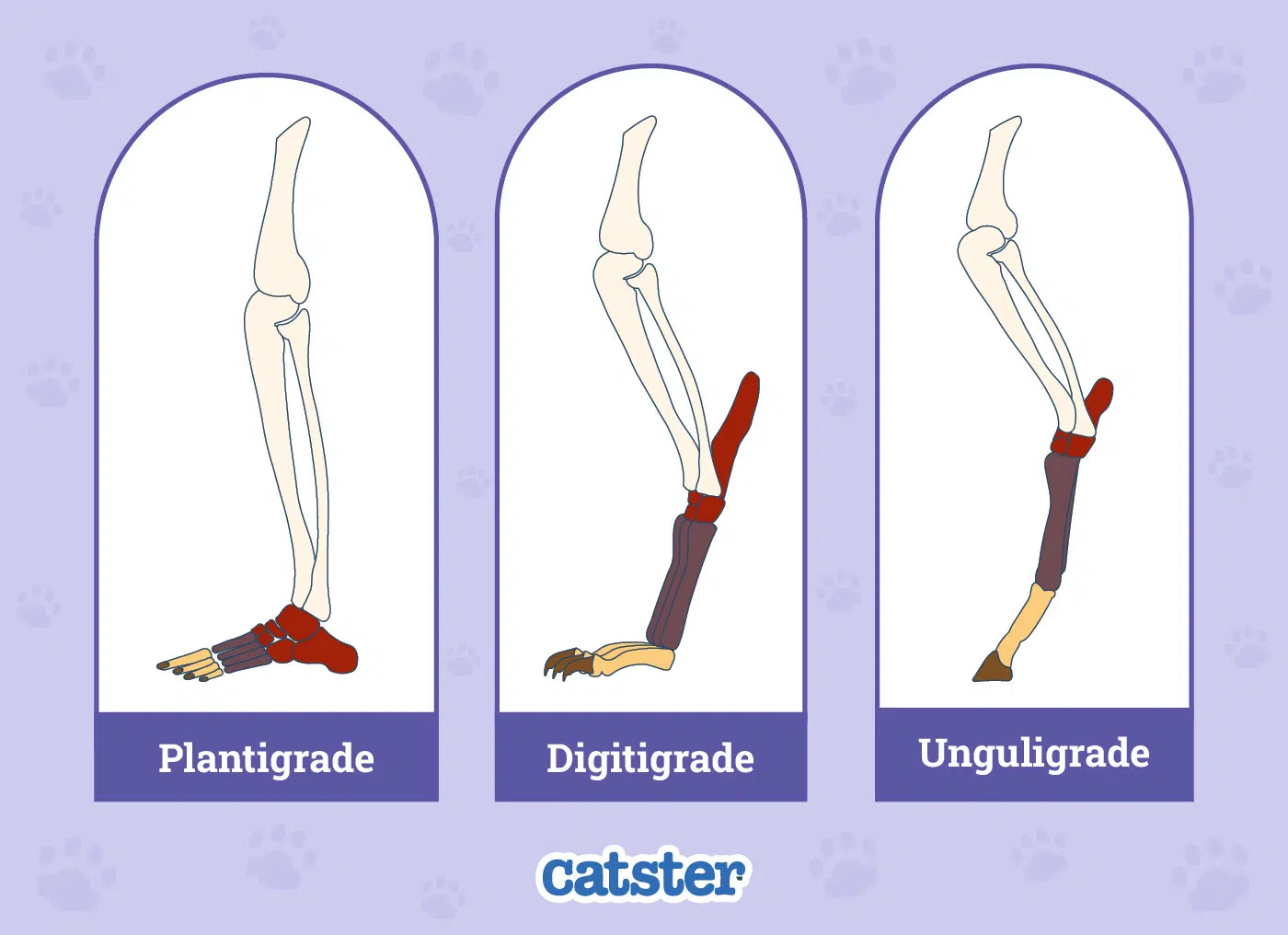
You are free to use this image but we do require you to link back to Catster.com for credit

divider cats oct 2024

Frequently Asked Questions

Are There Other Animals Who Walk Using a Direct Register Pattern?

Absolutely! In addition to most cats, wolves, and foxes also use it, and coyotes have a direct register trot to which they often resort.

How Many Toes Do Cats Usually Have?

Cats usually have 18 toes. Most kitties have five toes on their front paws and four on their back ones. However, some have more than the standard number of toes; polydactyl cats can have anywhere from one to several extra digits.

Polydactylism is an inherited trait, although veterinarians aren’t entirely sure why some cats develop one extra toe and others have more. The extra digits make it easier for cats to hunt and grip. The trait is more likely to be found in Maine Coon and Pixiebob cats than in other breeds.

cute little paws of a polydactyl cat
Image Credit: Sel_Sanders, Shutterstock

Do all cats have retractable claws?

Most cats, including big ones, have retractable claws, except Cheetahs. Cheetahs are fascinating big cats! They don’t roar and can reach up to 75 miles per hour.

divider cats oct 2024

Conclusion

Feline direct register walking is a way of moving in which cats move a front paw and then put the back paw (on the same side) in the place where their front paw was. It’s an incredibly efficient way of moving and has the benefit of being quiet, which gives cats an advantage when hunting by allowing them to move stealthily while following prey and getting ready to go in for the kill.

Almost all cats (including wild ones like Mountain Lions and Bobcats) use the pattern, as do many wolves and foxes.


Featured Image Credit: davemhuntphotography, Shutterstock

Want content like this delivered to you?

Sign Up For Our Newsletter

News, insights, expert advice, and everything cat

* By submitting, you agree to our Terms & Conditions and Privacy & Cookies Policy.


How useful was this post?

Click on a star to rate (you can leave written feedback after clicking submit)

Help us improve Catster for pet parents!

Your feedback really matters.

What did you like about this post? Also how can we improve it?

Join the conversation

Leave a Reply

You’re very welcome to leave a comment or question. Please know that all comments must meet our community guidelines, and your email address will NOT be published. Let’s have a positive and constructive conversation.


Talk With A Vet Online

Peace of mind,
anywhere, anytime

Affordable vet advice

Welcome to Coastal Cats & Critters

As much as we all love cats, we also know that in many parts of the country (and the world), the problem of...

Ask Dr. Paola – Help! My Cat Suddenly Has Dandruff! (March 30, 2026)

Welcome to our “Ask Dr. Paola” series, where every Monday we bring expert advice straight from Dr. Paola Cuevas (MVZ) to help our...

Your Cat Keeps Vomiting After Eating: Here’s What’s Going On

Cats vomit. It’s one of the less glamorous facts of life with a feline, and most cat owners have cleaned up more than...

Ask Dr. Paola – Help! My Cat Gets Diarrhea from Wet Food! (March 23, 2026)

Welcome to our “Ask Dr. Paola” series, where every Monday we bring expert advice straight from Dr. Paola Cuevas (MVZ) to help our...

More related

15 Grey Cat Breeds (With Info & Pictures)

You may be surprised by the number of cat breeds that come in grey (as well as the many that only come in...

Catster Photo Contest: Cats of the Week Winners (November 21, 2024)

This Week’s Winner Silliest Cutest Most Dignified Most Expressive Best Action Shot Sleepiest Enter Your Cat Submit your kitty for a chance to...

Why Do Cats Meow Back at You? 5 Vet-Reviewed Reasons for This Behavior

If you have a cat, you might have noticed that they sometimes meow back at you when you talk. Some cats will even...

My Cat Ate a Sewing Thread, What Do I Do? Our Vet Answers

Cats love playing with long, thin materials like string, tinsel, and sewing thread. This is likely because it excites and mimics their natural...

Keep reading

Can Cats Eat Yams? Vet-Approved Nutrition Facts

Yams are a big part of meals in autumn and winter. As you prepare for holiday dishes, you may be wondering if you can share some of your yams with your cat. Or, if your cat likes to sample food...

Can Cats Eat Yams

Why Do Cats Like Straws? 6 Likely Reasons

Most cat owners can attest that cats do strange things. Whether your cat sleeps in the sink or finds a way to get stuck in the window blinds, there’s rarely a dull moment with them around. Another common cat quirk...

cat playing with straws in glass

How Much Attention Does a Cat Need? Vet-Reviewed Facts

While cats are often perceived as independent pets, they still require daily attention from their owners. Most cats need at least 20-30 minutes of undivided attention a day. However, the amount of attention can vary and depends on several different...

cat sleeping in owner's arms

Does Palmolive Kill Fleas on Cats? Vet Reviewed Effectiveness & Safety Explored

Fleas are the bane of every pet owner’s existence. They’re not only a nuisance for you, but they can cause itching and discomfort for your cat. Worse yet, fleas can carry diseases that can be serious. If your cat gets...

tabby cat taking a bath

Are Polka Dot Plants Toxic to Cats? Vet-Reviewed Houseplants Examined

The polka dot plant (Hypoestes phyllostachya) is also known as the pink polka dot plant, the measles plant, baby’s tears, or freckle face. The green leaves have freckled markings of pink that look like polka dots. The more sunlight the...

Catster_Are Polka Dot Plants Toxic to Cats

Can Cats Eat Aloe? Vet-Approved Safety Guidelines

If you have a garden full of aloe and a cat, you know it’s only a matter of time before you have a garden full of aloe plants with cat bite marks. At that point, you’ll ask yourself, “Can cats...

Can Cats Eat Aloe

Do You Have an Aggressive Cat? Vet-Reviewed Triggers and Management

While cats are generally well-behaved, sometimes their conduct can cause you to think,” My cat is a brat,” especially when there’s aggressive behavior involved. Aggression is a normal survival behavior in cats. It allows them to defend themselves, establish boundaries,...

an aggressive tuxedo cat in white background

Can Cats Eat Capers? Vet-Reviewed Facts & FAQ

Capers are known for adding a certain “pizazz” to many meals including pasta, salads, fish, and bagels. These small and savory flower buds have been around since the mid-17th century and have become a mainstay ingredient in many Italian dishes....

Can Cats Eat Capers

Love Cats? So Do We! Join the Catster Community

Stay informed with expert pet care insights delivered straight to your inbox! Discover professional guidance on animal behavior, feeding tips, trusted product picks, and much more.


Sign up for the Catster Email Newsletter

Stay informed with expert pet care insights delivered straight to your inbox! Discover professional guidance on animal behavior, feeding tips, trusted product picks, and much more.