11 Cat Museums Around the World for Feline Fanatics to Visit

It’s so much fun traveling to cities and other countries and exploring everything that they have to offer. As a cat lover, you know that it would be particularly fantastic to specifically check out cat-related things. It might surprise you to learn that there are at least 11 cat museums worldwide.
So, if you’re a feline fanatic like us, plan trips to one or more of these cities so you can check out everything cats!

The 11 Cat Museums Worldwide
1. American Museum of the Housecat, North Carolina, Sylva, U.S.A.

| 🗺Address: | 5063 US Highway 441 South, Sylva, North Carolina |
| 🕐Hours: | Mon, Fri, Sat, 10 a.m.–5 p.m.; Sun, 12 p.m.–5 p.m. (April to December) |
| 💲Admission: | $10 for adults, $5 for kids |
The American Museum of the Housecat is the love child of curator Dr. Harold Sims, who amassed this cat collection for about 30 years, which is now on display.
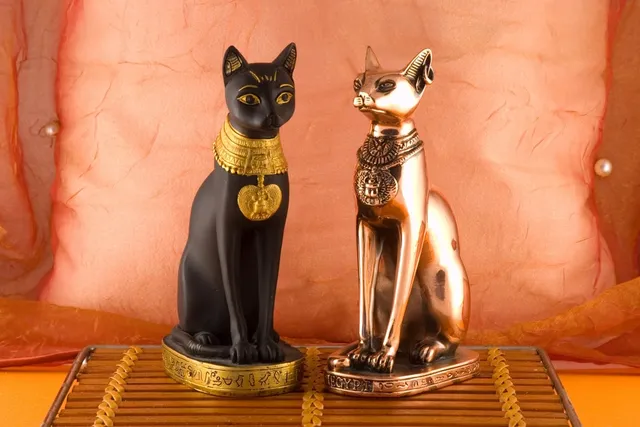
The museum has roughly 5,000 cat-related items, including a bronze statue of the Egyptian goddess Bastet, dating back to 600 B.C.!
Proceeds from the museum go to the no-kill shelter also founded by Dr. Sims and his wife, Kay.
2. Cat Museum, Minsk, Belarus

| 🗺️Address: | Minsk, str. Internacyjanalnaja, 23 Metro station "Oktyabrskaya" |
| 🕐Hours: | Tues–Sun, 11:00 a.m.–8:00 p.m. |
| 💲Admission: | 10 Belarusian rubles for adults, 10 Belarusian rubles for kids and students |
This Cat Museum features cat artwork, including sculptures, paintings, photography, and graphics. This is not just a museum, however; it’s also a cat rescue. Volunteers bring in homeless cats from the streets for veterinary care. With a clean bill of health, the cats stay at the museum and are available for adoption.
These cats are also considered “staff,” including Donut, the Cat Museum director.
3. Cats Museum, Kotor, Montenegro

| 🗺️Address: | Trg Gospa od Anđela – Stari Grad 371, 85330 Cattaro / Kotor |
| 🕐Hours: | 10 a.m.–5 p.m. (May to October) |
| 💲Admission: | €1 |
Cats Museum in Kotor, Montenegro, had its beginnings when the Countess of Montereale Mantica donated an extensive collection of cat-related images. The town of Kotor is cat friendly and has many well-fed and looked-after cats, so it’s no surprise that it has a cat museum.
The museum started in 2013, and it actually influenced the cat to become the symbol of Kotor.
4. Cat Museum Budapest, Hungary

| 🗺️Address: | 1054 Budapest, Vadász u. 26 a |
| 🕐Hours: | Mon–Fri,11 a.m.–6:30 p.m.; Sat–Sun, 10 a.m.–1 p.m. and 2:30 p.m.–9 p.m. |
| 💲Admission: | Free |
The Cat Museum in Budapest is connected with the Cats Museum in Kotor. It features murals, interactive installations, and art based on beloved cats. There are also many cats. You can feed them food that the museum provides.
Test your knowledge of cats on a tablet, and if you get a high enough score, you can choose a souvenir from the gift shop.
5. Ernest Hemingway Home & Museum, Key West, Florida, U.S.A.

| 🗺️Address: | 907 Whitehead St, Key West, Florida |
| 🕐Hours: | 9 a.m.–5 p.m. daily |
| 💲Admission: | $18 adult, $7 children, free children 5 and under |
While his home isn’t strictly a cat museum, Ernest Hemingway is forever intertwined with cats, nonetheless. While he was famous for his writing, he was given a polydactyl cat by a ship’s captain, and he became famous for those cats.
Today, there are about 60 cats on the island, most of which are polydactyl and direct descendants of the original, and they are well-cared for.
Polydactylism gives cats a few extra toes, usually on their front feet, making them look like they’re wearing mittens.
6. Feline Historical Museum, Alliance, Ohio, U.S.A.

| 🗺️Address: | 260 East Main St, Alliance, Ohio |
| 🕐Hours: | Wed, Thurs, Fri, 10 a.m.–4 p.m. |
| 💲Admission: | $3 adults |
The Feline Historical Museum is run by the Cat Fanciers’ Association (CFA) and was opened in 2011. There’s a library with stud books, CFA yearbooks, and roughly 8,500 other books about cats.
The museum includes a vast number of cat show memorabilia and educational displays and sometimes has cats running around.
7. Kattenkabinet, Amsterdam, Netherlands

| 🗺️Address: | Herengracht 497, 1017 BT Amsterdam, Netherlands |
| 🕐Hours: | Tues–Sun, 12 p.m.–5 p.m. |
| 💲Admission: | €10 adult, €5 student, children are free |
The Kattenkabinet roughly translates to Cat Cabinet and is an art museum dedicated to cats. There are drawings, paintings, and sculptures, some from notable artists like Picasso, Toulouse-Lautrec, Rembrandt, and more.
You might be lucky enough to spend time with one of the resident cats that roam the museum’s halls.
8. Kuching Cat Museum, Kuching, Sarawak, Malaysia

| 🗺️Address: | Bangunan DBKU, Jalan Semariang, Petra Jaya, 93050 Kuching, Sarawak, Malaysia |
| 🕐Hours: | 9 a.m.–5 p.m. daily |
| 💲Admission: | RM three adults, RM two children, children 2 and under free |
This cat museum boasts a beautiful view of Kuching City and has four galleries with over 4,000 cat memorabilia and paintings. In fact, if you’ve seen anything cat related—movie posters, key rings, broaches, and even hats—it’s likely in there!
9. 9. Lucky Cat Museum, Cincinnati, Ohio, U.S.A.

| 🗺️Address: | 2511 Essex Place #150, Cincinnati, Ohio |
| 🕐Hours: | By appointment only |
| 💲Admission: | Free but donations are encouraged |
Also called the Lucky Cat Mewseum, this museum celebrates the lucky cat, Maneki-Neko, which is the beckoning cat famous in Chinese culture. You’ve likely encountered one of these figurines, especially if you’ve ever visited a Chinese restaurant because Maneki-Neko is considered a lucky or fortune cat.
This museum opened in 2012 and features over 2,000 “beckoning cat” figurines made from ceramic, wood, metal, and stone. There are also plush toys.
10. Manekineko Art Museum, Okayama, Japan

| 🗺️Address: | 865-1 Kinzanji, Kita-ku, Okayama, Japan |
| 🕐Hours: | 10 a.m.–5 p.m. daily |
| 💲Admission: | 600 yen for adults, 300 yen for children and teens |
This museum is also dedicated to the beckoning cat, Maneki-Neko, but it is located in the city of Okayama in Japan. It contains about 800 beckoning cat figures made from ceramics, stone, tin, wood, and Japanese paper, many from the Meiji era.
You can also write prayers on Japanese paper and hang them from the museum’s bamboo tree or walls, and you can paint your own Maneki-Neko to bring home.
11. Persian Cat Museum, Tehran, Iran

| 🗺️Address: | Tehran Province, Tehran, Nejatollahi St, PC58+PG8, Iran |
| 🕐Hours: | Sat–Fri, 12 p.m.–10:30 p.m. (by reservation) |
| 💲Admission: | 30,000 Iranian Rial |
The Persian Cat Museum (or Iranian Cat Museum) is based in Tehran, Iran. It was launched in 2018 and was created to educate the public on cats and the history of felines in Iran.
The museum has a café and restaurant, and you can interact with the Iranian cats that live there. Just be aware that you need to make a reservation to see the museum.
A Few Tips
Since these museums are specialized and unique, many are only available for viewing by appointment, so be sure to call ahead before you plan a trip there. You should also double-check the rules of the museum, particularly those that have cats on the premises.
You shouldn’t bring any food or treats with the intention of feeding the cats, but the museum might appreciate a donation.

Conclusion
The most apparent thing that all these museums have in common is a love for felines. But most of them also recognize the importance of caring for cats, including the homeless ones.
It is incredibly gratifying to see how some of these museums use their admission fees to help feed and care for the stray cats in the area.
Hopefully, you’ll have the opportunity to visit one or more of these museums—after all, the pets and purrs are free!
Featured Image Credit: cocoparisienne, Pixabay
Expert cat care, straight to your inbox
News, insights, and useful advice, delivered to you.

No spam — unsubscribe anytime.
By signing up, you agree to our Terms & Conditions and Privacy & Cookies Policy.
How useful was this post?
Click a star to rate. You can leave written feedback afterwards. (We read all feedback.)

Kathryn was a librarian in a previous lifetime and is currently a pet writer. When she was a child, she hoped to work in ZOOs or with wildlife in some way, thanks to her all-consuming love for animals. Sadly, she's not strong in the sciences, so she fills her days with researching and writing about all kinds of animals and spends time playing with her adorable but very naughty tabby cat, Bella. Kathryn is hoping to add to her family in the near future – maybe another cat and a dog.