8 Ways People Are Like Cats: Genetics, Traits & More
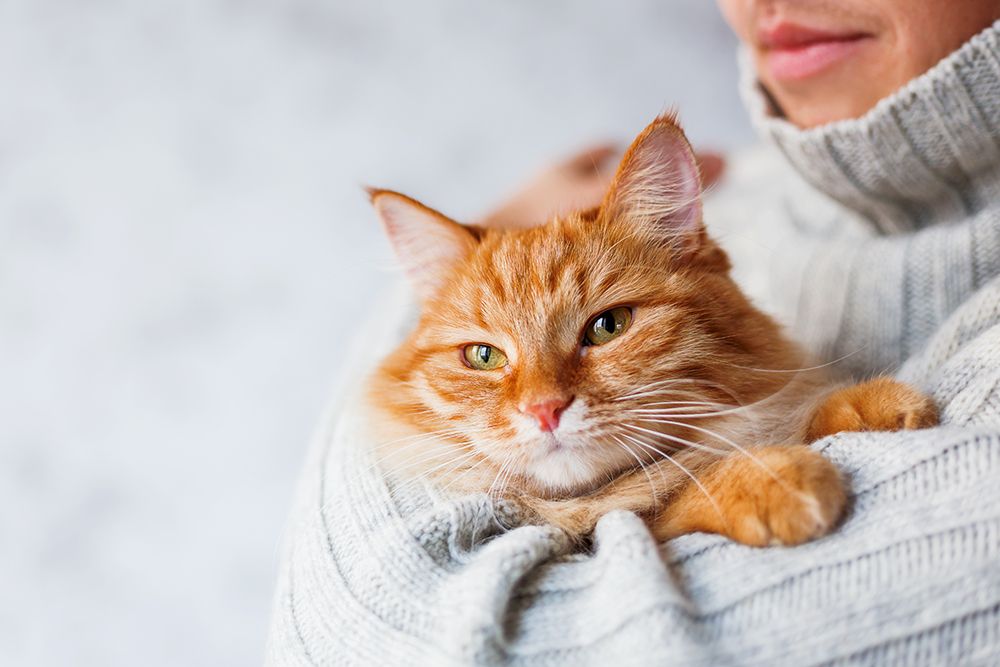
While it's widely accepted that monkeys and apes are very similar to humans, as we're all primates, what you may be surprised to learn is that we share many traits with our cat family members. While there are obviously many things that set us apart from cats, like how we use our voices and not our tails to communicate, science shows us that there are a lot of similarities between us and felines. Read on if you're ready to learn what you have in common with your kitty counterpart.

The 8 Ways People Are Like Cats
1. Genes
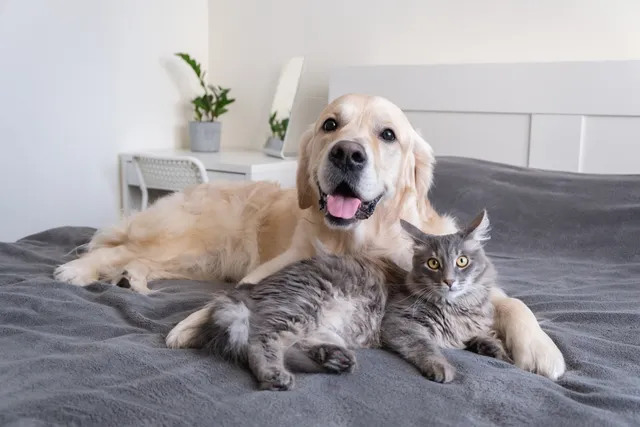
Many people think that dogs are closer to humans on an evolutionary scale than their feline counterparts, but it turns out that the reverse is true. Cats have 90.2% of their DNA in common with us, making them genetically closer to humans than dogs1. While this may make you feel closer to your pets, it actually has a scientific benefit, too. A cat's genomic similarity to humans makes it a more straightforward model for the study of various human diseases.

2. Brains
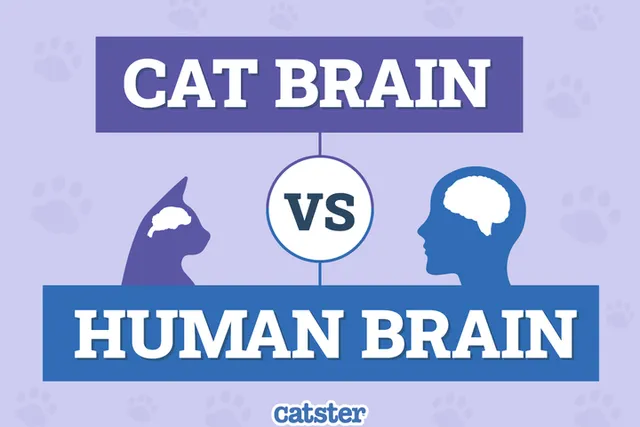
The physical structure of a cat's brain and a human's are alike in many ways. We both have cerebral cortices, the portion of the brain responsible for higher-level processes like memory and learning, with similar lobes. A cat's brain is gyrencephalic, meaning it has the same surface folding as our brains. In fact, the folding and brain structure of a cat's brain is 90% similar to our human brain.
While our brains may be similar in structure, cats have significantly fewer neurons in their cerebral cortex—203 million versus our 86 billion. This leaves cats with cognitive abilities similar to those of a human toddler.

3. Personality
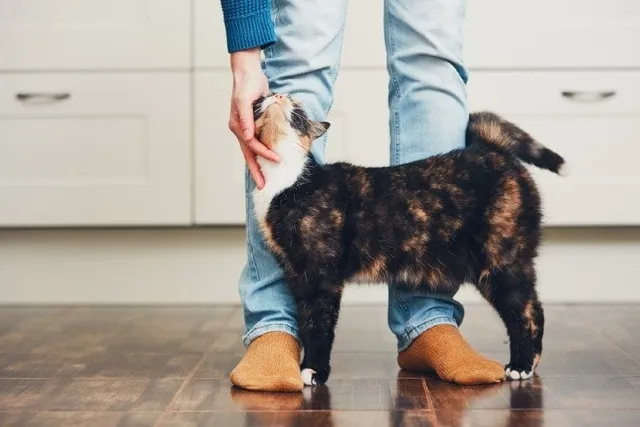
Cats mimic their owner's personalities, especially when considering specific traits such as extraversion, openness, and emotional stability.
A 2019 study found that owners rating higher in the neuroticism category often have cats that demonstrate various behavioral issues, while those who ranked higher in a trait like extroversion had cats who enjoyed spending time outside more2.

4. Observational Learning
We've all heard the phrase "monkey see, monkey do," which refers to learning something by mimicry. Children are especially notorious for such behaviors, but adults can learn this way, too. But did you know that cats are also excellent at this skill?
Cats learn about their environment by watching you or another cat complete a task through observational learning. Cats in multi-pet households will learn behaviors from one another.
5. Memory
Humans have episodic memories, a type of long-term memory that involves recollecting previous experiences in a particular spatial and temporal context. For example, we can remember specific moments in our personal history, such as our first kiss or facts like the make and model of our first car.
Recent studies show that cats can remember things the same way we do, suggesting that they, too, have an episodic memory. This research suggests that it could be possible for cats to recall their memory on demand and may even use their favorite memories to entertain themselves.

6. Vision Capabilities

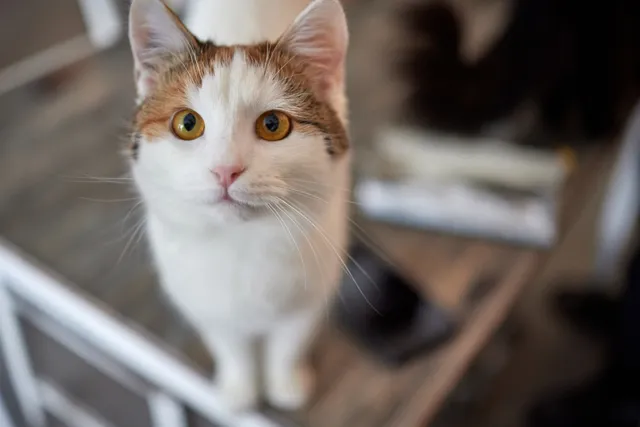
Cats and humans both have two eyes that point straight ahead. This feature distinguishes cats from their canine counterparts, who have eyes on the sides of their heads. This means that cats (and humans) won't have as good peripheral vision as dogs.
As for color vision, it's a common misconception that cats can only see shades of gray. The current thought is that cats have photopic trichromatic vision. This means they can see colors similar to how we see them but not in the same saturation or clarity.
7. Mental Health
Just like us, cats can develop mental health issues, like depression and anxiety. Situations that can cause depression signs in cats typically involve changes to their routine, such as losing a family member, moving, or a change to their physical health.
Cats can also develop obsessive and compulsive behaviors, such as sucking on fabrics, excessive grooming, or chewing inappropriate objects.

8. Skeleton
There are some similarities between cats and human skeletons. Like most land mammals, we both have well-formed skulls, seven cervical vertebrae, a spinal column, and four limbs. Our skeletons provide the same basic set of functions, providing the framework necessary for other body systems to attach.

Final Thoughts
While cats and humans share some clear similarities, many things separate us as a species. If there's one thing we can say for certain is that cats, like humans, all have their own motivations and personalities.
See also: How Do You Name Your Cats?
Sources
Featured Image Credit: Konstantin Aksenov, Shutterstock
Expert cat care, straight to your inbox
News, insights, and useful advice, delivered to you.

No spam — unsubscribe anytime.
By signing up, you agree to our Terms & Conditions and Privacy & Cookies Policy.
How useful was this post?
Click a star to rate. You can leave written feedback afterwards. (We read all feedback.)

For Chantelle, writing and animals are the two driving forces in her life. Growing up on the Canadian prairies surrounded by pets, she now shares her home with five cats, two guinea pigs, and a bearded dragon. Chantelle, her husband, and their child pride themselves on being dedicated pet parent, even spending a fortune on wall-mounted cat shelves to provide their cats with an indoor jungle gym. When she's not snuggling with her cats or photographing their humorous moments, Chantelle is exploring the Rocky Mountains, rewatching her favorite Netflix series, and reading up on various random subjects.