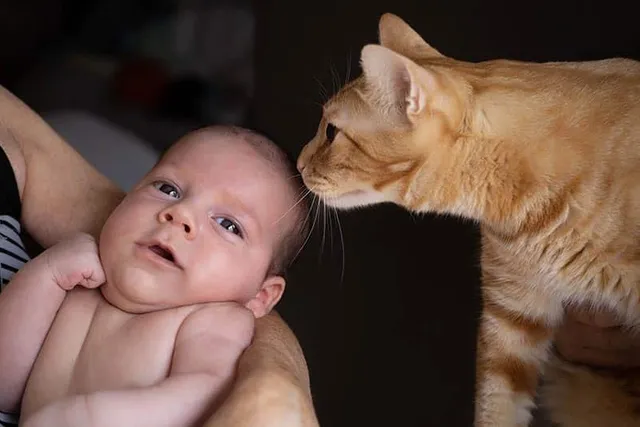
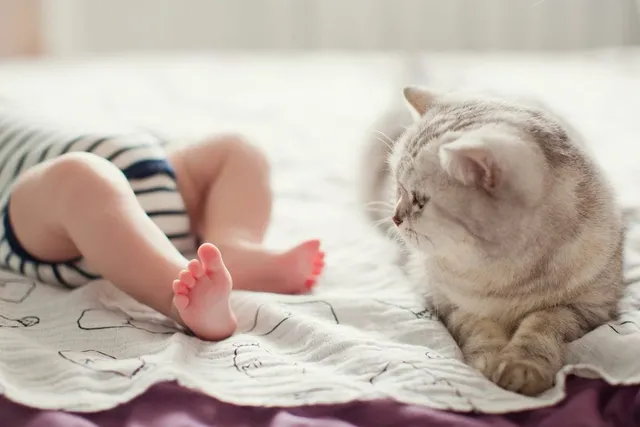
Does Parenting a Cat Prepare You for Parenting a Baby? Facts & FAQ
In this article
Some experts say that adopting a cat can help people prepare to care for a human child, while others say that caring for a cat and a baby are nothing alike, so there’s no point in trying to prepare with an animal.
The truth seems to be somewhere in between.
Yes, there are some ways that caring for a cat can help prepare you for parenting a baby. However, there are plenty of reasons that you can never be prepared for first-time parenthood, no matter what you do. Let's explore both sides of the coin together below:

The 4 Ways Caring for a Cat Can Prepare You for Parenting a Baby
There are certainly some things that cats can teach you about being a parent to a human child. First and foremost is the fact that cats require lots of love, attention, and food, which they have in common with human babies.
They do well with routines and rely on schedules for eating, just like babies do. Humans also worry about their cats’ well-being, which is something that overwhelms them when it comes to their children. Here are some other ways that parenting a cat can help you prepare for parenting a human baby:
1. Budgeting
Owning a cat can show you what it will be like to budget for a new baby, although it won’t be the same. After all, kids cost a lot more than pet cats do as time goes on. Still, cats require food, cat litter, regular veterinarian visits, and vaccinations to stay happy and healthy. They also rely on their caretakers to provide them with safe, cozy bedding and toys to play with. Also, like children, emergencies can arise with a cat due to an accident, injury, or sudden illness. Therefore, budgeting for the care of a cat will give you a clear idea of what it will be like to budget for a baby once one comes into your life.
2. Scheduling
Having a cat requires scheduling to make sure that mealtimes are regular. The same will be true when it comes time to care for a baby. No longer can you just leave the house and watch a movie whenever you feel like it. You’ll have to plan for your every move and ensure that your child goes to sleep, eats, and plays at the same times every day. While your schedule will be much tighter with a baby in your life, you'll get a sense of scheduling requirements when taking care of a cat first.

3. Temper Control
Let’s face it, we’ve all seen parents lose their temper for one reason or another, and it’s usually because they have hit their limit with patience or understanding. However, it’s the responsibility of parents to keep their tempers in check as much as possible so they aren’t dealing with their children in unfair or abusive ways. There is no question that a cat will test their caretaker’s patience and temper, like when they decide to tear up a curtain or scratch the couch. So, as a cat parent, you will have to learn how to control your temper, which can go a long way in giving you a head start when you become the parent of a baby.
4. Sleep Interruption
Cats are known for waking their human companions up from their sleep during the night, at least occasionally. It just so happens that sleep interruption is one of the most common problems new parents complain about. Most parents experience sleep interruption nightly with babies, but that isn’t usually the case with cats. So, sleep interruption due to a cat’s shenanigans will give you a little taste of what things will be like with a baby living in the house.

The 3 Ways Caring for a Cat Cannot Prepare You for Parenting a Baby
Caring for a cat is not the same as caring for a baby, and there are many ways in which cat parenting won’t prepare you for the arrival of a newborn family member. One is that a cat doesn’t spend much time crying unless they are in severe distress. Babies, on the other hand, tend to cry and scream for many reasons, whether they are hungry, they have a dirty diaper, they’re tired, they’re bored, they’re lonely, or they are feeling irritable. Here are some other things to consider:
1. Potty Training
Cats don’t wear diapers, and keeping a cat litter box clean is a lot different than changing poopy diapers several times a day. Children can take months, if not years, to potty train. There are lots of accidents, protests, and tantrums that go along with the process. Potty training a cat typically takes only a matter of days, and once done, accidents are minimal.
2. Daily Freedom
Although you provide your cat with daily attention and regular feedings, you can still come and go whenever you feel like it – at least for the most part. You don’t have to find a babysitter unless you’ll be gone for more than a night. You don't have to worry about whether having a drink will impair your ability to care for your cat overnight. When it comes to parenting a baby, parents don’t have much freedom, if any at all.
3. Worry and Stress
While a cat can make their caretakers worry about their well-being, the stress grows by leaps and bounds when it comes to worrying about a human baby. Babies don’t know how to walk, talk, or even maintain control over their motor skills half the time. Therefore, watching them traverse the world where table corners and other dangers abound is nerve-racking.
Never Adopt a Cat Just to Prepare for a New Baby
It’s never a good idea to adopt a pet to practice having a baby. Cats deserve to live in homes where they are wanted as companions and nothing more. Bringing a cat into your life that you are not committed to can result in the cat having to find a new home later when a baby comes into play. If you are not truly interested in sharing your life with a cat or cannot commit to caring for them throughout their entire life, finding other ways to prepare for a new baby is a good idea.

Conclusion
Caring for a cat can prepare you for parenting a human baby, but only so much. Even babysitting a child extensively before having a baby won’t fully prepare you for parenthood. Being the parent of a baby for the first time is an experience that nobody and nothing can fully prepare you for.
Sources
Featured Image Credit: Julija Sulkovska, Shutterstock
Expert cat care, straight to your inbox
News, insights, and useful advice, delivered to you.

No spam — unsubscribe anytime.
By signing up, you agree to our Terms & Conditions and Privacy & Cookies Policy.
How useful was this post?
Click a star to rate. You can leave written feedback afterwards. (We read all feedback.)

Rachael has been a freelance writer since 2000, in which time she has had an opportunity to research and write about many different topics while working to master the art of fusing high-quality content with effective content marketing strategies. She is an artist at heart and loves to read, paint, and make jewelry in her spare time. As a vegan, Rachael is obsessed with helping animals in need both in her community and anywhere in the world where she feels she can make a difference. Animals also happen to be her favorite topic to write about! She lives off the grid in Hawaii with her husband, her garden, and her rescue animals including 5 dogs, a cat, a goat, and dozens of chickens.