Can a Cat Smell Cancer? Facts & Surprising Stories (Vet-Reviewed)


In this article
Most days when you turn on the news, you’ll hear an amazing animal story. Whether it’s about a hero police K9, a dog that saved their family, or a cat that protected a child they love, we all feel a bit giddy inside when these stories air. These aren’t the only stories we hear, however. Stories of dogs being able to sniff out illnesses in the human body have been told for ages. It’s even been researched. But what about cats? Can cats do the same miraculous things dogs can? Can cats detect cancer?
Unfortunately, there’s no hard evidence to determine whether a cat can smell cancer, but there are those out there who say they have the potential to do it. Let’s take a deeper look at cats and whether their amazing noses could be put to use like their canine counterparts.

Stories of Cats Detecting Cancer
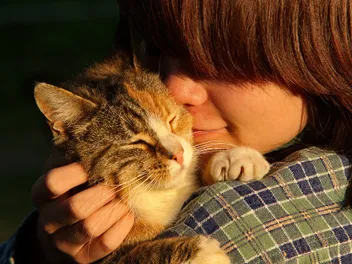
There have been no formal studies done to determine whether cats can smell cancer. What we do have are stories told by cat owners who claim their kitties have saved their lives by sniffing out issues. One such case comes from a woman in Tennessee.1 According to the story, for some reason, her cat was paying special attention to her chest area. The cat would even pounce on it, as if trying to alert her to something. Noticing how her cat reacted to the area and even formed a bruise, the woman visited her doctor and soon found out she had breast cancer. This woman, a loving pet owner, credits her cat with her early detection and ability to beat the disease.
Another well-known story is that of a man from Alberta, Canada.2 His feline friend began to pay special attention to his left side. As time went on, the cat began to paw at the man’s side. Eventually, the man sought medical attention and discovered that he was suffering from a tumor in his left lung. The cat owner felt the cat’s senses, especially their claws, were what led him to go to the doctor for tests in the first place.

Is It Possible for Cats to Smell Cancer?
With no solid research on the subject, the best way to determine whether cats can detect cancer, or if this could even be possible, is to consider their noses.” We all know that dogs have superior noses. They are used to find missing people and sniff out bombs and have been tested for detecting illnesses with their noses. Cats may not have the sniffing strength that dogs do, but they are far better than humans at it. Cats use over 200 million odor sensors to help them sniff out prey, food, and danger. Humans have 5 million, which is why our cat’s sense of smell is 14 times greater than our own.
We are starting to understand that for cats, scents are a huge part of their perception of their environment and how they get around in it. The biggest difference between cats and dogs is their use of the vomeronasal organ. This organ is used by cats to perceive chemical messages from other felines. At some point in evolution, after canines and felines diverged but before wolves and dogs diverged, canids suffered substantial V1R deterioration. Our canine friends have nine V1R proteins in their noses, and our aloof kitties have 30. While vomeronasal receptors are not exactly odorant receptors, they are considered olfactory receptors and they play a crucial role in an animal's senses and perception of their environment.

The Untrainable Feline
Now that we’ve realized cats have the tools, namely their noses, to smell cancer or other types of threats, why aren’t researchers testing cats and their sense of smell the same as they do with dogs? The answer is simple: Most people feel that cats are untrainable and less reliable when it comes to these types of situations in comparison to dogs. We all know how hard it is to motivate a cat to do what we want, but does that mean they are completely untrainable? No, it doesn’t. That is a myth that has surrounded cats for quite a while.
Food is the main way a cat can be motivated. Pulling out a box of treats and shaking it can bring your cat running from anywhere in the house. It’s also a great way of getting your cat to come inside if they’ve been outside exploring. Imagine the possibilities if you utilize real tasty treats for your kitty. Cooked chicken, lickable treats, or whatever a cat enjoys can motivate them and help with training. Cats also enjoy playing and socializing as a reinforcer. They may be the more difficult domestic animal to tempt into training, but that doesn’t mean it isn’t possible.

Would Smelling Cancer Be Accurate?
Accuracy is another issue when discussing cats smelling cancer. While a cat has a better chance of detecting certain smells than a human does, dogs and cats learn their owner's normal scent by smelling it every day. But cats have the particular social behavior of trying to create a collective group smell, which dogs do not engage in. A cat likes to have the person or animals within their group rubbed with their own smell. The same is true with their toys and anything else that they consider part of their territory.
When cancer develops in the body, changes occur in the cells. Cancerous cells produce odors referred to as volatile organic compounds (VOCs). Specific ones are produced in different pathological states, such as infections, or even in different types of cancers. Dogs can be trained to recognize the various VOCs from different biological samples—for example, urine, stool, or even breath. However, the dogs need to be trained to recognize those specific VOCs.
In the case reports of cats diagnosing cancer in their owners, the felines clearly detected a change in their owners' scent and made a point of addressing it. They were trying to return to their normal collective smell (typically created via the combination of the owner’s BO with the cat's scent) by insistently using the scent glands in their paws. The cats seemed to have detected exactly where their person’s scent change was coming from.
That said, dogs are relatively easier to train, and there’s a wealth of experience available for training canines to use their superior sense of smell. Perhaps this is why researchers aren’t in a hurry to use felines as cancer detectors. It would take much more work, and we would be relying on the cats to choose if they wish to participate. Cats will simply ignore you if they are not in the mood, whereas dogs are usually eager to participate. But the owners in the case reports argue their kitties saved them due to their reaction when something changed with their health, and there's no reason to believe that they aren’t correct.
Final Thoughts
If your cat suddenly begins pawing or scratching at a particular part of your body, could it mean something is wrong? There’s no clear answer to that question. It would be up to you to decide just how differently your cat is acting and whether you feel it’s a cause for concern. Yes, cats technically have the tools to detect changes in a person's scent, and this could include them sniffing out cancer or other pathologies. Still, due to feline nature, it is likely that this power that cats hold will stay in our homes and not in our hospitals.
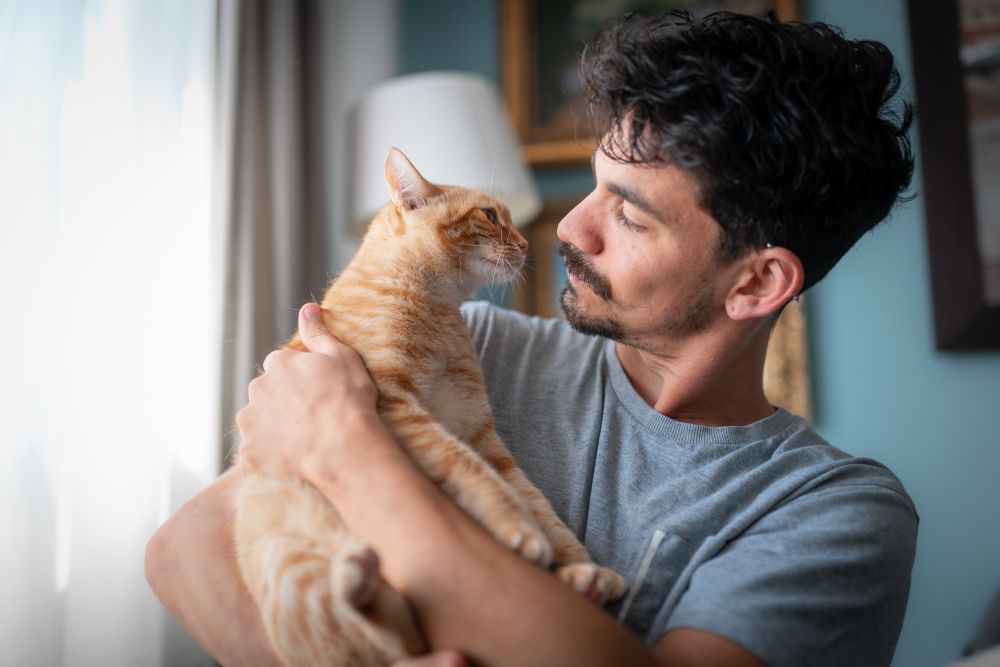
Featured Image Credit: Magui RF, Shutterstock
Expert cat care, straight to your inbox
News, insights, and useful advice, delivered to you.

No spam — unsubscribe anytime.
By signing up, you agree to our Terms & Conditions and Privacy & Cookies Policy.
How useful was this post?
Click a star to rate. You can leave written feedback afterwards. (We read all feedback.)
A native of East Tennessee, Melissa is an avid animal lover who enjoys writing in her notebooks and playing outside with her many pets. Currently, she has two cats, Princess and Pepper, who are total opposites that demand constant attention. Her three dogs, Jazzy, Whitey, and Demon, are spunky troublemakers.
Melissa is also a dedicated wife and mother to two children. Beyond her career as a freelance cat writer, she's a published Indie author under the pen name Rena Marin!