Why Does My Cat Sleep on My Head? 5 Vet-Reviewed Reasons


In this article
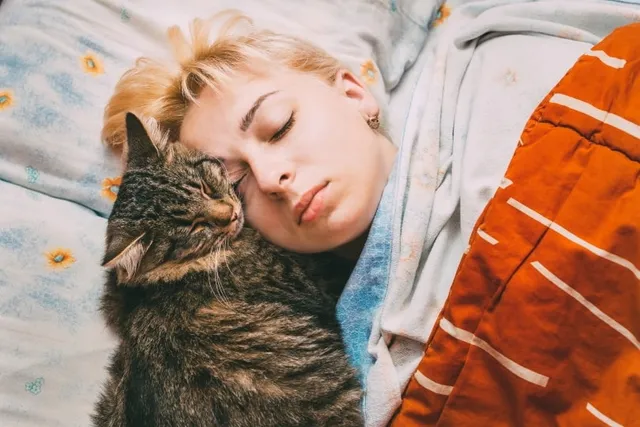
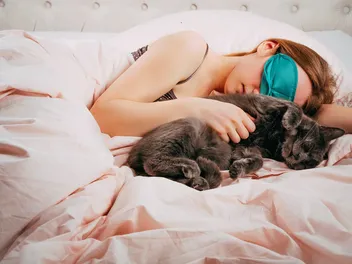
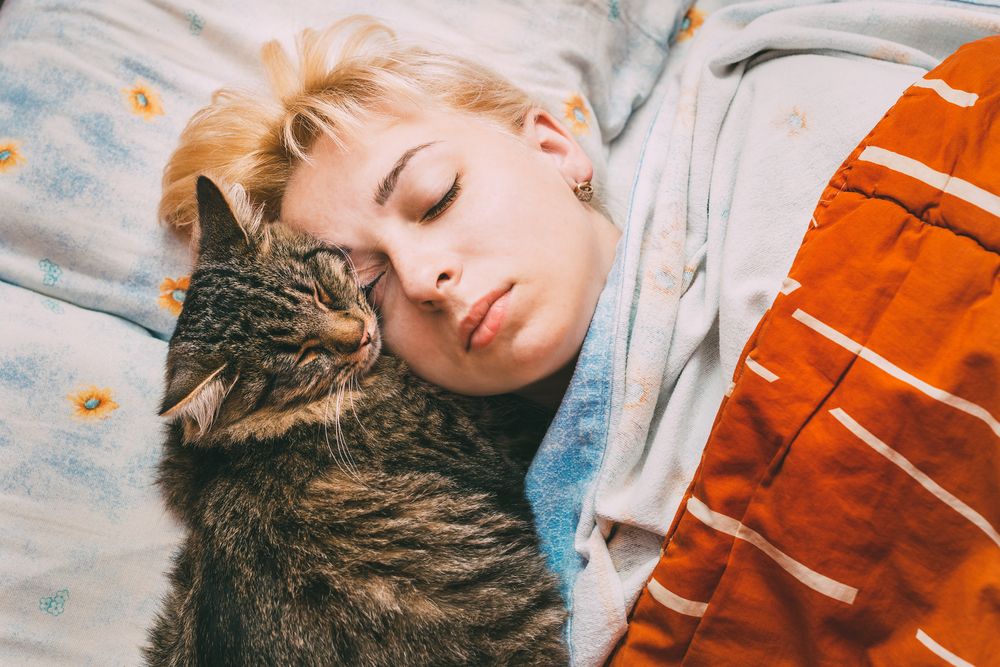
Cats have all sorts of odd (and sometimes annoying behaviors), which sometimes include sleeping on people's heads. Though most pet owners don’t seem to find this behavior, others find it difficult to understand why their cat is choosing to sleep on their heads.
So why do some cats sleep near people's heads and some do not? Whether you find this behavior cute or annoying, we'll help you figure out the reason in this article.

Top 5 Reasons Why Your Cat Sleeps on Your Head
1. Smell
In some instances, your cat may like the way your hair smells. This is most common for women, who tend to use lots of products in their hair. If you're using something the cat particularly likes or is curious about, they may decide to sleep next to your smelling-good hair.
This may not necessarily have anything to do with affection. Your can may not be lying there because they want to be close to you. They may think your hair and your pillow smell nice.

2. Affection
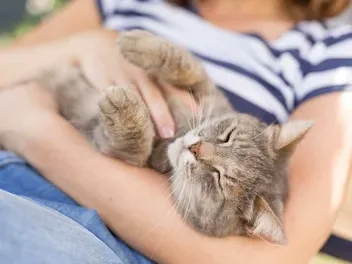
In many cases, cats may decide to sleep on your head for affectionate purposes. They may merely like sleeping near you, which can be precisely why they decide to sleep near your head. Of course, we may never know why they choose not to sleep next to your head instead of your feet, for example.
It may be that your cat doesn't see sleeping next to your cover-up limbs the same as sleeping next to you since they're under the blanket. Your head may be the only thing your cat can see, hence why they decide to sleep next to your head.
Alternatively, your feline may sleep next to you for affection but pick your head precisely because it’s easy to cuddle next to, as your hair might be more “comfortable” for them. Or, they may also like the smell of your hair.
3. Avoiding Your Restlessness
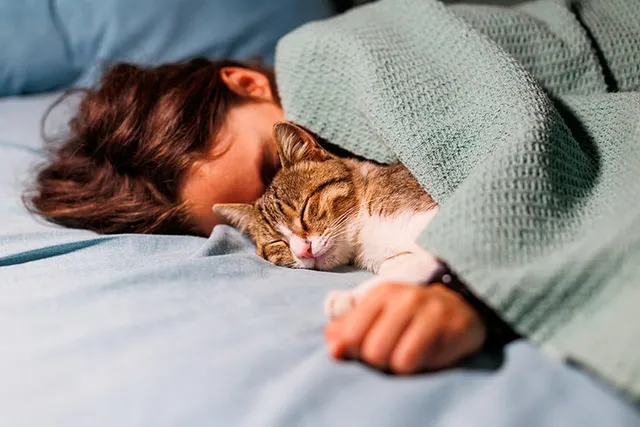
Alternatively, your cat may be avoiding your restless movements at night. If you move a lot at night, your cat probably knows this. Since your feline doesn't want to get rolled over on, they may sleep somewhere safe that is still next to you – your pillow.
They don't have to worry about you rolling over on them if they're next to your head. They also don't have to worry about your arms or legs moving around and accidentally bumping into them as you sleep.
You may not be aware of how much you move in your sleep. Even if you don't move that much, one bad experience may make your cat decide that sleeping on your pillow is the safest solution.

4. Comfort
Your cat may like sleeping on your pillow more than other parts of the bed. It may be more comfortable. If your cat likes squishy sleeping places in other situations, then this is probably even more likely to be true.
This doesn't necessarily mean that your feline isn't being affectionate at all. They may want to sleep near you and find that your pillow is the most comfortable place near you. Plus, it's probably the warmest as well!
Is there anything better than a happy cat? We don’t think so—that’s where the Hepper Nest Bed comes in.

- COMFY KITTY - Your cat or kitten will have an amazingly deep sleep in this self warming, nesting cat bed. The warm, fluffy cat bed lining provides calming stress relief for cats of all ages.
- PRETTY HOME - This round cat bed has a modern and unique design that’s perfect for a sleek indoor look. We don’t think of it as cat furniture but think of the Cat Nest as a “cat home”.
- SPACE SAVER - Reclaim your desk, window sill, or couch from kitten encroachment. This calming nest cat bed has an elevated, space-saving hideout so comfortable your kitty can't resist!
This product was designed with both your and your kitty's happiness in mind. While the comfortable bowl shape and wide lip to rest their heads on are ideal for sleepy kitties, you’ll appreciate the removable and machine-washable fleece liner for easy cleaning. It doesn’t get any better than this! Click here to try it out.
At Catster, we’ve admired Hepper for many years and decided to take a controlling ownership interest so that we could benefit from the outstanding designs of this cool cat company!
5. Warmth
Though cats naturally have a higher body temperature than humans do, in some instances, your cat might be sleeping next to your head to keep warm. Kittens aren’t good at thermoregulation and might appreciate the warmth that emanates from your head (humans lose a great deal of heat from their heads!). Cats with no hair, or sparse hair, are less tolerant of the cold and might choose your head as a resting place. Likewise, an unwell cat and under the weather might simply be feeling cold (similar to when we’re not feeling well) and may decide that sleeping near your head is a way to keep warm while they rest.

Which One is It?
With several possible reasons, you may be wondering how to figure out which reason is behind your cat's behavior. Sadly, it isn't always possible to determine exactly why your cat is acting a certain way. Your cat can't talk, and there aren't any behaviors that will make one reason more likely than the other. Most cats don’t sleep at night, and if your cat chooses to snuggle with you, odds are they’re doing so just for affection.
Plus, there may not be a single reason your feline decides to sleep on your pillow. They may decide that they want to sleep near you and find that your pillow is the most suitable solution. Or, they may want to sleep somewhere warm and find that your pillow helps them avoid your restless movements as you sleep. In most cases, there is probably a list of reasons behind your cat's behavior.
What If You Can’t Sleep?
In many cases, your cat may not disturb your sleeping situation all that much. In this situation, there may be little reason to make your cat sleep somewhere else. However, sometimes cats are just as restless as us, which may keep us awake. Furthermore, some cats try to sleep on their owner's heads, which can be uncomfortable for us.
If you find yourself unable to sleep with your cat's current insistence on sleeping near your head, there are a few things you can do.
There are several reasons for this:
What If Your Feline Is Restless?
Occasionally, your cat may be particularly restless at night. If they insist on sleeping on your head but always get up and down, it may be hard for you to sleep. As mentioned above, cats don’t necessarily sleep at night. You may have to prioritize your health in this instance using the tips provided above, as sleep is very important for your health.
Cats do not have the same day-night cycle as we do. Cats are naturally crepuscular, and often more active at night versus during the day. In the wild, cats often retreat during the heat of the day and hunt at night. This is because some of their prey (rodents) are more active at night, while others (birds) have worse vision than cats do in darkness. In between hunts, cats tend to unwind and rest. In your home, your cat may see the safest place as being next to you, which may be precisely why they decide to sleep on your head.
Conclusion
Your cat sleeps on your head or near your head for several reasons. However, most of these reasons are pretty harmless and not a cause for concern. If your cat seems unwell and seems to seek you out as a source of warmth though, it’s recommended that you have them looked over by a veterinarian.
Related Reads:
Why Does My Cat Sleep at My Feet? 6 Vet-Reviewed Reasons Behind This Behavior
Why Does My Cat Sleep On My Legs? 11 Vet-Reviewed Explanations For This Behavior
Featured Image Credit: masik0553, Shutterstock
Expert cat care, straight to your inbox
News, insights, and useful advice, delivered to you.

No spam — unsubscribe anytime.
By signing up, you agree to our Terms & Conditions and Privacy & Cookies Policy.
How useful was this post?
Click a star to rate. You can leave written feedback afterwards. (We read all feedback.)
Christian started writing for a local newspaper as a teenager, and he's been involved in the publishing industry for most of his adult life. Combining his love of writing with a passion for animals, he is currently the Director of Editorial at Pangolia and the Editor-in-Chief at Catster.
Christian lives in the Philippines with his wife, son, and four rescue cats: Trixie, Chloe, Sparky, and Chopper.