Why Does My Cat Chase Me? 8 Vet-Reviewed Reasons & What to Do


In this article
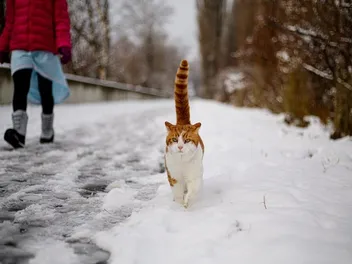
Cats are cute and adorable even when they’re chasing you, but sometimes you just want a bit of space. To help you understand if your cat’s behavior is normal, you need to figure out why they’re chasing you in the first place.
There are many potential reasons, but we highlighted the eight most common ones here. Also, while having a cat chase you is in most cases completely normal, if you don’t like the behavior, there are a few things that you can do about it.

The 8 Possible Reasons Why Your Cat Is Chasing You
1. They’re Hunting
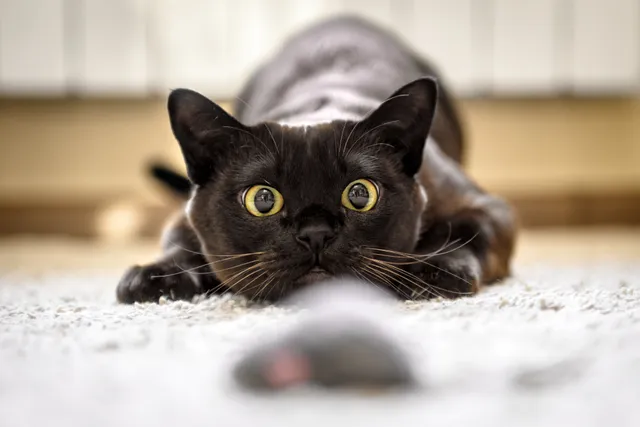
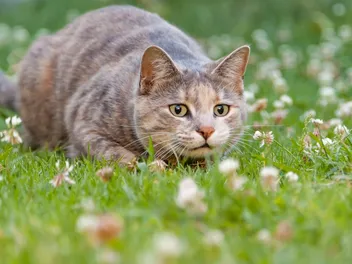
Cats are natural hunters, and they love to hone their hunting instincts. To be clear, your cat isn’t trying to hunt and kill you when they’re chasing you. They’re just practicing and playing, and if you ever end up with a rodent in your home, they can put that practice to good use!
But if they are practicing their hunting skills, they might decide to use their claws or teeth, and that’s not enjoyable for anyone.

2. It’s Fun
To a cat, there’s no better way to spend the day than chasing something around. If they find that you’re a “willing” participant, they’re going to keep at it just to entertain themselves!
Do note that you don’t actually need to be willing; they just need to think that you are. Even if you’re only walking away, this may stimulate typical cat play behavior, and they’re likely to keep doing it if you encourage it by offering your attention.
3. They Like You
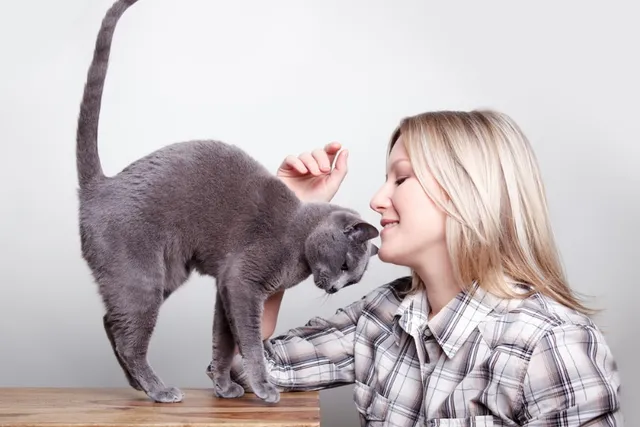
Chasing their owner around can be a great bonding experience for a cat. If you don’t mind and they’re not hurting you, it might not be something that you want to stop.
To your cat, it’s just a way for them to play with their friend, and you might not want to object to their favorite game. Of course, if you don’t like the game, you can bond with them in different ways.

4. They’re Scared of You
If a cat is chasing you around, it’s typically not because they don’t like you. But it is technically possible.
If your cat is scared of you and that’s why they are chasing you around, they will display a few telling markers. If their fur is standing up, this means they’re not comfortable and are on edge. If it’s like this when they’re chasing you, you might have scared them. This is especially true if you only recently got your cat and they are scared or anxious in their new surroundings or if your cat has had unpleasant experiences previously.
5. They Have Poor Socialization
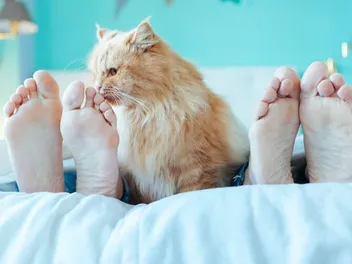
Sometimes your cat is simply chasing you around because they don’t know any better! When they’re kittens, it’s important to teach them what type of behavior and play is desirable, and what isn’t, such as playing with your fingers and toes, which can initially seem cute, but soon becomes less than desirable. If your cat doesn’t learn this or you encourage this type of behavior, it can lead to unpleasant problems afterwards.
The good news is that while it can be a challenge, it is possible to overcome these issues with a bit of training and patience. Ask a veterinarian about the correct training methods using positive reinforcement.
6. They’re Bored
Your cats need ways to entertain themselves through playing, mental stimulation, and environmental enrichment. If their needs aren’t met, they can resort to chasing you around.
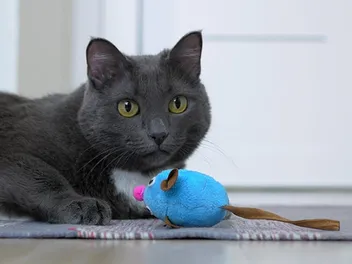
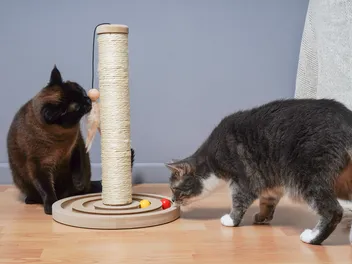
To them, chasing you is both physically and mentally stimulating, which is exactly what they need. If you want the chasing to stop, you’ll need to find other ways to entertain them. Toys and active playtime with your kitty can be a great solution, as well as enriching their environment with cat trees, vertical perches, scratch posts, interactive games, window lookouts, and more!
7. There’s Too Much Going On
While a cat might chase you because there’s not enough going on, they can chase you for the exact opposite reason if there is stress or noise in the home or a change in their routine.
First, when they go into “attack mode,” it’s sometimes hard for them to turn it off. Second, they might be chasing you so you can help them out! Your cat might feel safe around you, and when there’s too much going on, they may look to you for comfort and seek your company.

8. They Don’t Feel Well
When we aren’t feeling our best, we can get a bit moody. The same thing goes for cats, and their behavior can change. Sometimes, they might try to chase you away or even hiss if they are in pain.
If you notice them acting differently, their eating and drinking or toileting habits changing, or them appearing in pain, they might not be feeling well. It’s best to contact a vet to get down to the root of the problem
How to Get Your Cat to Stop Chasing You
If you don’t want your cat to chase you around, you’re not alone. But just because you want them to stop, that doesn’t mean they will do it on their own. Here’s what you should do to prevent your cat from chasing you.
First, spend at least 20 to 30 minutes several times a day playing with your cat. This will give your cat the time and attention with you that they need, as well as ways to use up any excess energy.
Next, set up an environment with plenty of toys for your cat to play with. This will give them multiple options for physical and mental stimulation without resorting to chasing you around.
Once you have everything set up for them to succeed, it’s time to move on to the training portion. If your cat starts to play too roughly with you, simply stand up and walk out of the room without giving them any attention. If they chase you to another room, find a way to keep them away, ideally without picking them up and moving them.
Next, when your cat jumps out at you, don’t swat them away or try to run away. This makes them think of prey, which encourages the behavior. Instead, either redirect their behavior or don’t pay them any more attention.
Finally, avoid punishing your cat, and only reward them when they’re acting the way that they should. With enough time, your cat will stop chasing you and understand how and when they ought to play with you!

Conclusion
Cats chasing their owners is nothing new, and it will likely not stop anytime soon. But while it’s often normal behavior, you can still train your cat not to chase you, and they can be just as happy without doing it.
That said, if you enjoy the bonding activity, don’t feel like you need to train it out of them!
Featured Image Credit: JackieLou DL, Pixabay
Expert cat care, straight to your inbox
News, insights, and useful advice, delivered to you.

No spam — unsubscribe anytime.
By signing up, you agree to our Terms & Conditions and Privacy & Cookies Policy.
How useful was this post?
Click a star to rate. You can leave written feedback afterwards. (We read all feedback.)
Christian started writing for a local newspaper as a teenager, and he's been involved in the publishing industry for most of his adult life. Combining his love of writing with a passion for animals, he is currently the Director of Editorial at Pangolia and the Editor-in-Chief at Catster.
Christian lives in the Philippines with his wife, son, and four rescue cats: Trixie, Chloe, Sparky, and Chopper.