Get

In Your Inbox

Catster is reader-supported. When you buy via links on our site, we may earn an affiliate commission at no cost to you. Learn more.

Why Does My Cat Bite Me When I Pet Him? 3 Vet-Approved Reasons & Solutions

Share

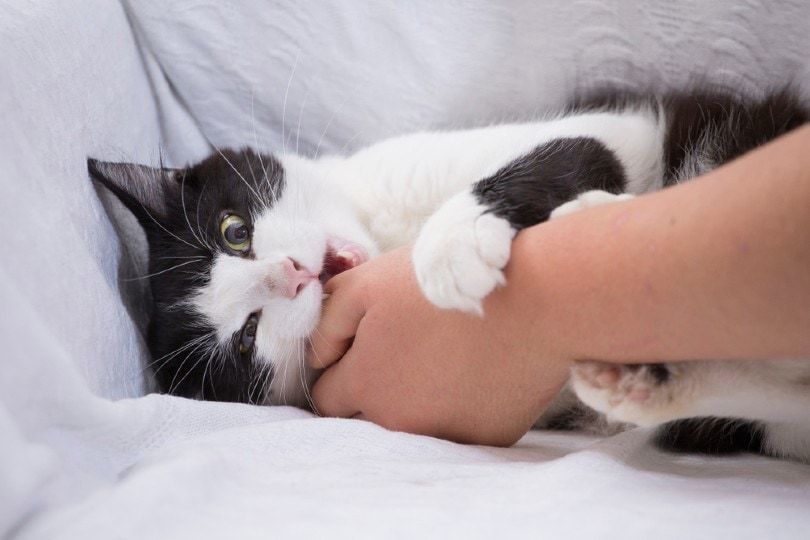
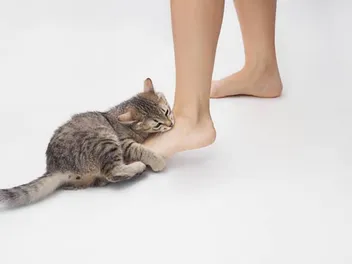
cat bites the woman's hand

Cats are not always the most predictable creatures. Sometimes, they adore your petting and practically beg for your attention. Other times, they get irritated and bite you during the petting process. Why is that? More importantly, what can you do to stop the biting?

In this article, we will look at the top three reasons your cat bites you when you pet him and some solutions to help resolve the issue.divider 3 paws

The 3 Reasons Your Cat Bites You When You Pet Him (With Solutions)

Here are the top 3 reasons your cat bites you when you pet him:

1. You Touched a Sensitive Spot

Just like humans, cats have certain parts that they don’t usually like to be touched. Cats do not prefer being petted in vulnerable areas, such as the stomach, back, or tail. Even if the spots aren’t necessarily sensitive, cats generally don’t like being pet there. In older or injured cats, some body parts can become sore from scratches, growths, etc.

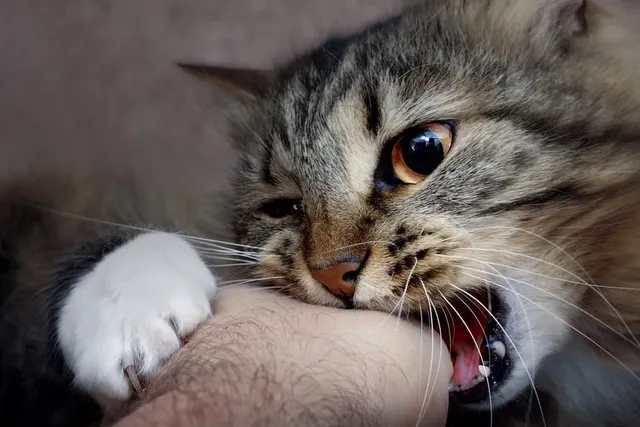
a red domestic cat bites its owner's hand
Image Credit: Irzhanova Asel, Shutterstock
Solution:

The top way to stop a cat from biting you for this reason is to avoid the sensitive spots entirely. Focus on petting your cat in areas that they like. Cats typically love being petted at the base of their ears, around their cheeks, and under their chin.

If your cat has a sensitive spot, you should take him to the vet. If you feel any growths or sores, get them checked out and treated accordingly. During the process, make sure to be gentle and kind to your cat. He doesn’t like being handled when he is injured.


2. He Is Stressed or Irritated

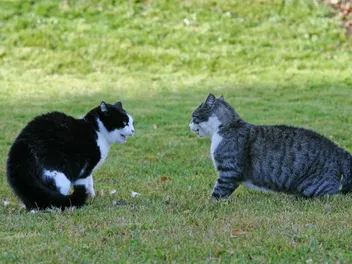
If your cat is incredibly stressed or irritated by being pet, he might bite you as a sign of aggression. This is likely to happen whenever the cat is afraid of humans or is not used to being touched. Given that cats are so much smaller than humans, it makes sense that they would be scared of us.

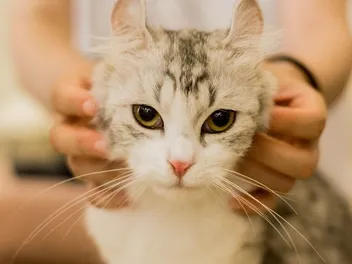
petting a cat
Image Credit: Pixabay
Solution:

If your cat is biting you because you think he is scared or stressed, the first thing you need to work on is getting him more comfortable around you. Always be kind and encourage your cat to trust you. Like in any relationship, trust takes time to build. Taking care of them, providing healthy food and water, interactive playtime with toys, and the occasional healthy treat are ways to strengthen your relationship with your cat and build trust.

The cat will learn you are a positive factor in their life, but it takes time, so be gentle and patient. If your cat begins to trust you more, you can start acclimating him to being petted. It is recommended that you pet them for short periods. Begin with petting once a day and stay under four strokes, focusing the petting area around the ears and under the chin. Never pet your cat with scratching motions.

You can offer a treat right after you pet him. You should be aware of the signs and notice when your cat starts to get stressed or irritated. Sometimes, your cat may enjoy it, but at other times, he may hate being petted. Look for signs of irritation so that you can stop petting him whenever he feels uncomfortable.

Like you, your cat might not always be in the mood, which is ok! Sometimes, they only like a little bit, and you should not push the limits. It is better to give space and no attention (including no looking at or talking to a moody cat) than too much.

Here are some common signs of irritability in cats:
  • Flattened ears
  • Growling
  • Hissing
  • Rolling on his back
  • Sitting in a hunched position
  • Slanted or squinted eyes
  • Twitching tail
  • Whiskers that are held back

3. It’s a Love Bite

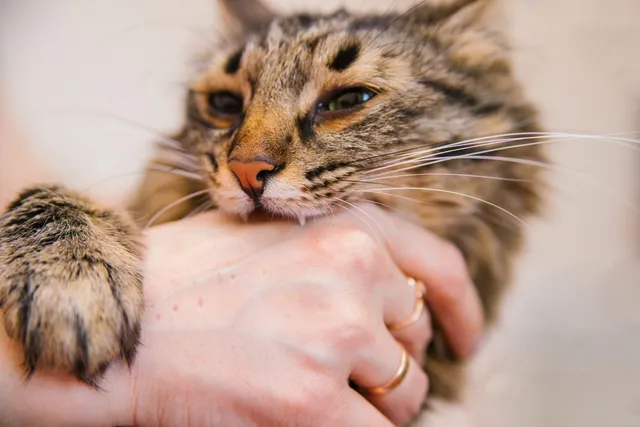
When you hear the phrase “love bite,” you probably think that it is an affectionate response. That is not the case. A love bite is your cat’s way of telling you that they don’t want to be petted anymore. You can think of a love bite as a warning sign before he gets angry. He wouldn’t give you this sign if he didn’t love you!

Love bites typically are not aggressive. Sometimes, love bites are unintentional because they are part of your cat’s grooming habits. So, they rarely break the skin. If you don’t stop petting the cat after their love bite, they will likely aggressively bite you to force you to stop.

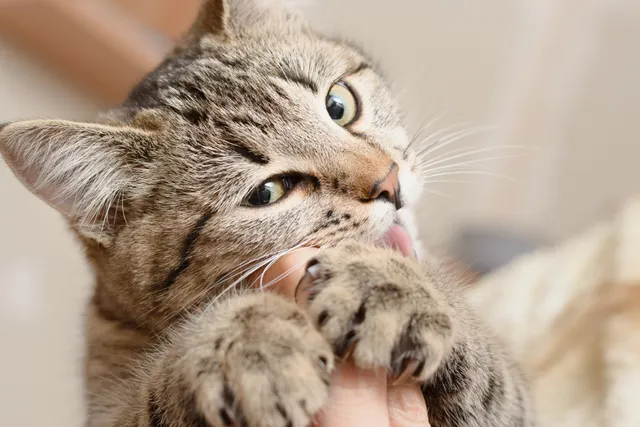
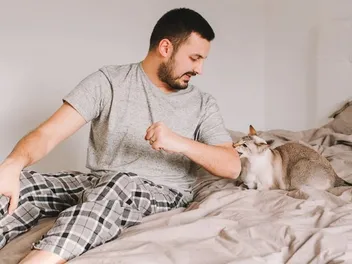
a tabby cat biting owner's hand
Image Credit: Alie04, Shutterstock
Solution:

Unfortunately, there is not much you can do to discourage love bites since it is a natural response. You can look for signs of discomfort to know when your cat is beginning to get irritated. For example, if you notice that the cat is twitching his tail or ears, stop petting him.

If you’re concerned about your cat’s behavior we suggest you speak to a vet.

If you have a question about your cat's health or behavior, why not Ask a Vet for Free with Catster. Our veterinary team answers reader questions and provides trusted advice to help you better understand your cat.

askavet on catster

divider 1 paws

Don’t Physically Punish Your Cat

Since we are talking about cats that bite, it is essential to note that you should not physically punish your cat after they bite you. Physically punishing your cat includes hitting, kicking, slapping, or throwing the cat about.

You shouldn’t physically punish your cat because it can hurt him. Even a slight push or shove can injure his delicate bones. In addition to hurting your pet, physical punishment will likely make the biting issue worse. As you become physical with him, he will likely become fearful of you, causing him to retaliate more aggressively.

divider 2 cats

Conclusion

If your cat bites you while you are petting him, it is likely because he doesn’t want to be petted anymore. Even if he adores your attention, cats don’t want to be constantly petted. This is easy to understand since we, as humans, also don’t want to be touched all the time.

To prevent your cat from biting you, look for signs that he is irritated. These signs will tell you that your cat doesn’t want to be pet anymore, allowing you to stop before the situation escalates. If your cat does get to the point where he bites you, never use physical force to teach him a lesson.

Related Reads:


Featured Image Credit: Luis Echeverri Urrea, Shutterstock

Want content like this delivered to you?

Sign Up For Our Newsletter

News, insights, expert advice, and everything cat

* By submitting, you agree to our Terms & Conditions and Privacy & Cookies Policy.


How useful was this post?

Click on a star to rate (you can leave written feedback after clicking submit)

Help us improve Catster for pet parents!

Your feedback really matters.

What did you like about this post? Also how can we improve it?

Join the conversation

2 Responses

    1. Hi Chole, sorry to hear about your cat's aggression. Head shaking can be a sign of ear infection but also other medical issues. Check out: https://www.catster.com/cat-behavior/why-does-cat-keep-shaking-head/
      Pain-induced aggression is a possibility, so we recommend you book a one-on-one consultation with one of our veterinarians at www.pangovet.com to help you find out the cause and make a management plan for your cat. Bitting is a self-reinforced behavior that can quickly turn into a bad and hard-to-eliminate habit. Kind regards.

Leave a Reply

You’re very welcome to leave a comment or question. Please know that all comments must meet our community guidelines, and your email address will NOT be published. Let’s have a positive and constructive conversation.


Catster's Digital Magazine is Back!

Vet-approved health & behavior advice

Real cat stories & community features

Ask Dr. Paola – My Cat Loves Eating Grass, But It Makes Her Vomit! (June 29, 2026)

Welcome to our “Ask Dr. Paola” series, where every Monday we bring expert advice straight from Dr. Paola Cuevas (MVZ) to help our...

Learning to Speak Cat with Anthony Smith

Many cat lovers know me through Learn to Speak Cat and Cattitude – Doggonit, cartoons that explore the often mysterious, occasionally mischievous, and...

Weird Cat Behaviors That Actually Make Perfect Sense

We have been sharing our lives with cats for thousands of years, yet we still find ourselves genuinely stumped by what they get...

The Dream of Talking to Cats Just Got Closer to Becoming a Reality

If you’ve ever wished your cat could simply tell you what they wanted, you’re not alone. From the meow that wakes you before...

More related

Can You Spay a Cat in Heat? Risks & Precautions

Most veterinarians generally recommend that a kitten be spayed before her first heat. But that can get tricky since kittens don’t go into...

Can Cats Feel Love? Vet Reviewed Facts & Considerations

Very few cat owners around the planet would dare utter the possibility that their cat can’t feel love. After all, what are all...

Why Do Cats Hiss and Growl at Strangers? Vet-Reviewed Behavior Insights

Hissing and growling are ways cats communicate how they’re feeling. Hearing your cat hiss and growl can be shocking and a bit embarrassing...

Why Does Your Cat Rub Their Head on You? 5 Vet-Reviewed Reasons

You’ve likely had your cat rub their head on you multiple times. While cats are independent creatures that don’t trust easily, they are...

Keep reading

Can Cats Eat Chestnuts? Vet-Approved Diet Precautions & Advice

Do you have a furry friend at home and are curious if chestnuts are a safe snack for them? Wonder no more! Let’s explore whether cats can eat chestnuts and answer some other pressing questions about the safety of this...

Catster_Can Cats Eat Chestnuts_v1_Dec 4 2024

Why is My Cat Throwing Up Yellow Liquid? 5 Vet Approved Reasons

Your cat vomiting can be concerning, but it may alarm you when they throw up yellow liquid. This colorful concoction surely could not be good, right? While yellow vomit looks incredibly unnatural, all it means is that it is mostly...

tabby white british shorthair cat vomit outdoors

Why Do Cats Lick You? 6 Vet-Approved Possible Reasons

Cats are notoriously aloof little critters, so it’s hard not to feel like the chosen one when yours licks you. But what’s the real reason cats lick their humans? Is it a way to show affection, or is something more...

cat-licking-owners-face

Heartworm Prevention for Cats: 3 Vet Approved Methods

Of all the diseases our cats can suffer from, heartworm disease is one of the worst. This disease is transmitted by mosquitoes that carry heartworm larvae that burrow into the body and can go on to grow up to 12...

Sick cat in animal hospital

Cat Dander vs Dandruff: How to Tell Them Apart (With Pictures)

With so many people having cat allergies, there’s a lot of talk about cat dander. However, many people aren’t really aware of what cat dander is. On top of that, some people assume that if their cat has flaky skin,...

Cat Dander vs Dandruff Side By Side

How to Take Care of a Cat: Vet-Approved Beginner’s Guide

Here are much-needed tips on cats and how you can give a kitty the best life possible. It can be difficult to be sure if you’re ready to take on the responsibility of owning an animal, so let’s get some...

Domestic-cat-lying-on-owners-lap

Why Is My Cat Pulling Their Hair Out? 7 Vet-Reviewed Reasons

Cats can spend up to 50% of their day grooming themselves. They do it primarily to keep themselves clean, but grooming also helps regulate their body temperature and spreads oils through their coat, to name a few reasons. Cats also...

woman holding a pile of cat hair

Are Hydrangeas Poisonous to Cats? Common Houseplants Examined

Hydrangeas are beautiful blooming flower bushes that are a stunning addition to any home garden. If you have cats, however, you should tread with caution when planting these gorgeous blooms in your yard. All parts of the hydrangea plant are...

Catster_Are Hydrangeas Poisonous to Cats

Love Cats? So Do We! Join the Catster Community

Stay informed with expert pet care insights delivered straight to your inbox! Discover professional guidance on animal behavior, feeding tips, trusted product picks, and much more.


Sign up for the Catster Email Newsletter

Stay informed with expert pet care insights delivered straight to your inbox! Discover professional guidance on animal behavior, feeding tips, trusted product picks, and much more.