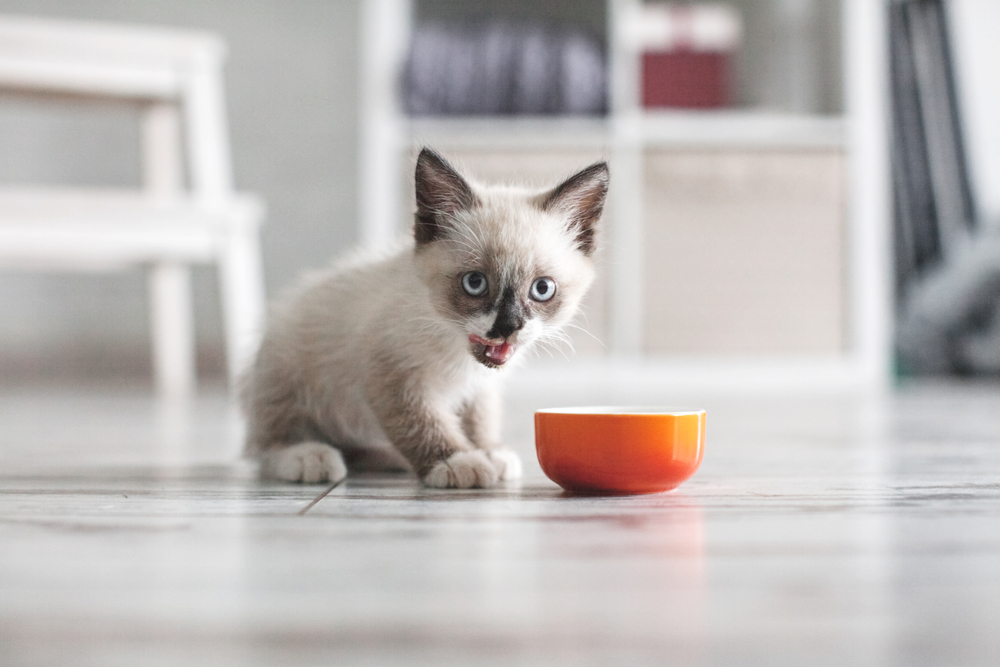
When Do Kittens Start Pooping? Vet-Approved Facts & FAQ

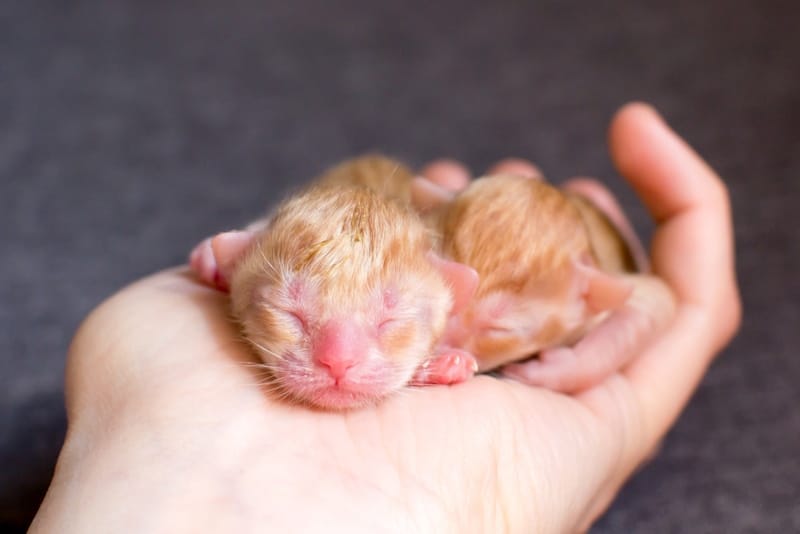
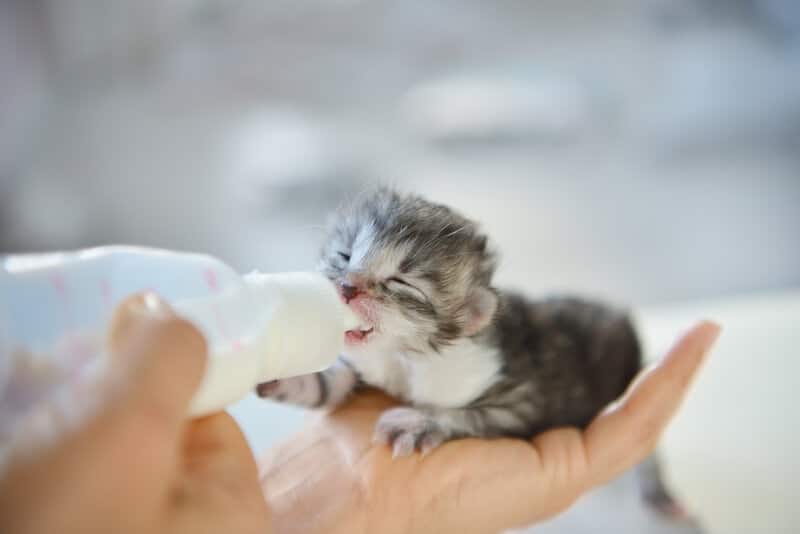
Kittens are adorable little animals that we can’t help but clamor over. It’s much easier to adore kittens than it is to care for them and make sure they grow into healthy and happy adult cats. After all, we would much rather think about kitten cuddles rather than kitty poops! However, pooping is a fact of life. Do you know that kittens do not start pooping on their own until at least 3 to 4 weeks of age? Until then, they rely on their mother to stimulate the area under their tail to make this possible.
A mother cat will take care of her kittens if she’s able to. However, if this isn’t possible, you will have to take over her responsibilities. Finding a litter of stray kittens means you’ll be doing the mother cat’s work unless you can find a rescue center. Regardless, it’s important to know when a kitten is supposed to start pooping.

Self-Defecation Usually Happens at Around 4 Weeks
While some kittens will start pooping on their own by about 3 weeks old, most will only start doing it at about 4 weeks of age. At this time, they will start to look for places to relieve themselves where they will not be spending the bulk of their time. Before this time, a mother cat will utilize her tongue to stimulate the ano-genital region and get her young to relieve themselves. Failing to stimulate a kitten’s defecation can cause constipation, which could be life threatening if not addressed.

How to Stimulate Pooping & Peeing Before Self-Relief If Possible
If you must step in as a mother cat to help kittens relieve themselves, don't panic. The process might feel foreign at first, but it is not complicated at all!
To start, gather a clean washcloth or cotton ball and a cup of lukewarm water. Then, consider that a mother cat would use her tongue to lick her kittens’ genitals and anus to stimulate peeing and pooping. So, while gently holding the kitten, use your water-soaked washcloth or cotton ball to gently rub their genitals in a licking motion to create the necessary stimulation. Rub the genitals, abdomen, and bottom in a slow, circular motion. Being careful not to cause discomfort, keep up the stimulation until peeing and pooping commences. If discomfort is noticed, stop the stimulation, and wait until later in the day to try again. If discomfort continues, it’s a good idea to consult a veterinarian.

How Often Should a Kitten Be Stimulated?
Most kittens will poop after each meal, which is, depending on their age, likely about three to four times a day (every 3 to 6 hours). Therefore, stimulation should occur a few minutes after each meal. The process should not take more than 5 minutes, but since it is crucial, it must be made a priority.
If a kitty does not defecate during a stimulation, wait a while and try again. It can take trial and error to determine how long after eating a kitten best responds to stimulation. By the time that a kitten is about 4 weeks old, you will no longer have to stimulate their defecation as they should do so on their own. Keep an eye on your kitty’s poop to make sure it remains uniform.

When Should Litter Box Training Begin?
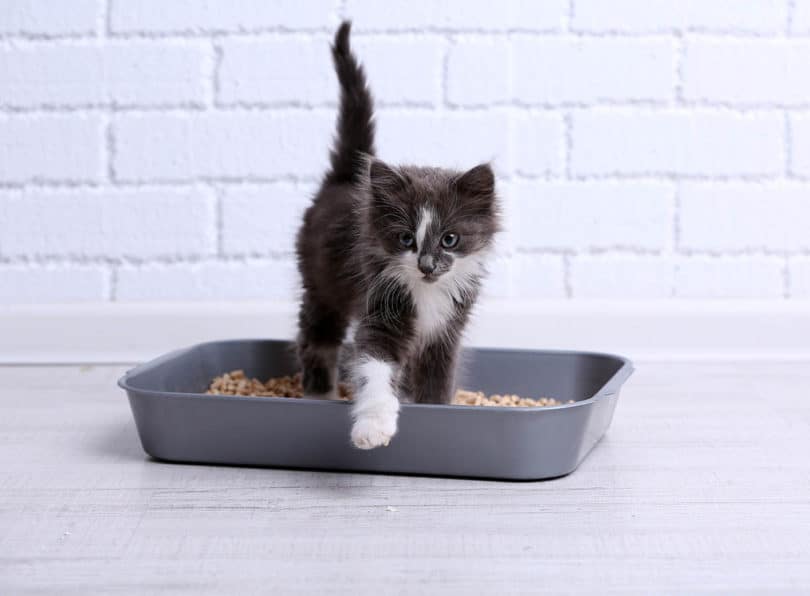
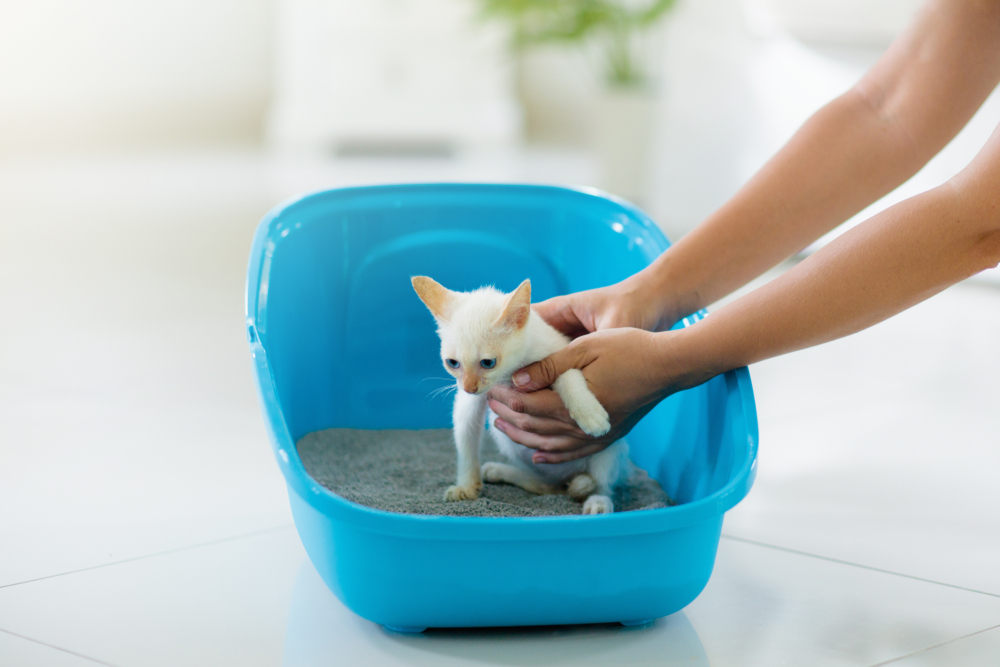
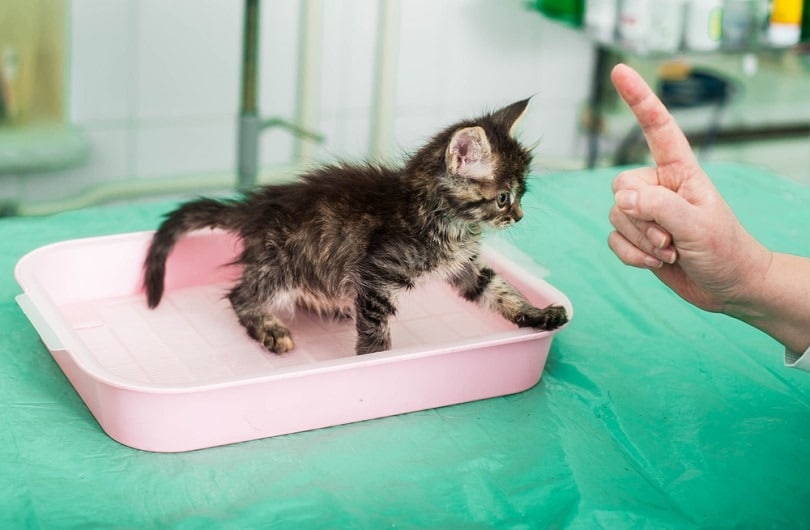
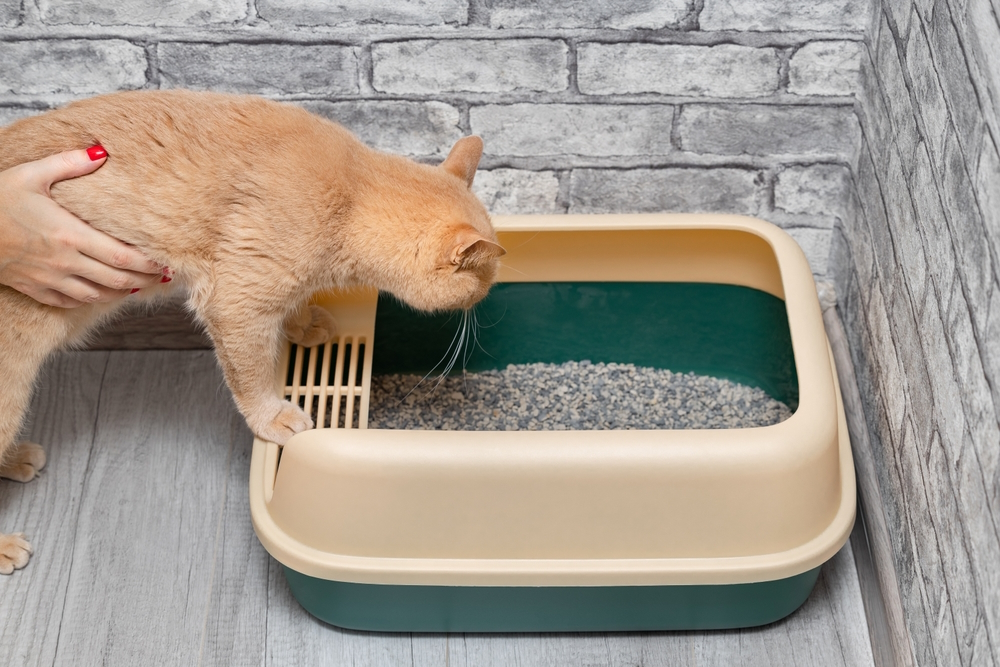
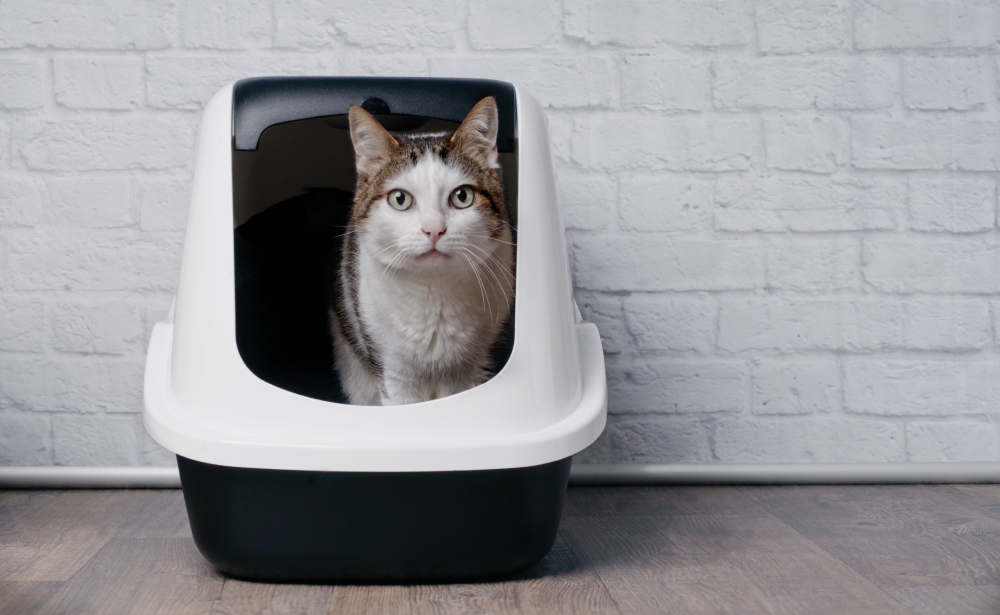
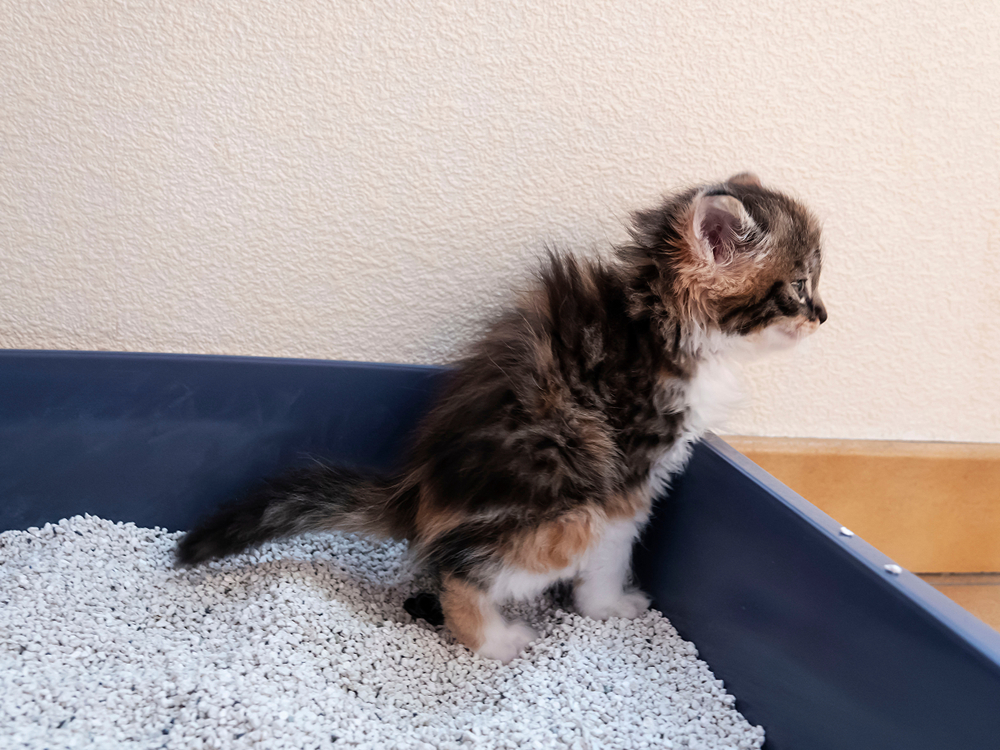
You can start litter box training a kitten from around 3 weeks of age. You can stimulate the kitten while standing in the litter box. That way, they’ll understand where the right place for toileting is. Fortunately, kittens prefer to relieve themselves where they don’t spend the majority of their time, so it’s quite easy to litter box train them. The trick is to make the process easy and to maintain consistency and a positive frame of mind as learning takes place.

Litter Box Training Tips
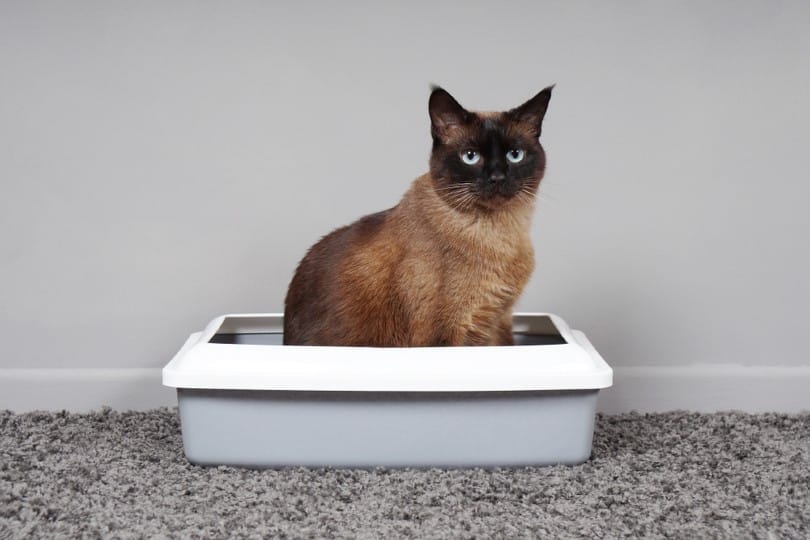
There are a few tips for making litter box training as easy and effective as possible. For one thing, use a small litter box designed for seniors. This box should be shallower and more compact than a typical litter box so it’s easier for a small kitten to get in and out of and it’s easier for you to keep clean. Here are other tips to consider:
- Keep the litter box close to where your kittens spend their time so it’s easy for them to find.
- For a while, look for signs that your kitty is getting ready to relieve themselves. When they seem ready, put them in the litter box so they can handle their business. After a while, they will start going into the litter box themselves. You should also place them in the litter box after they wake up, eat, or drink.
- Provide kittens with a small treat whenever you catch them relieving themselves in the litter box until they are doing so consistently.
- Never get angry or scold your kitty if they relieve themselves outside of the litter box. It won’t encourage them to use the litter box, and it will only make you feel frustrated.

What Should Kitty Poop Look Like?

It’s important to know what a kitten’s poop should look like to ensure their good health. If their poop does not look right, you can get help from a veterinarian and correct whatever problems are causing the irregularity. In general, a kitten’s poop should be brown, firm, and have the shape of a small sausage. Sometimes, it can have a yellow tint, depending on their diet. If other colored poop presents itself, there could be reason for concern. Here’s what you should know:
- Black Stool — This could indicate bleeding in the upper gastrointestinal tract.
- Red Stool — This may mean fresh blood and a problem in your cat’s large bowel.
- Green Stool —This might be due to something they ate. If the poop is loose it can be a sign of bacterial or parasite infection in the gut or gallbladder problems.
- Grey Stool — This indicates that overfeeding is taking place, as there is a lack of probiotics in the diet.
- Orange Stool — Many times, this means there is a liver and/or gallbladder issue.
- White Spots in the Stool — This usually indicates intestinal parasites. Tapeworm segments like a grain of rice are typical, as well as long and thin roundworms. The presence of either requires veterinary intervention.

Final Thoughts
Kittens are cute, but they must be looked after properly, including making sure they poop regularly until they are ready and able to do so themselves. This guide will help you take care of a kitten’s defecation needs if their mother cannot be there to do so. You’ll also know to potty train your kitties when they’re old enough to relieve themselves. This way, you’re prepared for and know what to expect from the process!
Sources
Featured Image Credit: irinacapel, Shutterstock

Expert cat care, straight to your inbox
Vet-reviewed advice, behavior tips, and the best of Catster. Free, and you can unsubscribe anytime.
By signing up, you agree to our Terms & Conditions and Privacy & Cookies Policy.
Rachael has been a freelance writer since 2000, in which time she has had an opportunity to research and write about many different topics while working to master the art of fusing high-quality content with effective content marketing strategies. She is an artist at heart and loves to read, paint, and make jewelry in her spare time. As a vegan, Rachael is obsessed with helping animals in need both in her community and anywhere in the world where she feels she can make a difference. Animals also happen to be her favorite topic to write about! She lives off the grid in Hawaii with her husband, her garden, and her rescue animals including 5 dogs, a cat, a goat, and dozens of chickens.
Join the conversation
Ask a question, share your story, or send private feedback.