Get

In Your Inbox

Catster is reader-supported. When you buy via links on our site, we may earn an affiliate commission at no cost to you. Learn more.

What Temperature Do Cats Like? Vet-Verified Climate Tips & FAQ

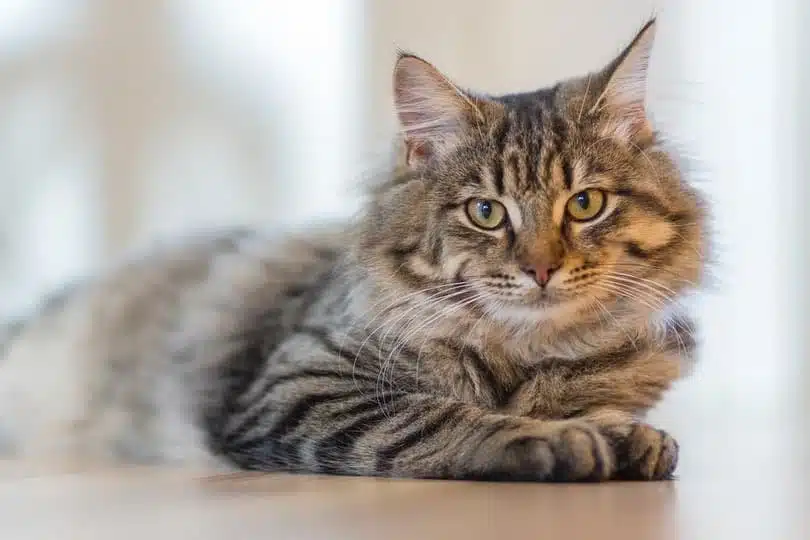
a tabby cat lying on the floor

We all know that cats like to be warm and cozy, whether they’re curled up in a donut bed or splayed out in front of a fireplace. It’s not uncommon to spot your cat spread out in a sunbeam, even during the hotter parts of the summer. But what is the right temperature for your cat? Knowing the ideal temperature for your cat will help you keep your cat at a temperature that’s safe and comfy for your kitty. The optimum ambient temperature for most cats is 77–86°F (25–30°C). However, most healthy adult cats can tolerate temperatures below this range within reasonable limits.

divider cats oct 2024

What Temperature Do Cats Like?

Cats have a higher baseline body temperature than humans, typically running between 100–102.3°F (38–39.1°C). The ideal temperature for your home to be kept at to keep your cat comfortable would be between 77–86°F (25–30°C).

In addition, most healthy adult cats can easily adjust to living in a home that stays as cool as 59–68°F (15–20°C). On the warm side, cats can tolerate temperatures up to 100°F (38°C). However, cats tolerate slightly colder temperatures better than slightly warmer ones.

Though these temperatures are applicable to most cats, please be mindful that there are exceptions to these guidelines:

Some Exceptions To Be Aware Of:
  • Cats that are underweight or unwell likely cannot tolerate lower or higher temperatures, as well as healthy cats.
  • Young kittens or senior cats may struggle to keep warm as temperatures drop.
  • Cats with osteoarthritis usually don’t appreciate colder temperatures.
  • Pre-weaned kittens (under two months of age) cannot tolerate low temperatures. They also cannot tolerate being overly warm. They have strict temperature requirements depending on their age.
  • Cats with a single or no coat have poor cold tolerance compared to double- or triple-coat breeds.
  • Cats with a large area of their fur shaved may be unable to keep warm, as fur plays a major role in thermoregulation.
  • Cats have poor temperature tolerance when wet, such as right after a bath.
  • It is a misconception that cats with sparse or no hair, such as the Sphynx, should spend extra time in the sun to keep warm. These cats can easily sunburn when exposed to the sun for long periods.
blue-eyed-white-fluffy-himalayan-cat-in-hepper-nest-bed
Blue enjoying her Hepper nest bed. | Image Credit: Hepper

How to Provide Comfortable Spaces for Your Cat

If you keep your home on the cooler side, it’s important to provide warm spaces for your cat to spend time. This is especially important if you observe the following signs that your cat might be cold.

Signs Your Cat Might Be Cold
  • Your cat is shivering.
  • Your cat is sitting on all fours, with their feet held close to their body, their tail wrapped near them, and their fur slightly raised.
  • Your cat’s extremities feel slightly cool to the touch.
  • Your cat is seeking sources of warmth, like a blanket, bed, lap, etc.

Keeping a couple of blinds in your home open will allow warm sunbeams to come in, providing your kitty with a nice space to stretch out. You should also provide cozy beds, blankets, and even heated pet beds to ensure your cat has warm options in safe areas.

Conversely, if your home is too warm for your cat, they may show signs of discomfort, too.

Signs Your Cat Might Be Warm
  • Your cat is looking for shady places to hide.
  • Your cat is lethargic or spends their time hiding in a shady area, excessively grooming themselves.
  • Your cat is lying flat on a cool surface (such as floor tiles).

In this scenario, your cat should have cooler areas to spend time in case they get too warm. Tile and wooden floors often stay cool enough to help your cat cool off on a warm day. Cooling mats and raised beds are good options for keeping your kitty cool. Turning on the air conditioner or a fan is also recommended to help keep your cat comfortable.

How Do I Know if My Cat Is Too Warm?

Like people, cats sweat. However, they sweat through their paws and not their entire body, so sweating is often not enough to cool cats down. If your cat is sweaty, they may leave damp pawprints around the home, so keep an eye out for this if your house seems particularly warm. If your cat is panting or showing other extreme signs of heat stress, reach out to a veterinarian.

If you need to speak with a vet but can't get to one, head over to PangoVet. It's an online service where you can talk to a vet online and get the advice you need for your pet — all at an affordable price!

PangoVet_Mention-in-Content for PangoVet2 save money

divider single cat paw oct 2024

Conclusion

Cats have a flexible ambient temperature range that’s very easy to establish in most homes. It’s important to provide a warm home or warm spaces for your cat to spend time. They should also have the option to leave warm areas for cooler spots if they get too hot. Keeping an eye out for signs of heat stress and heat stroke if the temperatures in your home reach excessive temperatures is important for keeping your cat healthy and safe. If you’re unsure if your cat’s body temperature is maintaining an appropriate level,  you should have your cat seen by a veterinarian to ensure everything is okay.


Featured Image Credit: Inge Wallumrød, Pexels

Want content like this delivered to you?

Sign Up For Our Newsletter

News, insights, expert advice, and everything cat

* By submitting, you agree to our Terms & Conditions and Privacy & Cookies Policy.


How useful was this post?

Click on a star to rate (you can leave written feedback after clicking submit)

Help us improve Catster for pet parents!

Your feedback really matters.

What did you like about this post? Also how can we improve it?

Join the conversation

Leave a Reply

You’re very welcome to leave a comment or question. Please know that all comments must meet our community guidelines, and your email address will NOT be published. Let’s have a positive and constructive conversation.


Talk With A Vet Online

Peace of mind,
anywhere, anytime

Affordable vet advice

5 Signs of Aggression in Cats: Vet-Reviewed Behavior Problems to Watch For

Aggression is a relatively common feline behavior problem, and it can have several causes, from pets getting a bit too carried away while...

Guide to Dry Skin on Cats: 9 Vet-Reviewed Causes & Treatments

Cats can suffer from dry skin just like we do. Dry skin can be uncomfortable, itchy, and irritating, so it’s best to figure...

Blood Clots in Cats (Aortic Thromboembolism) – Vet Answer on Causes, Symptoms & Care

Feline Aortic Thromboembolism (abbreviated FATE) is a highly fatal disease caused by a blood clot becoming stuck at the aortic trifurcation—the area where...

100+ Spiritual Cat Names: Ideas for your Mystical Cat

Spirituality can mean different things to different people, but a spiritual identity is a core part of people’s lives all around the world....

More related

A Cat Owner’s Manual: Dr. Lauren Explains Cat Carriers

Hi, I’m Dr. Lauren! Read my introduction to learn more about me and my two adventurous cats, Pancake and Tiller. OK, I’m just...

Is Advantage 2 Safe for Cats? Medication, Dosage & Usage

Fleas are pesky pests. They live on our dogs and cats and can cause various problems: intense itching, tapeworms, and anemia, to name...

I’ll Scratch Your Back if You Scratch Mine: Itchy Cats

Hi, I’m Dr. Lauren! Read my introduction to learn more about me and my two adventurous cats, Pancake and Tiller. As a vet,...

Cerenia for Cats: Uses, Doses & Side Effects (Vet Answer)

It can be highly stressful as a cat owner when your feline is sick. If your cat has a bug causing them to...

Keep reading

Why Do Cats Have a Henry’s Pocket? What Is It For? Vet-Verified Info

Henry’s Pocket is the little flap of flesh you see on the outer part of a cat’s ear. Cats’ outer ears resemble triangles and are called pinnae. On the outside of the pinna, there’s a small pocket close to the...

close up cat ears pinna

What to Feed a Kitten: Vet-Verified Guide For Each Stage

Proper feeding and nutrition are essential for kittens to grow into healthy adults. Kittens reach the weaning stage around 4-5 weeks of age. They should ideally remain with the mother until an absolute minimum of 8 weeks of age (12...

Kitten eating food from bowl

Why Do Cats Move Their Kittens? 3 Vet-Verified Reasons for This Behavior

Despite being some of the earliest domesticated animals, cats retain most of their wild instincts. It’s why they hide their food, bury their waste, and spray urine to mark their territory. However, one of the most confusing behaviors cats display...

mother cat transferring kitten

Can You Catch a Cold From a Cat? Vet-Verified Facts & Info

Once cold and flu season hits, most people find themselves feeling pretty crummy at some point. As soon as one person in the household goes down with a fall or winter cold, it seems like only a matter of time...

teenager cat owner cuddling with pet cat

Can Cats Have CBD Treats? Vet-Verified Safety & Benefits Explained

You might’ve noticed all the hype about CBD (cannabidiol) in recent years. Maybe you’ve even tried it yourself. In people, CBD has been shown to help reduce or prevent seizures in some childhood epilepsy disorders as well as relieve insomnia...

Can Cats Have CBD Treats

9 Best Cat Foods for Weight Loss in 2026: Reviews & Top Picks

Obesity is one of the most common issues affecting domestic cats, and in 2018 alone, 33.8% of cats were obese, and 27.7% were considered overweight.1 This is an alarming statistic, especially when you consider that a cat’s health is almost...

grey cat just finished eating

Are Jute Rope Scratching Posts Safe for Cats? (Common Materials Explained)

Being a cat owner means stocking up on all kinds of scratching posts, especially if you don’t want your furniture clawed up! Whether you’re a new cat owner or just looking for a new scratching post, you might be wondering...

Catster_Are Jute Rope Scratching Posts Safe for Cats

Why Does My Cat’s Tail Twitch? 6 Vet-Reviewed Reasons

Cat ownership would be a lot easier if our pets could tell us their thoughts. However, until someone develops a cat-to-human translator, we have to use context clues and our pet’s body language to decipher their moods. A cat’s tail...

A-curled-cats-tail-close-up

Love Cats? So Do We! Join the Catster Community

Stay informed with expert pet care insights delivered straight to your inbox! Discover professional guidance on animal behavior, feeding tips, trusted product picks, and much more.


Sign up for the Catster Email Newsletter

Stay informed with expert pet care insights delivered straight to your inbox! Discover professional guidance on animal behavior, feeding tips, trusted product picks, and much more.


