Toyger vs. Bengal: Main Differences (With Pictures)


In this article
Choosing a cat to give a forever home can be a challenging task, especially when you’re trying to decide between two similar breeds. If you’re trying to decide between a Toyger and a Bengal, you might wonder what the differences are.
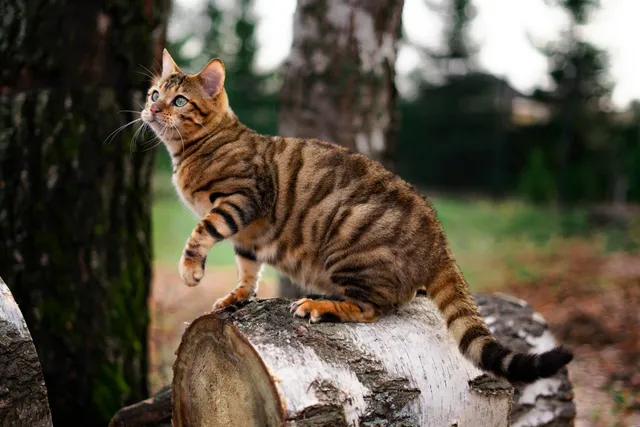
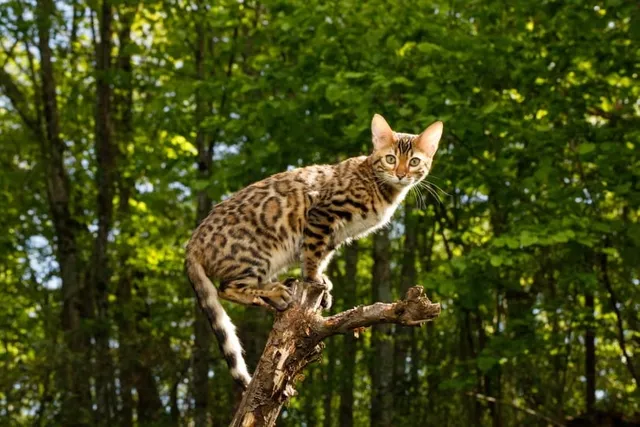
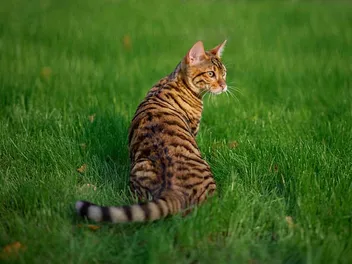
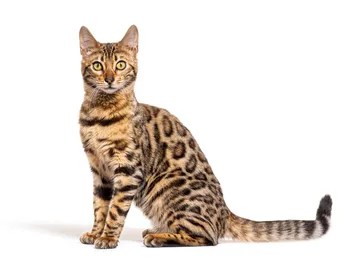
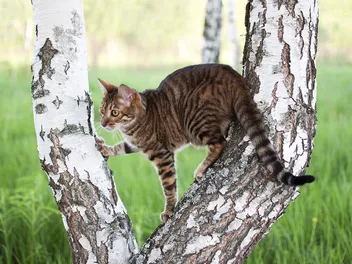
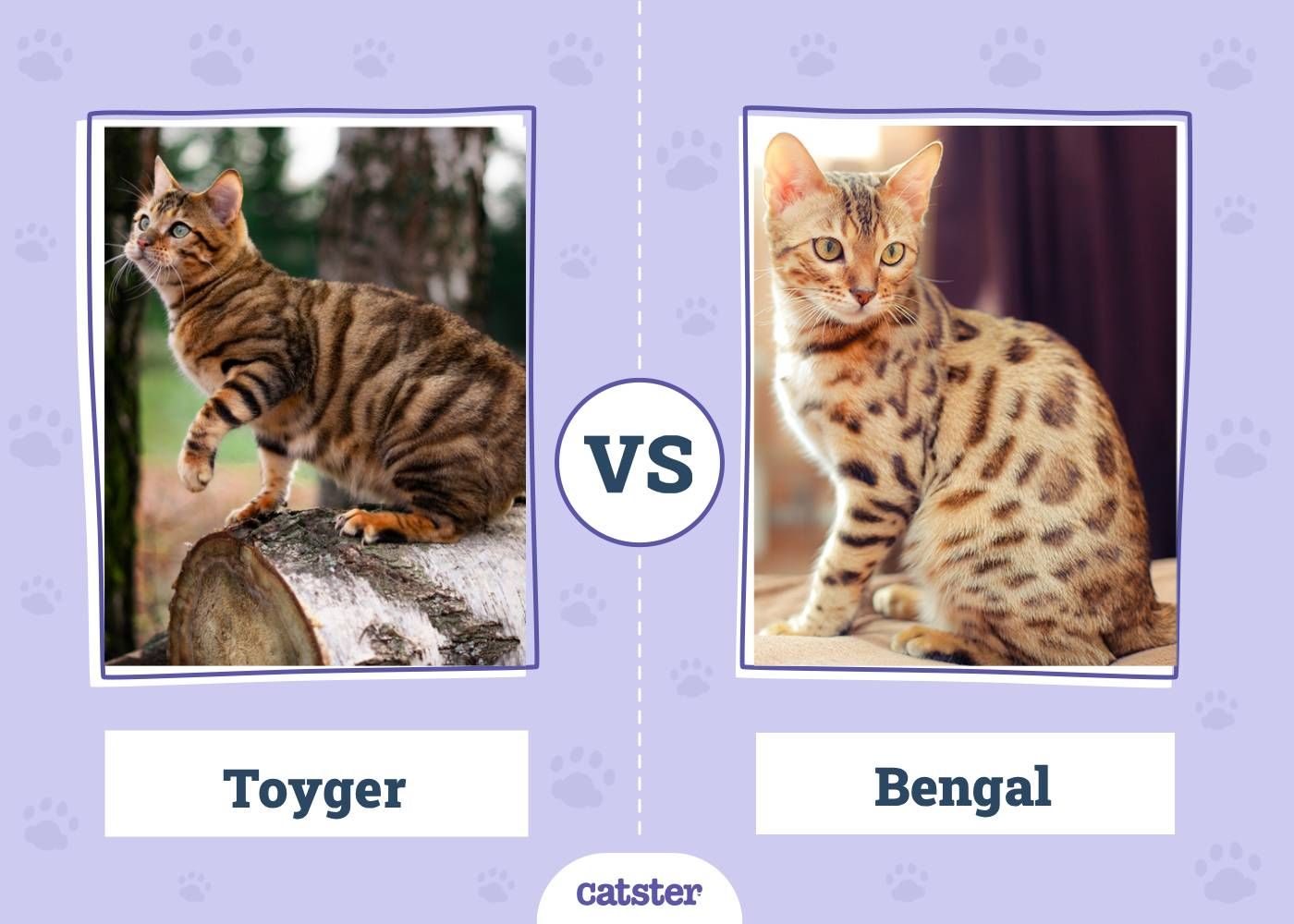
Toygers are a rare breed bred to look like toy tigers. Bengals, on the other hand, were bred to look like miniature leopards. In this article, we’ll discuss the differences between the Toyger and Bengal so you can determine which feline is right for your home.

Visual Differences

At a Glance
Toyger Overview
The Toyger was developed to look like a wild tiger. In fact, they are nicknamed “toy tigers.” It’s important to note that these cats are not bred with wild cats but are selectively bred by crossing Domestic Shorthairs with tabby coats with Bengals. Since this is a newer breed, they are pretty rare, expensive, and hard to find.
If you’re considering a Toyger over a Bengal, you’ll need to know a bit about the Toyger cat's personality, training, exercise needs, and health issues. We’ll tell you everything you need to know in the sections below.

Personality / Character
While the Toyger is recognized by the Cat Fancier’s Association and other organizations, you won’t find anything about their personality in the breed standards. In fact, their personalities can differ quite a bit. However, you can expect your Toyger to be incredibly active. They enjoy spending time around their family, but you’ll have to exercise them a lot, and they aren’t the best choice for someone looking for a companion to curl up on the couch and watch television.
While they are considered friendly and outgoing, they may take a while to warm up to strangers. However, they’re gentle and tolerant of children. The Toyger will need something to do as well since they are intelligent and aren’t content just sleeping all day. They need plenty of toys and interactive games to keep their minds occupied.
Exercise 🐈
The Toyger is an energetic feline that loves to run, jump, and climb. They need daily play sessions with their owners to keep them happy and fit, but they’ll also need toys and a cat tree to entertain them when they’re not around. Like other intelligent felines, Toygers lose interest in playing when the sessions are too long.
Breaking their playtime down to 10 to 15-minute periods is ideal to keep them engaged. Although they need more daily exercise than some breeds, Toygers can be trained to walk on a leash, which is helpful for apartment dwellers who don’t have access to safe, enriched indoor spaces.

Training 🧶
Since the Toyger is intelligent, they are generally easier to train. Patience is vital because most cats, unlike dogs, don’t train on anyone else’s timetable. However, Toygers are more dog-like than other kitties and are more willing to learn new tricks and commands.
They love playing fetch but also like chasing catnip mice and playing with teasers. Although they’re more accepting of training than other breeds, keeping the training sessions brief is best to keep them interested.
Health Issues
Since the Toyger is a new breed that is quite rare, there is limited long-term health data available. Of course, that’s likely to change. When searching for a Toyger to adopt, look for reputable breeders who perform health screening and DNA tests. If you cannot meet the Toyger’s parents or tour the facilities, look for another breeder.
Breeders who provide documentation about their litters and are open to answering your questions are more likely to produce healthy cats. Toygers are not currently known to have breed-specific inherited diseases, but the following conditions have been reported or are considered potential concerns.
- Heart murmurs
- Hypertrophic cardiomyopathy (HCM)
- Obesity

Suitable For
The Toyger is suitable for active families who stay on the go and can meet their daily interaction and enrichment needs. They aren’t typically afraid of kids, which makes them ideal to have around small children. They can become stressed and unhappy if left alone for too long, and they’re happier in homes where someone is home most of the day.
However, they enjoy playing with other pets, and if you spend the day at work, they’ll be content to play with another well-socialized cat or dog. Older, relaxed canines may find the Toyger a bit too energetic, but energetic pups will likely enjoy their company when introductions are done gradually and safely.
Bengal Overview
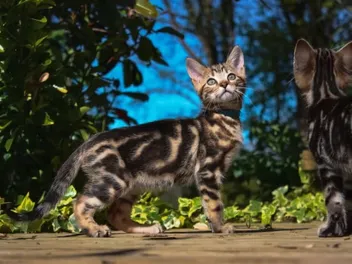
The Bengal has an Asian Leopard Cat heritage, and they were developed by breeding friendly domestic cats like the Egyptian Mau with the Asian Leopard Cat. Because the Asian Leopard Cat is a wild feline, breeders select mates with friendly personalities to balance out the early-generation wild cat ancestry.
Like the Toyger, the Bengal isn't a lap cat that will lay around the house sleeping all day. They can make a loving, intelligent pet for active families, and we’ll discuss their character, exercise requirements, and more below.

Personality / Character
The Bengal's energy is only rivaled by their intelligence. The cat's intelligence can be challenging for some pet owners, making it difficult for them to handle. They’re clever enough to open cabinets and doors and are talented escape artists. Because of their climbing and leaping skills, you must ensure they don’t escape when your back is turned.
However, they’re incredibly affectionate and vocal, and if they’re displeased that you’re not paying attention to them, they’ll let you know. Like a highly social dog, a Bengal will wait at the door to greet you when you come home.
Exercise 🐈
As with the Toyger, the Bengal needs more exercise than most cats, so if you’re one to sit on the couch, don’t expect your Bengal to sit with you for long periods. Cat trees, toys, and interactive games are essential items to keep the intelligent Bengal happy and mentally stimulated.
Playing with your Bengal daily will prevent them from becoming stressed and engaging in unwanted behaviors. Like the Toyger, the Bengal can be trained to walk with a leash and harness.

Training 🧶
Not only can you teach your Bengal to walk on a leash, but you can also teach your furry friend to do tricks. They can be taught to play fetch, and unlike most cats, Bengals will come to you when you call them.
It won’t take long for the Bengal to learn how to use the litter box, and you can use positive reinforcement and clicker training to teach them new tricks. Like the Toyger, they respond better to short training sessions when you reward them with treats.
Health Issues
Bengals are a generally healthy breed, but there are health issues that you need to be aware of.
- Flat-chested kitten syndrome
- Hypertrophic cardiomyopathy (HCM)
- Luxating patella
- Progressive retinal atrophy (bPRA)

Suitable For
If the Bengal is trained and socialized as a kitten, they can make a great family pet. They do best with plenty of activity and people to play with them. They get along well with respectful children, especially when interactions are supervised. They often attach themselves to one person and stick close to them most of the time. However, they’ll still love everyone in the household.
They can get along with other pets, but they’re better suited for families with other active dogs and cats. An aging dog that’s not interested in playing or running around the house may not be the best roommate for a Bengal.

Which Breed Is Right for You?

As you can see, the Toyger and the Bengal have quite a few similarities. While they are both energetic and don’t like to lie on the couch or sleep all day, the Bengal is slightly more active and mischievous than the Toyger. Because of their hybrid wild cat heritage, the Bengals may be more likely to escape their home through an open window or door. Neither cat handles being alone for very long, and they’re more prone to stress-related behaviors associated with social isolation. However, the Toyger and Bengal make remarkable pets when they get enough exercise and can spend plenty of time with their owners. See also:
Featured Image Credit: Left - Kutikova Ekaterina, Shutterstock | Right - AJR_photo, Shutterstock
Expert cat care, straight to your inbox
News, insights, and useful advice, delivered to you.

No spam — unsubscribe anytime.
By signing up, you agree to our Terms & Conditions and Privacy & Cookies Policy.
How useful was this post?
Click a star to rate. You can leave written feedback afterwards. (We read all feedback.)
Patricia is a pet writer and lifelong animal lover. She has two cats (Binx and Link) and one dog (Mystery). Binx was found as a kitten under her house and has been part of the family ever since! Patricia is also a published author under the pen name Skylar McKinzie. When she isn’t writing, Patricia enjoys volunteering at her local animal rescue.