Siamese Cat Genetics: Does It Affect Siamese Behavior? Temperament Facts


In this article
Talkative, always wanting to be around you, and a bit needy—these are all common traits and behaviors of the Siamese cat. These behaviors don’t apply to every other cat breed, though. Have you ever wondered why cat breeds act in different ways? There are many commonalities among cat breeds, but some, like the Siamese, are more vocal than others, while other breeds are cuddlier, and so on. Does it all come down to genetics?
If you are the parent of a Siamese cat and have been wondering whether their genetics affect their behavior, the answer is yes– to some extent. Genetics affects all felines to some extent, including the Siamese. But which behaviors are caused by genetics in this breed?

How the Siamese Cat Got Its Coat
Before we discuss behavior, we need to learn about the genetics behind the Siamese breed’s unique coloring.
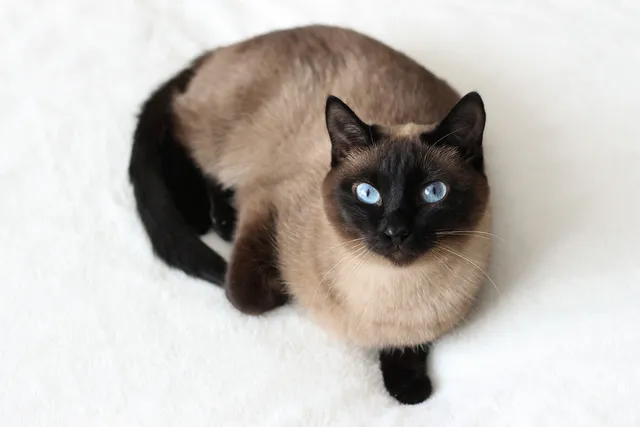
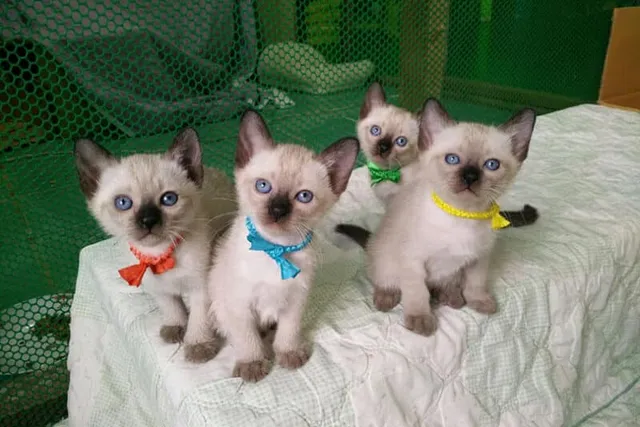
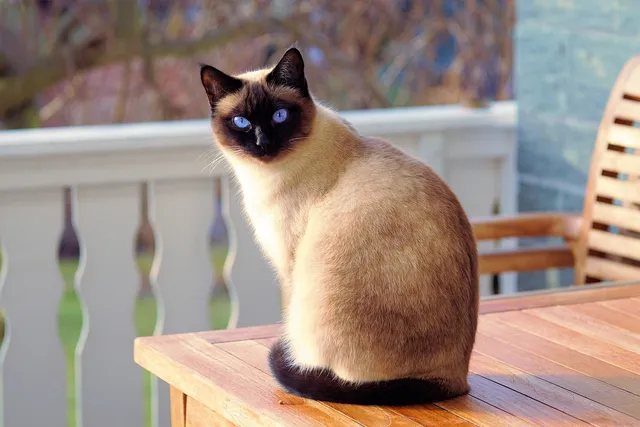
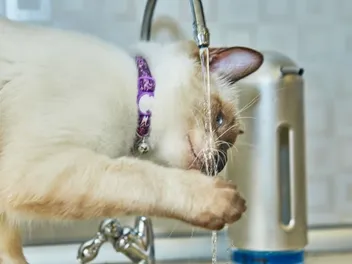
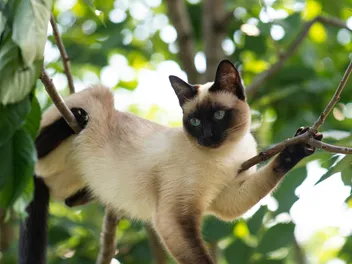
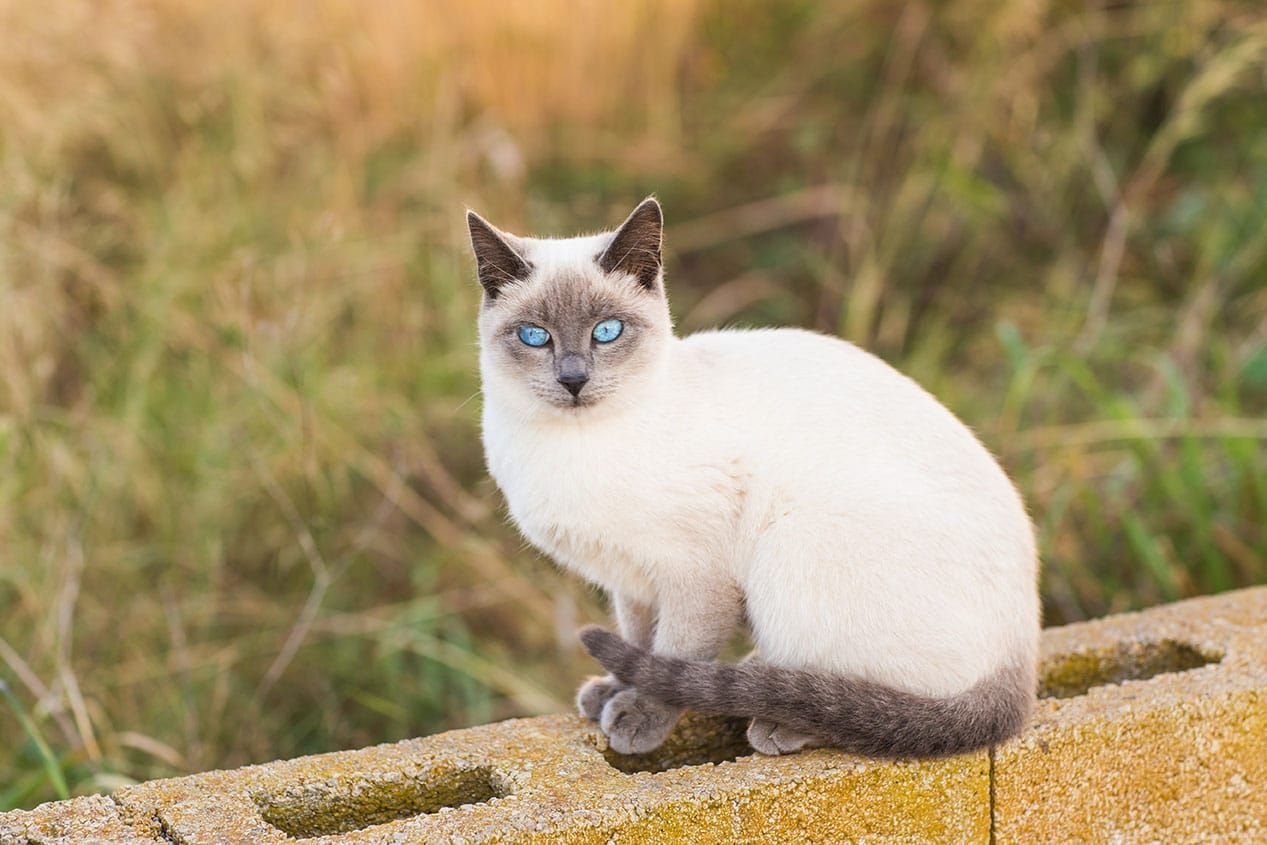
Interestingly enough, the coloration of a Siamese is temperature-dependent. What does that mean? It means the cooler areas of the body are darker, while the warmer parts are lighter. This is what makes this breed color point, as the coolest parts of the body tend to be the face, ears, and extremities. But why is this feline’s coat coloring dependent on temperature?
It all comes down to a mutation in a specific protein—tyrosinase. This protein is involved in the production of melanin (yes, the same kind we have), so the more melanin, the darker the fur will be. However, this mutation causes the melanin in a Siamese to be produced more at temperatures around 77°F. Since a cat’s normal body temperature is around 101°F, and the extremities tend to be cooler than a cat’s core, darker colors pop up on the legs, nose, ears, and tail while the rest of the body stays lighter.
Though the mutation in tyrosinase being the cause of a Siamese’s coloration wasn’t discovered until 2005, the fact that the coloration was affected by temperature was known long before that. The idea that this was the case was first tested in the 1930s when researchers took a few Siamese to Moscow in the USSR to study the effects of the cold on the color of their fur. Not only did they find that the cold did indeed make fur darker, but they also discovered that if you kept the darker areas warm, it would turn lighter!

Genetics and Behavior of the Siamese Cat
What does that have to do with the behavior of the Siamese, though? The same genetic mutation that affects the color of the breed’s coat may impact their behavior because of how it also affects the brain.
One of the main non-behavioral impacts of this mutation on the brain is the way it causes an odd organization of the visual nervous system with nerves crossing to other sides of the brain that aren’t normally crossed in other breeds of cats. This can make it so a Siamese cat has less depth perception and potentially double vision, which can be a partial reason behind their crossed eyes.
How else does this mutation of tyrosinase affect the brain of the Siamese? Another significant way it does that is dopamine, or rather a lack thereof. This protein is important in the production of dopamine, and as anyone who knows even a little about mental health can tell you, when dopamine is in an imbalance, it can affect behavior. For Siamese, the tyrosinase mutation means that it doesn’t work in warm areas such as the brain. so dopamine levels may be lower. This could lead to anxiety and compulsive disorders.
One such compulsive disorder that’s fairly common in this breed is wool-sucking. Wool-sucking is when a cat routinely and repetitively searches out non-food items to suckle, chew, and even ingest. This could be anything from sweaters to socks to even pipe cleaners. While this behavior isn’t always serious, it has the potential to be unhealthy or dangerous.
Another issue found in the Siamese breed is hyperesthesia syndrome. If you have a Siamese and have noticed their skin is sensitive to touch or ever seen them have running fits, excessively lick or bite at themselves, or sit for long minutes staring into space before taking off in a mad dash, this might be why. While the exact cause of this disorder isn’t known, it seems to be caused by something impacting brain activity and is prevalent in the Siamese and other related breeds.
There are also inherited traits that make the Siamese distinctly Siamese. Studies that have looked at the behaviors of several feline breeds have found that the Siamese are more likely to have certain traits than other cat breeds, such as sociability and excessive grooming. So, it seems some other aspects of the Siamese’s personality are also affected by genetics.

Final Thoughts
Genetics absolutely have some effect on the behavior of a feline, including the Siamese. The Siamese is possibly affected more than other breeds due to the gene mutation that causes the unique coloration of their coat, as this mutation also affects the brain in various ways. Despite the many common traits each Siamese cat will have, though, every feline is an individual, so your cat is likely to have some personality quirks all their own. Regardless of those quirks, Siamese cats still make wonderful companions.
Featured Image Credit: Tatiana Chekryzhova, Shutterstock
Expert cat care, straight to your inbox
News, insights, and useful advice, delivered to you.

No spam — unsubscribe anytime.
By signing up, you agree to our Terms & Conditions and Privacy & Cookies Policy.
How useful was this post?
Click a star to rate. You can leave written feedback afterwards. (We read all feedback.)
Misty Layne lives out in the woods in small-town Alabama with her two Siamese cats —Serafina and Jasper. She also has an array of stray cats, raccoons, and opossums who like to call her front porch home. When she’s not writing about animals, you’ll find her writing poetry, stories, and film reviews (cats, by far, her favorite writing topic, though!). In her free time, Misty enjoys chilling with her cats, playing piano, watching indie and foreign films, photographing abandoned places, and catching up on her never-ending TBR list.