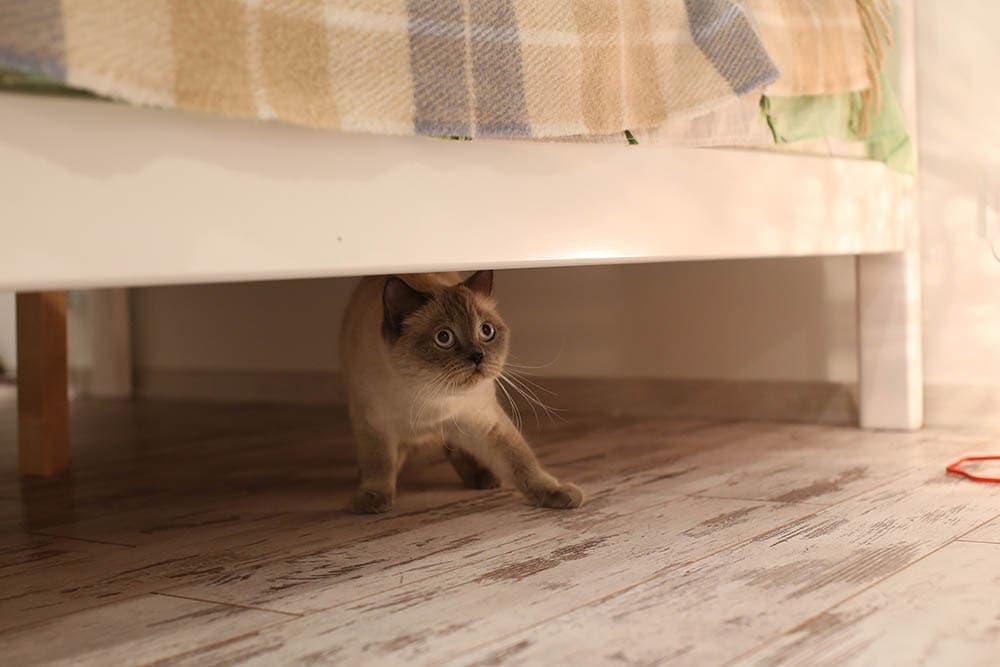
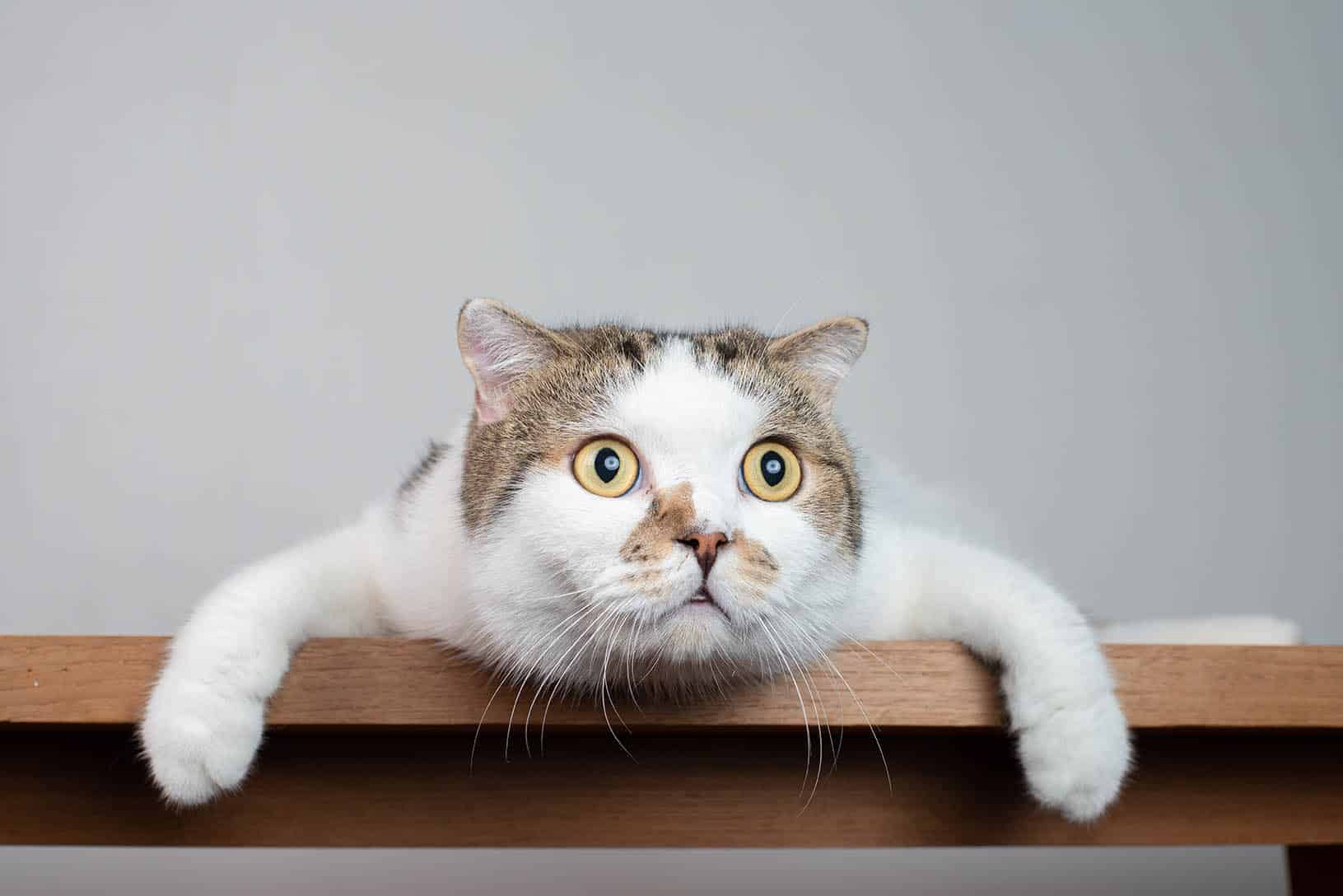
My Cat Is Scared of Something I Can't See: Common Causes & Vet-Approved Advice


It’s a tale as old as time—cats can see ghosts, right? While this is perhaps an ideology stemming from myth and fable, there may be some truth to it. After all, cats are capable of using their senses in ways we can’t directly fathom.
So, if your cat is seemingly scared but you don’t see anything and you’re wondering what they’re scared of, we will explain what we know about a cat’s senses and what they might be experiencing. If you want to divert their attention, we have a few pointers for you, too.

Why Might My Cat Be Scared?
Here are a few things that might make your cat a little skittish or frightened.
1. Unfamiliar Smells
Your cat could be sensing a new and unfamiliar smell in a specific part of the household. You may have a new fragrance diffuser or put a new item in a drawer. A cat’s sense of smell is so much stronger than ours. Sometimes, a scent slips right past our senses, but our cats can certainly pick up on it.
If it’s a smell that makes them uncomfortable in some way, it might cause a reaction in your cat that seems like they are unsure or scared. It could even confuse them, making them seem a little more flustered than normal.
2. Unusual Sounds
Cats are able to hear frequencies that humans cannot hear. Notably, cats can hear the frequencies at which mice, rats, and other rodents produce sounds and communicate with each other. For animals that view these animals as prey, this is important, as it allows them to pinpoint the location of their target during a hunt.
Therefore, your cat may, at times, seem very interested or show behaviors that you can’t figure out. For example, they may be pawing at a wall or a cupboard, which might not make any sense to us. However, there’s a chance that your cat is hearing something that we just can’t hear!
3. Personality
Some cats are naturally more skittish than others. They might get very freaked or stressed out after several environmental changes. Nervous cats tend to be a little bit more skittish with touch and may only come out when the coast is clear.
If your cat is naturally prone to displaying more nervous traits, it might not necessarily be something that’s wrong in the household, but rather they’re experiencing something that’s just overstimulating for them.
4. Household Change
If something has recently changed in the household, whether a new person or pet has started living there or you're recently renovating, your cat might not be fully acclimated or adjusted to these changes and could be displaying skittish behaviors for no apparent reason.
If something has been moved—like a piece of furniture, for example—it might frighten some cats when they see it. After all, it might look threatening, like a figure standing in the darkness to some cats. This often ties in with the personality aspect discussed above. Often, cats that are more skittish are also more likely to not appreciate household changes.

5. Impending Natural Disasters
While uncommon, your cat could be sending an impending natural disaster. A study 1 was conducted on the behavior of cats and dogs before the 2011 earthquake off the Pacific Coast of Japan. The study ascertained that many pets display unusual or strange behavior before natural disasters strike, indicating that they may be able to sense such events before humans do.
Signs that cats normally displayed before natural disasters include the following:
- Appearing restless
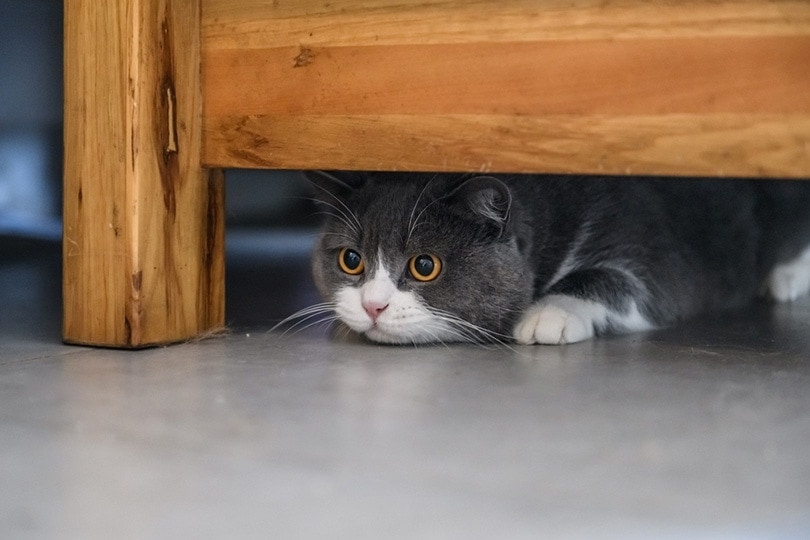
- Hiding
- Attempting to move their kittens to a new location
- Appearing frightened
- Disappearing
- Vocalizing excessively
- Trembling
- Refusing to eat
- Episodes of unexplained aggression
- Unexplained vomiting
- Unexplained diarrhea
Of course, not all cats will show all these signs, and the odds of a natural disaster are (thankfully) relatively low for most people. Nonetheless, the ability of cats (and other pets) to sense impending disasters and act out before humans realize what’s happening is definitely intriguing.

What to Do if Your Cat Seems Scared
Now you have a better idea of what could be scaring your cat—even if you can’t see it. In most cases, you won’t know what exactly they are scared of, and there is nothing you can do except let the feeling pass for your cat on its own. Most of the time, scared cats can retreat to a quiet area to calm themselves down, or they may try to adjust to whatever new change makes them scared.
It’s important to remember that a spooked cat can lash out very easily when approached, and attempting to physically handle your cat may backfire when they’re terrified of something. The best thing to do in such a situation is to allow your cat the space and time they need to come to terms with their senses and re-emerge from hiding at their own pace.
Meanwhile, your goal should be to try and identify the stressor and remove it from the vicinity. For example, if loud noises outside are spooking your cat, closing the doors, windows, and perhaps exploring options to soundproof your house might be in order. Likewise, if you suspect a new piece of furniture has frightened your cat, it might help to move it to a different location. If you would have hard time figuring out what is stressing out your cat, the consultation with a veterinarian can help you.
Why Do Cats See Things We Can’t?
Your cat seems to stare down something in the darkness, hair erect, vision unstaggering—what exactly is causing this reaction? If they do it frequently in the home, it can really start to freak you out if it's something you cannot perceive.
In comparison to humans, cats only have roughly 20–40% of the visual acuity we do. So, while they might not see better than we do, they outdo us in other ways. Most indoor cats are nearsighted, which actually works to their advantage for hunting purposes.
Cats also have more rods in their eyes than we do, making them much more efficient in low-light settings and better at perceiving motion. So, if your cat is getting frisky in darker settings, they might just see something you cannot.
Lastly, cats have a tapetum lucidum, which helps to bring more light into the retina. It is also responsible for the reflection in a cat's eyes when light hits it at night. However, cats don’t have the same color spectrum as humans, meaning they have fewer colors on their radar.
The Science Isn’t Foolproof
Regarding cats and what they can perceive, the science is still being determined. We don't have all the information we need to determine just what cats can register that we cannot. However, we have some pretty good leads.


Conclusion
The bottom line is that our cats interpret the world very differently than we do. We don't quite understand exactly what they perceive, but science has uncovered some amazing things about our differences.
If your cat seems scared, they could be noticing something that we can’t. If your cat is spooked, it’s best to try and figure out what’s causing the fright and try to resolve it, if possible. As always, your veterinarian should be your first point of contact if you suspect that your cat might be dealing with a medical ailment.
Featured Image Credit: Maistet, Shutterstock

Expert cat care, straight to your inbox
Vet-reviewed advice, behavior tips, and the best of Catster. Free, and you can unsubscribe anytime.
By signing up, you agree to our Terms & Conditions and Privacy & Cookies Policy.
As a freelance dog writer and passionate pet enthusiast, Ashley Bates is pursuing studies in animal therapy. A mother to four human children and 23 animal companions, Ashley is dedicated to volunteering at shelters, advocating for animal rights, and rescuing animals in need. Her goal is to spread awareness, provide education, and offer entertainment about pets to reduce homelessness. Ashley's specialties include dogs and cats.
Join the conversation
Ask a question, share your story, or send private feedback.