Understanding Lost Cat Behavior: Vet-Reviewed Feline Personality Factors



In this article
If your cat goes missing, knowing their personality may help you find your cat. Knowing their habits can guide you to specific search areas and toward effective strategies for finding a frightened cat that has been missing. If you don’t immediately find your cat, don’t lose hope. Cats are excellent at hiding, especially when in unfamiliar territory.
Understanding the behavior of a lost cat can increase your odds of finding your pet if they ever find themselves lost or displaced. In this article, we’ll talk about several factors that you should consider when trying to find a lost cat.

Outdoor Cats

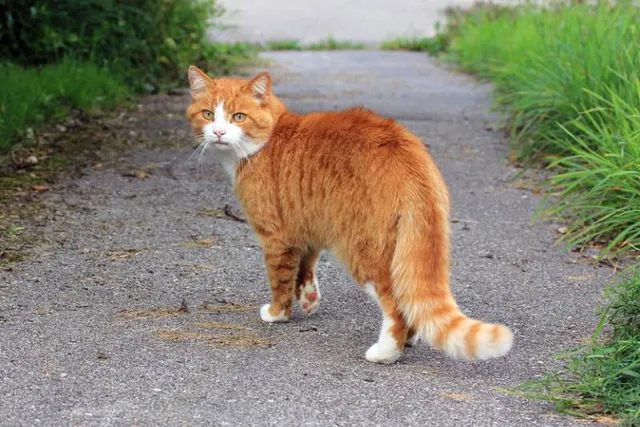
Although outdoor cats can have an extensive territory, they will stay centralized in one area. This area includes your home, where they know they have food, shelter, and clean water. If an outdoor-only cat goes missing, something in their environment has either impacted their ability to come home or their desire to come home.
If your cat has become injured, for example, they may find shelter near the area they were injured. If another animal has made your cat feel unsafe, like a new cat or dog, they may not want to come home for fear of confronting the other animal.
Indoor Cats

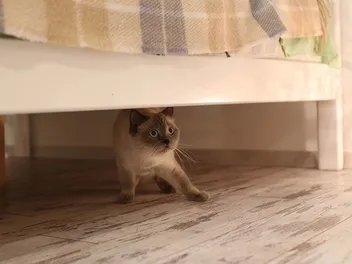
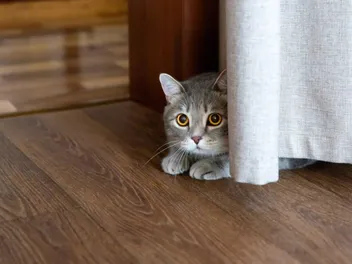
Most indoor cats are curious about the outdoors and may take the opportunity to slip through an open door or window. They will quickly look for a hiding place once outdoors, whether it’s underneath a car or behind some bushes.
Their instinct tells them to hide quietly, so it’s uncommon for an indoor-only cat to verbally respond when called once they are outside the comfort zone of the home. More often than not, indoor-only cats will take the first hiding place they see and rarely wander too far from the house within the first few minutes or hours.

How Temperament Impacts Behavior
Your cat’s general temperament and whether or not they’re indoors or outdoors tends to impact their actions once they’re lost or displaced. Inherently, cats are territorial, and when in an unfamiliar territory (which is what they encounter when lost), their temperament tends to predict their behavior.
Fearful
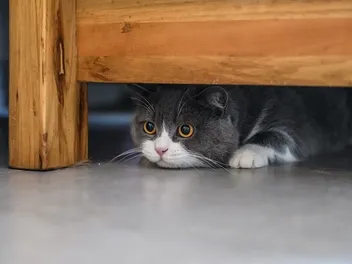
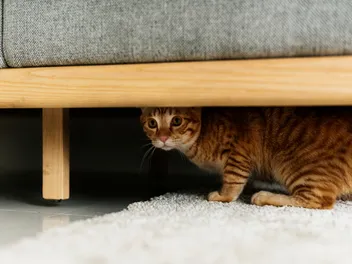
For most cats, fear is the emotion that tends to take the driver’s seat when they find themselves lost or displaced. It also seems to be the dominant emotion if an outdoor cat suddenly finds themselves injured or attacked by anything they perceive as a threat. Cats that are generally timid or shy can be tricky to find and catch. Such cats will often hide in the first available secluded spot they can find. They won’t meow and are generally very quiet.
In a study of cats that went missing 1, it was found that the average distance the lost cat would travel was around 50 meters from their house. Therefore, if your cat is hiding out of fear (which is highly likely), it’s important to thoroughly check the immediate area around your home and property, including sheds, garages, underneath cars, in and behind bushes, and any other spaces a cat could fit. Remember that cats can fit in very small spaces.
Generally, frightened cats are often found in very close proximity to their house, and indoor cats venture for a lesser distance before going into hiding.

Cautious
Initially, cautious cats will respond similarly to fearful cats, finding a nearby hiding place and freezing in fear. However, after some time, they may begin to wander, often hiding as they go, and therefore may not be in the same spot forever. The good news is that barring an inability to return home, they will often return to the area they went missing from. They will generally continue to hide but may meow or come out of hiding once they see or hear their owner.
These cats may be willing to leave their hiding place within the first couple of hours of going missing. Sometimes, they will continue to hide until they become desperate for food or water. This can unfortunately lead to disastrous outcomes for some of them, as they become increasingly more likely to develop health issues or get attacked by predators when they venture out to find food.
Aloof
Aloof felines are relatively indifferent to people, especially strangers. They may show affectionate tendencies toward people they are comfortable with but are likely to ignore strangers. Their initial response to getting lost will likely be to hide, but they will begin wandering shortly afterward. Door-to-door search efforts may be beneficial since someone in the area may have seen your cat wandering.
These cats sometimes come home on their own, too. Some will return to the door or window they went missing from and begin scratching or meowing to be let back in. Although aloof, they are not generally fearful cats, so they are more likely to approach people for help if they are missing.

Curious
Unlike the other three temperaments, curious cats may or may not initially hide when they become lost. Sometimes, they will immediately begin exploring a new area. Door-to-door searches can be beneficial since they are unlikely to hide as they wander. A broad search area may be necessary, and you should still check in all the hiding places you come across, just in case the cat becomes spooked by something.
While a curious cat may respond to being called, don’t expect it. Their curious nature means they may be overwhelmed by the new sights, smells, and sounds they are experiencing, which can lead to a lack of desire or ability to respond. In the study mentioned earlier 2, it was found that curious cats are often retrieved from a neighbor’s house, as their curiosity often leads them to explore other houses in the vicinity.

In Conclusion
One of the top mistakes people make when their cat goes missing is giving up too quickly. It can be discouraging when you can't find your cat, but finding a lost cat can be a challenge. They are great at finding unusual hiding places and may not be willing to come out when called or spotted. It can be difficult to catch a scared cat, and even the most confident feline may become very fearful in a new environment.
When searching for your cat, knowing their personality can help predict their actions and possibly give some clues as to where your cat might be. Ultimately though, if it’s taking too long to find your cat, don’t be afraid to ask for help from your neighbors, shelters, or other animal rescue organizations.
Featured Image Credit: Murat An, Shutterstock
Expert cat care, straight to your inbox
News, insights, and useful advice, delivered to you.

No spam — unsubscribe anytime.
By signing up, you agree to our Terms & Conditions and Privacy & Cookies Policy.
How useful was this post?
Click a star to rate. You can leave written feedback afterwards. (We read all feedback.)
Brooke Billingsley, a former veterinary assistant for nine years, became a nurse in 2013. She lives in Arkansas with her boyfriend of five years, surrounded by her beloved pets: three dogs, two cats, five fish, and two snails. Brooke has a soft spot for special needs animals, caring for a three-legged senior dog and a widely known cat with acromegaly and cerebellar hypoplasia. She has developed a keen interest in fish keeping and is always learning how to provide the best environment for her aquatic pets. In addition to her passion for animals, Brooke enjoys gardening and maintains a vegetable garden during the summer. She stays active with yoga and received her 200-hour yoga teacher certification in 2020. Brooke also hosts a podcast that delves into folklore and myth, dedicating her spare time to research and writing. She embraces the philosophy that every day is an opportunity for learning and growth, continually working to acquire new skills and knowledge.