Laser Declawing Your Cat - Vet-Reviewed Facts & Considerations


In this article
Veterinary professionals and reputable veterinary and animal welfare organizations, such as the American Veterinary Medical Association and the American Society for the Prevention of Cruelty to Animals, have released statements against cat declawing if done for the purpose of managing natural cat scratching behavior. There are only a few instances when declawing may be discussed or considered, like in the case of medical health issues affecting a claw or paw.
The ASPCA statement also considers declawing as the last resort in cases where “all behavioral and environmental alternatives have been fully explored, have proven to be ineffective, and the cat is at grave risk of euthanasia.” In Canada, parts of the United States, and much of Europe, declawing is illegal, no matter the method. Several states and cities, including New York and Los Angeles, have anti-declawing laws.
Fortunately, the percentage of people who would even consider a declaw of their cats is dwindling due to growing awareness and education in the field of animal welfare and ethical concerns regarding this harmful procedure, both on cats’ physical health, their ability to express their natural behavior, and their quality of life.
Some people may still wonder if laser declawing is more suitable as a surgical method, as there may be less postoperative complications, but the effect is the same. Laser declawing as a method that should only be considered for cats with paw or claw health issues, such as tumors, degloving traumatic tissue injuries, or large non-healing wounds.

Why Is Declawing Illegal in Many Countries Around the World?
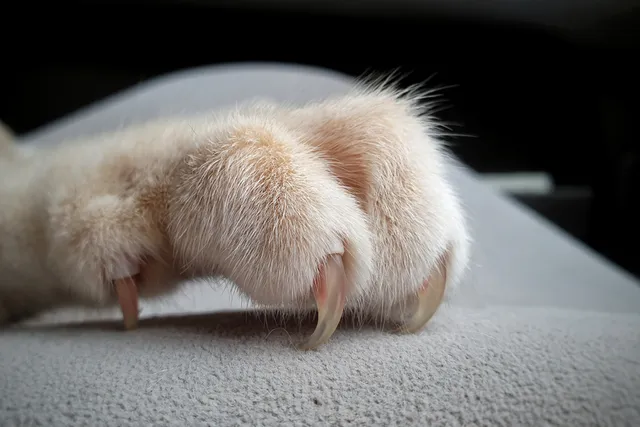
Declawing refers to surgical removal of the cat’s last phalanx bones that contain the claw, which correspond to human knuckles. Traditional surgical declawing methods use a scalpel to remove the very last segment of your cat’s toe bones, where the claws are located. The wounds are then closed using stitches and sometimes surgical glue. The cat’s feet may be bandaged throughout the recovery.
This surgery should only be considered as a last resort, as stated by the ASPCA, and for cats with medical issues affecting a certain toe. The same applies for the laser method of declawing.
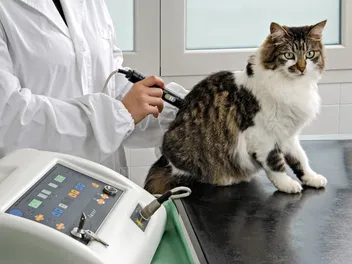
Lasers have been used instead of scalpels for surgeries in pets and humans for decades. This method uses a laser beam to cut through the bone and remove the cat’s claws. Fewer complications arise from laser declawing surgery in terms of postoperative complications, bone remnants, and claw regrowth.1 The laser cauterizes the incision, which reduces the likelihood of bleeding and inflammation, but there is no significant difference between this and other methods long term.
Because the laser is more precise than a scalpel, this method may reduce swelling during recovery. This procedure may be used if a cat has a tumor on their claw or paw that needs surgical removal, they have a large or non-healing wound, there is a complicated fracture where repair cannot be pursued for any reason, or there is a degloving injury, often associated with severe trauma or a road traffic accident.

Why Is Declawing Harmful?
Many animal welfare organizations and veterinary professionals agree that this surgery is not justified and ethical if performed for the sake of human convenience because it provides absolutely no benefit for cats.2 Declawing causes cats pain and discomfort with lifelong harmful effects, taking away their unique ability to use their claws to exhibit normal cat scratching behavior, mark their territory, scratch themselves, knead, grasp surfaces and objects, stretch their muscles, and so much more. The surgery can only be justified as a way of treating one of the previously listed health issues.
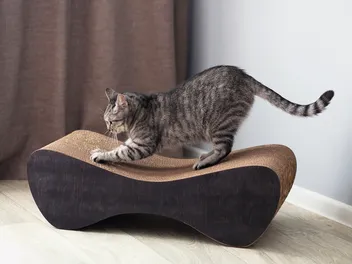
Cat behaviorists suggest keeping your cat from clawing inappropriately by training your pet to scratch only where you want them to. Providing a variety of scratching mats and posts can redirect this behavior and preserve your furniture, carpets, and walls. Teaching your cat not to use their claws during play requires time investment, but cats are quick learners.
Declawed cats have fewer natural defenses against predators. A declawed cat should never be let outside because they won’t be able to defend themselves from other animals. For indoor cats, being unable to use their claws means they may be more likely to attack with their teeth rather than swat with their claws. Cat bites pose more of a risk to people and other pets because of the naturally occurring bacteria present in their mouths.
Using the litter box may be painful for declawed cats. Normally, cats enjoy pawing around in their boxes after using them. Their instincts tell them to move dirt around the area where they relieve themselves to cover evidence of their presence. The gritty clay of most cat litter can be uncomfortable against the toe tips where their claws used to be. This discomfort can lead to cats using other surfaces as their personal bathroom.
Conclusion
If your cat is scratching the furniture in your home, please speak to your vet and a feline behaviorist about ways to manage this natural cat behavior. It may be a question of providing them with more appropriate scratching posts, ensuring adequate environmental enrichment, plenty of exercise, and mental stimulation on a daily basis. Declawing is an outdated and harmful practice that is fortunately becoming illegal in a growing number of countries around the world, as well as states and cities in the US, due to the recognized harmful effects it has on the cat’s well-being, health, and quality of life.
There are various training methods based on positive reinforcement and alternatives that are successful at managing excessive scratching behavior in most cats, in comparison to such an irreversible and mutilating procedure like declawing. We hope we have shed some light on this difficult topic, have raised awareness about this harmful procedure, and have shown cat owners that there are safer and more ethical ways to manage their cat’s scratching behavior without any risks for your kitty and their lifelong health and happiness.
Featured Image Credit: RJ22, Shutterstock
Expert cat care, straight to your inbox
News, insights, and useful advice, delivered to you.

No spam — unsubscribe anytime.
By signing up, you agree to our Terms & Conditions and Privacy & Cookies Policy.
How useful was this post?
Click a star to rate. You can leave written feedback afterwards. (We read all feedback.)
Christian started writing for a local newspaper as a teenager, and he's been involved in the publishing industry for most of his adult life. Combining his love of writing with a passion for animals, he is currently the Director of Editorial at Pangolia and the Editor-in-Chief at Catster.
Christian lives in the Philippines with his wife, son, and four rescue cats: Trixie, Chloe, Sparky, and Chopper.