9 Ways to Keep Cats out of a Crib: Easy & Humane
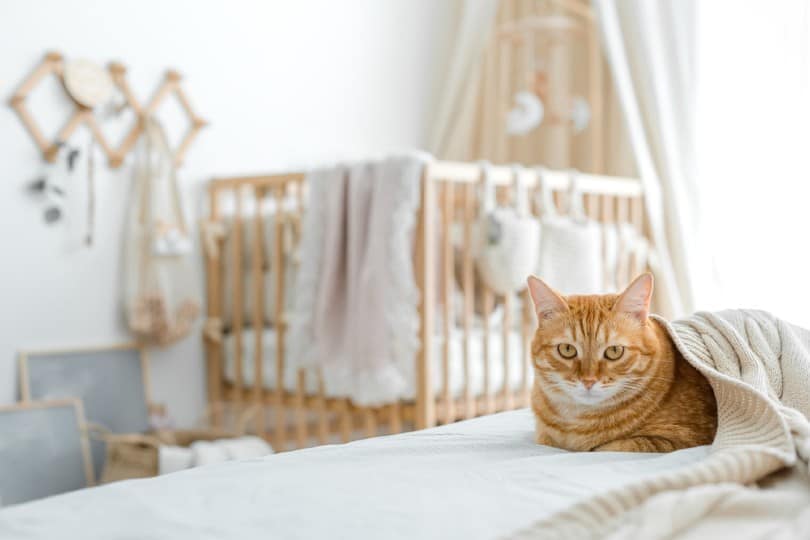
If you or someone in your family has recently had a baby, you are probably looking for ways to keep your cat out of the crib. We love our cats, but they can present a health risk to a newborn baby. Cats can make it difficult to breathe, and they can also carry diseases that babies don't have the immunity to fight. There is also the danger that the cat can scratch the baby, no matter how gentle they are. If the cat decides to walk on the baby, they can injure them. The best bet is to prevent the cat from getting into the crib altogether.
If your cat is as stubborn as ours, you know that it will be no easy task. If you are interested in learning some tricks, keep reading while we go over several methods that you can use to keep your cat out of a crib.

The 9 Ways to Keep Your Cat Out Of Crib
1. Set Up the Crib Early
Setting up the crib ahead of time will give you time to train your cat to stay out. The earlier you get it, the more time you will have, so don't waste any time preparing. Once you set the crib up, you can watch how your cat reacts to it, but more importantly, you'll see how they attempt to get inside. This can give you insight that you can use to prevent your cat from getting in when the baby arrives.
2. Keep the Crib Away From Furniture
If you keep the crib near the bed or a tall bookshelf, your cat will be able to use those items as a launchpad to jump into the crib. This momentum can injure a newborn. Look around the room as you're choosing your spot and try to find an area away from other furniture. It's not always possible, but it can be a big help.
3. Redirection
You can try to place a comfortable bed that your cat can use close to the crib. With any luck, your cat will see the bed when they go to jump in the crib and choose the bed instead. Admittedly, this is more of a long shot, and it's unlikely to work every time, but it can help, so it's worth a try.
Alternatively, if you want to surprise your cat with something cool, check out the Hepper Hi-Lo Cat Scratcher. It's not just a scratcher; it's a piece of modern furniture that your cat can play on. It's got a curvy design that's perfect for stretching and moving, and it's built tough with strong birch plywood and thick B-flute cardboard. You can adjust it to three different heights, which keeps cats entertained. Plus, it won't break the bank! Our cats love it, and we do too.

- Premium Materials - Hepper's cardboard scratcher is made with dense, B-flute cardboard, and a metal core. Encased in a 1/2" plywood frame with gloss coating. Stable and beautiful, use after use
- High, Low and Lower - A single cat scratch pad won't keep your cat engaged. 3 unique positions keeps them coming back, and back, and back again. Finally, something to get them away from the couch!
- Activates Muscles - The Hi Lo isn't just a cat nail file to stop the chief cat couch scratcher. The deep cat scratcher wave encourages maximum musculoskeletal activation for a healthier workout
At Catster, we’ve admired Hepper for many years, and decided to take a controlling ownership interest, so that we could benefit from the outstanding designs of this cool cat company!
4. Light Scolding
If you find your cat inside the crib, immediately take them out and give them a firm "no" before placing the cat in a place they're allowed to be, like the comfortable bed we mentioned in the last step. Be consistent with immediately taking the cat out of the crib, saying "no" and placing the cat in a preferred area of the home. This training period can take a while, so be patient and start early.
5. Aluminum Foil
Before the baby arrives, if the earlier steps are not working, you can try to make the crib less comfortable for the cat when they jump in. Aluminum foil is noisy, and most cats do not like it. You can put a layer of aluminum foil over the mattress, and there is a good chance that the cat will quickly jump back out if they jump in. The aluminum foil will also help alert you that your cat is in the crib so you can react quicker. It usually doesn't take too many attempts before the cat quits jumping on the foil, so this can be an effective method for keeping the cat out of the crib.

6. Double-Sided Tape
The double-sided tape method is similar to the previous method. Just replace the foil with tape. Cats hate to walk on sticky things, and they will quickly jump out of the crib if it covers the mattress. This method is effective because your can won't jump in after they learn about the tape, and it's also much quieter than the aluminum, though you might not be aware of what is going on if the crib is in the next room.
7. Use a Screen Door
Most pet owners know that cats hate being banned from an area of the home and will often scratch at the floor to get in and can also become vocal. A screen door can let them see what's going on when the baby arrives so they can feel part of the action while remaining outside of the room. In many cases, this can help alleviate the cat’s angst, so they don't scratch at the floor.

8. Let Your Cat See the Baby
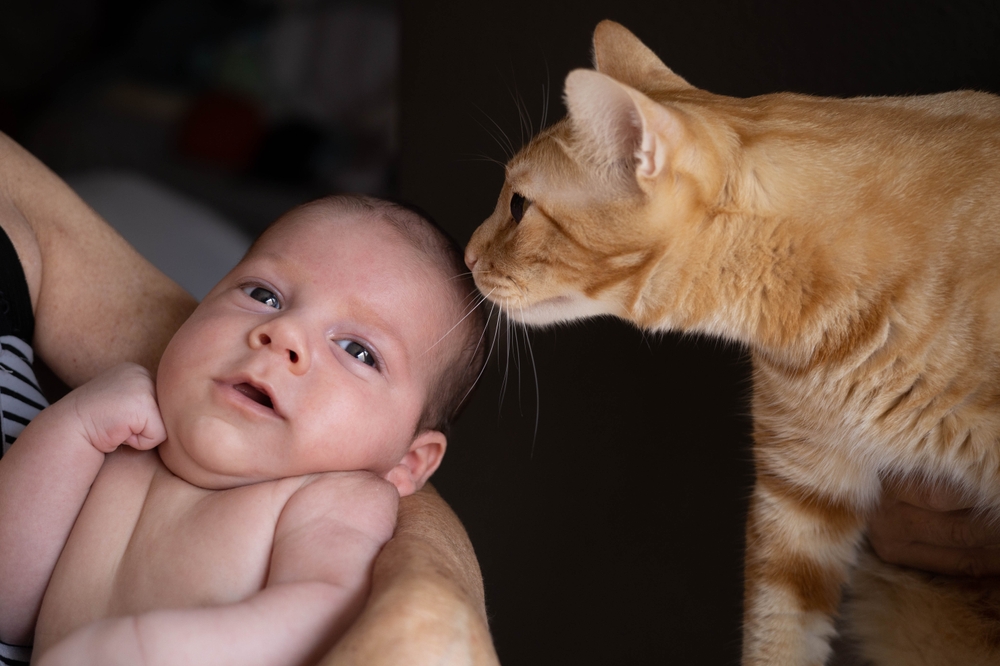
Once the baby arrives, you can help alleviate the cat's curiosity by holding them while they look the new family member over. Cats are intelligent animals and will likely sense the vulnerability of the child and leave them alone.
9. Close The Door
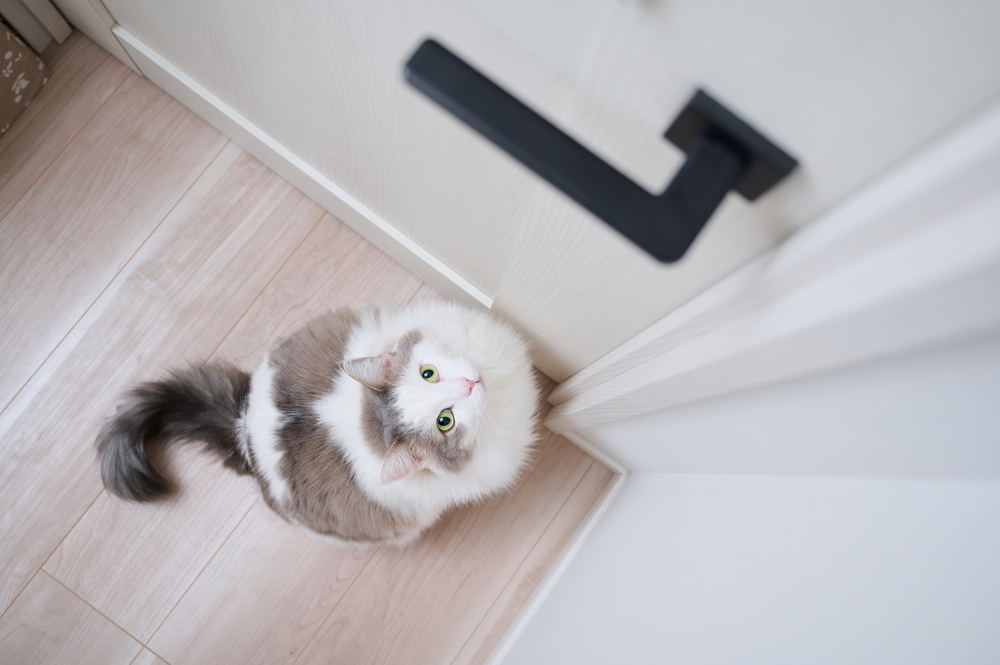
If your cat intends to get into the crib once the baby arrives, you will need to keep the door closed so the cat can't enter the room. Many experts recommend keeping the cat out of the room anyway because they can put a lot of hair and dander into the air even if they don't get into the crib.

The 3 Things to Avoid
1. Getting Too Angry
If you get too angry and yell at the cat, they are unlikely to understand what is wrong. The result can be a cat that develops more behavior problems and continues to jump into the crib.
2. Sonic Devices
There are several commercial sonic devices that you can purchase that produce a high-pitched whistle, like a dog whistle, that can discourage cats from bad behavior. The idea is that when the cat behaves improperly, you push a button on the device, and it plays a whistle that you can't hear but the cat can, and it causes your cat to retreat. The problem with these devices is that they don't work on all cats, and since you can't hear them, you have no idea if you are causing discomfort for your cat.
3. Barring the Cat
Cats are territorial animals, and if there is something new in their territory, they will not rest until they inspect the area. Barring the cat from the area will only cause them to be more curious, and since cats are nocturnal, they will likely find a time to investigate when you are not looking.
Summary
We recommend purchasing your crib as early as you can in order to have as much time as possible to train your cat to stay out. We found the aluminum foil to work well, and it's much less costly than double-sided tape, which also works well. Most of our cats would leap out the first time and didn't try again. Even our stubborn cats quit after a few tries, and the rattling aluminum would alert us to their behavior, so we could remove them, say "no," and place them in a suitable location. If you can't guarantee that the cat will not get into the crib, it's best to keep the door closed, especially when the baby is still an infant.
We hope you have enjoyed reading over this list and found a few ideas you haven't tried before. If we have helped make a safer environment for your newborn baby, please share these nine ways to keep cats out of a crib on Facebook and Twitter.
You might also like:
Featured Image Credit: Nikita Dukhnik, Shutterstock

Expert cat care, straight to your inbox
Vet-reviewed advice, behavior tips, and the best of Catster. Free, and you can unsubscribe anytime.
By signing up, you agree to our Terms & Conditions and Privacy & Cookies Policy.

Christian started writing for a local newspaper as a teenager, and he's been involved in the publishing industry for most of his adult life. Combining his love of writing with a passion for animals, he is currently the Director of Editorial at Pangolia and the Editor-in-Chief at Catster.
Christian lives in the Philippines with his wife, son, and four rescue cats: Trixie, Chloe, Sparky, and Chopper.
Join the conversation
Ask a question, share your story, or send private feedback.