Is TV Good for Cats? Enrichment or Risky?


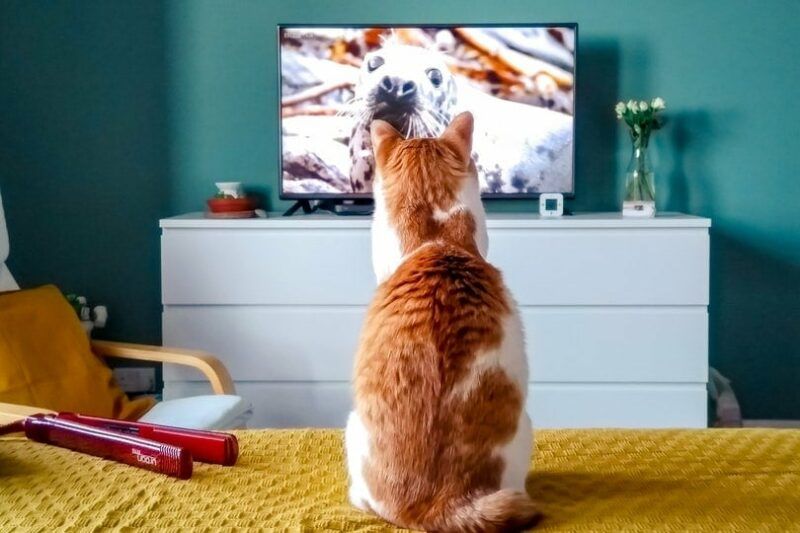
Search for "cat TV" on YouTube, and you'll find countless options for feline programming. One of the top results is an 8-hour video of mice playing, running around, and hiding in holes. The video has 15 million views and was only posted a year ago!
There is a huge demand for shows that cats can watch. But is it good for them? Or should you turn off the tube when the cat is in the room?
The answer is that watching TV can be a fun enrichment activity for cats. However, don't be disappointed if yours doesn't seem too interested. Keep reading to learn what cats see on TV, how to pick the right shows for them, and how to make sure that screen time is as safe and healthy as possible.

How Cats Process TV Shows
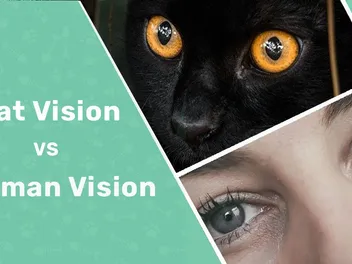
You and your cat may be watching the same show, but you do not see the same things. Cats perceive visual stimuli differently from humans, and it affects their TV experience:
1. TV Shows May Look Like Flickering Stills to Cats
For most people, TV shows and movies look like seamless, fluid videos. Technically, however, what you're seeing are still images rapidly flashing one after the other. This is called "refresh rate," and it's measured in hertz (Hz). It refers to how many still images, or frames, appear in one second of video.
Humans can process between 30 to 60 frames per second (FPS) (30 Hz to 60 Hz), and some experts believe that 60 Hz is the maximum refresh rate humans can perceive. The average TV shows and movies are shot at 24 Hz or 60 Hz to accommodate this.
The problem is that it's too slow for cats. Humans only need to process 20 frames per second to perceive a TV show as a moving image. Cats need at least 100 FPS to see the same series of images as a moving object.
In short, your cat probably thinks of your TV as a "flickering screen" instead of a moving video. It's also the reason why cats may enjoy watching newer TVs with a high refresh rate; it creates a better illusion of movement than older versions.

2. Cats Don't See in Technicolor
When it comes to picking shows for your cat, colorful ones such as children's cartoons may seem like a no-brainer. The problem is that while cats can see colors, they do so at a lesser intensity and range than humans.
Cats only have two cone photopigments, compared to the three that humans have. Photopigments are what allow the eyes to detect colors, and the fewer photopigments cats have, the fewer colors they can distinguish. That's why cats see with a muted color palette, one with fewer vibrant hues than ours.
As a result, cats who like watching TV may prefer naturalistic images with a limited color palette.
3. Cats Have Excellent Low-Light Vision
The other thing to consider when selecting TV shows for your feline friend is that cats have very good night vision. They're able to detect light levels up to six times lower than we can, which means they'll be able to easily see the screen in a dimly-lit room. Therefore, what you see as a comfortable room with a faint glow may be too bright for your cat.

4. Cats Are Extra Sensitive to Sound
Human ears pale in comparison to a cat's sense of hearing. As predators, cats have evolved to be able to detect subtle sounds, such as birds chirping or mice scurrying, from far away. So when it comes to watching TV, what seems like "normal" volume to us may actually sound deafening or uncomfortable to cats.
How to Keep TV Time Safe & Fun for Your Kitty
Since cats experience TVs differently from humans, it's our job to make sure it's a safe, positive, and healthy experience for our furry friends. Use these tips:
Secure the TV
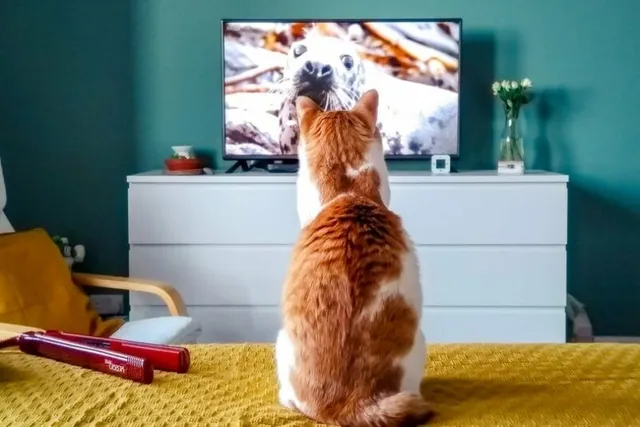
Cats are unable to distinguish between what's real and what's not when it comes to TV shows. So when they see a mouse scurrying across the screen, they may attempt to catch it!
In fact, this is the greatest danger when it comes to watching cats watch TV. They may try to swat, pounce, and dig at whatever's on the screen. This may cause the TV to fall off its stand or topple over, which can be very dangerous for your cat. To prevent this from happening, make sure the TV is securely fastened to the wall or to a sturdy stand.

Keep the Volume Low
As we mentioned before, cats are incredibly sensitive to sound. To protect their ears, make sure you keep the volume at a level that's comfortable and comfortable - and that's going to be much lower than what you're used to.
Offer Your Cat Other Enrichment Activities Besides TV
It may be tempting to just keep the TV on when you leave for work, but watching TV is never going to offer long-term, meaningful stimulation to your cat. They do not understand the concept of characterization, plot, and story development, so they won't gain much from it.
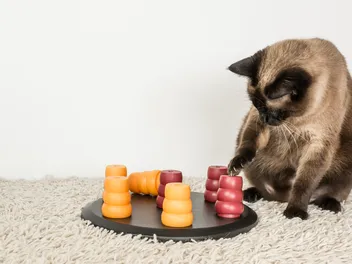
Instead, make sure to offer your cat plenty of other enrichment activities, such as play sessions, interactive toys, and puzzles. This will provide them with more mental and physical exercise while strengthening the bond between you two.

Conclusion
TV can be good for cats, but only as one of the many enrichment activities that occupy their daily life. As with anything else, moderation is key when it comes to watching TV, including frequency, volume, and content.
As for what kind of shows to put on for your feline friend, we recommend keeping it as natural as possible. Stick to nature scenes, and when in doubt, simply type "cat TV" on YouTube. You will be surprised by how many shows out there are designed just for cats!
Sources
Featured Image Credit: SnacksInTheBackpack, Pexels
Expert cat care, straight to your inbox
News, insights, and useful advice, delivered to you.

No spam — unsubscribe anytime.
By signing up, you agree to our Terms & Conditions and Privacy & Cookies Policy.
How useful was this post?
Click a star to rate. You can leave written feedback afterwards. (We read all feedback.)
Christian started writing for a local newspaper as a teenager, and he's been involved in the publishing industry for most of his adult life. Combining his love of writing with a passion for animals, he is currently the Director of Editorial at Pangolia and the Editor-in-Chief at Catster.
Christian lives in the Philippines with his wife, son, and four rescue cats: Trixie, Chloe, Sparky, and Chopper.