Is Rabies Common in Cats? Vet Approved Facts & Stats



Just reading or hearing the word rabies is enough to strike terror into the hearts of most cat lovers. It’s a horrible disease that almost always results in death if left untreated. The frequency of rabies in cats varies greatly from country to country, with the condition having never existed in some regions, eradicated in others, and endemic in many places.
In the United States, the number of cats catching rabies is relatively low: about 250 cases per year. For context, there are probably around 32 million feral cats and 58 million pet cats in the country. Thanks in part to the rise in feline vaccinations, it’s been more than 40 years since a cat in the United States has transmitted rabies to a human. Read on for more information about rabies, how it’s most commonly spread, and where it’s found around the world.

What Is Rabies?
Rabies is a viral disease that spreads when a mammal comes into contact with the saliva of an infected animal. It’s most often transmitted through bites and scratches. It’s extremely uncommon for the disease to spread if an infected cat or dog licks you or your cat. Nor is the disease passed through coming into contact with airborne droplets containing the virus. It’s also not transmissible through bodily fluids such as blood, urine, or feces. Bites and scratches are the two most common modes of transmission.

How Does the Disease Spread in the Body?
All mammals can contract and spread rabies. The way it impacts the body is the same, whether you’re talking about cats, dogs, monkeys, or humans. The disease enters the body through a bite or scratch and then travels to the closest nerves.
From there, it moves through the nerves toward the newly infected individual’s spinal column, where it speeds towards the brain. This is called the incubation period, and it lasts from 3 to 12 weeks in humans but can be much shorter depending on the animal. Individuals are rarely capable of spreading the virus during this initial stage.
Once in the brain, however, the virus begins to multiply significantly and quickly reaches the salivary glands. Infected individuals start showing clinical signs of the disease within days, and many become infectious before becoming visibly sick. Most die within 7 days after the virus begins ravaging their brain.
What Are the Symptoms of Rabies?
In the initial stages, it’s common for humans infected with the virus to feel a tingling or numbness around the bite site. Itching, weakness, flu-like exhaustion, and headaches are also common. When the disease reaches the brain, acute symptoms such as severe anxiety, agitation, fear of water, confusion, insomnia, and delirium kick in.
After a person enters the acute phase of the disease, recovery is essentially impossible. According to the CDC, there have been fewer than 20 documented cases of individuals recovering after the rabies virus reaches the brain.
Symptoms often differ when it comes to animals. Cats sometimes have fevers and generally appear out of sorts in the first 2 to 4 days after contracting the disease. The disease tends to progress quickly in kitties, with symptoms such as seizures, paralysis, fear of water, drooling, and behavioral changes kicking in rather quickly, followed by coma and death. Death is most often preceded by either paralysis or extreme uncontrolled seizures.
Cats demonstrate one of two clinical clusters after a rabies infection: paralytic or furious. Cats with “furious” clinical symptoms typically become highly aggressive and often engage in indiscriminate attacks or become provoked by things that aren’t there. Those with “paralytic” clinical symptoms lose control over their muscles, leading to paralysis, the inability to breathe or swallow, and hypersalivation.

How Is Rabies Transmitted if It’s so Uncommon?
Rabies is not found very often in cats and dogs in the United States, but it’s still relatively common in bats, raccoons, squirrels, skunks, and foxes. Most rabies cases now occur after a human or domestic animal comes into contact with a rabid wild animal, with 7 out of 10 human cases in the United States caused by bat bites.
The virus has been eradicated in places like Japan and most of Western Europe, and it’s never existed in Australia, New Zealand, Norway, or the Cook Islands.
Keep in mind, however, that the disease is far from uncommon in other places throughout the world. It’s a significant cause of death in Africa and certain parts of Asia. Approximately 95% of the cases in humans worldwide occur in those two regions.
It’s considered endemic in most African countries and several nations throughout the world, including Nepal, India, Belize, Burma, Afghanistan, Bolivia, Cambodia, Armenia, Russia, Azerbaijan, Bangladesh, Guyana, Belarus, Brazil, China, Pakistan, Colombia, Tajikistan, Cuba, Ecuador, Georgia, Guatemala, Haiti, Indonesia, Laos, Malaysia, Mongolia, Moldova, Peru, the Philippines, Sri Lanka, Turkey, Vietnam, and Venezuela.
Over 35,000 people die per year in Asia due to rabies, and almost 35% of those deaths occur in India. Around 21,476 people die every year in Africa after having been exposed to the virus, usually through contact with an infected dog.


Is the Disease Always Fatal?
Absolutely not. There are safe and effective vaccines for cats and humans that can keep your buddy safe if bitten or scratched by an infected animal. Without proper vaccinations or effective post-exposure prophylaxis, the disease has a whopping 99.9% fatality rate, making rabies one of the deadliest preventable diseases on the planet.
The human version of the vaccine requires three shots spaced one week and then approximately one month apart for optimal effectiveness. While you’ll still need treatment if you end up being bitten or scratched by a rabid animal or one suspected to be carrying the virus, being vaccinated increases your chances of survival and drastically limits any required further treatment.
Post-exposure prophylaxis (PEP) shots safely control the disease if administered quickly after exposure to the rabies virus. Any bites or scratches inflicted by a wild animal should be washed with hot water and soap for at least 5 minutes as an initial precaution that may limit virus transmission.
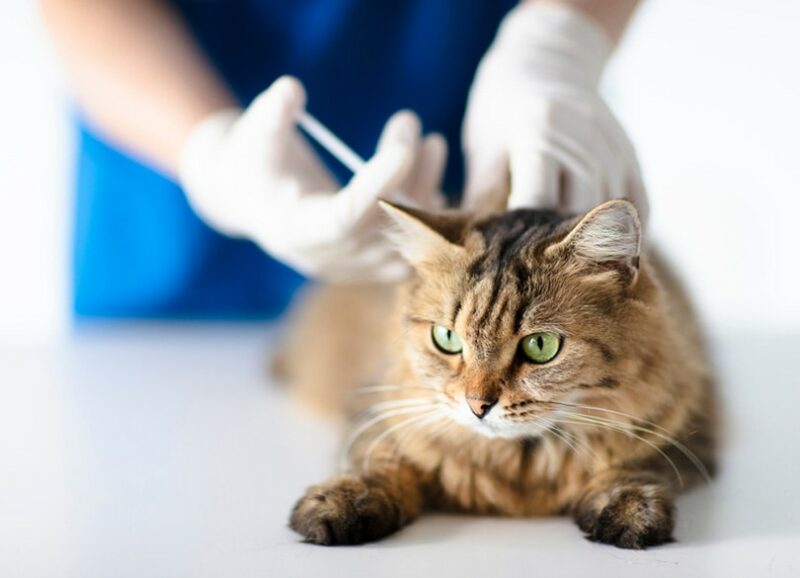
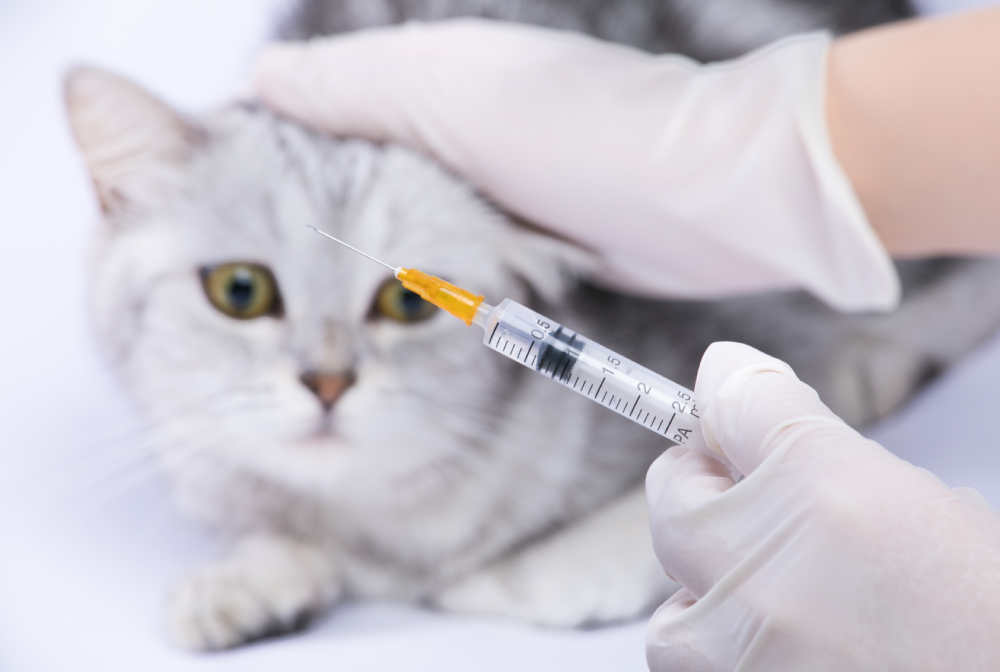
Thankfully, there are safe and effective feline rabies vaccinations available for your pet as well. The vaccine is part of the common core group of inoculations all kitties should get and is required by law almost everywhere in the United States. It’s extraordinarily good at protecting cats from the virus.

There are 1- and 3-year non-adjuvanted options available that are extremely well tolerated and cause very few side effects. If your vaccinated cat is bitten or scratched by a wild animal, contact a veterinarian immediately since your kitty may benefit from post-exposure prophylaxis.
Pet vaccination and the widespread availability of post-exposure prophylaxis have drastically decreased the fatality rate of this disease. In the 1900s, approximately 100 people per year died in the United States after rabies exposure. Since 1960, that number has dropped to around 2 per year. From 1960 to 2018, there were only 217 confirmed human rabies infections in the United States.
Almost all human fatalities occur because the individual failed to seek prompt medical care and virtually every one of the annual 250 feline rabies cases occurs in unvaccinated kitties.
Do Indoor Cats Need to Be Vaccinated?
Absolutely. Cats are consummate escape artists as anyone who’s spent more than 30 minutes with one of these furry Houdinis can attest! The biggest danger to any feline when it comes to rabies is coming into contact with a wild animal carrying the disease.
The CDC recommends that vaccinated cats bitten by a known rabid animal receive a booster shot and remain under strict observation at home for 45 days. Unvaccinated cats bitten by a known rabid animal, on the other hand, are subject to immediate euthanasia as post-exposure prophylaxis simply won’t work without prior inoculation.


Final Thoughts
While rabies is uncommon in cats, kitties carry the disease more often than dogs. However, the numbers for both animals remain thankfully low in the United States. Feline to human transmission almost never occurs, with bats being the most common source of human infections.
Safe and effective vaccinations exist for cats and for humans, although current guidelines only recommend human vaccinations for those who regularly work with wild animals or travel to a place where the virus is endemic. Remember that vaccinating your cat against rabies is one of the most important things you can do to keep your kitty and your fellow humans safe!
Sources
https://www.cdc.gov/rabies/location/usa/surveillance/domestic_animals.html
https://www.petmd.com/cat/care/what-you-need-know-about-rabies-vaccines-cats
https://avmajournals.avma.org/view/journals/javma/258/11/javma.258.11.1205.xml
https://www.petmd.com/cat/conditions/neurological/c_ct_rabies
https://www.petmd.com/cat/care/what-you-need-know-about-rabies-vaccines-cats
https://www.petmd.com/cat/conditions/neurological/c_ct_rabies
https://patient.info/travel-and-vaccinations/travel-vaccinations-leaflet/rabies-vaccine
https://www.cdc.gov/importation/bringing-an-animal-into-the-united-states/high-risk.html
https://www.licg.nl/katten/vaccinatie-van-uw-kat/#bijkomende-vaccinaties
https://www.rspcapetinsurance.org.au/pet-care/new-pet/about-pet-vaccinations
https://www.animallaw.info/content/rabies-vaccination-and-exemption-laws-dogs
https://vcahospitals.com/know-your-pet/vaccination-are-booster-vaccines-necessary-for-cats
https://www.cdc.gov/rabies/specific_groups/veterinarians/clinical_signs.html
http://publichealth.lacounty.gov/vet/rabiesmanual/Biting.htm
Featured Image Credit: Motortion Films, Shutterstock

Expert cat care, straight to your inbox
Vet-reviewed advice, behavior tips, and the best of Catster. Free, and you can unsubscribe anytime.
By signing up, you agree to our Terms & Conditions and Privacy & Cookies Policy.
Lorre Luther is a writer who is firmly convinced that cats are smarter than humans. She left her law career in the United States and moved to the Netherlands to follow her dream of becoming a writer. Lorre currently lives in Rotterdam, she enjoys traveling and greatly appreciates the beauty of nature. Lorre has a spot for animals and admires the intelligence of cats.
Join the conversation
Ask a question, share your story, or send private feedback.