How to Train a Cat to Stay Indoors: 7 Vet-Approved Tips


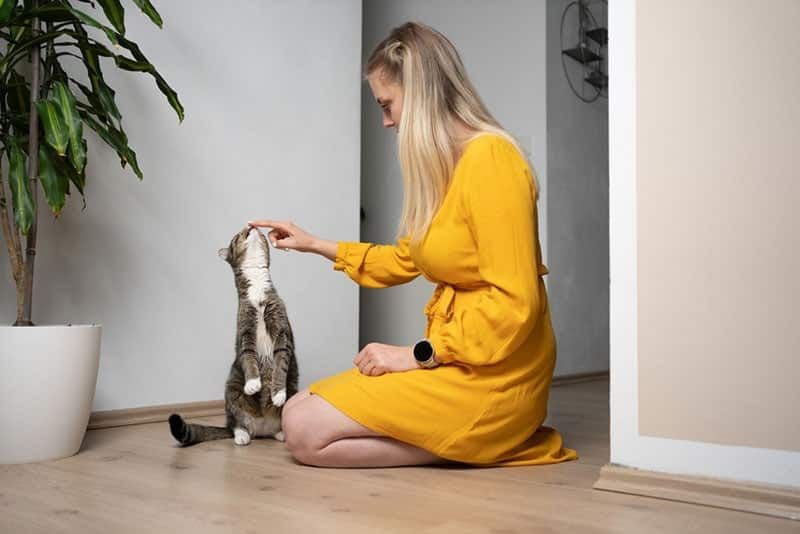
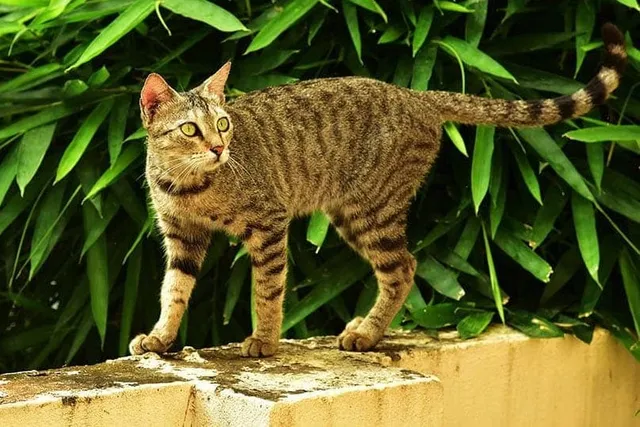
Of the over 160 million cats in the United States, roughly 30—80 million are unowned and roaming free1. Many cats with owners also live outdoors, at least part of the time. Outdoor cats pose a risk to wildlife and are subject to numerous dangers. Experts typically recommend that cats stay inside for their safety, but the process can be stressful. Here are seven vet-approved tips to help you train a cat to stay indoors.

The 7 Tips to Train a Cat to Stay Indoors
1. Make the Transition Gradually
Most cats will accept transitioning to life indoors better if you slowly get them used to the idea. For example, start by keeping them confined at night, which is the most dangerous time to be outside. Bring your cat inside during the day for meals or playtime, gradually increasing their time indoors. Be prepared for your cat to protest at first, scratching at the door, vocalizing, or trying to run back out. Stay consistent, however, and most cats will eventually accept staying inside.
2. Introduce Indoor Accessories Before the Transition
If your outdoor cat has never used a litter box, scratching post, automatic feeder, or any other indoor accessory, these unfamiliar items could cause unnecessary stress and make the transition harder. Begin training your outdoor cat to use a litter box and scratching post before you bring them inside.
Provide access to a litter box in a protected area and use treats or catnip to encourage your cat to use it. Allow your cat to smell and get used to their indoor bed or scratching post while they’re still living outside. Once they move indoors, these now-familiar items can make the cat feel more at home too.
We're quite fond of cardboard as a material in cat scratchers, which is why we love the Hepper Hi-Lo Cat Scratcher. Encased within a well-constructed, modern birch plywood frame, this scratcher is designed with both cats and their owners in mind. It offers three versatile configurations to keep your feline friend active and entertained while enticing them to fulfill their natural scratching instincts (and away from scratching things they shouldn't). For more details, click here!
At Catster, we’ve admired Hepper for many years, and decided to take a controlling ownership interest, so that we could benefit from the outstanding designs of this cool cat company!
3. Use the Weather to Your Advantage
If you live in an area with cold weather, take advantage of the drop in temperature as you train your cat to stay indoors. Cats love to be warm, meaning they’re more likely to accept staying inside when it’s cold outside. Offer your cat a nice, cozy bed inside when the weather outside is frigid. As your cat ventures indoors to escape the cold, they’ll naturally get used to staying behind closed doors. Hopefully, your outdoor cat has accepted the perks of life indoors by the time the weather warms up again.
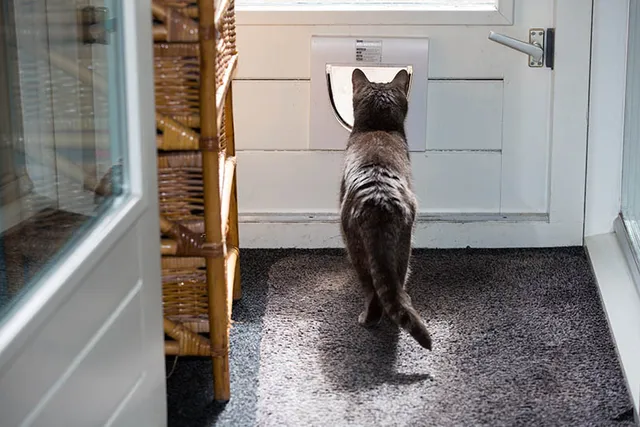
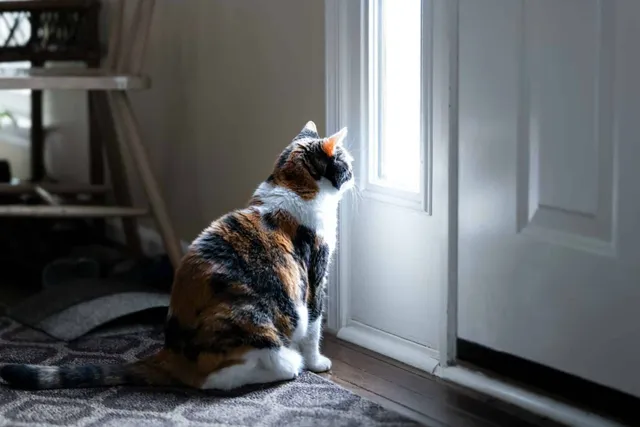
4. Distract Them From the Door
If your outdoor cat is constantly looking for an escape route once they make the move indoors, use distraction to train them not to run out the door. For example, keep treats near the door and toss one in the opposite direction for your cat to chase as you leave the house.
If you spot your cat dashing for the door, clap your hands or make another loud sound to get their attention. However, never yell angrily at your cat, hit, or kick them. These actions will only make your cat afraid of you and may inspire them to try harder to escape the house.

5. Make the Indoors Exciting
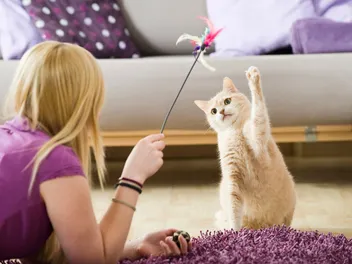
While you’ll never be able to provide the same space and stimulation inside that your outdoor cat previously enjoyed, you should still make it as entertaining as possible. Provide multiple toys for your cat, particularly those that allow them to use their hunting and stalking instincts.
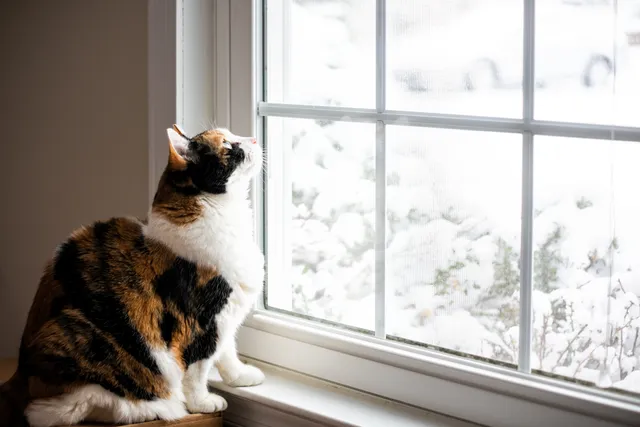
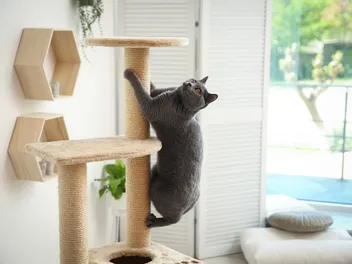
Add vertical spaces, such as cat trees, towers, or shelves, to allow your outdoor cat to climb and survey the environment as they would in trees outside. Ensure your cat has a comfortable spot near a window or patio door to enjoy views of the outdoors. Consider placing a bird feeder outside a window so your cat can observe wildlife as they used to do outside.
6. Provide Safe Outdoor Access
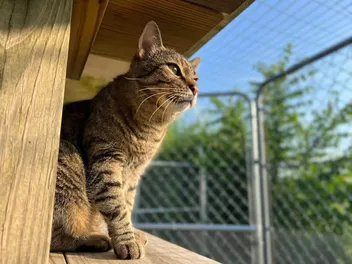
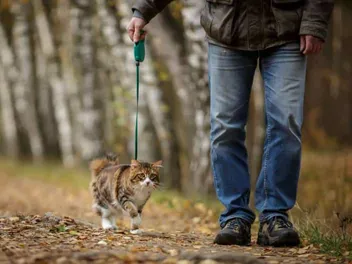
Consider allowing your cat limited, safe outdoor access to make the transition indoors easier. This might mean training your cat to walk on a leash. Another option is to buy or build a “catio” for your pet. Portable outdoor enclosures or cat fences are also available. Some cats may have a harder time accepting life indoors if they get any access outside. If you notice your cat seems more restless or unhappy inside with their limited trips outside, you may have to eliminate them entirely.
7. Know When to Ask for Help
If you’re struggling to train your cat to stay indoors, don’t be afraid to ask for help. A vet may be able to suggest other tips that can make the process easier. They could also refer you to a cat behavior specialist for expert assistance. Some cats may need behavioral modification techniques or even calming aids to help make the training process easier.
Why Should Cats Stay Indoors?
Vets generally recommend that cats be housed indoors when possible. This recommendation is to protect the cats and the local environment.
Predator cats kill billions of birds and small wildlife each year worldwide. This mass death harms the local ecosystem and has resulted in the extinction of several bird, reptile, and small mammal species. Outdoor cats also reduce available food sources for wild predators.
They pose a significant threat to wildlife, but living outdoors is even more dangerous for them. Studies show that outdoor cats have a shorter lifespan than indoor cats.
Outdoor cats are more exposed to viruses like feline leukemia and parasites like ticks that carry deadly diseases. They also risk falling victim to larger predators like coyotes and foxes, and fights among outdoor cats can lead to serious injuries.
Humans can also be deadly to outdoor cats. Getting hit by a car is a common danger for roaming cats, and some feral cats get poisoned or shot by humans.
Extreme heat and cold, intense storms, and natural disasters are other dangers to outdoor cats. Outdoor cats that aren’t spayed or neutered will >continue to breed and contribute to the overpopulation of stray cats.

Conclusion
Although training a previously outdoor-only cat to stay indoors can be tricky, these seven easy steps should help. Remember, living indoors is safest for your cat and the birds and squirrels. Sometimes, owners may consider turning an indoor cat into an outside one due to human allergies or kitty behavior issues. Given what we’ve learned about the danger outdoor cats face, consider a catio, and speak to your allergologist about other alternatives before you take this step.
See Also:
Sources
Featured Image Credit: Nils Jacobi, Shutterstock
Expert cat care, straight to your inbox
News, insights, and useful advice, delivered to you.

No spam — unsubscribe anytime.
By signing up, you agree to our Terms & Conditions and Privacy & Cookies Policy.
How useful was this post?
Click a star to rate. You can leave written feedback afterwards. (We read all feedback.)
Elizabeth Gray is a lifelong lover of all creatures great and small. She got her first cat at 5 years old and at 14, she started working for her local veterinarian. Elizabeth spent more than 20 years working as a veterinary nurse before stepping away to become a stay-at-home mom to her daughter. Now, she is excited to share her hard-earned knowledge (literally--she has scars) with our readers. Elizabeth lives in Iowa with her family, including her two fur kids, Linnard, a husky mix and Algernon, the worldʻs most patient cat. When not writing, she enjoys reading, watching all sports, and spending time outdoors with her family.