How to Prevent Insect Bites on Cats: 6 Useful Tips


In this article
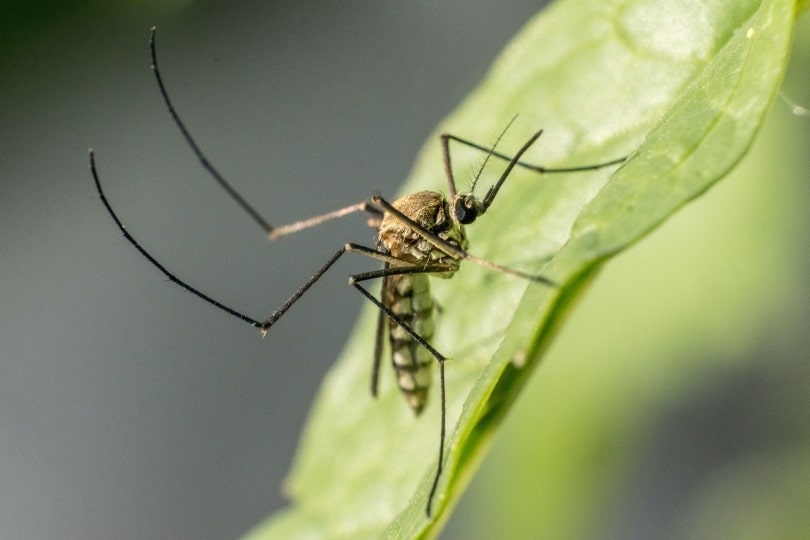
It stands to reason that if you have to worry about mosquito and other insect bites in the yard, you have to worry about them biting your feline pal. As with humans, mosquito bites can be harmful to your cat.
Not only do they irritate the skin, but your cat could also be allergic to the insects that bite them or contract one of the mosquito-borne illnesses. While mosquitoes play an ecological role as pollinators and a food source for wildlife, they still carry serious diseases that can be easily transmitted to your furry friend.
Luckily, there are a few ways that you can help prevent the insects from biting your cat.

How to Prevent Insect Bites on Cats
1. Reduce Insects in Your Yard and Garden
There are a couple of measures you can implement in your yard to both repel and reduce the number of troublesome insects like mosquitoes.
Firstly make use of natural repellants by growing insect repellant plants in your yard such as basil, catnip, lavender, and rosemary. Be careful to avoid any plants which are toxic for felines, this includes citronella. Try and attract mosquito-eating birds instead by providing bird feeders.
Cover or remove standing water from your property since it makes an ideal breeding ground for mosquitoes and can attract other insects. A large number of mosquitoes can be produced from eggs laid in even small amounts of stagnant water.
Some places to check and empty for standing water include the following.
2. Keep Your Cat Inside when Mosquitoes Are Most Active
Another way to keep your feline from being attacked by insects is to keep them inside when the mosquitoes are most active.
While different types of mosquitoes are most active during various times of the day, most species are active early in the morning and the first few hours of the evening. If you keep your cat inside during these hours, they’ll get bitten less, and you’ll have to worry less about them getting sick or having irritated skin from the bites.

3. Call in the Professionals
While there are several home remedies and natural repellents to keep your yard and garden mosquito-free so that your feline doesn’t get bitten excessively, you may want to consider having the yard area treated by a licensed professional to keep the insects at bay.
You can have a professional spray for insects at the beginning of the summer or whenever mosquitoes become active where you live. Make sure that a pet-safe yard mosquito spray is used but you should still keep your cat inside when the yard is being sprayed and for at least a few hours after to be safe. These sprays usually help prevent ticks as well.
4. Examine Entry Points in Your House
It’s not just possible for insects to bite your cat in the yard and garden. Mosquitoes can creep in through the doors, windows, and any cracks and crevices in your home. To keep the pests from entering your home, examine all the entry points that they can buzz in through.
When mosquito season begins, examine your screens on the doors and windows for snags, rips, or tiny holes, and repair or replace them to keep the mosquitoes out as much as possible. Nothing is foolproof when creating a barrier between your home and cats to prevent mosquitoes. However, you can do everything you can to keep them from making their way inside.
Make sure to also kill the mosquitoes you see inside your home.

5. Work to Prevent Heartworm Infection
Although the tips above will prevent mosquitoes from attacking your cat to a point, they aren’t foolproof, and the cat is still at risk of being bitten. That’s why it’s important to keep up with heartworm prevention medications.
Talk to your vet about the correct type and dosage of heartworm medicine to give your cat, and make sure you give it to your cat according to the dosage schedule. This is one of the most important preventative measures to protect your cat if mosquitoes are prevalent in your area.
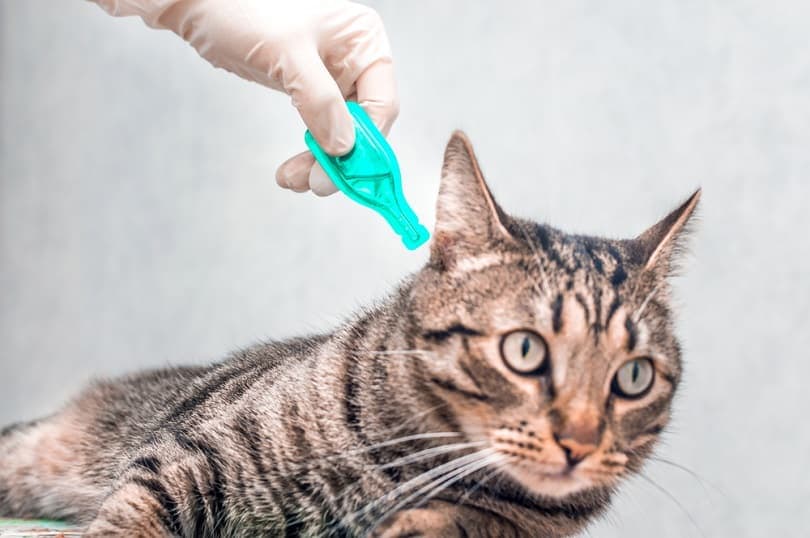
6. Use Veterinary-Approved Insect Repellents
If you choose to use an insect repellent make sure it’s safe for use on your cat and follow your vet’s directions. Some flea and tick preventatives may also be effective at repelling insects like mosquitoes.
Be aware that many dog (and human) insect repellents are extremely toxic to cats and must never be used.

Signs that A Mosquito Has Bitten Your Cat
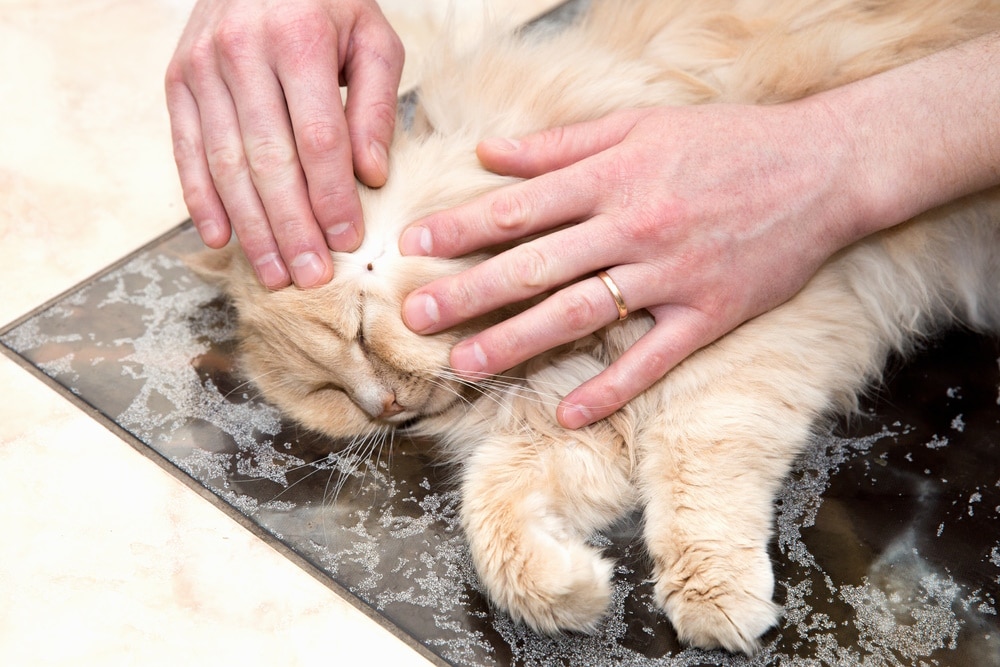
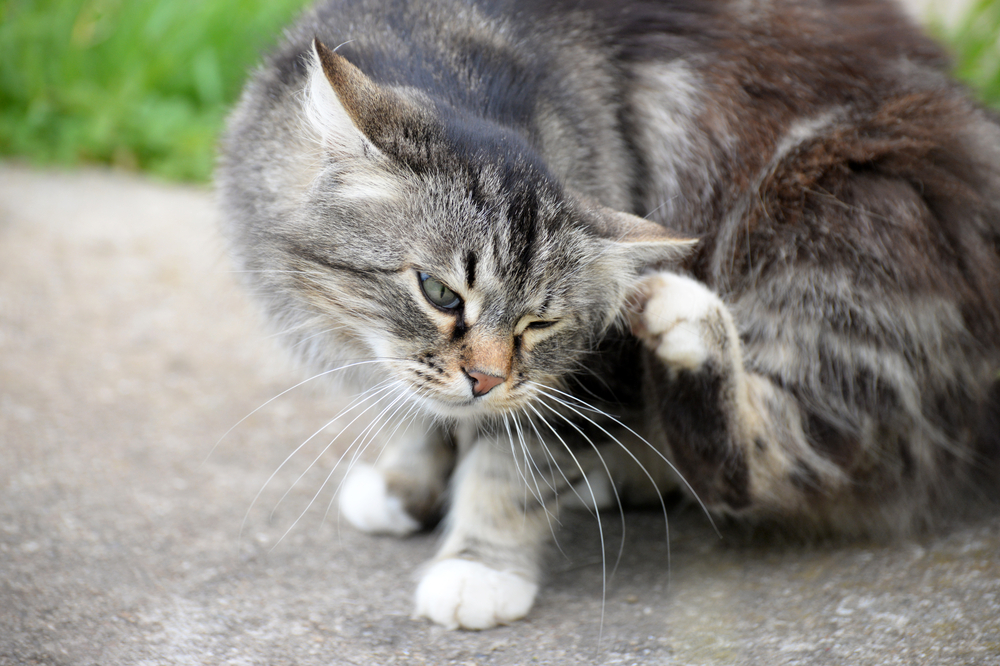
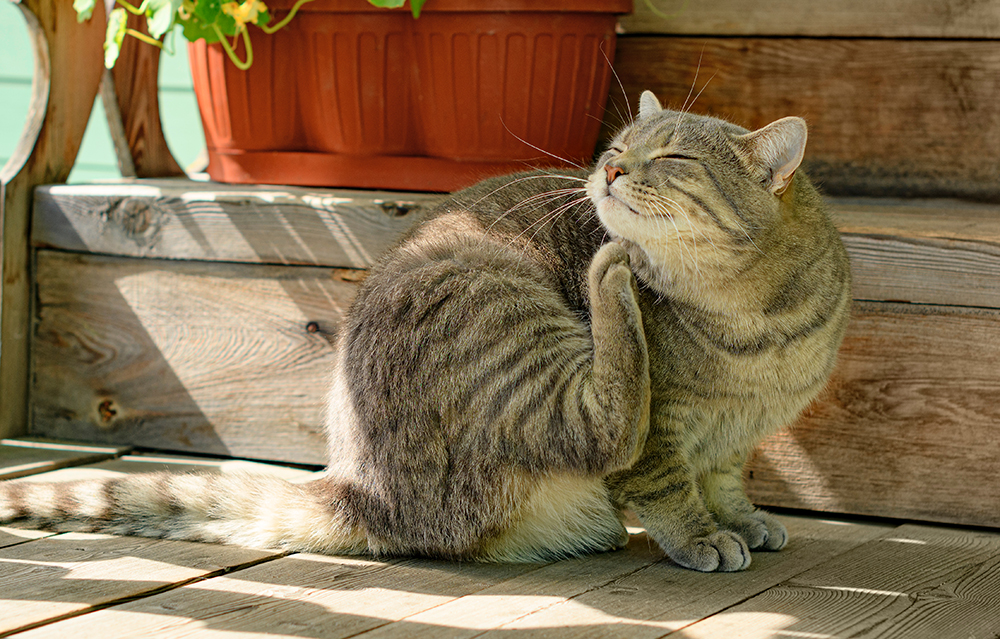
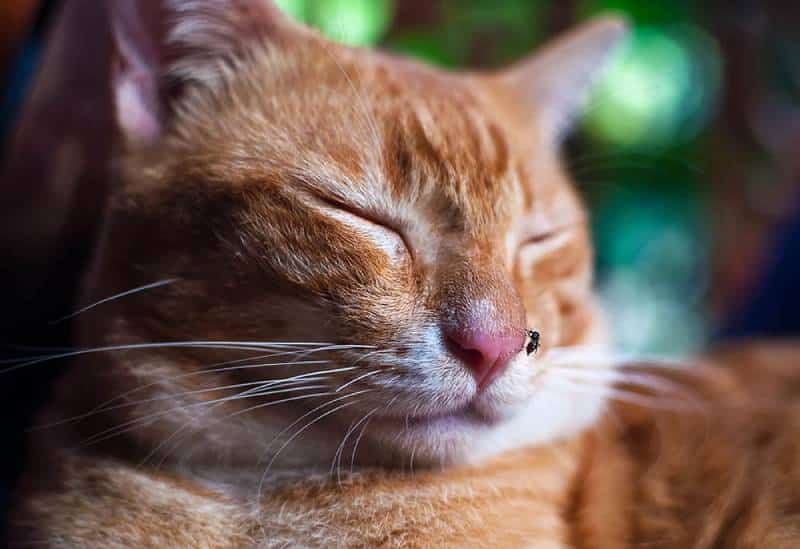
You might be wondering what the signs are that your cat has been bitten by a mosquito. Mosquitoes most commonly target exposed areas with thin hair cover, such as a cat’s nose and ears. The cat’s behavior can indicate they have been bitten, they will usually be itchy and will scratch or rub the area for relief.
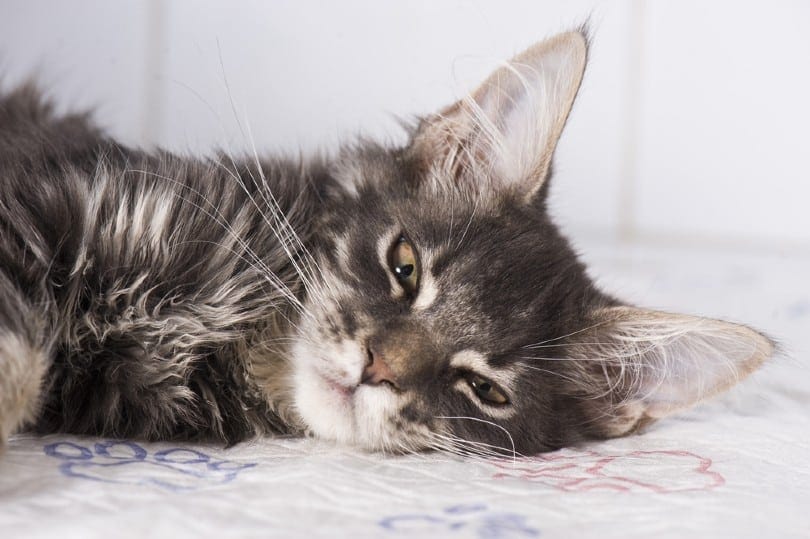
In most cases, the bite will irritate them for a brief period, and they’ll be fine in a couple of days. However, you must monitor your cat and the affected area. Some cats suffer from mosquito bite hypersensitivity, which is an allergic reaction caused by mosquito saliva. This can cause redness, swelling, crusting and ulceration in the affected areas, most commonly the nose and ears. Take your cat to the vet if your cat develops these signs.
Conclusion
Insects, particularly pesky mosquitoes, not only cause irritation when they bite your cat, but they can also transmit diseases and trigger allergic reactions. While the tips above should keep your cat from being bitten often, they won’t stop mosquitoes from biting your cat completely, so it’s essential to follow your vet’s advice and keep up with heartworm preventatives as necessary as well.
Follow the tips above and keep an eye on your cat for bites or signs that they have been bitten during mosquito season. If you feel your cat has had a reaction or become sick from a mosquito bite, contact your vet immediately for an examination.
Sources
Featured Image Credit: Irina Soboleva S, Shutterstock

Expert cat care, straight to your inbox
Vet-reviewed advice, behavior tips, and the best of Catster. Free, and you can unsubscribe anytime.
By signing up, you agree to our Terms & Conditions and Privacy & Cookies Policy.
Patricia is a pet writer and lifelong animal lover. She has two cats (Binx and Link) and one dog (Mystery). Binx was found as a kitten under her house and has been part of the family ever since! Patricia is also a published author under the pen name Skylar McKinzie. When she isn’t writing, Patricia enjoys volunteering at her local animal rescue.
Join the conversation
Ask a question, share your story, or send private feedback.