Get

In Your Inbox

Catster is reader-supported. When you buy via links on our site, we may earn an affiliate commission at no cost to you. Learn more.

How to Introduce a Hyper Dog to a Kitten: Vet-Reviewed Step-by-Step Guide


Share

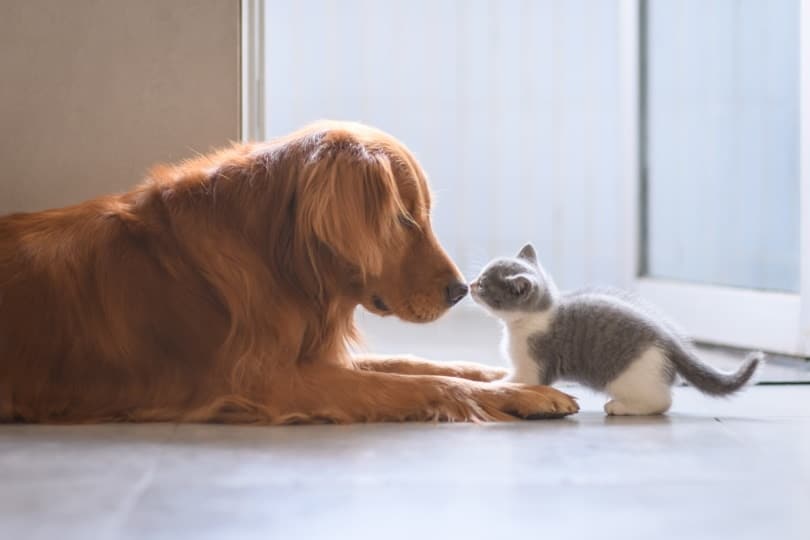
dog and kitten

Having a family full of furry friends can be a lot of fun if all the required precautions have been considered. When you want to introduce more than one species into the mix, things can be more complicated, even when considering introducing a kitten to a dog.

Dogs are wonderful pets, but they have different exercise requirements, energy levels, and body language than cats. Since they are usually also larger, they can hurt your kitten even without meaning to do so. There may even be times when they do want to chase or even hurt the cat due to the hunting instincts ingrained into their genetics, or due to competition for resources, such as food or toys.

However, if you really want to own both a cat and a dog, there are a few ways to introduce a kitten into the home safely and gradually.

divider 2 cats

What You Need to Know

When wanting to keep different species of pets that would otherwise not live together, it’s important to understand each animal’s character, temperament, exercise requirements, instinctual behavior, and body language. Their early life experiences, previous socialization, and cohabitation with other animals also plays a role in how they behave around other animals.

Despite living together in harmony for many years without any issues, pet owners need to be aware of the risks a dog may pose to your cat and the other way around. Even animals that get along very well may fall out through rough play, where the cat may scratch the dog’s eye badly or the dog may chase the cat or bite them if the cat shows interest in the dog’s toy or food bowl. They should always be supervised, and their time together and interaction should be tailored to their particular needs and temperament. Unfortunately, there is always a risk, no matter how small, that serious injuries may happen.

Overall, what you want to do is teach your dog how to act around your kitten and make your kitten feel comfortable having them around. You need your dog to understand that it is not acceptable for them to rush at the kitten, chase them, paw at, or bite them. Instead, they should give the kitten space and remain calm. This is done through gradual introductions and positive reinforcement while rewarding the dog’s calm behavior and gentle interactions.

However, if your dog does the opposite, it will scare the kitten and cause them to run or scratch your dog, which may stimulate the dog to chase the kitten. Neither encourages a positive relationship.

Cat and dog together on sofa indoors
Photo Credit: New Africa, Shutterstock

No matter if you have a kitten or not, work on training your dog to obey specific, helpful commands. Start with teaching them in a calm and familiar environment without any distractions and working up toward a new and more exciting environment, where they will gradually be exposed to various different distractions.

Seek help from a canine behaviorist if you are not sure what to do or if your dog is not responding adequately to training. Never use punishment, but focus on positive reinforcement and go back a step if your dog needs more time. It is easier for them when they know what you expect from them in a situation.

If your dog doesn’t have adequate training, or you are in process of training them, and you just rescued the kitten, you should separate them until you can safely introduce them. Do not rush this. Allow them to get used to the smell and sounds of the other creature without coming into contact with one another.

Once you are ready to start the process, prepare the environment to keep all parties safe throughout. Read each of these methods, and choose the best one for you and your household. You might need to use more than one and seek help from a professional behaviorist, particularly if you don’t have sufficient experience with both species.

We recommend you only follow these steps if your dog is already well socialized with cats, as these steps are meant as a general guide to introduce a cat-friendly dog to a kitten, not a poorly socialized dog or one that has negative or no previous experiences with cats. The latter three types of dogs require a much different and cautious approach than the ones provided in this article. Please be mindful of your kitten’s safety at all times. These steps may not work for all pets, so seek professional advice when choosing the best option for your animals.

divider 2 cats

Methods to Introduce a Hyper Dog to a Kitten

1. Provide a Private and Safe Space for Each Animal

kitten laying _Sheila Fitzgerald_Shutterstock
Image Credit: Sheila Fitzgerald, Shutterstock
  • Separate the animals by keeping the kitten in their own room for several days or even weeks in some cases. Equip it with everything that they need, like a litter box, toys, scratching posts, perches, water, and food. This step allows the kitten to get used to the home’s smells, sounds, and sights without the added stress of a bouncy dog. Don’t forget to give them plenty of attention in order to create a bond with them and to keep them physically and mentally entertained.
  • After the kitten has settled in, with the dog in their own secure room or an outdoor enclosed garden, allow the kitten to explore the rest of the house undisturbed. Make sure not to carry them around; just open the door of their room and they will explore at their own pace. This step may take weeks in some cases and should not be rushed. They may even see the dog through the window, and both can start becoming familiar with the presence of each other’s scent.
  • After the kitten is confident with the house and has come in contact with the dog’s bed and other belongings, let your dog near the door of the kitten’s room. Allow them to smell under the door, but don’t let them scratch at the door or bark. Reward their calm behavior with toys or treats. The kitten should always have their private space where the dog is not allowed into and where they feel safe and can seek shelter. If the kitten gets scared, take a step back and keep the dog away from the kitten’s room.
  • Make sure both animals are well exercised, particularly the dog, so they are more calm and relaxed during their introductions.
  • Allow visual contact. You can also put up a baby gate in the doorway, and open the door mid-way. The dog and kitten should be able to see each other, but the dog should be kept on a short but relaxed leash during this step. Don’t let the dog bark at the kitten and reward their calm behavior with a treat. Always supervise both animals closely and do not let go of the dog’s leash.
  • Reward calm behavior whenever the cat is approaching the dog or exploring around them.
  • Repeat each step several times throughout the day, so it becomes normal for both pets, and keep it as short as a few minutes or adjust it to the animals’ preferences. If they are both relaxed and curious around each other, you can extend the intros longer. If one of them seems fearful or stressed, take a step back and cut it short until the next time. Leave the cat’s room open, so the kitten can go back in when they’ve had enough, but do not let the dog go there at any point.
  • After at least a week of using the barrier, observe how the kitten and dog react to each other in a controlled, supervised environment. If they seem comfortable and calm, allow the animals to interact a little longer or even for several hours in the same neutral room. Supervise them carefully. Keep the dog on a loose leash. The kitten should be the one to approach your dog while you pet and reward your pup for staying calm.
  • Avoid leaving food on the floor or introducing toys, as this may lead to competition, generally with signs of jealousy and even aggression from the dog that may not want to share the resources or may guard them. If your dog has shown such behavior before, it’s important to consult with a certified canine behaviorist before proceeding any further. This type of behavior can be dangerous for the cat but also for you and other family members as well.

2. Controlled Introductions

dog and owner_Piqsels
Image Credit: Piqsels

Perhaps you don’t have the space in your home to effectively keep your kitten separated from your dog for a couple of weeks. This method works best if your dog is trained with commands like “stay” and “leave it”, but still, your dog should always be on a leash.

  • Prepare by ensuring that your kitten has an escape route if they feel overwhelmed. This could be a cat tree or a room with a barrier that they can climb over. Make sure your kitten is familiar with this room first. Keep your dog on a leash to have more control over the situation.
  • Keep your dog still by keeping them in that “stay” position. Allow the kitten to explore a bit farther but don’t let the dog rush over to them.
  • Reward your dog with pets and praise for maintaining their “down” position around the kitten. Keep this introduction short, so your dog doesn’t become too excited.
  • Do not force interaction if the animals would rather keep their distance in the beginning.
  • Steadily increase the time that the animals are around each other, all while controlling your dog with a leash. You want the dog to associate the kitten’s presence with positivity and calmness, so give them treats throughout the process.
  • As your dog maintains more and more calm behavior around the cat, extend their leash a little bit but still keep it on. Always maintain an escape route for your kitten until they are comfortable with each other.


3. Crate Introduction Method

a tiny white kitten
Image By: Annette Shaff, Shutterstock

What if you don’t have a room that your kitten can stay in or a baby gate to limit exposure? Consider this method instead.

  • Ensure that your dog is on a leash and being calm. Let them see the kitten that is in a secure crate on the other end of the room and has a small box or bed inside they can hide in if they feel overwhelmed.
  • You can feed the kitten and leave treats in their crate so they feel relaxed and start to associate this type of interaction with a positive experience. Reward the dog with treats if they are calm. Gradually increase the time they spend together like this in the same room, but keep the kitten in their crate and the dog on a leash, so they don’t try to run up to the crate.
  • Repeat the process until they seem to feel more comfortable around each other.
  • Do not allow physical contact at this stage. After a few days, open the crate door and let the kitten choose if they want to come out or not. Keep the dog on the leash still. Observe their interactions to ensure that the dog won’t lunge at the cat and grab them.
  • Once your dog stays calm even when the kitten is wandering around them, you can extend the leash further giving the dog more room to roam. Observe their first interactions together carefully in the coming weeks, and never leave the two pets interacting without supervision.

After you have introduced the two animals successfully, remember to never leave them together unsupervised. It’s important that you place the kitten in their crate or their own secure room when you’re leaving the house, even for just a few minutes. Or maybe your dog has their own space where they rest when you’re at work, like a large crate or an enclosed garden. After a while, as the kitten grows, both animals will develop their own routines and means of interacting, which may be tolerance, ignoring each other, or a closer friendly relationship.

However, there will still not be a guarantee that injuries won’t happen, as animals may behave unpredictably if they get scared, startled, or are in pain. The same may happen if dog or cat food is left outside or somewhere accessible for the dog, as usually it’s the dog that tries to eat it and may become aggressive toward the cat who is approaching the food.

Practice caution and, with time, you will find a way to manage your two pets safely, but remember, each of them needs their own safe space where the other one will not disturb them.

divider 2 cats

Conclusion

Before getting a kitten, the responsible thing to do is to first consider if your dog is actually suitable for living with a cat safely, as not all dogs will be, and they should not be pushed into doing something they are not comfortable with since it could be putting the kitten’s health and life at risk. These interactions will also influence your dog’s attitude toward cats for a long time. It is up to you to keep them calm and to have plenty of patience.

We want to reiterate that all these processes can take several weeks of steady introductions, if not longer in some cases, even if your dog is cat friendly and has had positive experiences with cats. You want to ensure your kitten’s safety, and this is a priority. In many cases, with lots of time, patience, and continuous supervision, you may end up having a comfortable house of fuzzies, and it will have been worth it.

However, if your dog is not cat friendly, nervous, or they have had negative experiences with cats or a lack of socialization, it’s best not to adopt a kitten, as it’s quite likely this will cause stress to your pooch and may put the kitten’s life at risk.


Featured Image Credit: Chendongshan, Shutterstock

Want content like this delivered to you?

Sign Up For Our Newsletter

News, insights, expert advice, and everything cat

* By submitting, you agree to our Terms & Conditions and Privacy & Cookies Policy.


How useful was this post?

Click on a star to rate (you can leave written feedback after clicking submit)

Help us improve Catster for pet parents!

Your feedback really matters.

What did you like about this post? Also how can we improve it?

Join the conversation

Leave a Reply

You’re very welcome to leave a comment or question. Please know that all comments must meet our community guidelines, and your email address will NOT be published. Let’s have a positive and constructive conversation.


Catster's Digital Magazine is Back!

Vet-approved health & behavior advice

Real cat stories & community features

Your Cat Isn’t Picky – Their Nose Is Just Bored

If you’ve ever sighed while scraping uneaten cat food into the trash, you’re certainly not alone. Many cat owners know the routine: their...

Ask Dr. Paola – Help! My Kitten Won’t Use the Litter Box! (July 27, 2026)

Welcome to our “Ask Dr. Paola” series, where every Monday we bring expert advice straight from Dr. Paola Cuevas (MVZ) to help our...

Chatting with Petra Luna About CatCrazy, Cat Food Ingredients & The Secret of E-Beams | Chatty Cattys, Episode 28

In this episode of Catster’s Chatty Cattys podcast, Nicole and Dr. Karyn welcome back Petra Luna from CatCrazy to catch up on her...

According to Vets, Most Owners Miss These Signs That a Cat is Sick

Cats are famously good at hiding discomfort. It is not stubbornness or indifference; it’s a deeply ingrained survival instinct. In the wild, showing...

More related

How Do Vets Deworm Cats: Typical Procedure (Vet Answer)

Over the last few years, “animal dewormer” has frequently been in the news—and not for use in your beloved pets. As veterinarians, we...

9 Best Tall Cat Trees in 2026 – Reviews & Top Picks

Cats are agile creatures who love to leap from one piece of furniture to the next. You’ve probably found your cat lounging in...

Why Is My Cat Hissing at Me All of a Sudden? 4 Vet-Reviewed Reasons

A cat usually hisses when they feel uncomfortable or threatened by something in their environment, either another cat, another animal, or even a...

Can Cats Eat Yams? Vet-Approved Nutrition Facts

Yams are a big part of meals in autumn and winter. As you prepare for holiday dishes, you may be wondering if you...

Keep reading

Why Is My Cat Only Eating Treats and Not Their Food? 4 Likely Reasons

Oh no! Your cat, who used to be such a good eater, is now ignoring their full bowl but won’t stop meowing for treats. What gives? Well, your cat may just be acting like a kid who only wants to...

calico cat having treats

How Long Do Ragdoll Cats Live? Vet-Verified Average Lifespan Data & Facts

Ragdoll cats get their name due to their unique behavior. They go limp when you pick one up, just like a ragdoll. They have been bred to be this laid back and are adorable. If you are considering adopting one...

Ragdoll Cat standing on the outside

How to Potty Train a Kitten: Vet-Approved Tips & Tricks

If you’ve landed on this post, odds are that you just added a new kitten to your life. Given that your new bundle of feline joy is a kitten, they will need a little direction from you. When it comes...

cat toilet_kachalkina veronika_shutterstock

How Much Is a Rabies Shot for a Cat? (2026 Vet-Reviewed Update)

Vaccinations are crucial to protect your cats from disease. Arguably, one of the most important vaccines for cats is rabies. It’s not only required by law in many states and jurisdictions, but it’s the best defense against a devastating viral...

man holding syringe to inject into cat

My Cat Suddenly Doesn’t Want to Be Touched – 5 Vet-Approved Reasons

If your usually loveable cat suddenly doesn’t want to be touched, you probably have reason to be concerned. It isn’t normal for cats to suddenly not like affection. Typically, there is an underlying reason, though not all of these reasons...

cream domestic cat close up photo

Why Do Cats Rub Their Faces on You? 3 Vet-Reviewed Reasons

A cat rubbing their face on you is one of the highest compliments you can receive from your furball, and it’s seriously adorable to boot. This behavior is called “bunting,” and it’s a common way cats greet their human companions,...

Gray cat licking owners face

Nutrisource Cat Food Review of 2026: Recalls, Pros & Cons

Review Summary Nutrisource is an all-American pet food brand, and they’ve been making pet foods in the same small town of Perham, Minnesota, for three generations, starting in 1964. Nutrisource produces several cat food formulas, and you can choose from...

NutriSource Cat Food Review

What Normal Aging Looks Like in Cats and When You Should Worry

These days, cats can live anywhere from 13 to 17 years on average, with some making it well into their 20s. That is a long life, with considerable changes affecting the body along the way. While some of those changes...

cat sleeping on a cat tree bed

Love Cats? So Do We! Join the Catster Community

Stay informed with expert pet care insights delivered straight to your inbox! Discover professional guidance on animal behavior, feeding tips, trusted product picks, and much more.


Sign up for the Catster Email Newsletter

Stay informed with expert pet care insights delivered straight to your inbox! Discover professional guidance on animal behavior, feeding tips, trusted product picks, and much more.