How Do I Calm a Cat Down for a Bath? 6 Vet-Approved Tips to Try


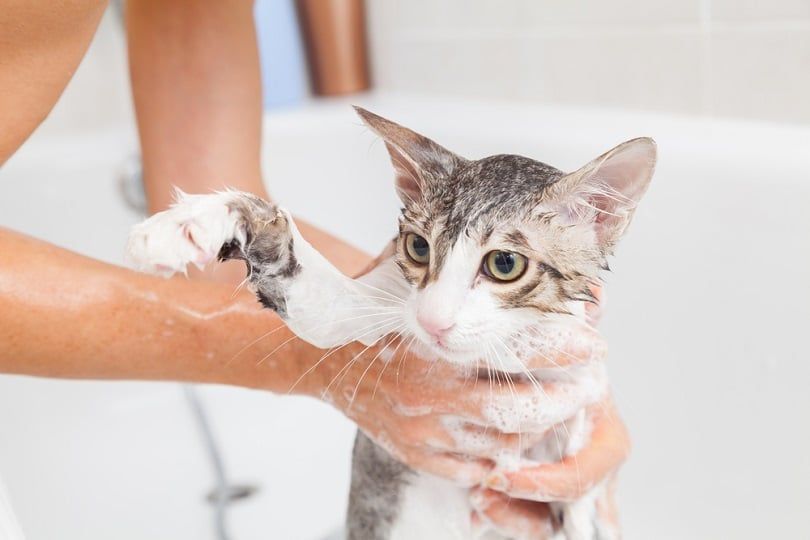
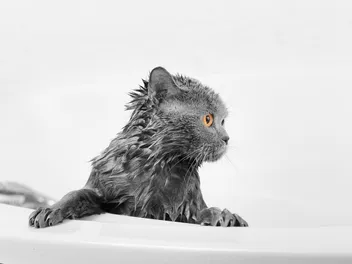
Oh, the dreaded cat bath time. Thankfully, this process will only be necessary on exceptionally rare occasions, perhaps even never throughout your cat’s life. We can admit that we’re grateful for their stellar self-grooming abilities, but your cat may need a bath if they become especially dirty with urine, feces, or vomit at some point or if a veterinarian recommends a medicated shampoo to treat a skin problem. If you’re one of the lucky ones, you will have a relaxed cat who takes a bath like a champ. If you’re like most of us, you have a challenge ahead of you.
Keeping your cat as calm as possible is critical to the development of a good bathing experience. In this list, we have included some tips on how to keep your cat calm before bath time. It is important to remember that with pet-friendly wipes or a good brushing, it is possible to clean your cat if they soil themselves on most occasions. On the other hand, if your cat has only gotten a part of their body dirty, do not bathe them completely but only the affected area. Finally, if your cat has a skin condition and needs a medicated shampoo but you don't have assistance washing your cat or you know your cat won't tolerate bathing, don't hesitate to talk to a veterinarian about alternatives with topical products that don't need rinsing. Now, let’s take a look at six ways to make bath time easier:
Please note: You should not bathe your cat unless it’s really necessary. Unless your cat is used to it from a young age, bathing your cat can be a very stressful situation and can even affect your bond. We recommend you contact a veterinarian first if you’re planning to bathe your cat.

The 6 Ways to Calm a Cat Before a Bath
1. Take Things Slowly
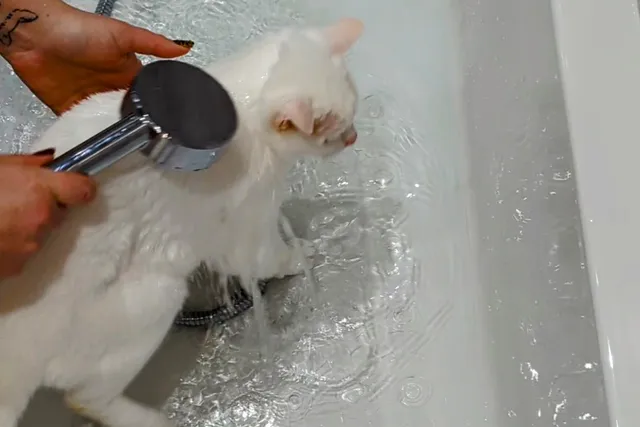
Any cat that is not keen on bathing is going to be nervous when the time comes. The best thing you can do is remain calm and move slowly during the process. Run the bathwater and have it at a good temperature before you even attempt to bring your cat into the room.
The loud sound of the bathwater running will likely make your cat even more fearful. Keeping your energy calm can have a large impact on your cat’s demeanor. If they sense you are nervous, they will likely grow increasingly nervous themselves. Keep calm, move slowly, speak with a soft voice, and provide them with lots of positive reinforcement.
2. Get Them Used to the Bathtub or Sink
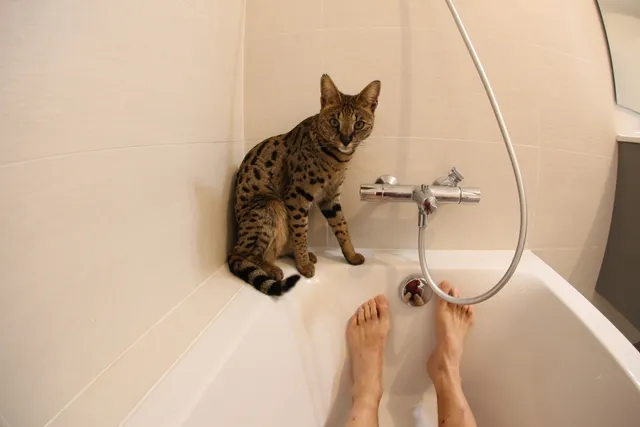
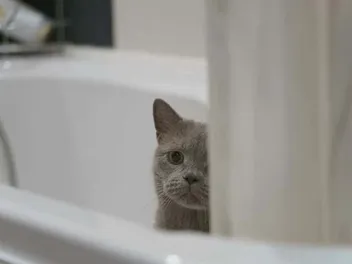
You can try placing your cat in the empty bathtub or sink before putting water in the bath. If you occasionally place them in that area and sit with them, providing them with lots of love, affection, and even treats, they will not view it as an unfamiliar area but will have had a stress-free, positive experience in the environment before the actual bath takes place. Ideally, place a non-slip bath mat or a towel in the tub so that your cat feels safe during the process.

3. Use Pheromones
Feliway is a product on the market that is geared toward calming kitties. Feliway emulates the natural pheromones released by a mother cat to calm her kittens. This product comforts and reassures cats and kittens to help with stress reduction and prevent unwanted behaviors. It can be purchased in a spray bottle or as a plug-in diffuser.
With regard to essential oils, information can be found promoting their use with calming effects on cats. In general, the use of essential oils in cats is not recommended as they are very dangerous.
4. Try White Noise or Soft Music
Cats are just as sensitive to noise as they are to scents, and some noises can be used for calming in stressful situations. Soft classical music varieties and even white noise machines have been recommended for use in calming cats. This isn’t just owners claiming that music could soothe their cats, there have been studies to back these claims.

5. Try Anxiety Relief Supplements or Medication
There are some over-the-counter products available in treat or supplement form that are specifically designed to have calming effects for cats. Natural products are more effective if given some time in advance rather than a short time before the bath. They typically contain L-theanine, which is an ingredient found in green tea, alpha-casozepine, a milk-derived peptide, and tryptophan, which have been shown to naturally relieve anxiety.
Prescription anxiety medication are also options, but these will need to be discussed directly with a veterinarian before use. It’s always best to consult a professional before adding any type of supplement to your cat’s regime. Having a veterinarian’s input can be quite helpful in these situations, as they will have the best recommendation for medication that could help you on an as-needed basis for stressful situations like bath time.
With regard to essential oils, you may find information promoting their use with calming effects on cats. However, the use of essential oils around cats is not recommended at all, as they are very dangerous. Cats lack the enzymes necessary to break down these products, and the lightest contact with some of them can be life threatening. Make sure you don't diffuse any essential oils around your cat, and, if necessary, reach out to a vet for guidance.
6. Schedule a Play Session Beforehand
One way to help calm your cat before a bath is to tire them out with lots of play and stimulation before taking to the water. If your cat is full of energy, they will have more fights when it comes to putting them in the bath. If they have had a good amount of exercise and are feeling more tired and mellow, you may have a much easier time with the entire process.

Additional Information

Conclusion
There are a few different tactics you can try to keep your cat calm before and while they get their bath. Keep in mind that these tips may not always be effective for all cats; what works wonders for one might not be useful or others. If you have a cat that becomes particularly overwhelmed and anxious at bath time, consult a veterinarian to check whether the bath can be skipped or if they can offer an alternative solution in the form of products that don’t require rinsing.
In the event that bathing your cat is really necessary and the above tips do not work, a veterinarian may be able to give you medication to calm them down and make bathing less of a negative experience for them.
See Also:
Sources
Featured Image Credit: 135pixels, Shutterstock
Expert cat care, straight to your inbox
News, insights, and useful advice, delivered to you.

No spam — unsubscribe anytime.
By signing up, you agree to our Terms & Conditions and Privacy & Cookies Policy.
How useful was this post?
Click a star to rate. You can leave written feedback afterwards. (We read all feedback.)
Christian started writing for a local newspaper as a teenager, and he's been involved in the publishing industry for most of his adult life. Combining his love of writing with a passion for animals, he is currently the Director of Editorial at Pangolia and the Editor-in-Chief at Catster.
Christian lives in the Philippines with his wife, son, and four rescue cats: Trixie, Chloe, Sparky, and Chopper.