How Do Professionals Cut Cat Nails? 7 Vet-Approved Useful Tips


Cat claws can shred, tear, and destroy objects in a matter of seconds. So, what do you do when you know that it’s time to give them a trim? Can you even do it at home?
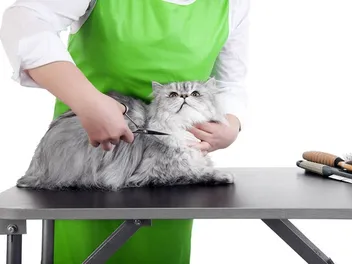
It can be stressful to attempt feline nail trimming, which is why you should either leave it to the professionals or learn from someone experienced. Here, we explain what to expect when a professional trims your cat’s nails and how you can mimic it.

The Top 7 Tips for Cutting Cat Nails Like the Pros
Regardless of how tough they look, cat nails are actually quite delicate. If you cut them the wrong way, there can be pretty painful consequences for your feline friend. If you are choosing to trim their nails at home, you're going to want to learn from a professional.
1. Gather Up Your Supplies
| Product | Use |
| Nail trimmer | Cutting |
| Treats | Calming |
| Flour or cornstarch | Stopping bleeding |
| Towel or blanket | Wrapping cat securely, if required |
| A helper | Optional but valuable |
Before you start anything, you need to gather up all your supplies. Also, if you can, gather up your mental strength—because we know it’s not a task for the weak of heart.
We recommend having a helper for any cat, but we especially think it’s vital for cats that are a little violently squirmy. You don’t want a manicure season to turn into a crime scene—leaving you, the victim, with a perpetrator on the loose.
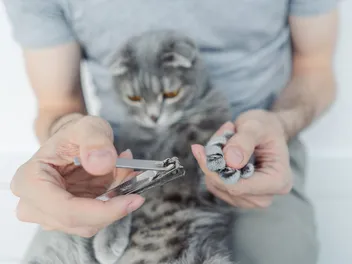
Make sure that you have a good pair of cat nail clippers . Your medicine cabinet nail clippers won’t do in this case. Because of the way your cat’s nail is shaped, you need to come in from all sides to prevent splitting.
Your cat’s claws contain an impressive amount of nerve endings and blood vessels in their quick. That is the pink part you want to stay well away from . If you have ever cut your nails too short, you know just how painful it is and how much it can bleed. That’s where the flour and cornstarch come into play. Flour and cornstarch both help stop bleeding. Consider it a “just in case.”
Treats are motivation to even the most stubborn felines, but not the most nervous. It seems that a cat that is fighting for their life to get away from you might not be interested in the tiny morsel you have to offer at the time.
In any case, if you dare take up the sword and accept the invitation to battle, we commend you. As a serious side note, it's essential to keep your skin safe, so make sure you're wearing long sleeves with thick fabric—preferably, multi-layer.
Once you have your things and hopefully a willing hand, it’s time to get down to brass tacks.
2. Set the Mood and Ready the Space
Your cat is super sensitive to their surroundings. If they sense something isn’t quite right or they stay tense, it can cause them to cling with their claws. This can be really difficult to work with, so it’s best to make sure your kitty is in a good state.
What cat doesn't love a good rubdown? Play with your kitty for a few minutes, give them lots of chin rubs, and let them bunt your face—whatever it takes to make sure they are relaxed. If you have a helper, let them join in on the fun, so your cat is familiar with everyone in the room and totally cool with it.
If you have a Houdini on your hands, you need to make sure you’re in a small space to avoid clean escapes. Ideally, your cat feels nice and sleepy, ready for some relaxation. If you can calm your cat into a near-coma state, that's the best thing you can hope for. If not, at least they will be calm enough.
Make sure you’re somewhere quiet where you won't be interrupted. It will be a nightmare if you are ready to snip and one of the kids comes plundering through the house in a panic.
3. Let Them Investigate Your Gear
Cats are curious—let them be curious. New objects can really put your cat on edge, so familiarity with tools is important. If you have the supplies nearby, your cat can nose around to get used to all the new smells and sights.
If you have the clippers, treats, and towel, let them sniff all three, and see which one piques their interest (which one could it be?). Once they are enjoying a delicious snack, surrounded by familiar environments and people, you can start.
4. Clip the Nails Correctly

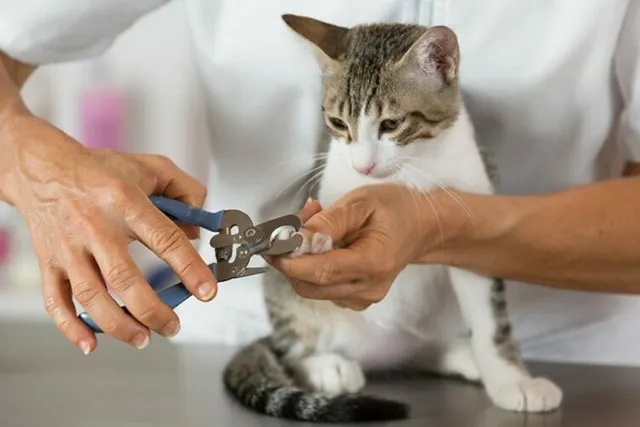
Once you feel like your cat is completely comfortable, restrain them (without making them feel like you’re restraining them, if you can). If you have a helper, you can have them keep the kitty’s body still while you trim.
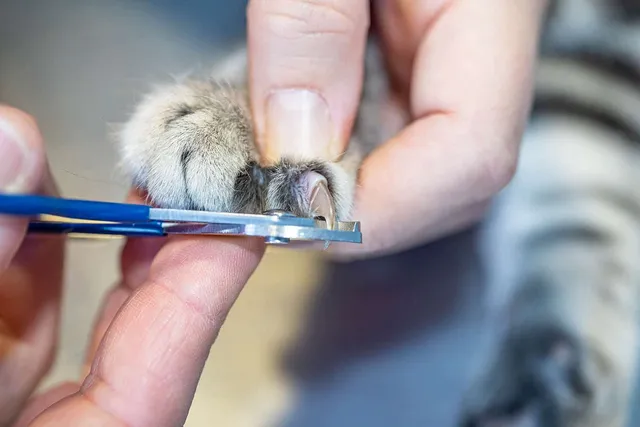
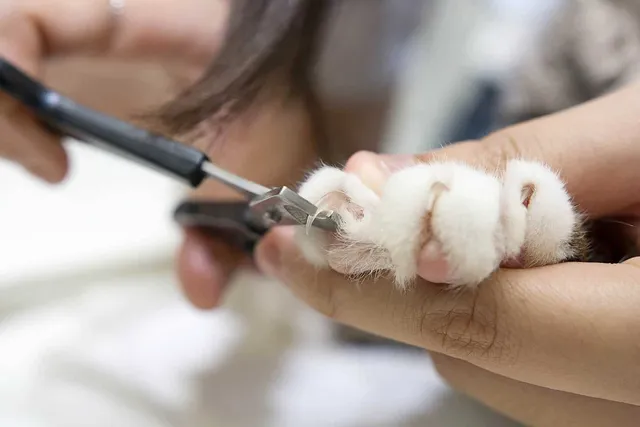
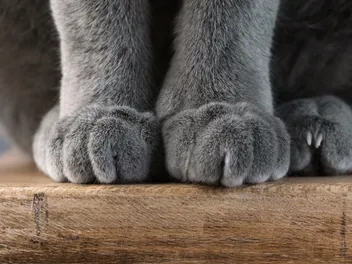
Gently put pressure on the base of the paw pad. You will see your cat’s claws project outward so you have direct access. Hopefully, your pal is still feeling friendly at this point instead of feeling like you’re invading their space.
If you notice that they tense up or try to warn you to stop, respect their space. Pet them, talk to them—do anything to redirect their attention to pleasant things. The important thing here is to take your time. Then, slowly press on the paw again.
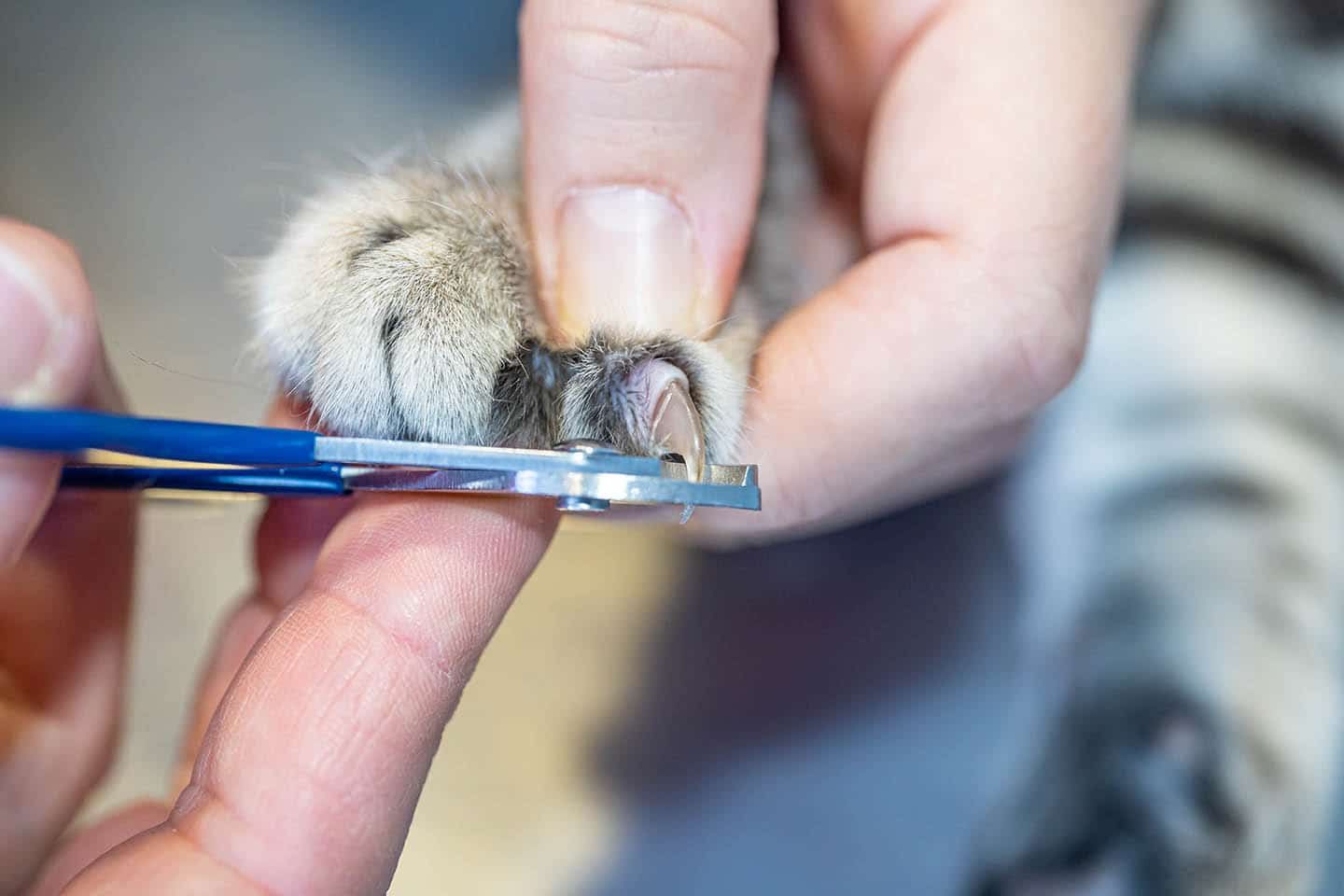
Once you have a good hold with no resistance and the cat is firmly secure, you can start clipping. Don’t clip straight across; rather, try to place the clippers at a slight angle following the natural curve of the nail itself, and avoid hitting any nerves or blood vessels.

- Complete Set - These cat nail clippers include both a large and small pair, meaning it works well as a kitten claw trimmer when they're a small kitty, and then before you know it, as a cat nail cutter
- Razor Sharp Stainless Steel - The most comfortable cat nail clippers for indoor cats provide a fast and clean cut. And for rough residuals remaining, the free cat nail file included can smooth it all.
- Safety First - With a safety nail guard and locking spring, you can make sure every grooming cut is stress free for you, and pain free for your purry pal
Trimming your cat's nails at home can be hard, but having a professional do it can be expensive. With the help of great tools like Hepper's Cat Nail Clipper Set, you can easily and quickly trim your cat's nails at home. This set includes two pairs of stainless steel clippers with safety guards and locking mechanisms, plus a built-in nail file and a convenient pouch.
At Catster, we’ve admired Hepper for many years and decided to take a controlling ownership interest so that we could benefit from the outstanding designs of this cool cat company!
5. Avoid the Quick
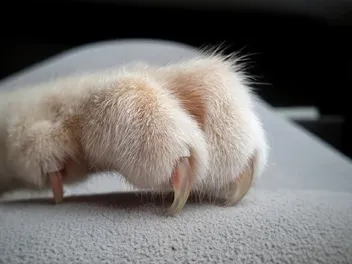
If you take a look at your cat's claws in good light, you can see that they are somewhat translucent. You can see through them pretty well—just like you can with a human nail. If you look closely, you should be able to see the part that runs up through the nail because it is pink, sticking out from its surroundings.
This part of the nail is called the quick . It is filled with many blood vessels and nerves, so even the slightest nick can produce a lot of blood and pain if you aren’t careful.
When you are getting close, just ensure the cat is completely still and not feeling frisky. It shouldn’t be too hard to stay away as long as they are being calm and compliant.
6. Finish Up
If it hasn’t been too much of a traumatic experience up to this point, you can examine all the nails , making sure you haven’t missed anything. If there is an ingrown nail, meaning it has started to dig into the pad, do not attempt to cut this by yourself, as it will be uncomfortable for your cat. Instead, contact a vet promptly.
7. Reward Your Cat for Good Behavior
Always make sure to positively let your cat know what a good job they did. Even if they were grumpy the entire time, if they endured, praising them and offering them treats will give them good memories. So, next time it’s nail-trimming day , they might slowly start to trust the process.
Truthfully, some cats will never warm up completely. That’s okay! Every cat is different, and they react to triggers with numerous responses.
But if you treat them poorly or punish them for resisting, it will only increase the amount of fear and rebellion during the trim time. Putting that much stress on a situation is both unnecessary and unhealthy and will break your bond.
It’s much better to stay on their good side. If you feel like you need some assistance, you can always take your cat to a professional so they can be the "bad guy," and you can be the hero who "rescues" them to take them home.


Professional Cat Nail Cutting Tips
You will likely feel out the situation and come up with a routine that works for you and your cat. But following these steps can give your cat a fresh set in no time with (hopefully) minimal hassle.
Here are a few more tips you might find useful.
Acclimate Your Cat Early
It’s very rare that you find a cat that enjoys having their nails trimmed. We all know that our felines like to be in control and that there’s something vulnerable about their paws. But that doesn’t mean that you can’t get them used to nail trimming as a customary practice.
The best thing to do, as with any other type of training, is to get them used to it when they’re very young. If you were lucky enough to get your cat as a kitten, this is probably no problem for you. However, if your cat is older and unfamiliar, it might be a little harder to get them used to the process.
Introducing these concepts early, consistently, and patiently will help you see rewards and success at trimming time.

Play Soft Music
Music can heal many things for us (just like your cat’s purr), and it can do the same thing for pets. Classical music especially carries specific vibrations and notes that soothe anxieties.
If your cat has some serious second thoughts about this nail-trimming business, pop on some relaxing music, and speak in a soothing tone. Try to keep the room as quiet as possible otherwise, and eliminate distractions.
Supply Lots of Scratching Surfaces
When you know your cat is a big-time scratcher, constantly ripping on furniture and fabrics, scratching posts are so important. Not only do these materials, like sisal rope and fabric, specifically attract cats, but they also provide different textures and tensions for your cat to enjoy.
We're quite fond of cardboard as a material in cat scratchers, which is why we love the Hepper Hi-Lo Cat Scratcher. Encased within a well-constructed, modern birch plywood frame, this scratcher is designed with both cats and their owners in mind. It offers three versatile configurations to keep your feline friend active and entertained while enticing them to fulfill their natural scratching instincts (and away from scratching things they shouldn't). For more details, click here!
At Catster, we’ve admired Hepper for many years, and decided to take a controlling ownership interest, so that we could benefit from the outstanding designs of this cool cat company!
Use Vet-Approved Pheromone Diffusers or Calming Treats (If Necessary)
If your cat has extremely bad reactions due to severe anxiety and fearfulness, you should speak to your veterinarian. They may recommend pheromone diffusers or other calming products that may come as treats or supplements.
Some of these over-the-counter products may help calm nerves so your cat can relax without feeling so scared and vulnerable. These are not sedatives and will not impact your cat’s level of consciousness but may just be enough to take the edge off.
This is a common solution for owners who have pets scared of travel, vet offices, and groomers. If this isn’t working for your cat, you should seek advice from a vet and a feline behaviorist.
Consider Temperament Beforehand
Your cat’s temperament says a lot about how your nail trim sessions with them will go. A more aggressive or anxious cat might have a more challenging time keeping it together, potentially causing injury for you if they are feeling frightened or agitated.
However, if you have a more relaxed cat that doesn't get worked up very quickly, you might find it's much easier to trim their nails even if they’re not a super huge fan of the process.
Luckily, most cats fall into the category of "reluctantly compliant" during nail-trimming time.

Create Comfortability
We want to stress how vital it is to create a safe environment where your cat can feel secure and anxiety free. In a professional setting, it can be a little difficult to calm an anxious kitty. But regardless of the method you use to trim their nails, make sure the environment around them stays calm.
Ensure that the same routine happens each time you trim too, to keep their confidence in the process.
Conclusion
Nail trims can sound like an absolute nightmare to most cat owners, but it doesn’t have to be a painful process. If you make the entire setting relaxed and have someone nearby to help , things should go over smoothly enough.
Cats don’t want nail trims . Humans don’t want to trim cats' nails. But with the potential of damage to the skin, pads, furniture, and other surfaces during play, trimmings are essential.
Sources
Featured Image Credit: GaiBru-Photo, Shutterstock
Expert cat care, straight to your inbox
News, insights, and useful advice, delivered to you.

No spam — unsubscribe anytime.
By signing up, you agree to our Terms & Conditions and Privacy & Cookies Policy.
How useful was this post?
Click a star to rate. You can leave written feedback afterwards. (We read all feedback.)
As a freelance dog writer and passionate pet enthusiast, Ashley Bates is pursuing studies in animal therapy. A mother to four human children and 23 animal companions, Ashley is dedicated to volunteering at shelters, advocating for animal rights, and rescuing animals in need. Her goal is to spread awareness, provide education, and offer entertainment about pets to reduce homelessness. Ashley's specialties include dogs and cats.