Get

In Your Inbox

Catster is reader-supported. When you buy via links on our site, we may earn an affiliate commission at no cost to you. Learn more.

How to Get Cat Pee Out of a Comforter: Step-by-Step Guide
Share

cat-peeing-on-the-bed

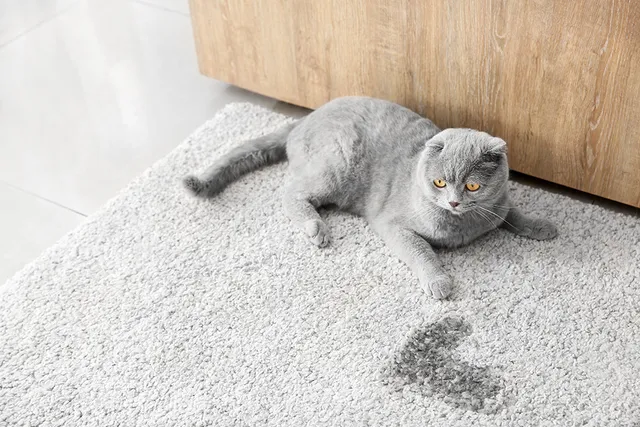
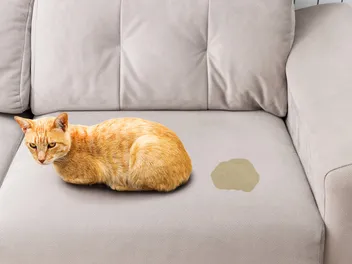
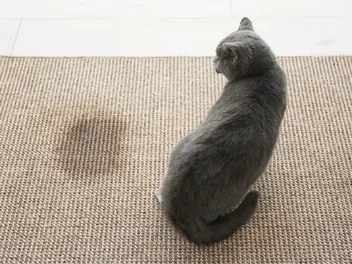
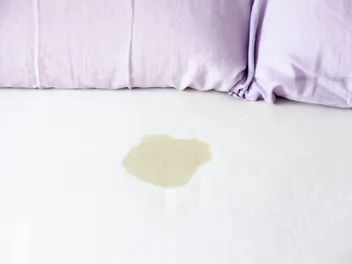
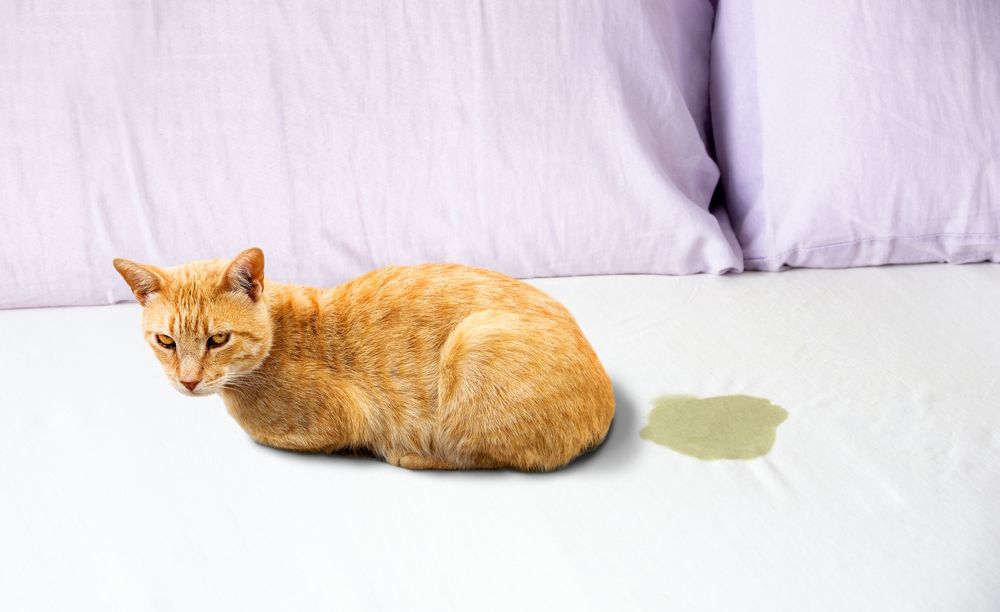
If your cat has occasional accidents on your bedding, you already know that the smell of cat pee is extremely hard to get out, particularly once it’s dry. If you have tried and failed to get cat urine out of your comforter, we’re here to help!

You can remove the cat urine odor from virtually any washable fabric. While we’ll show you how to get it out, it’s also essential to deal with any health or behavioral issues that are causing your cat to pee on your bed in the first place.

divider 2 cats

Materials
  • Paper towels
  • White vinegar
  • Oxygen bleach or Oxi-Clean
  • Baking soda
  • Enzyme detergent

Our Favorite Enzyme Cleaner 

The Hepper Advanced Bio-Enzyme Pet Stain & Odor Eliminator Spray is our favorite all-purpose enzyme cleaner. It kills harmful bacteria and permanently removes even the worst kitty stains and smells, leaving your home fresh and clean! Click here to learn more about this amazing product and get yourself a bottle.

Image Product Details
Best Enzyme Spray
Winner
Hepper Advanced Bio-Enzyme Pet Stain & Odor Eliminator Spray Hepper Advanced Bio-Enzyme Pet Stain & Odor Eliminator Spray
  • All-purpose
  • Pet-safe
  • Multi-surface safe
  • At Catster, we’ve admired Hepper for many years and decided to take a controlling ownership interest so that we could benefit from the outstanding products of this cool cat company!

    Pre-treatment

    If you have cat urine on your comforter, don’t throw it in the washing machine. Urine has a way of spreading odors. If you add the comforter to your laundry, you’ll likely find that the smell has penetrated the rest of the load. When you put your comforter in the washing machine, put it in by itself. However, it’s best to pre-treat the stain (and smell) for the best results.

    rinse cloth
    Image Credit by: schankz, Shutterstock
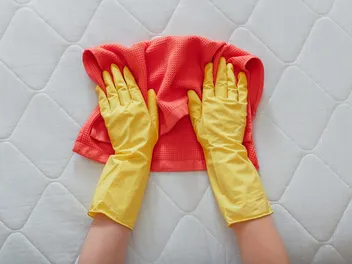
    • Rinse the urine spot with cool water and blot dry with a paper towel. Don’t scrub the stain, which will drive the smell deeper into the fabric’s fibers. Your goal is to remove as much urine as possible before starting the cleaning process.
    • Spray the comforter with an enzyme spray and allow that to sit before moving on to the next step.
    • Fill a sink or bucket with water and oxygenated bleach, such as Oxi-Clean. Don’t use chlorine bleach, as it can cause significant damage to your comforter. Soak the urine stain in the mixture for 1–4 hours.

    divider 1 paws

    Two-Stage Washing Process

    For the best results at removing cat pee odor, use a two-stage cleaning process to remove it. The first stage of this process is the vinegar wash.

    Stage 1

    1. Create the Mix

    Mix white vinegar and water in a 1:1 ratio. Coat the urine stain thoroughly with the mixture and allow it to sit for a few minutes.

    natural destilled white vinegar in spray bottle to remove stains
    Image Credit by: FotoHelin, Shutterstock

    2. Add baking soda

    Sprinkle the area with baking soda. While this step is optional, the baking soda aids the vinegar in absorbing odors.


    3. Wash on a washing machine

    Wash the comforter in your washing machine with cold water. Do not use hot or warm water since can set the stain and the smell. Do not use laundry detergent for this step.

    blue fabric in white and grey washing machine
    Image Credit by: Tima Miroshnichenko, Pexels

    4. Air-dry

    Air-dry the comforter. If you have to dry it indoors, it can take 24 hours. If you have the ability to do so and the weather is conducive, drying your comforter outdoors will be faster and make it easier to remove the smell. Do not use a clothes dryer; the heat will set in any remaining smell.

    divider 3 paws

    Stage 2

    The second stage of the washing process should be completed after your comforter is completely dry from the vinegar wash. This step is a more traditional washing process, and most of the cat pee smell should be removed.

    5. Wash in cool water

    Wash your comforter in cool water, using an enzyme-based detergent for removing organic stains. Unlike traditional laundry detergent, enzyme detergent contains enzymes that essentially “eat” the bacteria-causing odors. Many cold-water detergents contain enzymes, but read the label to be sure.

    woman using washing machine
    Image Credit by: fizkes, Shutterstock

    6. Air-dry again

    Air-dry your comforter again. This is because you are going to “sniff-test” your comforter once it’s dry. If there is any remaining odor, you will restart the pre-treat and wash process.

    You can do it as many times as needed to get the smell out, but only if you do not put it in the dryer. Once you’ve used heat to dry your comforter, getting the smell out is much more difficult.

    woman using washing machine
    Image Credit by: Piqsels

    If the cat urine has dried on your comforter, it’s possible that you will have to repeat the process two to three times to remove the smell entirely.

    divider 3 paws

    Are You Still Smelling Cat Pee?

    If your comforter has come out smelling fresh, but you can still detect the smell of cat pee in the room, it’s time to do some detective work. It’s possible that if your cat marked your comforter.

    Arming yourself with a blacklight is the simplest way to hunt down urine stains. They will glow under the blacklight. Then, you can use chalk or a sticky note to mark the problem areas. Once these are identified, use an enzyme cleaner to thoroughly clean the area so you can enjoy a fresh-smelling home.

    Hepper Advanced Bio-Enzyme Pet Stain & Odor Eliminator Spray
    • ADVANCED ENZYMATIC CLEANER - Penetrates the most stubborn smells and stains at the deepest molecular...
    • FOR ANY MESS, ON ANY SURFACE - This pet odor eliminator cleans your carpets, floors, furniture,...
    • FRESH, NATURAL ODOR - Our unique formulation doesn't rely on dangerous or unpleasant chemical...

    At Catster, we’ve admired Hepper for many years and decided to take a controlling ownership interest so that we could benefit from the outstanding products of this cool cat company!

    divider 2 cats

    Give Your Cat a Health Check

    To avoid more accidents in the future, it’s essential to address the problem. Health and behavioral issues can cause your cat to pee outside the litter box. Address any possible health issues first by taking your cat to the vet. You can address behavioral issues once you’ve ruled out a physical cause of your cat’s litter box avoidance.

    Separation anxiety in cats is a common reason for marking outside the litter box. Cats with this condition often mark bedding or personal items to relieve their anxiety. There are many things you can do to fix the problem and avoid more accidents.


    Featured Image Credit: cunaplus, Shutterstock

    Want content like this delivered to you?

    Sign Up For Our Newsletter

    News, insights, expert advice, and everything cat

    * By submitting, you agree to our Terms & Conditions and Privacy & Cookies Policy.


    How useful was this post?

    Click on a star to rate (you can leave written feedback after clicking submit)

    Help us improve Catster for pet parents!

    Your feedback really matters.

    What did you like about this post? Also how can we improve it?

    Join the conversation

    Leave a Reply

    You’re very welcome to leave a comment or question. Please know that all comments must meet our community guidelines, and your email address will NOT be published. Let’s have a positive and constructive conversation.


    Talk With A Vet Online

    Peace of mind,
    anywhere, anytime

    Affordable vet advice

    Do Cats Cause Schizophrenia? Scientists Find a Link – Here’s What It Means

    Being a fierce advocate (and occasional recipient of) mental health support and awareness, the term ‘crazy’ is not one I like to fling...

    One in 100 Cats Gets Diabetes – Here’s How to Catch It Early

    One in every 100 cats develops diabetes.1 That’s not a rare, unlucky condition reserved for cats with obvious health problems. It’s common enough...

    Dramatic Rescue Turns Into Dramatic Reunion

    What started as a routine call for the RSPCA became a heroic, five-hour rescue featuring one trapped and traumatized cat, an emotional family...

    Ask Dr. Paola – Help! How Do I Know if it’s Ear Mites! (May 4, 2026)

    Welcome to our “Ask Dr. Paola” series, where every Monday we bring expert advice straight from Dr. Paola Cuevas (MVZ) to help our...

    More related

    Is Baby Food the Secret to Homemade Cat Food? Read This First

    You love your cat like they’re family (because they are). But there might be times when you’ve run out of your cat’s kibble...

    How Do Cats Choose Their Favorite Person? 5 Interesting Factors (Vet-Reviewed)

    Anyone who’s ever lived with a cat and a few other people has probably witnessed the feline tendency to develop a particularly strong...

    I Just Got a New Kitten & My Older Cat Hates Them: 6 Vet Approved Tips on What to Do

    Bringing home a new kitten can be stressful not only for your new addition but for your existing pets as well. There is...

    How Do I Find a Lost Cat with a Microchip? Vet-Verified Facts & Safety Tips

    Losing your cat is a situation no one wants to go through. You might have lived with the cat for years, and losing...

    Keep reading

    Why Does My Cat Bite Me Unprovoked? 5 Vet-Reviewed Reasons for this Behavior

    There’s no secret—cats try to get our attention, whether it’s good or bad. Because your little kitties have fangs, it won’t feel too good when they sink them into your flesh. If your cat is biting you for no real...

    a red domestic cat bites its owner's hand

    How to Tell If a Nursing Cat Is Pregnant Again? 7 Vet Reviewed Signs to Look For

    Felines are extremely fertile animals, with females able to experience heats every 2–3 weeks during the breeding season1. That adds up to multiple opportunities for your cat to get pregnant! What if your cat just had kittens, though; surely, she...

    pregnant cat on the ground

    Why Do Cats Hate Closed Doors? 6 Vet-Verified Likely Reasons

    As any cat owner knows, cats have a lot of quirks and idiosyncrasies. One of them is a hatred for closed doors, no matter what lies behind them. Sometimes, this innate drive to get into the closed room could lead...

    cat sitting near the door at home

    Do Cats Eat Christmas Trees? Vet-Reviewed Risks & Tips

    Christmas is a magical time that fills our homes with warm smells and sparkly lights. Only, cat owners have to deal with the constant chaos of owning a Christmas tree with a pet. Christmas trees, both live and artificial, can...

    cat hiding in the Christmas tree

    Can a Cat Overheat? Vet Approved Signs & How to Help Them

    Due to their desert-dwelling ancestors, cats are often believed to not be affected by hot weather. While their normal body temperature is higher than our own—101.0°F to 102.5°F—cats are no better at handling overly hot weather than humans are. Cats...

    cat stretching a rocky beach and a beautiful sunset over the ocean

    Ways to Calm Your Cat in the Car: 11 Vet-Reviewed Methods

    Some cats don’t enjoy traveling in a car. Whether it’s a short trip to the vet’s or a road trip across the country to stay with family, they can become visibly distressed, yowl loudly, and scratch their carrier in an...

    Cute white British Shorthair cat inside pet carrier in car

    How to Weigh Your Cat: 5 Vet-Approved Steps

    Though it may not be considered a necessary part of caring for cats, there are significant benefits to weighing your cat. Since cats can’t use words to tell us if they’re feeling sick, cat owners must be observant and look...

    kitten on a weighing scale

    Why Do Cats Chatter at Birds? 5 Possible Reasons & FAQ

    Cats are vocally gifted and can produce up to about 21 distinct vocalizations.1 Although cat owners are accustomed to their pets meowing, they may be baffled by their chattering. Chattering is a unique sound that cats make after seeing potential...

    cat and bird

    Love Cats? So Do We! Join the Catster Community

    Stay informed with expert pet care insights delivered straight to your inbox! Discover professional guidance on animal behavior, feeding tips, trusted product picks, and much more.


    Sign up for the Catster Email Newsletter

    Stay informed with expert pet care insights delivered straight to your inbox! Discover professional guidance on animal behavior, feeding tips, trusted product picks, and much more.