How Long Does Cat Dander Stay on Clothes? Facts & Tips to Reduce It
In this article
Cat dander can be a problem for cat lovers who suffer from allergies, especially if your cat enjoys being curled on your lap or chest while it sleeps. Cat dander is invisible to the naked eye as it is microscopic, and there is most definitely dander left behind on your clothes.
Cat dander lasts longer than dog dander since it is airborne and can linger for months in your home. Because it is easily stirred up and disrupted, it can take time to get rid of it, especially if you still have a cat living at home. Even though your clothes have been washed, they will encounter other areas of built-up dander, which can remain on your for up to 6 months.

What is Cat Dander?
Cat dander is the combination of dead skin cells, saliva, and urine and is the trigger responsible for allergies. It is microscopic and ends up in areas all over the home, such as your clothing, bedding, furniture, curtains, carpets, and other surfaces.
Dead skin cells are shed, new ones are replaced, and a protein known as Fel d 1 is contained in the saliva; dead skin cells and urine are what trigger allergic reactions. Fortunately, not everyone is allergic to dander, but all cats produce it.

How Long Does Cat Dander Last?
Because cat dander is so tiny and invisible to the naked eye, it can end up in the crevices of your home. While the exact amount of time the dander is unknown, it is suggested that it can linger for a few months. It can also easily be carried in our hair and clothes without us being aware.
When you groom or pet your cat, allergens will get into the air, and even though they settle, they can easily be stirred up again, causing them to stay for long periods. Pet allergens can easily stick to soft materials, and pet dander can linger on clothes and other materials for several months and cause allergens for up to 6 months after the pet has been removed.
How to Clean Cat Dander off Your Clothes
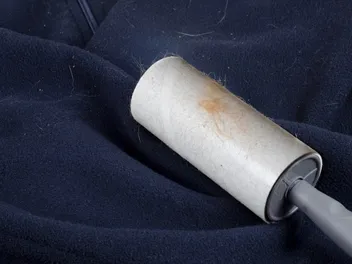
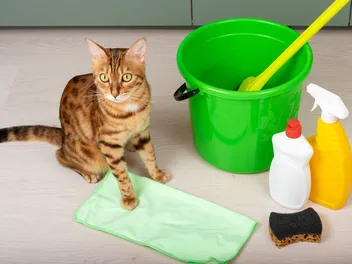
Washing your clothes will help eliminate dander, but they will need to be washed regularly, along with all other fabric items in the house, such as curtains, linens, and blankets. Invest in a lint roller and lint roll your clothes often, especially after petting your cat or sitting on the couch where your cat has been. It will also help to lint roll your curtains and sofas as well.
Before you throw your clothes into the washing machine, run a 10-minute cycle in your dryer with no heat. This will soften the fabric and loosen up any dander and hair. Give your clothing a good shake, pop it into the washing machine, and clean the lint trap once it is done.
Another helpful tip is to add half a cup of white vinegar to the rinse cycle. This helps the same way the dryer does, by softening the fabric and loosening the hair. Once your laundry load is done, run an empty cycle to give it a good rinse.
How to Reduce Cat Dander in 5 Steps
By following some simple tips, you can significantly reduce dander in your home, which will reduce the amount of dander on your clothes.
1. Make sure Your Cat Is Healthy
If your cat seems to produce more dander than usual, you may want to consult your vet. Mites, fleas, or yeast can cause itching and affect the health of your cat’s skin, resulting in your catch licking and scratching, often which can cause excess dander. Omega 3 fatty acids are essential for the health of your cat’s skin and coat, and making sure they are getting enough in their diet can help with excessive dander.
2. Groom
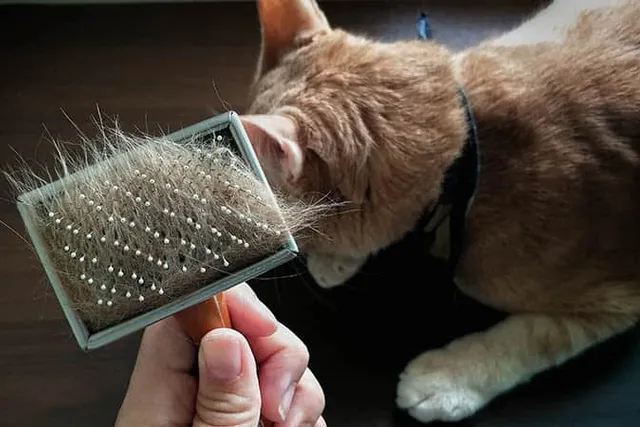
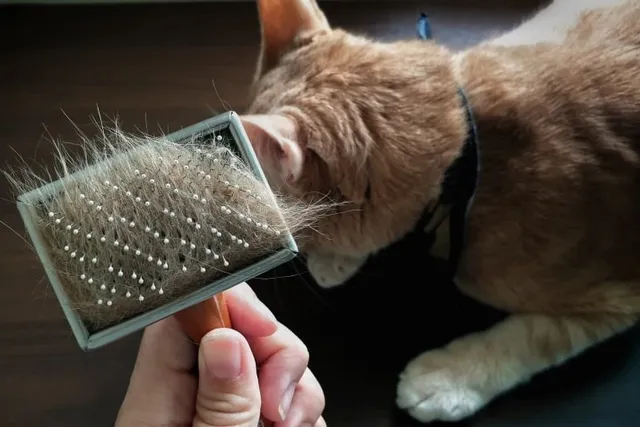
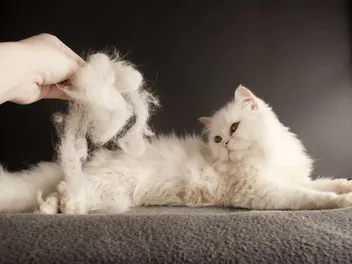
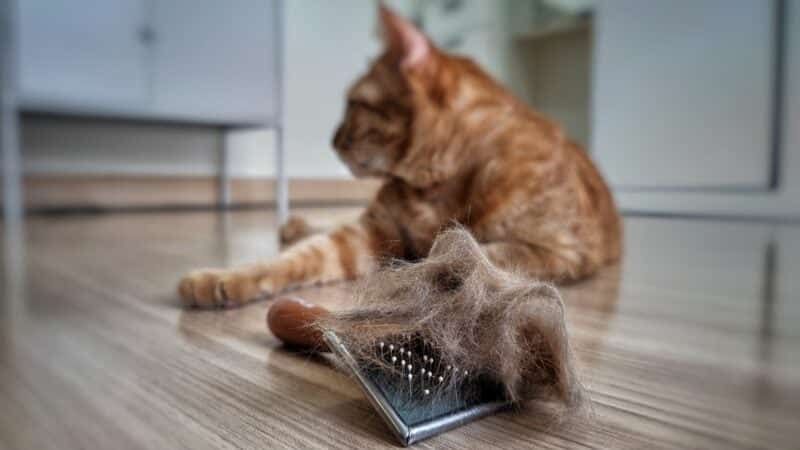
Make sure your cat is brushed and well-groomed regularly. If you battle to groom your cat, consider sending it to a professional groomer. Brushing your cat regularly can also help disperse healthy oils throughout its coat and encourage blood flow to improve your cat’s skin condition.
It can be helpful to get into the habit of bathing your cat every month, as it can significantly help reduce the amount of dander. If your cat is entirely resistant to washing, use a damp cloth to gently wipe down its fur.

3. Clean your Home
As we mentioned, dander can stick and linger on many surfaces, nooks, and crannies around your home. This means that if you suffer from allergies, you will need to do some regular deep cleaning. A sweep and a vacuum here and there will not cut it.
Here are a few cleaning tips to prevent dander sticking on clothing and surfaces:
4. Clean the Litter Box
Your cat's litter box can be a hot spot for allergens. It is a good idea to keep your cat’s litter box in an area of the house that you do not often visit if it is possible.
Take extra care when cleaning the litter box, and consider wearing gloves and a mask. Clean it scrub it with soap or baking soda, and rinse it with warm water.

5. Reduce your Exposure to Dander
Reduce your exposure by keeping your cat out of the rooms where you visit the most. It is easier said than done, but if you can get this right, even just a little, it will help immensely. Consider getting a bed for your cat and placing it in a designated room.
Conclusion
If you live with a cat, cat dander is something you must learn to live with as it is microscopic and easily transported. It can be controlled, but it will always be around. You can control the amount of dander in your home and on your clothes to help your allergies by grooming your cat well, ensuring it is healthy, and thoroughly and regularly cleaning your clothes, linen, curtains, rugs, and other surfaces.
For your clothing, a lint roller can work wonders. Have one in your car and a few in your home, so you always have one on hand.
Featured Image Credit By: RJ22, Shutterstock
Expert cat care, straight to your inbox
News, insights, and useful advice, delivered to you.

No spam — unsubscribe anytime.
By signing up, you agree to our Terms & Conditions and Privacy & Cookies Policy.
How useful was this post?
Click a star to rate. You can leave written feedback afterwards. (We read all feedback.)

Christian started writing for a local newspaper as a teenager, and he's been involved in the publishing industry for most of his adult life. Combining his love of writing with a passion for animals, he is currently the Director of Editorial at Pangolia and the Editor-in-Chief at Catster.
Christian lives in the Philippines with his wife, son, and four rescue cats: Trixie, Chloe, Sparky, and Chopper.