The History of Commercial Pet Food: Invention & Timeline


In this article
Most cats and dogs today eat commercial pet food, but when was pet food invented, and at what point did it become popular? Dry biscuits for dogs were first sold around 1860 in the UK and were the creation of James Pratt, a businessman who lived in Ohio but spent lots of time traveling.
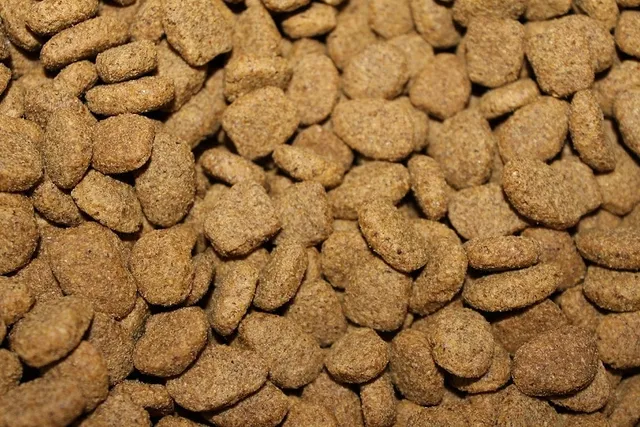
He came up with the idea for pet food after seeing dogs eating leftover scraps during a working trip to the UK. But pet food didn’t become popular until after World War II, and canned food only hit the shelves in the 1920s. As we know it today, kibble wasn’t developed until the 1950s.

Pet Food in the Late 1800s
Spratt’s Meat Fibrine Dog Cakes, the first commercial pet food product, appeared around 1860. The biscuits contained vegetables, wheat, and beef blood. They soon became popular among wealthy individuals with sporting dogs in England. The biscuits were first available in the United States in the 1890s. When and where the first commercial cat food was sold remains a mystery, but it may have been available in the UK as early as the 1860s.
The Early 1900s
Competition in the pet food market started to pick up during the first part of the 20th century. In 1908, the F.H. Bennett Biscuit Company began making Milk Bones for dogs. Spratts and the Bennet Biscuit Companion dominated the pet food market until the early 1920s. Spratt’s made a recipe for cats during the 1930s that was marketed as “digestible and healthy” and is described as having “ no equal for conditioning the cat and developing a splendid coat.”
Manufacturers in the 1920s began producing canned food made of leftover grain and meat, often horsemeat. Ken-L-Ration became one of the most popular canned pet foods of the era, and it hit the shelves in 1922; it was also made of horsemeat. Canine film star Rin Tin Tin appeared in print advertisements for the product. In the US, canned food grew in popularity in response to the economic difficulties of the Great Depression, which rocked the country starting in 1929.

World War II
Things changed drastically with the beginning of World War II, which saw the decimation of the canned pet food industry. Canned pet food manufacturers were categorized as non-essential and subject to material rationing. Many were forced to close as a result. At the same time, dry commercial pet foods increased in popularity, in part because of the high numbers of women working in war industries who simply had less time for preparing pet food.
After World War II, the US went through a massive economic boom. People were on the move, heading from cities to suburbs, and a culture built largely around consumption began to emerge. Supermarkets replaced small local grocery stores, and processed food production increased in scale, leading to food waste. The modern pet food industry emerged largely due to these social and cultural shifts.
Carnation Company began making Little Friskies cat kibble in 1950, and a feline wet food followed 5 years later. In the 1950s, Purina devised a way to “extrude” pet food, essentially allowing ingredients to be mashed up, cooked, and shaped. The company’s first kibble for dogs appeared in 1957, and it first started producing kibble for cats in 1962.
The Late 20th Century
Pellets of different sizes and shapes were made using the new extrusion technology, and flavoring could be added to create products with specific nutritional profiles. Dry food options have been popular since WWII, and with the development of affordable, nutritious, shelf-stable choices, the modern pet food industry took off.
During the 1970s, premium choices such as Iams and Hill’s Science Diet became increasingly popular, but they often restricted sales to veterinarians’ offices. Over time, pet food manufacturers began making products targeted to meet the needs of pets with health issues, such as kidney or urinary tract disease, and many introduced kibble and wet food designed specifically for more lifestyle-related issues, such as weight management formulations. Grain-free options started to gain traction around 2000.
Currently, in the US, the Food and Drug Administration oversees regulating pet food for safety, but The American Association of Feed Control Officials (AAFCO) comes up with ingredient definitions and sets nutrient guidelines. Pet food manufacturers then have their products tested by outside laboratories.

The 21st Century
The pet food market is booming, and it reached about $58.1 billion in 2022 in the US alone. The industry is likely to experience significant growth over the coming years and could hit $135 billion worldwide by 2030. By 2030, pet parents in the US will likely be spending around $200 billion on their companions.
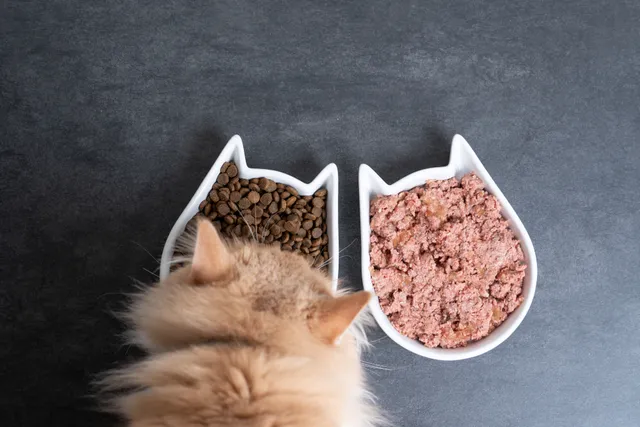
Dry food is the most commonly purchased pet food option worldwide. Wet food tends to be far less popular. Only about one-third of US pet parents regularly give their cats and dogs wet food. Pet owners are increasingly selecting brands featuring organic produce and sustainably raised meat. Gently cooked meals are also becoming incredibly big sellers. Dog and cat food featuring protein derived from insects is a likely area of growth since experts also expect pet food manufacturers to place more emphasis on sustainability.

What Did Pets Eat Before Commercial Pet Food Was Available?
Dogs most likely ate scraps from their human’s regular meals, like cabbage, potatoes, bones, and leftover bread. Dogs owned by wealthy individuals in the Middle Ages sometimes had access to meat and bread, and they probably even received eggs as special treats.
Cats most likely took care of their own needs, particularly when living on farms or in rural areas with access to prey. Starting around the 1800s, cats that lived in cities were probably fed different types of meat not considered fit for human consumption.
After “Spratt’s New Cat Food'' became popular, more cats began eating cat food and relied less on rodents for sustenance.
Conclusion
Commercial pet food got started in the 1860s when James Pratt came up with the idea of creating a sort of hardtack for dogs; it was a simple, easy-to-produce, hard biscuit that soon became popular among sporting dog owners. Spratt made cat food as well, although it's unclear exactly when feline options first appeared on the market.
Canned foods for dogs appeared in the 1920s, and choices for cats were available from major pet food manufacturers in the 1950s. The commercial pet food industry we know today largely took shape after the discovery of extrusion methods in the 1950s that led to the production of the kibble.
Sources
https://www.petmd.com/blogs/thedailyvet/ktudor/2013/sept/the-forgotten-history-of-pet-food-30883
https://www.hagley.org/librarynews/museum-collection-inventor-worked-dog
https://www.petfoodinstitute.org/about-pet-food/nutrition/history-of-pet-food/
https://www.americanpetproducts.org/press_industrytrends.asp
https://www.just-food.com/features/humanisation-in-pet-food-bounds-along-in-premium-led-growth/
https://books.google.nl/books?id=5-ANAAAAQAAJ&pg=PP8&redir_esc=y#v=onepage&q&f=false
https://nap.nationalacademies.org/catalog/910/nutrient-requirements-of-cats-revised-edition-1986
https://www.hagley.org/librarynews/museum-collection-inventor-worked-dog
https://www.americanpetproducts.org/press_industrytrends.asp
https://www.futuremarketinsights.com/reports/natural-pet-food-market
https://www.petmd.com/dog/nutrition/are-grain-free-diets-bad-for-dogs
https://www.denverpost.com/2022/07/23/how-canine-heart-disease-was-tied-to-grain-free-dog-food/
https://www.petfoodprocessing.net/articles/16872-global-pet-food-market-on-track-to-137-billion
https://www.petfoodinstitute.org/blog/evolving-history-pets-diets/
Featured Image Credit: Africa Studio, Shutterstock
Expert cat care, straight to your inbox
News, insights, and useful advice, delivered to you.

No spam — unsubscribe anytime.
By signing up, you agree to our Terms & Conditions and Privacy & Cookies Policy.
How useful was this post?
Click a star to rate. You can leave written feedback afterwards. (We read all feedback.)