Do Cats Inbreed? Vet-Reviewed Dangers & Why It's Bad


In this article
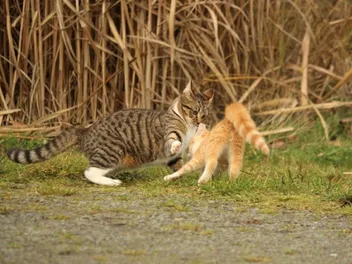
Inbreeding involves the mating of relatives, and it's often done to select for physical traits when breeding pedigree cats e.g Siamese points. It also happens among unaltered, related domestic cats left to their own devices and in feral cat colonies with few mating opportunities.
Unaltered sibling and half-sibling domestic cats who live together will mate when subjected to the potent combination of hormone-driven instincts and limited access to potential mates.

Why Is Inbreeding Considered Bad?
Inbred cats have less diverse genomes and, as a result, are more likely to express specific traits. Allowing close relatives, both of whom may have a genetic defect, to breed increases the chance of that genetic defect coming to light in their offspring.
Genetic Disorders and Breed-Specific Conditions
Inbred animals sometimes suffer from genetic disorders and are often prone to developing inherited diseases, such as hypertrophic cardiomyopathy in Sphynx and Maine Coon cats and amyloidosis, which can lead to liver and kidney failure in Siamese cats.
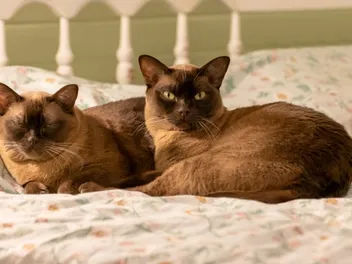
Pedigree cats are at increased risk for breed-specific health conditions because they (by definition) have gene pools that have been narrowed by inbreeding.
Immune System and Reproductive Issues
Serious and persistent inbreeding can result in sickly cats with compromised immune systems and reproductive problems, including decreased fertility, small litter sizes, birth defects 1, and high newborn kitten mortality rates.

What About Other Species?
Inbreeding doesn't just affect domestic cats. Lack of genetic diversity almost drove Florida panthers to extinction as their small population numbers in the ‘80s and ‘90s led to such genetic homogeneity that the cats often had low sperm counts, kinked tails, heart defects, and undescended testicles.
The population grew from a low of 20 to 30 individuals to around 200 2 after the introduction of new panther blood from Texas that expanded the genetic pool. Eventually, many of the physical defects associated with inbreeding, such as kinked tails and heart problems, decreased.
How Much Inbreeding Is Okay?
Coefficients of inbreeding (COIs) provide a scientific way to measure and describe how much genetic overlap exists in potential matings. Brother-sister and parent-child pairings have COIs of 25% 3. Cats born to two completely unrelated parents generally have COIs of 0%. Half-sibling, aunt-nephew, uncle-niece, and grandparent-grandchild matings usually produce kittens with COIs of 12.5%.
Higher inbreeding coefficients often result in increased neonatal death and stillbirth rates. According to the Grand Council of the Cat Fancy, inbreeding coefficients lower than 10% are considered ideal 4, and coefficients between 10% and 20% are acceptable. COIs of 20 to 25% represent a close mating and are at the far end of what this organization suggests many breeders consider acceptable.
The organization generally only allows offspring of parent-child and full sibling matings to be enrolled on the non-active register due to concerns about the health consequences of such close pairings.

How Has Genetic Testing Helped?
Many conditions can now be identified through genetic testing, which can be used to identify carriers of potentially problematic genes and exclude those individuals from breeding programs.
Scientists fully sequenced the feline genome for the first time in 2007 5, and there are currently several tests for conditions such as progressive retinal atrophy (PRA) and polycystic kidney disease (PKD). Genetic testing has largely been responsible for the massive decline in PKD in Persian cats and is also being used to reduce the risk of hypertrophic cardiomyopathy (HCM) in Ragdoll and Maine Coon cats. Other genetic tests available are for gangliosidosis and for spinal muscle atrophy (SMA). Genetic testing can also identify traits like coat color and length potential.
Are There Ways to Keep Cats From Inbreeding?
Spaying and neutering eliminates the risk of inbreeding since it prevents cats from reproducing. You can speak with your veterinarian about the best time to neuter or spay your buddy, but the procedure can be done when kittens hit 6 to 8 weeks old. Cats typically reach sexual maturity when they're around 4 months old, so having the surgery before then can prevent breeding entirely.
If spaying or neutering your cats isn't an option, consider sticking with same-sex pairs, including any siblings you adopt. In homes with unaltered male and female cats, isolating queens in heat is often the only way to prevent unwanted pregnancies.
Are There Benefits to Spaying and Neutering Cats?
Spaying and neutering cats is fundamental for feline population control. Every year, about 3.2 million cats end up in shelters across the USA and many of those who aren't adopted end up being euthanized. Spaying and neutering also help prevent the feral cat population from increasing.
Reduces Undesirable Behavior
Neutering also helps reduce hormone-driven behavior in male and female cats. Neutered male cats tend to be less aggressive and often mark less. They also tend to roam less and, therefore, are less at risk of road traffic accidents, fights with other cats, and contracting infectious diseases (such as FIV). Intact female cats go into heat about every 3 weeks and often become quite vocal and affectionate. Many indoor cats become obsessed with finding ways to get outside to find mating opportunities.
Reduces Risks of Health Conditions
Spaying cats also comes with health benefits, such as reducing or eliminating the risk of developing certain types of cancer and infections. Sexually intact cats have a seven-fold increased risk for mammary tumors compared to spayed cats. Spaying a cat eliminates the risk of uterine and ovarian cancer and prevents cats from developing pyometra, a painful uterine infection that usually requires surgery.

Are There Disadvantages to Spaying and Neutering Cats?
Spayed and neutered cats can sometimes gain weight, but it likely has to do with a mismatch between their caloric needs and actual intake. Altered cats appear to require fewer calories than pets who haven't been spayed or neutered. A 10-pound altered cat may need around 261 calories per day to meet their nutritional and energy needs, while an unaltered cat of the same size would require close to 305 calories per day.
Extra attention to your spayed and neutered pets' consumption can help prevent weight gain over time, which can lower their chances of developing obesity-related health conditions such as heart disease, diabetes, and arthritis. Recovery from neutering surgery usually takes about one week for male cats but can extend to two weeks for female cats.
Conclusion
Inbreeding occurs when two closely related individuals mate and have offspring. Because it results in reduced genetic diversity, it can result in kittens with physical deformities and health issues, but it's also used to breed cats with specific physical and temperamental traits.
All pedigree cats are essentially inbred in order to maintain the breed standards. Many breeders are now using genetic testing to reduce the occurrence of breed-specific conditions such as hypertrophic cardiomyopathy in Maine Coon cats. Domestic and feral cats breed with relatives, particularly when they don't have access to genetically unrelated potential mates, but female cats are thought to naturally avoid pairing off with close relatives when possible.
Featured Image Credit: Thomas B., Pixabay
Expert cat care, straight to your inbox
News, insights, and useful advice, delivered to you.

No spam — unsubscribe anytime.
By signing up, you agree to our Terms & Conditions and Privacy & Cookies Policy.
How useful was this post?
Click a star to rate. You can leave written feedback afterwards. (We read all feedback.)
Lorre Luther is a writer who is firmly convinced that cats are smarter than humans. She left her law career in the United States and moved to the Netherlands to follow her dream of becoming a writer. Lorre currently lives in Rotterdam, she enjoys traveling and greatly appreciates the beauty of nature. Lorre has a spot for animals and admires the intelligence of cats.