Do Cats Have Whiskers on Their Legs? Vet-Reviewed Facts & FAQ


In this article
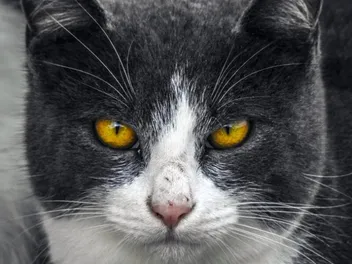
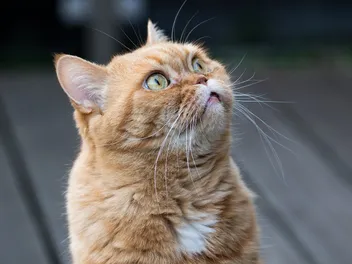
We are quite familiar with our little kitty's whiskers. They are one of the most adorable things about their faces. But do cats only have whiskers on their face? How about their legs? It would be absolutely right if you've heard a rumor that cats also have whiskers on their legs.
Let's learn more about whiskers, how they function, and how they help your cat navigate everyday life. And before we even begin, no, the whiskers never need a trim!

What Are Whiskers?
As cat owners, we love our kitty's whiskers, but most of us probably don't know much about them. You might've heard that if you clip a cat's whiskers, it causes them to walk sideways. The question is, why? We definitely don't recommend slicing off your cat's whiskers to test the theory. We're just going to tell you to clear up any confusion.

Whisker Function
Whiskers can tell us so many things about our cats. Your cat's whiskers can change in movement depending on their mood and what's happening around them. While these are typically used for tracking and hunting, they also are integrated into a cat's basic personality and behavior.
Your cat can use their whiskers to indicate fear, anxiousness, aggression, pain, friendliness, and interest.
Whiskers are an important sensory and navigational system for your cat. Interestingly, the whiskers are the very first hairs to develop in the womb. Each whisker is connected to a nerve bundle that signals the body, acting as a series of receptors.
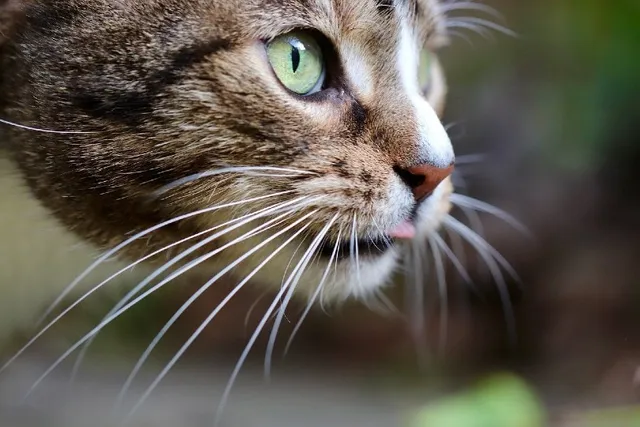
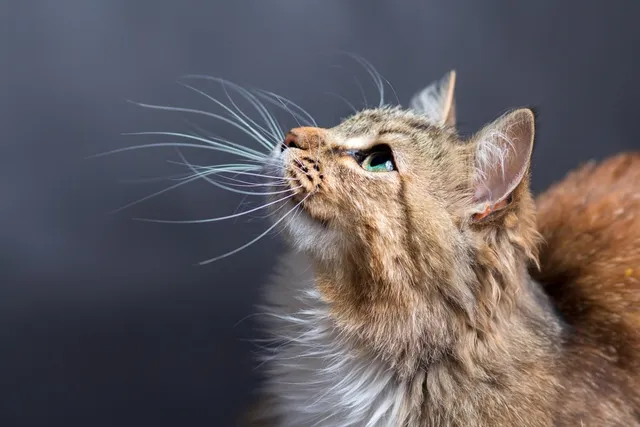
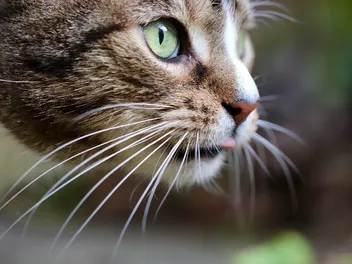
Whiskers help your cat detect even the slightest movements around them, making them incredibly keen to react. Your feline has several distributed throughout their bodies, mostly on the face. Generally speaking, cats have an even number of whiskers on both sides of the face, totaling roughly 24.
In addition to their muzzle whiskers, they also have chin whiskers and eyebrow whiskers. Whiskers control your cat's balance and keep them keenly aware of what's happening around their face. Whiskers will vibrate when an object gets close letting them know when an object is near.
What's unique about these particular whiskers is that they help your cat climb trees on other surfaces. Also, when your cat finally catches prey, these whiskers help them determine if the prey is still living.

Do Carpal Whiskers Also Affect Balance?
Carpal whiskers on the back of your cat's front legs are to help your cat navigate their path in alignment with the whiskers on its face. While the whiskers on the head detect most of what's going on around, the ground-level whiskers help your cats ensure their footpath and climb accurately. They are also useful when hunting prey.
All whiskers come together to create a GPS-like system. In combination with other senses, whiskers communicate with your cat's brain for safety, security, and survival purposes.
Whisker Fatigue: What Does It Mean?
In marketing, you might've heard the term whisker fatigue, but do you know what it means? Because cats measure distance with their whiskers, having a food bowl or something else very close to your cat's whiskers can overstimulate them. That is why you'll see a lot of marketing that aims to prevent whisker fatigue by providing a shallow cat dish that doesn't obstruct your cat's whiskers.
Whiskers can help your cat in a variety of ways. It's an external guidance system so they can navigate their daily lives without issue.
Often, whiskers help with hunting, but your domesticated cat won't need to do this for food as a wild cat would. Even though domestic cats don't need to seek out prey to survive, these instincts are still deeply embedded in your cat's psyche.

Never Trim Whiskers
So, the whiskers still have a primary function in your cat's daily life. It is so important to understand that you should never cut a cat’s whiskers under any circumstances. Even though you might cut your facial hair to eliminate scruff, your cat doesn't need the same treatment.
Not only will it be insanely uncomfortable for your cat, but it's also incredibly inhumane to perform such an action. If you have come here to educate yourselves before picking up the shares, we are glad you did.
Even the carpal whiskers on the back of the legs survey primary function and should never be tampered with in any way, shape, or form.

Final Thoughts
Now you know that it is perfectly normal for your cat to have whiskers on their front legs. It might not seem like that big of a deal, but these little tiny whiskers have huge functions, telling your cat about the environment they're walking in. This is part of your cat's overall navigational system.
Again, we must stress never to trim or cut any whiskers on your cat's body. These are not the same as hairs; they need these wiry projections to get around.
Sources
https://www.fearfreehappyhomes.com/face-talk-what-your-cats-whiskers-tell-you-about-his-mood/
https://vcahospitals.com/know-your-pet/why-do-cats-have-whiskers
https://www.floppycats.com/why-do-cats-have-leg-whiskers.html
Featured Image Credit By: Seregraff, Shutterstock
Expert cat care, straight to your inbox
News, insights, and useful advice, delivered to you.

No spam — unsubscribe anytime.
By signing up, you agree to our Terms & Conditions and Privacy & Cookies Policy.
How useful was this post?
Click a star to rate. You can leave written feedback afterwards. (We read all feedback.)
As a freelance dog writer and passionate pet enthusiast, Ashley Bates is pursuing studies in animal therapy. A mother to four human children and 23 animal companions, Ashley is dedicated to volunteering at shelters, advocating for animal rights, and rescuing animals in need. Her goal is to spread awareness, provide education, and offer entertainment about pets to reduce homelessness. Ashley's specialties include dogs and cats.