Get

In Your Inbox

Catster is reader-supported. When you buy via links on our site, we may earn an affiliate commission at no cost to you. Learn more.

Cats on Roombas: A Strange Relationship Explained (Vet-Verified)

Share

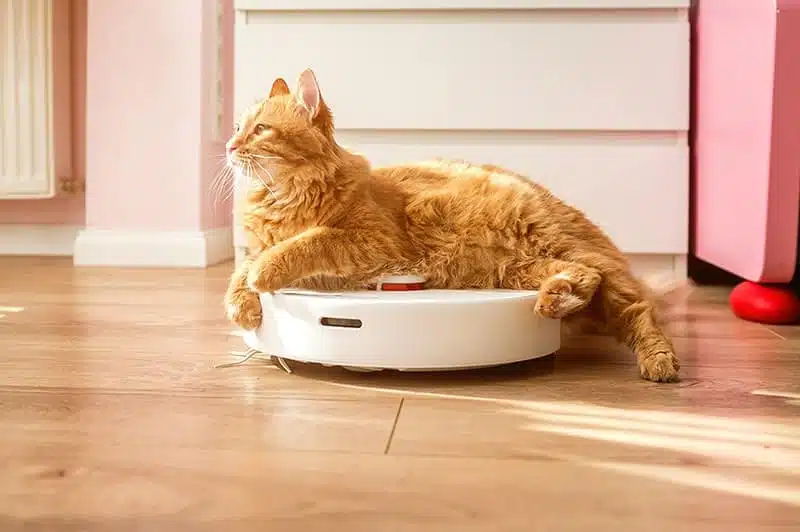
orange cat riding a roomba or robotic vacuum

Cats make great companions, are playful, and often engage in strange behaviors, such as riding on a Roomba, which is an automatic indoor vacuum. If your cat does this and you would like to know more about this behavior, why they enjoy it, and how to keep them safe, read on! We’ll provide several possible reasons behind this behavior and discuss how you can ensure your cat’s safety.

divider 3 paws

How Did a Cat on a Roomba Become Popular?

The internet has plenty of adorable animal content, but the phenomenon of cats on Roombas is truly special. Videos of the content often spread quickly across social media platforms. The combination of the cat’s graceful movements and the Roomba’s robotic technology creates a surprising contrast that is fun to watch and often leads to comical situations that can brighten anyone’s day.

black sphynx cat riding a roomba or robot vacuum at home
Image Credit: Marykor, Shutterstock

divider 3 paws

Why Do Cats Like to Ride Roombas?

1. Territory Surveying

Cats enjoy looking over their territory, which is why they enjoy cat perches. The Roomba enables them to move around in their territory and survey it from ever-changing angles without expending energy. This benefit is likely highly appealing to your pet.


2. Predatory Instincts

Cats are natural hunters with strong predatory instincts, and the movement of a Roomba, with its subtle vibrations and unpredictable path, can trigger a cat’s hunting behavior. The vacuum’s motion resembles a small animal’s, stimulating a cat’s curiosity and predatory drive.

curious sphynx cat inspecting a roomba or robot vacuum
Image Credit: New Africa, Shutterstock

3. Movement and Noise

The movement and noise produced by a Roomba can be captivating to cats. Its smooth gliding and the gentle hum of its motor can intrigue cats and make them feel like they’re interacting with a live creature.


4. Playfulness

Cats are playful animals that enjoy engaging with their environment. The Roomba’s movements can provide an opportunity for play, and some cats might see it as a moving toy to interact with. Cats can pounce on the Roomba, bat at it, or follow it as if participating in a game.


5. Curiosity

Cats are famously curious animals. Any new object or movement in their environment will likely capture their attention, leading them to investigate and interact with it.

curious kitten standing on a roomba or robot vacuum
Image Credit: Roman Pyshchyk, Shutterstock

6. Heat and Comfort

Some Roomba models generate heat while in operation. Cats like to seek out warm spots for comfort, and the warmth emitted by a running Roomba might make it an appealing place to sit for a while.

divider 3 paws

Why a Cat Might Not Want to Ride a Roomba

1. Noise

Roombas emit a consistent noise while in operation. Some cats are naturally more sensitive to loud or unusual sounds and may become fearful or anxious when a Roomba is running.


2. Unpredictable Movements

While the unpredictable movements of a Roomba can be captivating to some cats, they can be unsettling to others. Cats are creatures of habit and often prefer routines and predictability.

Cat hunting to toy mouse at home
Image Credit: Viacheslav Lopatin, Shutterstock

3. Invasion of Space

Cats are territorial animals, and a Roomba moving around in their territory can be an intrusion. If your cat views the Roomba as a potential threat to their territory, they may respond with fear or aggression.


4. Personality and Temperament

All cats have unique personalities. Some are more confident and curious, while others are shy and introverted. A cat’s temperament will significantly influence how they respond to the presence of a Roomba in their environment.

divider 3 paws

How Can I Ensure That My Cat Is Safe Around a Roomba?

1. Supervision

Always supervise your cat while they’re on the Roomba to prevent accidents and ensure that the cat isn’t stressed or scared.


2. Secure Placement

Make sure the cat is positioned securely on the Roomba while still being able to step off easily if they want to.


3. Positive Association

Associate the Roomba with positive experiences for the cat. You can use treats or toys to connect positively with the machine and help them feel more comfortable.


4. Stress Avoidance

If your cat appears uncomfortable or stressed, it’s best to stop the Roomba and allow them to dismount. Doing so can help them understand and trust that they aren’t trapped and that they can try again later.

divider 3 paws

How Can I Get My Cat to Get Used to a Roomba?

  • To get your cat used to a Roomba, introduce it to your cat in a calm and controlled environment. Place the Roomba in a stationary position with the motor turned off, and let your cat sniff and investigate it to help them become familiar with it before it starts moving.
  • Create positive associations with the Roomba by offering treats, praise, and pets whenever your cat is near it.
  • Turn on the Roomba and let them observe it in motion from a distance. Observe your cat’s reactions, and turn it off if they show signs of stress or fear.
  • Gently place your cat next to the Roomba while it’s stationary and turned off. Allow your cat to get used to it and continue to use treats and positive reinforcement to create a positive experience.
  • Once your cat is comfortable around the Roomba, turn it on and let it move for short durations.
  • Always pay close attention to your cat’s body language and behavior. If your cat seems stressed, scared, or uncomfortable, stop the Roomba immediately and provide reassurance.
  • If your cat shows fear or discomfort, respecting their feelings is important. Not all cats will get used to being near or riding a Roomba. Forcing the experience can lead to stress and anxiety and reduce their chance of ever liking it.
  • Always end each training session positively with treats, praise, and affection to help your cat associate the experience with positive outcomes, which can cause them to look forward to the next session.

divider 3 paws

Final Thoughts

While some cats fear the Roomba, many enjoy playing with them. Some cats will even get on them and take rides around the house. These machines likely activate the cat’s strong prey drive while chasing and playing with it, and they also enjoy the free ride around the house to look over their territory. Most Roombas also provide warmth.

Always supervise your cat while they get used to the Roomba to ensure they aren’t frightened or injured. Start slow, and use positive reinforcement to train your cat to ride it. If you have several cats, you can purchase several Roombas and start a Cats on Roombas video series on social media!


Featured Image Credit: Sharomka, Shutterstock

Want content like this delivered to you?

Sign Up For Our Newsletter

News, insights, expert advice, and everything cat

* By submitting, you agree to our Terms & Conditions and Privacy & Cookies Policy.


How useful was this post?

Click on a star to rate (you can leave written feedback after clicking submit)

Help us improve Catster for pet parents!

Your feedback really matters.

What did you like about this post? Also how can we improve it?

Join the conversation

Leave a Reply

You’re very welcome to leave a comment or question. Please know that all comments must meet our community guidelines, and your email address will NOT be published. Let’s have a positive and constructive conversation.


Catster's Digital Magazine is Back!

Vet-approved health & behavior advice

Real cat stories & community features

Your Cat Isn’t Picky – Their Nose Is Just Bored

If you’ve ever sighed while scraping uneaten cat food into the trash, you’re certainly not alone. Many cat owners know the routine: their...

Ask Dr. Paola – Help! My Kitten Won’t Use the Litter Box! (July 27, 2026)

Welcome to our “Ask Dr. Paola” series, where every Monday we bring expert advice straight from Dr. Paola Cuevas (MVZ) to help our...

Chatting with Petra Luna About CatCrazy, Cat Food Ingredients & The Secret of E-Beams | Chatty Cattys, Episode 28

In this episode of Catster’s Chatty Cattys podcast, Nicole and Dr. Karyn welcome back Petra Luna from CatCrazy to catch up on her...

According to Vets, Most Owners Miss These Signs That a Cat is Sick

Cats are famously good at hiding discomfort. It is not stubbornness or indifference; it’s a deeply ingrained survival instinct. In the wild, showing...

More related

Sam Sawet Cat Breed Info: Pictures, Temperament & Traits

When cat lovers think of Thailand, they probably jump straight to the Siamese. But few know about the Sam Sawet, a non-colorpoint cousin...

History of Catnip: Taking a Look at Its Past

Many people know about the effects that catnip can have on cats. However, have you ever stopped to wonder how humans stumbled upon...

10 Top SNL Sketches With Cats: Feline Funnies

Saturday Night Live has been producing comedy sketches for decades, and it occasionally has ones with animals in them. It seems like many...

How to Make a Cat Less Skittish: 10 Vet Approved Tips & Tricks

While some cats love to meet new people and explore novel environments, others emphatically don’t. Particularly skittish cats will sometimes disappear entirely in...

Keep reading

Do Cats Have Good Memory? Vet Approved Feline Memory Facts

Living with a cat is sure to create many fond memories. While we can recall these fun and enjoyable memories, it’s not clear if cats also can. Cats are intelligent animals that have a good sense of memory, but it’s...

cat resting with owner on sofa at home

Why Don’t Cats Listen? 6 Vet-Verified Possible Reasons

​​ One of the many perks of dog ownership is the feeling of being listened to. “Sit,” “heel,” and “stay” commands bring satisfaction every time that they’re obeyed, but pups show understanding even when we’re venting. They’ll rally through an...

Closeup portrait of old calico cat lying down by kitchen on tiled floor in home

10 Best Brushes for a Himalayan Cat in 2026 – Reviews & Top Picks

Himalayan cats are known for their endearing nature and stunning appearance. Caring for a Himalayan is a rewarding experience, but it requires significant grooming duties. The cat’s long, thick coat becomes easily tangled if it’s not brushed every day, and...

Cat with long hair being brushed with hepper brush

How to Reduce Anxiety in Cats: 10 Vet Verified Tips

Anxiety may not make sense to a lot of people, but it is a very real struggle for those who suffer from it. It can afflict humans and pets in varying degrees and can cause both physical and behavioral reactions....

scared cat hiding behind the door

Can Cats Share a Litter Box? Vet-Reviewed FAQ & Tips

Although cat litter trays are an unglamorous side of cat parenting, these items are more than just a bathroom for cats, as they also act as sacred spots and private retirement places for kitties. For this reason, the short answer...

multiple kittens in a litter box

How to Brush a Cat: 8 Vet-Verified Steps

Whether you’re trying to control shedding or looking for a way to bond with your cat, brushing is an essential part of caring for your pet. Some cats naturally love the activity, while others hide at the first sight of...

woman brushing the Persian cat

How to Clean a Cat’s Butt: Vet-Approved Step-by-Step Guide

Cats are generally experts at cleaning themselves, butts included. But sometimes, your feline pal needs a little extra help in the hygiene department. Cleaning a cat’s butt is mildly unpleasant and can also be a health risk, so ensure you...

A-curled-cats-tail-close-up

Why Is My Cat Suddenly Walking Like They’re Drunk? 10 Vet-Reviewed Reasons

It’s a question that concerned cat owners may ask: Why is my cat suddenly walking like they’re drunk? There are many possible reasons for this, and we will discuss some of them below. Cats can become unsteady on their feet...

orange cat shaking its tail

Love Cats? So Do We! Join the Catster Community

Stay informed with expert pet care insights delivered straight to your inbox! Discover professional guidance on animal behavior, feeding tips, trusted product picks, and much more.


Sign up for the Catster Email Newsletter

Stay informed with expert pet care insights delivered straight to your inbox! Discover professional guidance on animal behavior, feeding tips, trusted product picks, and much more.
