My Cat Is Obsessed with Food, Is Something Wrong? Vet-Verified Facts

In this article
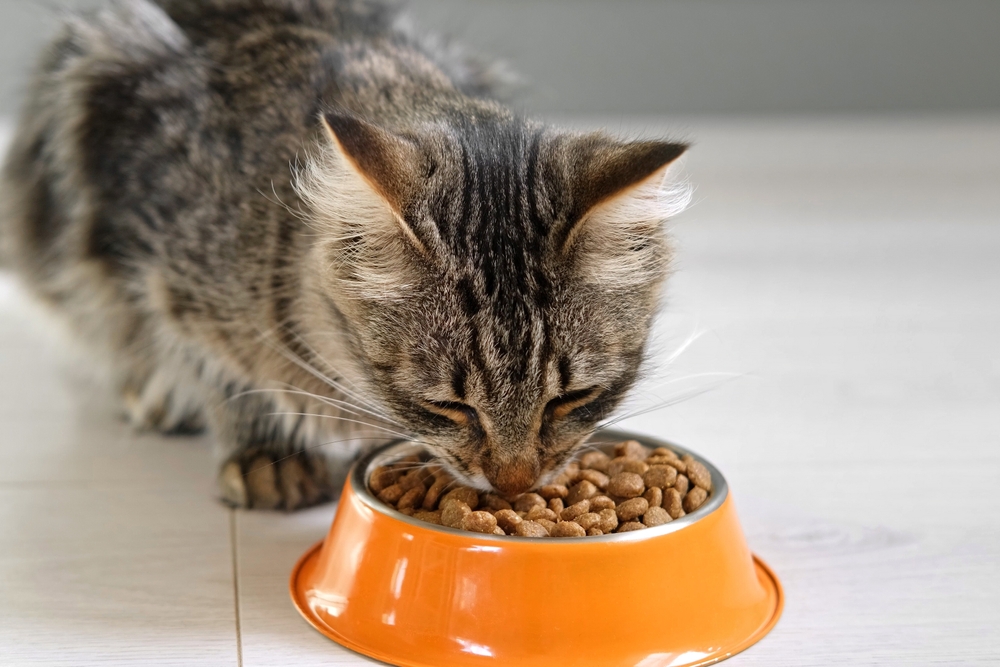
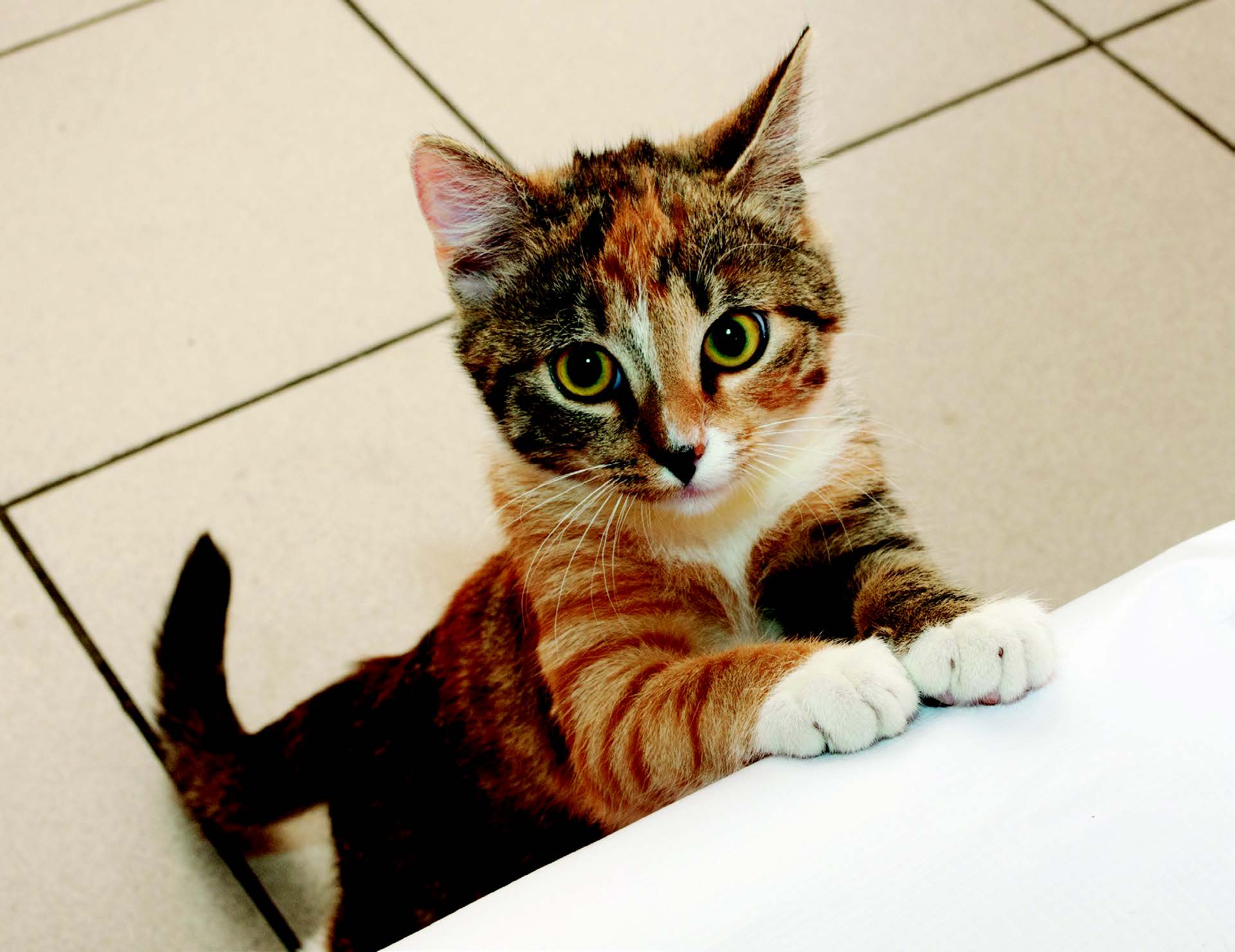
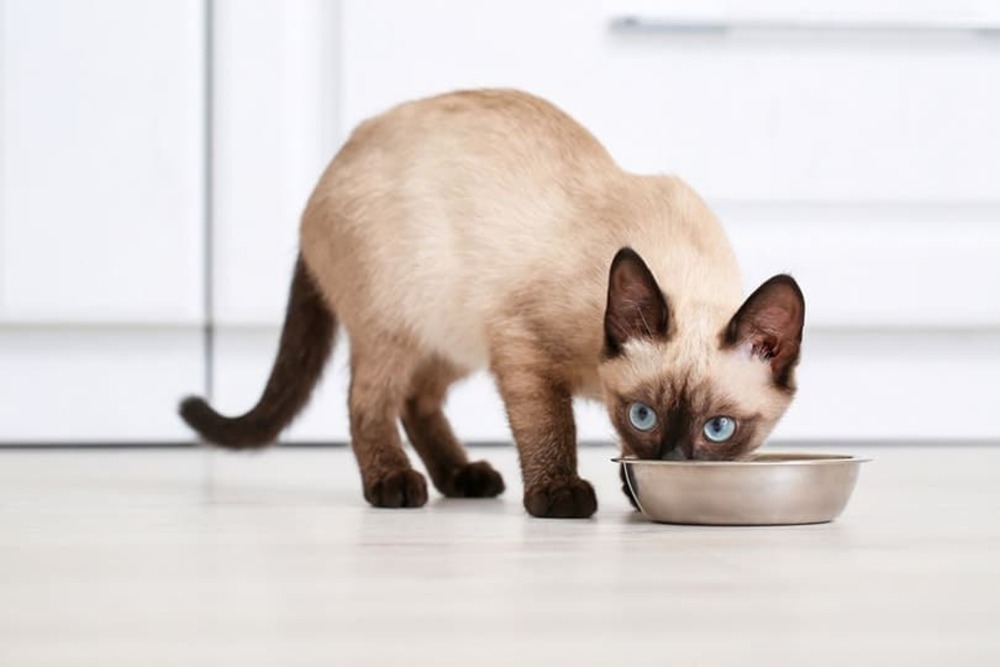
Some cats like to eat more than others. But if your cat can’t seem to get full regardless of how much they gulp down and are constantly jumping up onto your kitchen table to shove their face into the food you’re preparing, they probably aren’t hungry, but rather, food-obsessed. However, this behavior could also be the result of an underlying health condition, so it’s important to take them to a veterinarian for a complete medical workup to rule anything out.
Dealing with a cat that is obsessed with food can be taxing on owners because the cat will constantly be harassing them for more. Research suggests that cats can become obsessed with food, without there being a medical cause for it.1 Thankfully there are some ways to remedy this behavior. It will take consistency, positive reinforcement, and patience, but the result will be worth it. Let’s discuss what you can do to help your cat.

How to Know If Your Cat Is Obsessed with Food
It can be hard to know whether your cat is obsessed with food or just hungry. However, if they’ve had the recommended amount of food according to their age and weight and are still meowing for more, they might not be self-regulating the way they should. Here are a few signs that your cat is obsessed with food:
- Aggression towards other pets when there is food around.
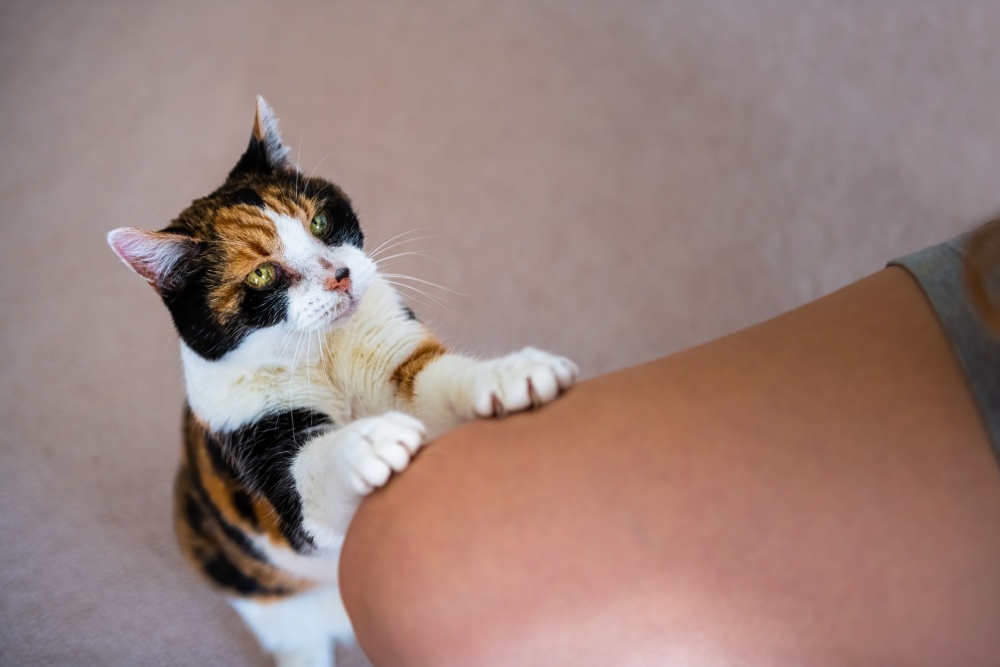
- Harassing you for food whenever you’re in the kitchen.
- Showing impatience around mealtimes.
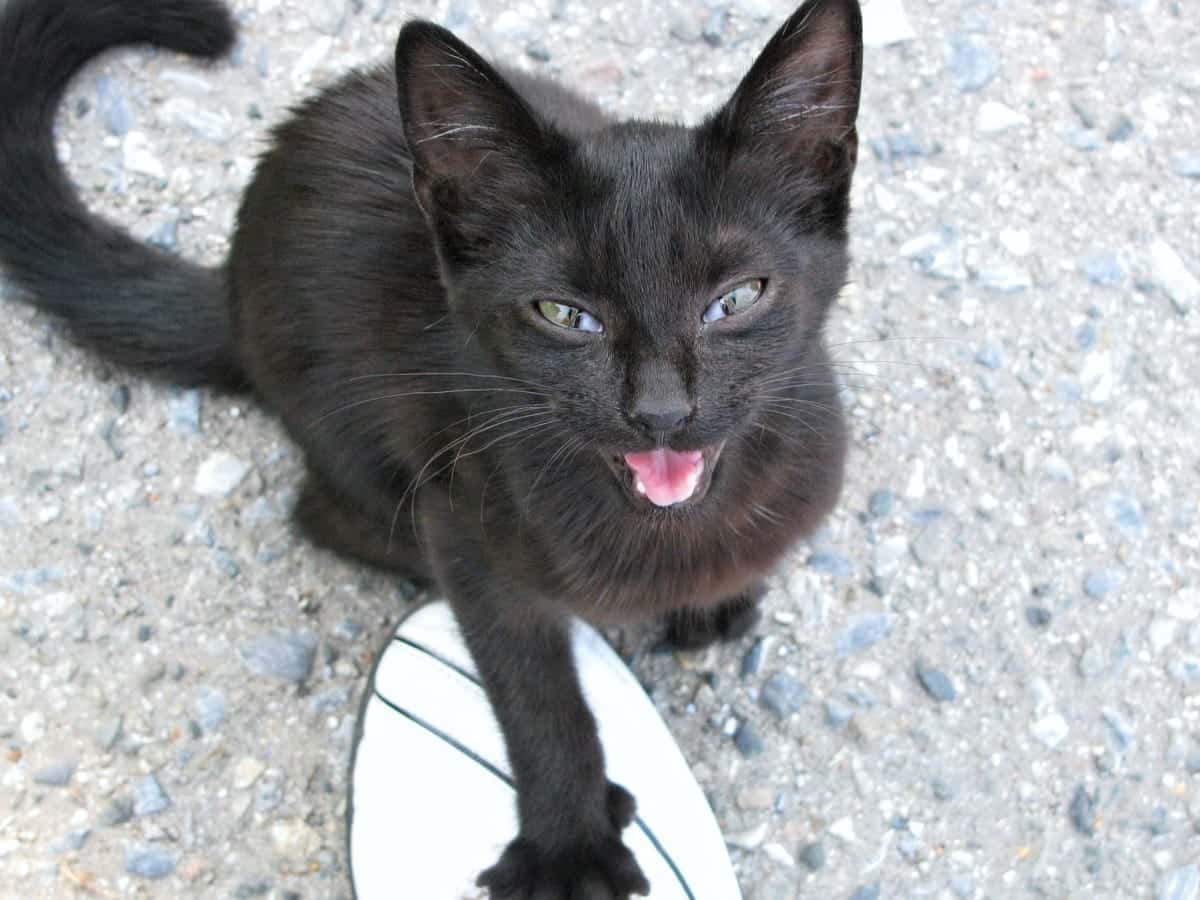
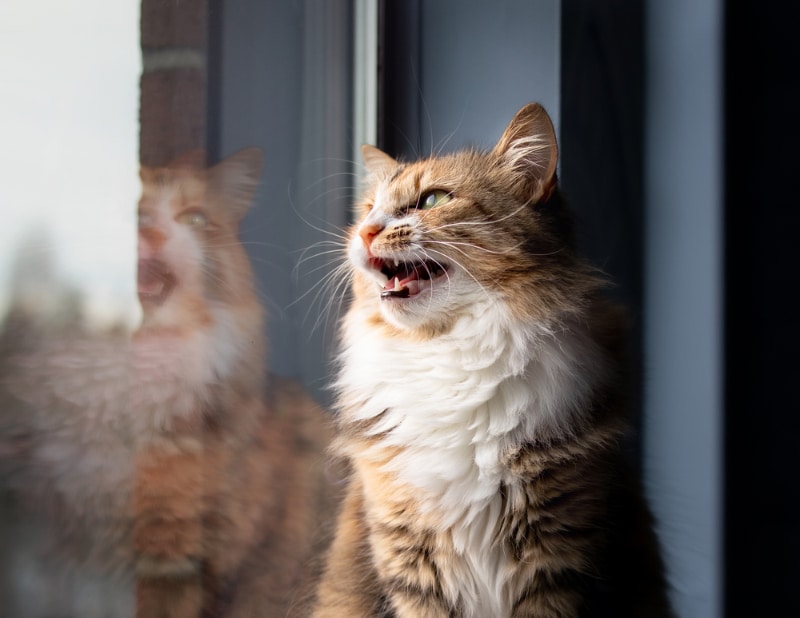
- Excessive vocalization.
- Overly interested in your food.
- Trying to eat your food, even while you’re trying to eat.

What Health Conditions Cause an Increase in Appetite?
Sometimes, the cause of your cat’s increased appetite can be a psychological issue, but there are a few conditions that will cause your cat to want to eat more. These conditions include:
- Pregnancy: Pregnant and lactating cats experience an increase in appetite because their bodies need more calories to nourish and feed their kittens.
- Hyperthyroidism: Cats with this condition eat more because their thyroid gland overproduces the thyroid hormone, which increases their metabolism.
- Some medications: Medications such as corticosteroids will increase your cat’s appetite. However, a veterinarian should have discussed these side effects with you before they started your cat on them.
- Diabetes: The body is unable to utilize the glucose in the cat’s bloodstream due to a lack of or a resistance to insulin. Therefore the body feels it is starving even though it has had plenty of food.
- Poor-quality diet: If a cat isn’t receiving adequate nutrition due to a poor-quality diet, they will feel hungry again soon after eating.
- Malabsorptive diseases: These include inflammatory bowel disease and exocrine pancreatic insufficiency. In both conditions, nutrients aren’t properly absorbed into the body from the food the cat eats, which causes them to remain hungry. Sometimes, cats with this condition will even eat non-food items.
- Intestinal parasites: Roundworms and tapeworms are some intestinal parasites that consume their host’s digested food. This results in the cat not receiving all the calories they need and causing them to always be hungry.
If your cat has suddenly started to eat a lot more or can’t seem to be satisfied, it is a good idea to take them for a health checkup with a veterinarian. Other signs that may accompany an increased appetite that require veterinary attention are excessive drinking and urination, vomiting, diarrhea, worms in their poop, weight loss, eating non-food items, and lethargy.
What Causes a Cat to Become Obsessed with Food?
If you have taken your cat to a veterinarian and their blood work and urinalysis came back normal, your cat’s food obsession might be psychological.
A cat being food-obsessed is often a learned behavior. They may have had to compete for food when they were being weaned because there wasn’t enough to go around. This is often the case for kittens born on the streets. If they didn’t fight for their food, they may have had to go hungry. If this is true for your cat, they will likely show signs of aggression towards other pets in the home when they’re around food, so feed them separately.
Some cats become obsessed with food when they’re stressed, depressed, or bored. Sometimes cats eat to self-soothe, and sometimes they eat because it’s the most exciting activity in their day. It’s essential to add toys, perches, and other fun things to your cat’s environment to keep them mentally stimulated. If your cat is eating out of boredom, you may notice weight gain. If they’re eating due to stress, you may notice other signs, such as overgrooming.

What to Do if Your Cat is Obsessed with Food
As much as it can be annoying, or even funny at times, to have a cat that pesters you for more and more food, overeating has consequences, which is why the behavior must be corrected. With patience and consistency, here are a few ways to treat a cat that is obsessed with food:
- Identify and reduce your cat’s exposure to stress.
- Create a routine so they know when mealtimes, playtime, and exercise times are.
- Reward good behavior, such as staying off the countertops when you’re preparing food.
- Feed them good-quality cat food that is high in protein. This will help them stay full for longer.
- Feed your cat at certain times of the day instead of leaving food out for them to eat constantly.
- Feed smaller portions more often.
- Use a slow feeder.
- Feed them in a separate room, away from other pets.
- If your cat pesters you for food, put her in another room for a few minutes and close the door. They’ll soon associate their behavior with this action and understand that their behavior doesn’t get them what they want.
- Always reward good behavior with attention, treats, and praise to reinforce it.
- Make their environment more stimulating with perches, a cat tree, food puzzles, and toys. A stimulated cat has less time to obsess about food.
- Give your cat plenty of attention and exercise.
Conclusion
No two cats are the same, and some appetites are bigger than others. However, if your cat is aggressive around food, pesters you for food constantly, is excessively vocal, and is impatient around mealtimes, they might be obsessed with food. However, this behavior can also be an indication of a health problem such as intestinal parasites, diabetes, hyperthyroidism, and malabsorption diseases, so it’s best to get your cat checked over by a vet.
It’s always necessary to take your cat to the veterinarian sooner rather than later if you notice sudden changes in your cat’s appetite. Your cat might be obsessed with food because it’s a learned behavior or because they’re stressed, depressed, or bored. Enrich your cat’s environment with toys and reward positive behavior with praise, treats, and attention.
See Also: My Cat Is Obsessed With Their Automatic Feeder, Should I Worry? Vet-Reviewed Causes & Facts
Sources
https://www.petmd.com/blogs/nutritionnuggets/cat/jcoates/march/2013/cats-obsessed-with-food-29894
https://www.madisonanimalcare.com/cat-obsessed-with-food#:~:
https://www.sciencedirect.com/science/article/abs/pii/S1558787812000378
https://www.purina.co.uk/articles/cats/health/pregnancy/feeding-during-cat-pregnancy
https://vcahospitals.com/know-your-pet/hyperthyroidism-in-cats
Featured Image Credit: Jaromir Chalabala, Shutterstock

Expert cat care, straight to your inbox
Vet-reviewed advice, behavior tips, and the best of Catster. Free, and you can unsubscribe anytime.
By signing up, you agree to our Terms & Conditions and Privacy & Cookies Policy.
Keri-Beth is a freelance writer from South Africa who loves writing about cats. She's very passionate about pet care and has spent quite a bit of time volunteering at animal shelters. Keri-Beth currently has two dogs: Benji, the Golden Cocker Spaniel, and Gracie, the Boerboel.
Keri-Beth's favorite hobbies include photography and camping. She lives with her husband, who is a professional drummer.
Join the conversation
Ask a question, share your story, or send private feedback.