Can You Be Allergic to Some Cats & Not Others? Vet-Reviewed Facts & FAQ



In this article
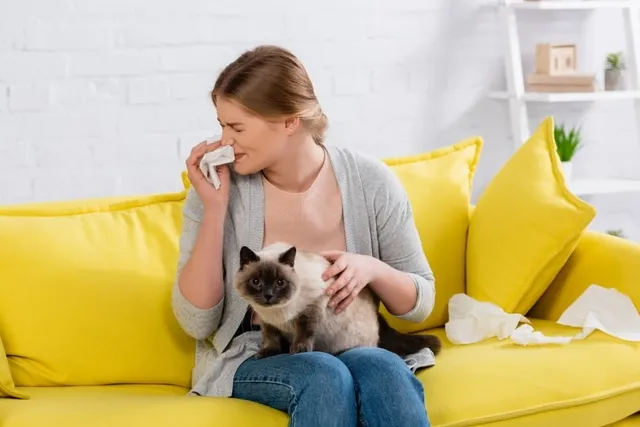
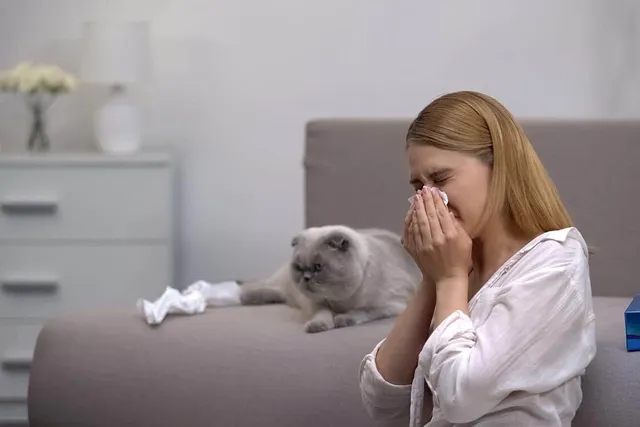
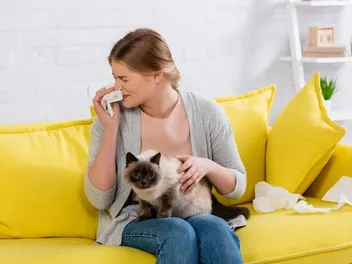
Cat allergies can be a real bummer, especially if you’re a cat lover hoping to introduce a cat to your home. There are things you can do on your side to minimize the effects of your allergies, like taking medications and cleaning frequently, but what if you could bring home a cat that wouldn’t irritate your allergies like other cats do? Is it possible to be allergic to some cats but not all cats? Yes, but there are things you should know!

Is a Hypoallergenic Cat a Good Option?
It’s best to just rip the bandage off with this one: there is no such thing as a hypoallergenic cat. The allergens that cats carry are in the proteins of their skin and bodily fluids, like urine and saliva. Dander is the biggest culprit of irritating allergies when you’re around cats, especially if you’re petting the cat or they’re rubbing on your clothes.
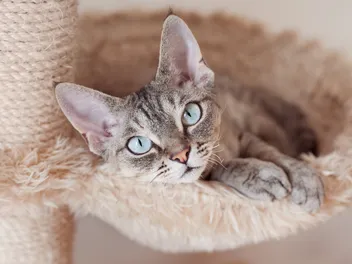
Some cats are less likely to irritate your allergies than others, and hairless or nearly hairless breeds, like the Sphynx and Lykoi, may carry fewer allergens than their long-haired cousins. They do still have the potential to irritate your allergies, though!

How Can You Be Allergic Only to Some Cats?
For clarity, some people are allergic to all cats, period. If you know or think you’re one of those people, it’s best to kick the idea of owning a cat out of your head because the negative health impacts you’ll suffer aren’t worth it.
Individual cats produce different levels of allergens, namely, Fel d 1. This is the primary allergen that cats release in their body fluids (mainly saliva) and skin. Some people are more sensitive to this allergen than others, which is why some people only get a little bit itchy or sneeze when they’re around a cat, while others have an anaphylactic reaction. It can also explain why you might not think you have a cat allergy, but one particular cat seems to cause a reaction in you.
The amount of shedding and grooming a cat can impact how much you come into contact with the allergen as well. Cats that shed a lot are leaving more dander behind than cats that shed minimally. Cats that don’t groom themselves may have fewer allergens on the external portion of their coat since they won’t have saliva on their coat, but if there is a buildup of hair and dander, then they may be more likely to irritate your allergies.


In Conclusion
The number of allergens produced varies notably between every cat, and the reaction the human body has to these allergens varies notably between every person. Some people are truly allergic to every cat they encounter, sometimes even to a deadly degree. However, some people find that only specific cats seem to set off their allergies.
With careful maintenance and the right cat, some people with mild cat allergies can even live with a cat in their house, but this tends to take a lot of extra work and effort to pull off. A specific cat food has also been developed that neutralizes Fel d 1 and reduces the amount of allergens in a cat’s saliva and dander. This can take time to be effective and needs to be fed continuously, but it can be helpful when trying to manage cat allergies.
Sources
Featured Image Credit by: Image Point Fr, Shutterstock

Expert cat care, straight to your inbox
Vet-reviewed advice, behavior tips, and the best of Catster. Free, and you can unsubscribe anytime.
By signing up, you agree to our Terms & Conditions and Privacy & Cookies Policy.
Brooke Billingsley, a former veterinary assistant for nine years, became a nurse in 2013. She lives in Arkansas with her boyfriend of five years, surrounded by her beloved pets: three dogs, two cats, five fish, and two snails. Brooke has a soft spot for special needs animals, caring for a three-legged senior dog and a widely known cat with acromegaly and cerebellar hypoplasia. She has developed a keen interest in fish keeping and is always learning how to provide the best environment for her aquatic pets. In addition to her passion for animals, Brooke enjoys gardening and maintains a vegetable garden during the summer. She stays active with yoga and received her 200-hour yoga teacher certification in 2020. Brooke also hosts a podcast that delves into folklore and myth, dedicating her spare time to research and writing. She embraces the philosophy that every day is an opportunity for learning and growth, continually working to acquire new skills and knowledge.
Join the conversation
Ask a question, share your story, or send private feedback.