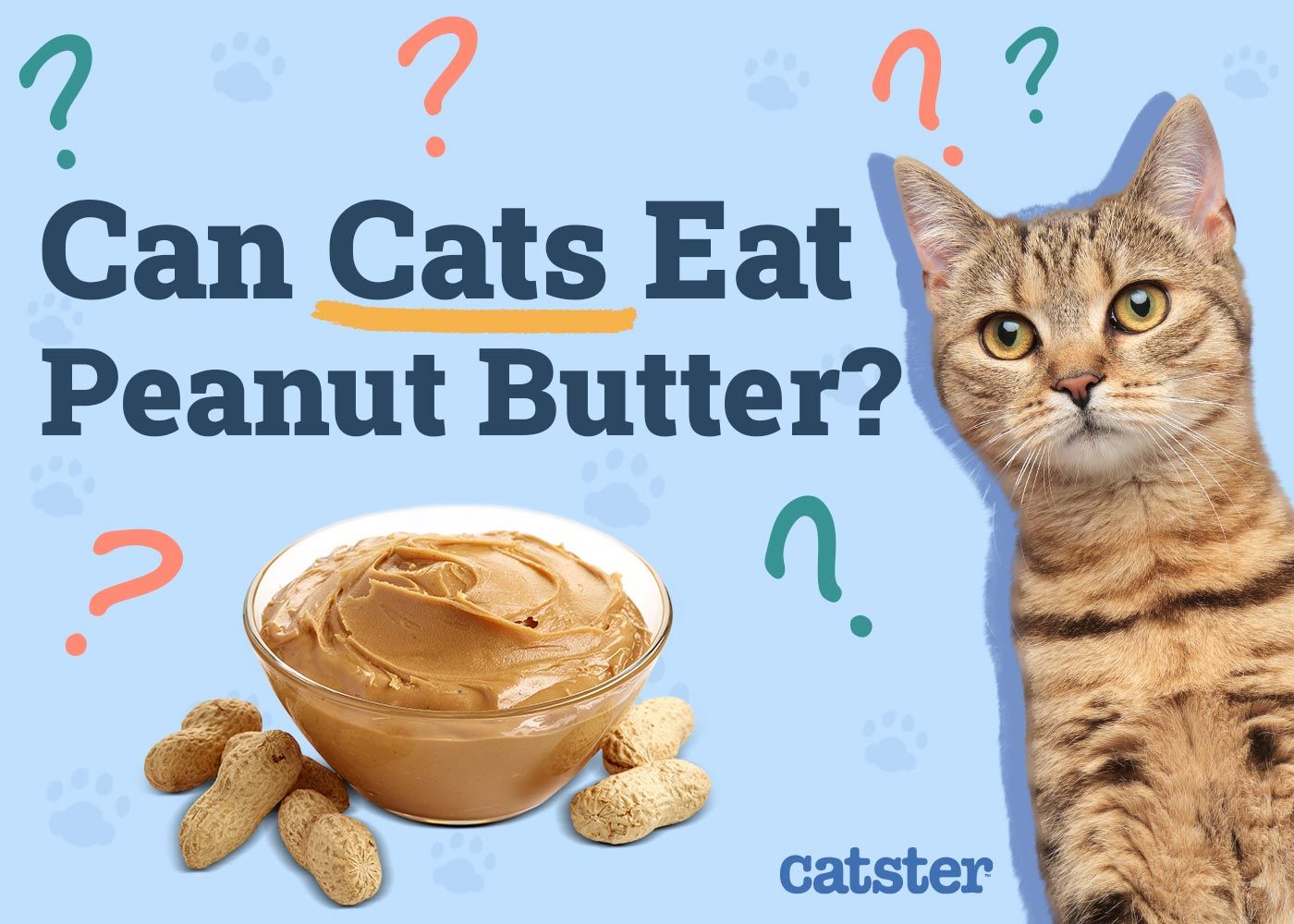
Can Cats Eat Peanut Butter? Vet-Reviewed Facts & FAQ


In this article
Peanut butter is a snack loved by humans and dogs alike, but is this sweet, nutty treat something you should share with your cat? As delicious as PB is, this food should not be added to your cat’s treat rotation. While peanut butter isn’t technically toxic, vets generally give it two huge thumbs down when it comes to offering it to your feline family member.
Read on to learn more about the relationship between cats and peanut butter and why you should avoid offering it to your pet.

Can Cats Eat Peanut Butter?
Nutritionally speaking, peanut butter offers many health benefits…for humans. It’s rich in protein, healthy fats, and antioxidants like manganese and vitamin E 1.
Unfortunately, the health benefits of PB simply do not apply to cats. Cats have entirely different nutritional needs than humans, and the benefits we would derive from a tablespoon of peanut butter would not transfer over to our feline friends.
What Do Cats Eat?
Cats are obligate carnivores, meaning they rely on the nutrients in animal products to meet their nutritional needs. So, while it’s true that peanut butter does contain protein, it’s not the right type of protein your kitty needs to thrive.
Your beloved house cat lives a life of luxury, sleeping on a fluffy cat bed, lounging from the highest perch on its cat tree, and eating at designated times throughout the day, but the same could not be said of its ancestors. Cats evolved as hunters who need to consume prey with a high protein content, moderate amounts of fat, and minimal carbohydrates. Though your spoiled kitty doesn’t have to hunt for its own food, its diet still requires similar proportions to its ancestors. Ask a veterinarian how exactly your cat's diet should look.

What Are the Risks of Offering Peanut Butter?
A little taste of peanut butter occasionally isn’t likely to cause any long-lasting damage because it’s technically non-toxic. However, if you make offering PB to your kitty a habit, there could be some consequences.
1. Tummy Problems
Cats process some human foods differently. Peanut butter is often high in fat and sugar, which can cause significant issues with your kitty’s delicate gut. Cats cannot metabolize the high quantities of protein and fat that PB contains.
Some brands of PB are also high in salt, which can wreak havoc on the digestive system. Too much salt can result in salt poisoning, which can cause signs like vomiting, diarrhea, lethargy, incoordination, seizures, or even death. It is rare but possible.
2. Choking Hazard
There’s a reason that peanut butter makes new parents nervous. Not only are peanuts one of the most common food allergens in children, but PB is also a clear choking risk. It can get stuck in a child’s throat, clogging and blocking their airway. The thick and sticky texture can form into a clump in your cat’s throat, causing choking. Even a small portion of PB can result in choking because your cat’s mouth and throat are so small.

3. Allergies
Like humans, your kitty can develop a peanut allergy. An allergy can develop at any stage of life and may be mild to severe in nature. Nut allergies are not widespread in cats, but it’s still worth keeping in mind. However, according to VCA Animal Hospitals, most cats with allergies are sensitive to things like beef, fish, chicken, and dairy.
4. Caloric Density
Have you ever measured out a tablespoon of peanut butter? If so, you were probably shocked at how small a tablespoon is and how many calories there are in that tiny portion. A portion of PB has almost 100 calories and 8 grams of fat. Most 10-pound indoor cats should eat around 200 calories daily, meaning a tablespoon of PB would account for half of their daily caloric intake. Feeding your kitty peanut butter puts it at risk of weight gain and obesity.
5. Xylitol
Many peanut butter companies use xylitol in the manufacturing of their product. Xylitol is a very popular artificial sweetener but can pose a health risk for pets. For a long time, it was believed that, while xylitol was highly poisonous to dogs, the sweetener’s toxic effects didn’t translate to cats. While studies show that it doesn’t appear to have the same blood sugar-lowering harmful effects in felines as in dogs, it could be that it isn’t as thoroughly researched.
The study we linked above looked at just six cats, so it could be that xylitol is still toxic to a certain subset that hasn’t yet been studied. In our opinion, it’s always best to err on the side of caution and avoid potentially harmful foods since there are so many healthier and safer options.

Accidental Poisoning
Cats that develop a taste for peanut butter may accidentally become poisoned if they eat PB mixed with poison to eliminate rodents and insects.
Can I Offer a Small Taste of Peanut Butter Occasionally?
Peanut butter isn’t technically toxic to cats, so you could occasionally offer a very small taste. However, we recommend allowing PB only in times when you have to bribe your kitty to take a pill and, even then, keep the serving to a tiny smidge.
Here are some things to keep in mind if using PB as a bribe for your kitty:
Final Thoughts
While peanut butter is not technically toxic for cats, it’s not a treat we recommend feeding them. Not only is it high in calories and fat, but the health benefits humans derive from PB don’t translate to cats. Your kitty indeed needs a high-protein diet, but the protein it requires must come from animal sources, not plants.
Expert cat care, straight to your inbox
News, insights, and useful advice, delivered to you.

No spam — unsubscribe anytime.
By signing up, you agree to our Terms & Conditions and Privacy & Cookies Policy.
How useful was this post?
Click a star to rate. You can leave written feedback afterwards. (We read all feedback.)
For Chantelle, writing and animals are the two driving forces in her life. Growing up on the Canadian prairies surrounded by pets, she now shares her home with five cats, two guinea pigs, and a bearded dragon. Chantelle, her husband, and their child pride themselves on being dedicated pet parent, even spending a fortune on wall-mounted cat shelves to provide their cats with an indoor jungle gym. When she's not snuggling with her cats or photographing their humorous moments, Chantelle is exploring the Rocky Mountains, rewatching her favorite Netflix series, and reading up on various random subjects.