Catster is reader-supported. When you buy via links on our site, we may earn an affiliate commission at no cost to you. Learn more.

Nutrition

Can Cats Eat Limes? Vet Approved Facts & FAQ

By Christian Adams · Reviewed & fact-checked by Dr. Tabitha HensonVet Approved
Dr. Tabitha Henson
Reviewed & Fact-Checked byDr. Tabitha HensonDVM (Veterinarian)
Dr. Tabitha Henson is a 2021 Midwestern University graduate who practices small and sometimes exotic animal medicine. Her clinical interests include dentistry, internal medicine, and rehabilitation. She will soon be a certified canine rehabilitation practitioner (CCRP). Tabitha also enjoys playing with her Golden Retriever and spending time in nature.View authorThe information is current and up-to-date in accordance with the latest veterinarian research. Read about our vets
Share
Can Cats Eat Limes

Our feelings about our pets have changed. Many people see themselves as parents instead of owners. That’s reflected in the fact that some manufacturers label their products as human-grade, although no legal framework for this term exists; it’s simply marketing. Nevertheless, we view sharing food as an act of love. If you like something, you want to share it with others—including your cat.

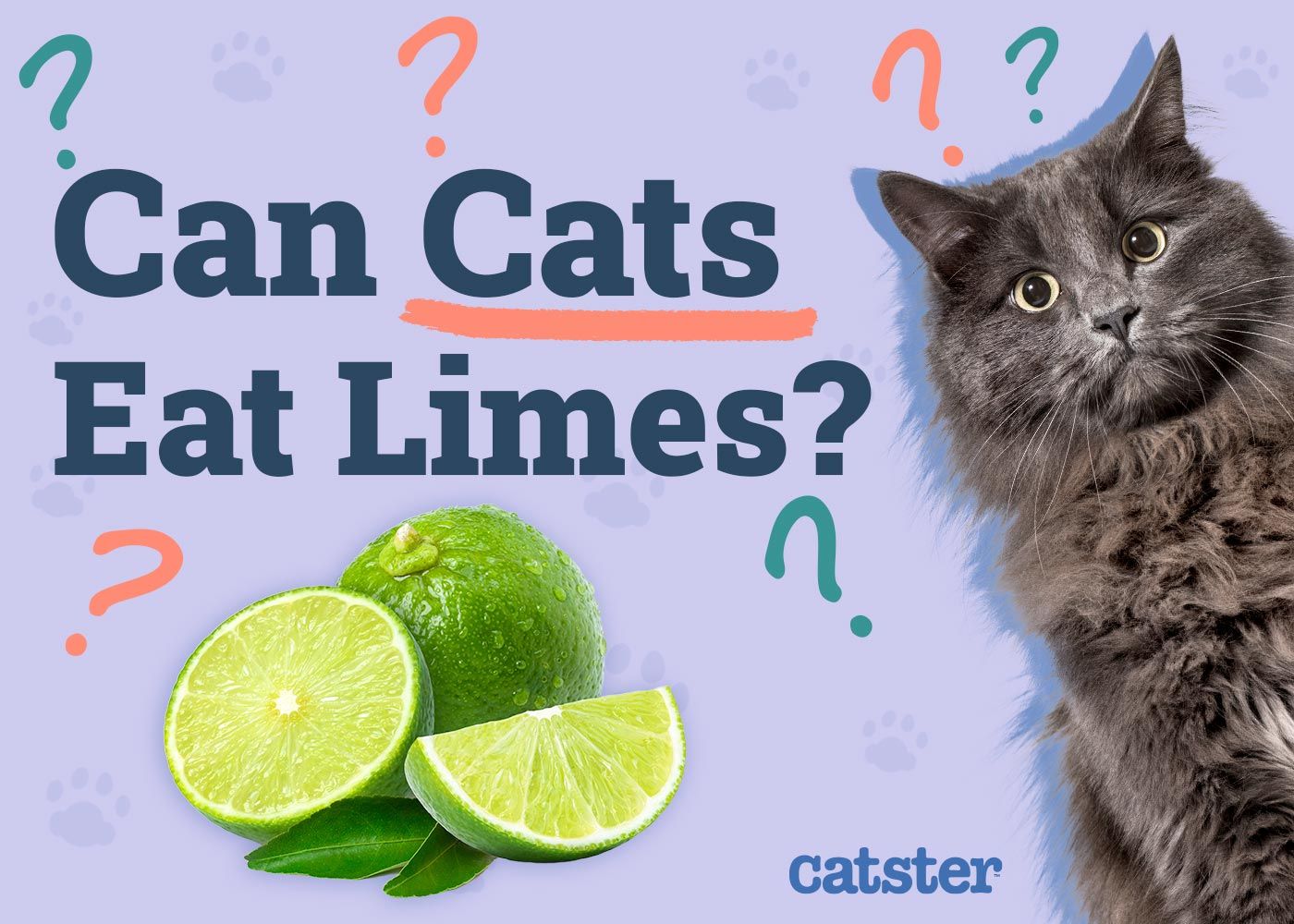
Unfortunately, that’s not a wise plan if you’re considering giving your kitty limes. According to the ASPCA, limes are toxic to felines, dogs, and even horses.

divider cats oct 2024

Nutritional Value of Limes

While we don’t usually eat limes, its juice has nutritional value. According to the USDA Food Database, a 100-gram serving provides rich sources of potassium with 10.5 grams of carbohydrates. The fruit contains over 88% water with only 30 calories. Of course, vitamin C is its hallmark, providing almost half of your recommended daily allowance for this essential nutrient.

The story of vitamin C is an interesting one. Its primary sources are fruits, which people couldn’t get during the winter months back in the day. That presents two problems. First, vitamin C is a water-soluble nutrient. That means that your body doesn’t store it. Therefore, you must get it every day from foods and beverages. Before widespread citrus agriculture and food transportation, that was a problem.

Second, humans can’t synthesize it, unlike other vitamins like vitamin K. It’s a trait we share with other primates and guinea pigs. That means we’re vulnerable to deficiencies, which was a serious issue with sailors before the 18th century. It wasn’t until Dr. William Paul Crillon Barton happened upon a connection between citrus consumption and scurvy protection that it changed.

Cats and humans have a common ancestor that goes back 94 million years ago. Today, we still share 90% of our DNA. It’s not a stretch to think that we may be able to consume the same foods and beverages, given this similarity. Unfortunately, that’s not the case. Bear in mind that humans are omnivores, while felines are obligate carnivores. Fruits and vegetables don’t supply a significant portion of their diets.

Seek veterinary advice if you’re concerned about your pet’s well-being.

Adverse Side Effects of Limes

Citrus essential oils can cause mouth irritation. It’s something sensitive people may experience, too. That might be enough to keep your cat from ingesting limes. The other issue is psoralens. Limes contain large amounts of these chemicals. That’s one reason these compounds are a vital aspect of photochemotherapy used for treating conditions such as psoriasis.

That doesn’t mean it isn’t without its risks. Medications containing psoralens increase your vulnerability to UV radiation and its effects. They also add to the toxic effects if your cat eats lime or drinks the juice. Then, there’s the acid. Pets with sensitive digestive systems may not be able to tolerate the acidity. It’ll likely cause similar discomfort for your kitty as it does you. This could mean vomiting or diarrhea for your cat if ingested.

Sick cat in animal hospital
Image Credit: Kachalkina Veronika, Shutterstock
divider cats oct 2024

Conclusion

We love our pets almost to a fault. It is understandable if you want to share your favorite foods with your cat. Unfortunately, it won’t work out as planned. Limes can cause problems for your feline companion, running from irritation to GI issues. If you want to treat your pet, you should give your cat treats formulated for them. Your kitty will love you just the same.

The Catster Newsletter

Expert cat care, straight to your inbox

News, insights, and useful advice, delivered to you.

No spam — unsubscribe anytime.

By signing up, you agree to our Terms & Conditions and Privacy & Cookies Policy.

Click a star to rate. You can leave written feedback afterwards. (We read all feedback.)

Christian Adams
Authored by

Christian Adams

Leave a Reply

You're very welcome to leave a comment or question. Please know that all comments must meet our community guidelines, and your email address will NOT be published. Let's have a positive and constructive conversation.

Can Cats Eat Lemon? Vet-Verified Facts & FAQ

Can Cats Eat Lemon? Vet-Verified Facts & FAQ

If your cat gets into the fruit bowl, you may wonder what you should do. Can cats have lemons, or are they unhealthy for your furry friends? Unfortunately, lem…

Christian Adams
By Christian Adams ·
Can Cats Drink Orange Juice? Vet-Reviewed Nutrition Facts & FAQ

Can Cats Drink Orange Juice? Vet-Reviewed Nutrition Facts & FAQ

Some people like to share certain safe foods with their cats, and most consider orange juice healthy and nutritious, so it’s only natural to wonder if it’s OK…

Christian Adams
By Christian Adams ·
Does Lime Kill Fleas on Cats? Vet Reviewed Effectiveness & Safety Explained

Does Lime Kill Fleas on Cats? Vet Reviewed Effectiveness & Safety Explained

Fleas can make your cat’s life miserable and yours a nightmare as you try to fight the infestation. Those searching for non-pesticide products to kill fleas mi…

Elizabeth Gray
By Elizabeth Gray ·
What Foods Are Toxic to Cats? 16 Everyday Items (Vet Reviewed)

What Foods Are Toxic to Cats? 16 Everyday Items (Vet Reviewed)

Cats are different from dogs. Dogs will eat anything that touches the ground. But cats? They’re a bit pickier. Still, some cats are little garbage disposals an…

Cassidy Sutton
By Cassidy Sutton ·

Can Cats Drink Lemonade? Vet Reviewed Health Risks & FAQ

When summer hits, it’s not uncommon to have a pitcher of lemonade sitting around with which to cool off. Lemonade makes the perfect hot weather drink: it’s swe…

Misty Layne
By Misty Layne ·
Can Cats Drink Lemonade? Vet Reviewed Health Risks & FAQ

Can Cats Eat Lima Beans? Vet-Reviewed Precautions & Health Guidelines

Beans are a popular staple throughout the world, used in many dishes, and enjoyed for their flavor and high protein content. While the most popular beans tend…

Misty Layne
By Misty Layne ·
Can Cats Eat Lima Beans? Vet-Reviewed Precautions & Health Guidelines

Can Cats Eat Passion Fruit? Vet Approved Feline Nutrition Advice

Our feline friends love treats, and we love giving treats to them! Most of the time, we stick with cat-specific treats, but sometimes, it’s tempting to let our…

Misty Layne
By Misty Layne ·
Can Cats Eat Passion Fruit? Vet Approved Feline Nutrition Advice

Can Cats Eat Oranges? Vet-Verified Facts & FAQ

Oranges are sweet, tart, and tasty and one of the world’s most popular fruit. They can often be found in household fruit bowls, added to fruit salads and schoo…

Christian Adams
By Christian Adams ·
Can Cats Eat Oranges? Vet-Verified Facts & FAQ

Can Cats Have Olive Oil? Vet-Approved Nutritional Facts & FAQ

The health benefits of olive oil for people are well-established. Evidence suggests it can improve cardiovascular health by lowering LDL, what is referred to a…

Chris Dinesen Rogers
By Chris Dinesen Rogers ·
Can Cats Have Olive Oil? Vet-Approved Nutritional Facts & FAQ

Can Cats Eat Cucumber? Vet-Reviewed Nutrition and Safety

Some of our cats love to keep a close eye on our kitchen activities; after all, who knows when you might drop a tasty morsel on the floor for them to investiga…

Christian Adams
By Christian Adams ·
Can Cats Eat Cucumber? Vet-Reviewed Nutrition and Safety

Can Cats Eat Pickles? Vet-Approved Health Facts & Nutritional Advice

Few things are more satisfying to us humans than the salty, vinegary crunch of a fresh pickle. Since we are often tempted to think that if we enjoy and benefit…

Christian Adams
By Christian Adams ·
Can Cats Eat Pickles? Vet-Approved Health Facts & Nutritional Advice

Can Cats Eat Grapefruit? Vet Approved Health Guide & FAQ

Cats can safely eat a variety of fruits as occasional treats but, unfortunately, grapefruit is not one of them. Cats should never eat grapefruit because most p…

Kit Copson
By Kit Copson ·
Can Cats Eat Grapefruit? Vet Approved Health Guide & FAQ

Love Cats? So Do We! Join the Catster Community

Stay informed with expert cat care insights delivered straight to your inbox! Discover professional guidance on feline behavior, feeding tips, trusted product picks, and much more.

You may opt-out at any time. View our Privacy Policy for more information.

The Catster site on a phone