Can a Cat Smell Human Hormones? Our Vet Explains the Science

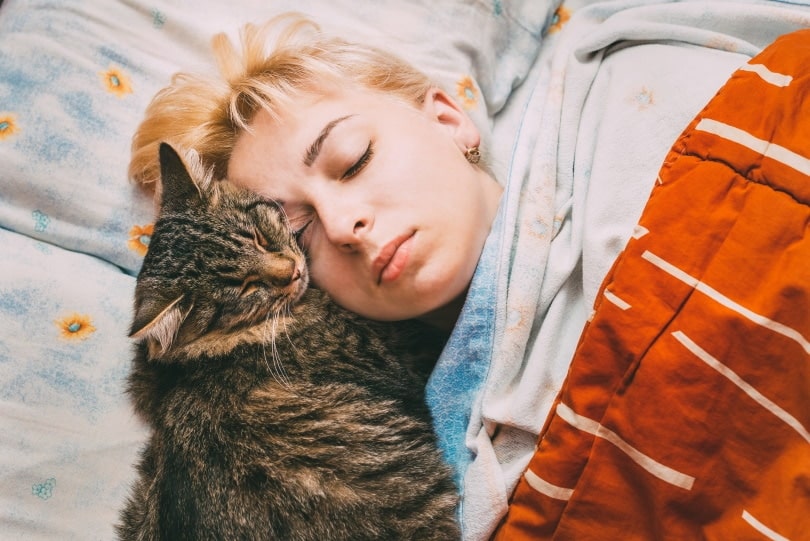
A cat’s sense of smell is much better than ours. This can be attributed to the fact that cats are endowed with over 200 million odor receptors in their nose, allowing them to detect a wide range of human scents and possibly also hormones.
Their keen sense of smell helps them detect their prey and predators. They can also detect pheromones emitted by other cats, largely believed to be part of social interactions and communication.
Read on to learn more about the different types of human hormones that cats can detect and how they react to them.

What Types of Human Hormones Can Cats Smell?
There is no scientific proof of cats being able to detect specific human hormones. However, cats are possibly able to perceive some hormonal changes in humans, based in part due to the fact that cats can read human language 1.
Below are some common human hormones that cats might be able to smell. However, it must be remembered that all of these claims are largely anecdotal or lacking sufficient studies to be confirmative.
1. Pregnancy Hormones
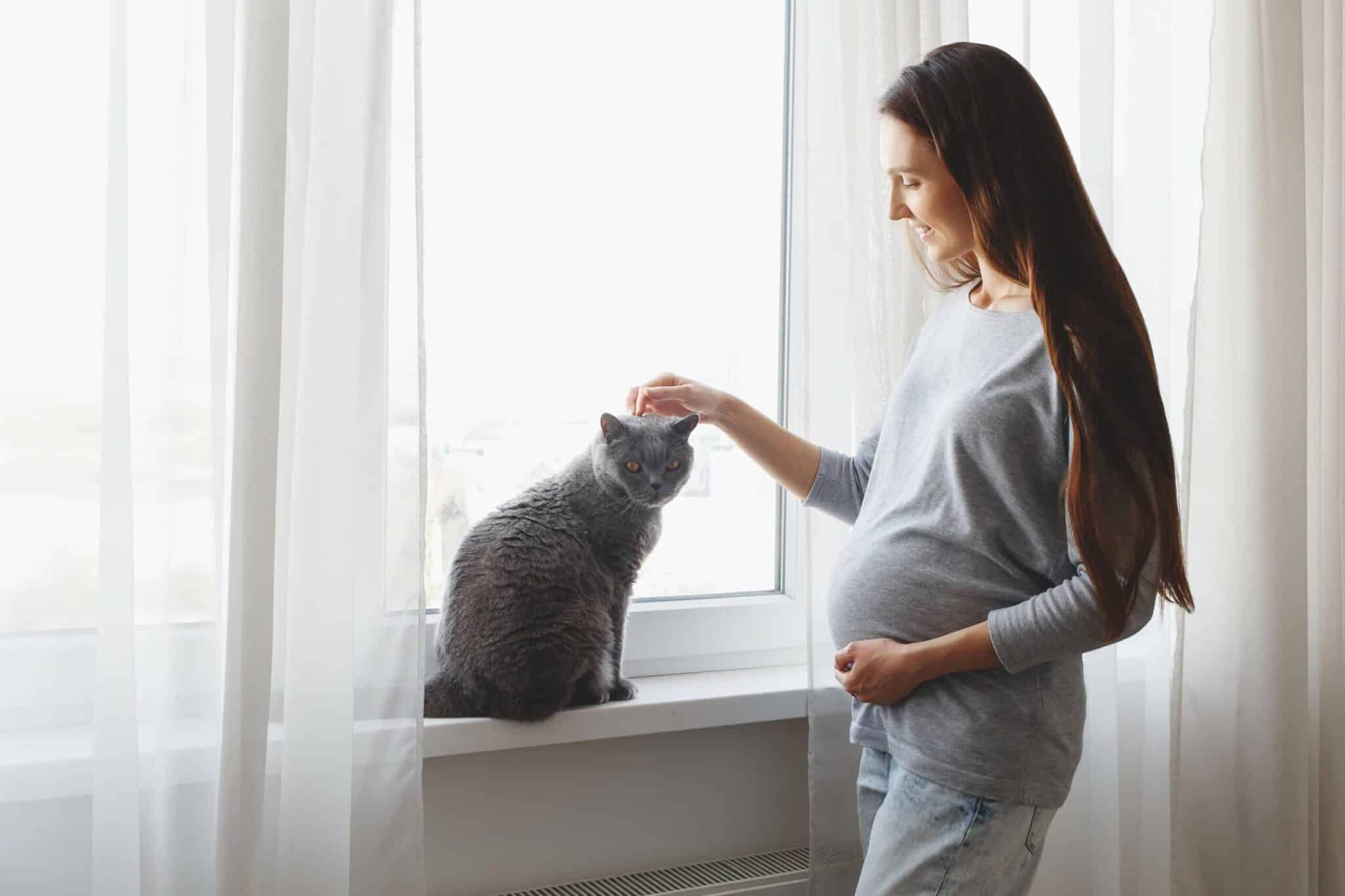
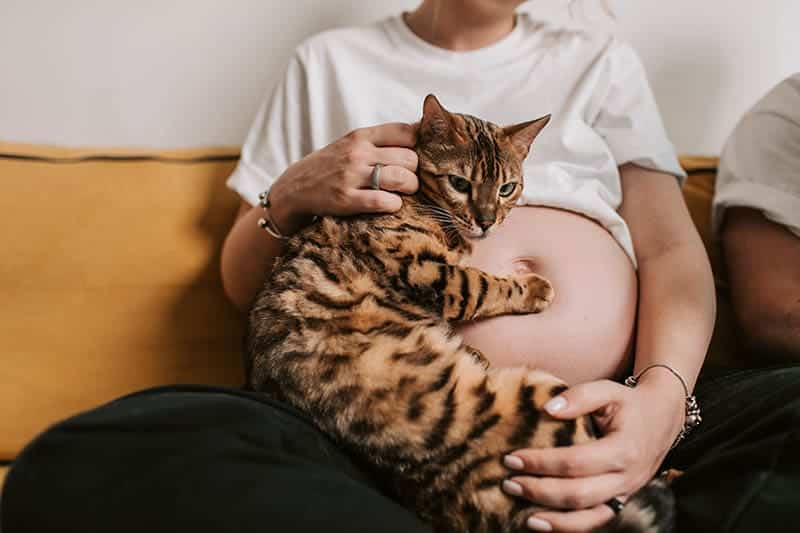
Some people believe that a cat can smell pregnancy, detecting it even before the mother 2. Indeed, cats may be able to detect hormonal changes in pregnant women’s bodies through their sense of smell, although they can’t exactly point it to pregnancy because they don’t understand the concept of pregnancy.
When a woman is pregnant, she produces higher levels of human chorionic gonadotropin hormones, progesterone, and estrogen. These hormones can have changes in a woman’s natural scent.
They can also affect certain behaviors, body language, and emotions. Usually, cats can almost immediately detect the shifting in a woman’s body, especially if they have a close bond with the woman or live together.
Even though these changes may be negligible at the beginning of the pregnancy, your cat may notice the difference.

2. Pheromones
Pheromones are essentially natural chemicals secreted by our bodies. While they may not have a noticeable smell for us, they play a major role in animal communication. For animals with a keen nose, they function as chemical signals helping provoke a social response from animals belonging to the same species.
Cats may likely be able to sniff out the pheromones produced by your body, though this isn’t confirmed by any feline studies.
Cats may possibly use these signals to determine what a person might be feeling, whether sad, happy, or fearful. They can use them to sense adrenaline and fear in humans. This allows them to tread carefully around their irked-out owners or even ask for attention. Interestingly, cats seem to spend more time with their owners when they claim they were depressed 3.
3. Menstrual Cycle Hormones
Even though it may sound far-fetched, it is believed that cats can detect whether a woman is on her period by sniffing for hormone and odor levels.
When a woman is on her period, her body produces some hormones, such as the follicle-stimulating hormone (FSH) and luteinizing hormone (LH), which changes a woman’s scent. Cats can detect the change in scent using their sense of smell.

4. Testosterone
Generally, men have about eight times more testosterone than women have in their bodies. Granted, several studies seem to indicate that cats can smell women's hormones, but no evidence suggests (anecdotal or otherwise) that they can distinguish men from women.
So, cats cannot use testosterone to differentiate between men and women. Sure, they may be able to recognize certain hormones that belong to a specific sex, but they can’t use their sense of smell to tell whether the human is a male or female. Anecdotally, though, pet cats seem to respond differently to people who use hormonal medication, including hormonal testosterone.

How Do Cats React to Human Hormones?
Though it’s plausible that cats can smell human hormones, do they react to them? Evidence suggests that they are able to read human body language; however, whether or not they can gauge you just by your hormones is not confirmed.
However, at times, our body language changes in conjunction with our hormones, and cats may respond differently as our body language does change.
When You Are Scared
Studies have shown that when you are fearful or agitated, your cat may respond with aggression on their part, indicating that they are capable of distinguishing this state of mind from a normal disposition 4.

When Sad
One study involving cats showed that cats were able to discern when their owners were feeling depressed 5. This study also highlighted that those who had cats seemed to be able to handle depressive episodes better. Although they had reservations about starting an interaction when depressed, they also tried to initiate interactions when in such a state of mind. Their pet cats were able to be of assistance in this instance.
When Happy and Content
Cats that interact with people who are happy and content, or cats that enjoy interactions with their humans are shown to have increased levels of oxytocin 6, also known as the “love hormone.” This means that cats are likely able to understand and benefit from positive emotions their owners evoke.


Conclusion
Cats can likely smell and detect hormonal changes in your body through their very developed sense of smell, which is far superior to that of human beings. They can probably smell the hormones produced during pregnancy, such as progesterone, estrogen, and HCG, although they cannot exactly tell that it's a pregnancy.
They can likely also detect endorphins produced by your body when happy or the adrenaline produced when you are scared.
Nonetheless, most of these claims seem to be anecdotal, and more research is required to ascertain the true extent of a cat’s ability to respond to human hormones.
See Also:
Featured Image Credit: masik0553, Shutterstock

Expert cat care, straight to your inbox
Vet-reviewed advice, behavior tips, and the best of Catster. Free, and you can unsubscribe anytime.
By signing up, you agree to our Terms & Conditions and Privacy & Cookies Policy.
Dr. Luqman Javed DVM (Veterinarian)
Dr. Luqman (also known as Dr. Lucky) grew up with an immense passion for animals of all kinds. By becoming a veterinarian, he turned his childhood dream into reality. Now, his goals are focused on providing help to cats all around the world by helping to cat owners understand their feline friends better to ensure the best quality of life for them. His passions are wildlife, exotic pets, pet owner education, and animal welfare. He graduated with his DVM from the Universiti Putra Malaysia in 2020. He has worked with a variety of animal species and has decades of personal experience with keeping many different types of exotic pets, such as turtles, hamsters, freshwater fish, chickens, songbirds, and parrots (and he has extensive skills in training parrots, too).
Join the conversation
Ask a question, share your story, or send private feedback.