9 Bicolor Cat Patterns (With Info & Pictures)


In this article
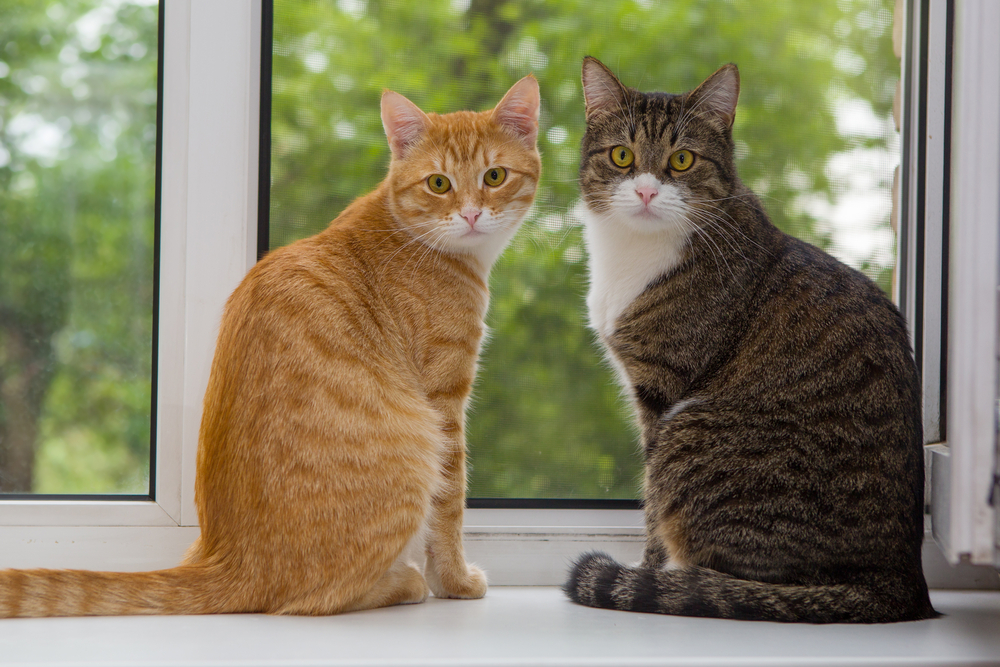
A bicolor cat isn’t a specific breed of cat, but rather a coat color pattern. You can find bicolor cat patterns in nearly all breeds of cats. Bicolor means the cat has a primary fur color but also some degree of white spotting on the coat. The white can range from a tiny spot to covering almost the entire coat. The primary fur color can be a solid color or a patterned coat, such as tabby.
The white-spotting gene is responsible for bicolor coat patterns.1 In this article, we learn more about this gene and look at nine common bicolor cat patterns that you can see in various breeds of cats, including mixed breeds. Let’s get started!

The 9 Bicolor Cat Patterns
White Spotting Gene Scale
The white spotting gene adds different amounts of white color to otherwise solid or patterned-colored coats. The variation of the white coloring can be measured on a scale from 1 to 10. One is the lowest while 10 is the highest, and this scale can be divided into three grades: low, medium, and high.
A low-grade coat (1–4) occurs when less than 40% of the cat’s coat is white. A medium-grade coat (5) means 40%–60% of the cat’s coat is white. High-grade coats (6–10) occur when over 60% of the cat’s coat is white.
Cats With Low-Grade White-Spotting Coats
These cats fall between 1 and 4 on the spotting scale.
1. Locket or Button Cat Pattern

Cats that have one solid color or color pattern, like tabby, may have small marks of white on their chests and sometimes abdomens. These spots resemble lockets or buttons and are known as locket cat markings because they are normally featured prominently in the center of the chest, like a necklace pendant. On other areas of the body, the spots are called buttons. These locket or button markings can be nearly any shape, but it’s impossible to reliably breed a cat to have these specific markings.
2. Tuxedo Cat Pattern

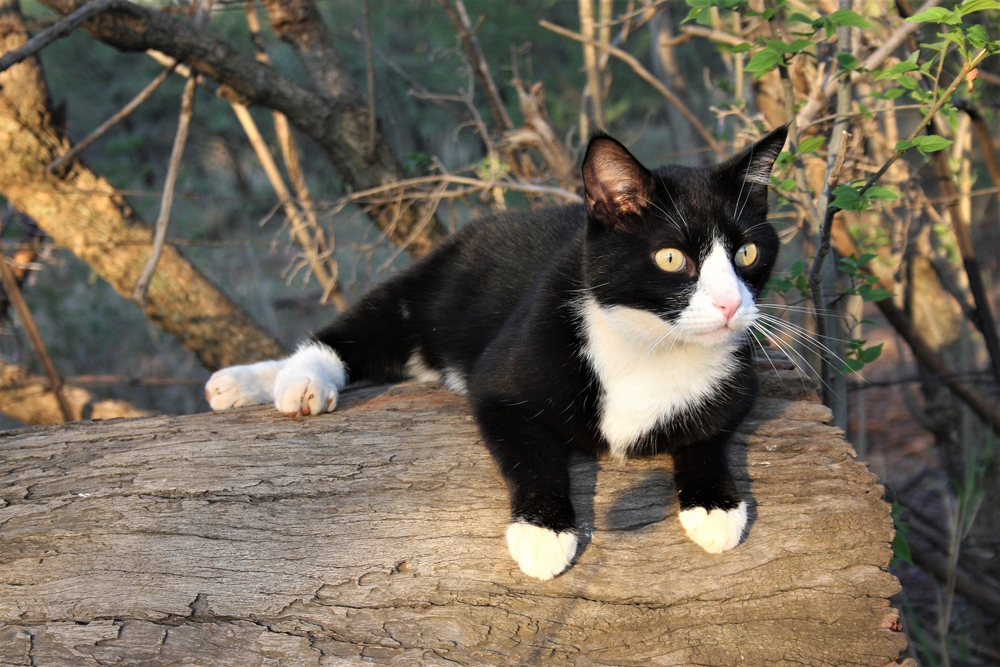
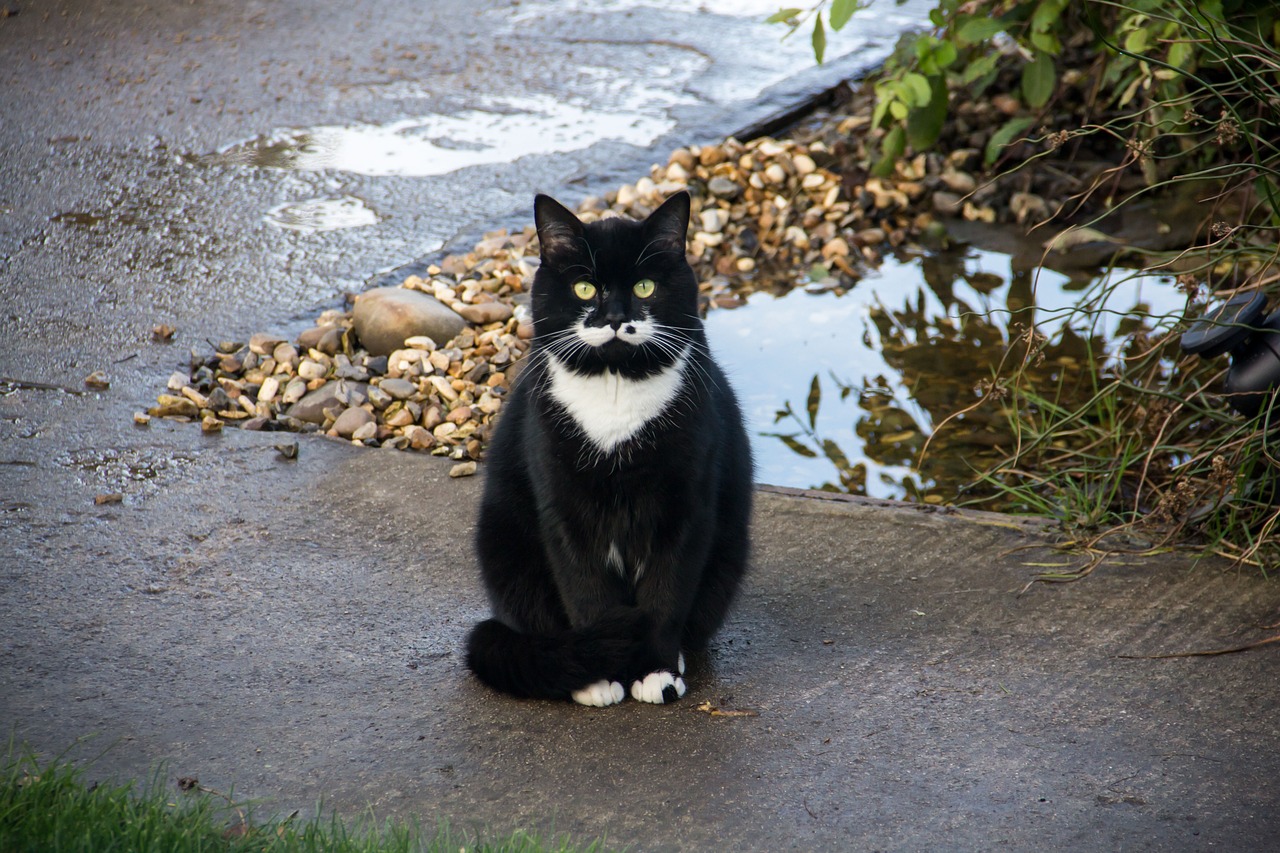
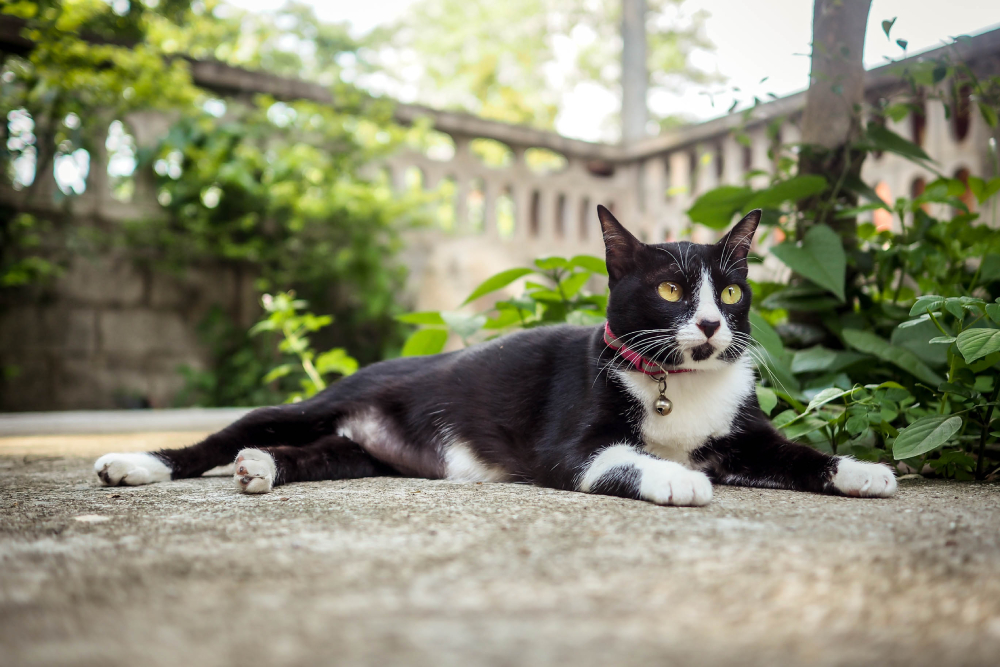
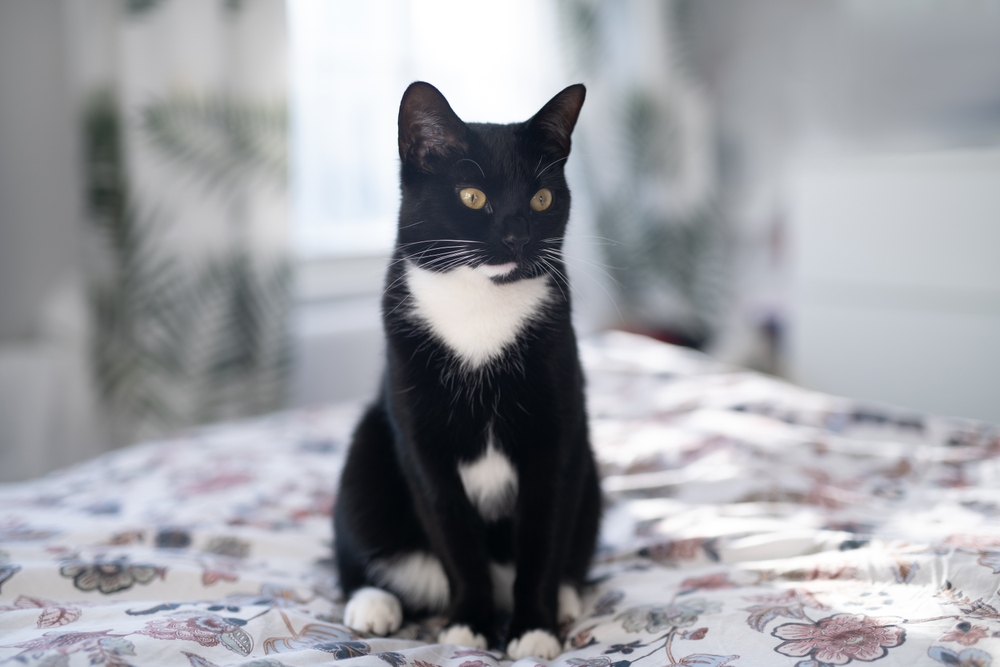
Cats with tuxedo markings have predominantly black or solid-colored coats with white chests, bellies, and paws. Sylvester, a cat character in “Looney Tunes,” is a famous tuxedo cat. The cat looks like they are wearing a tuxedo with a white shirt underneath. Tuxedo cats may have white patches on their faces, and tabby cats can also have tuxedo markings.

Cats With Medium-Grade White-Spotting Coats
The following cats fall at a 5 on the spotting scale.
3. True or Standard Bicolor Cat Pattern

A true or standard bicolor pattern refers to a coat with equal parts solid or tabby coloring and white markings. According to the Cat Fancier Association, cats that don’t have any additional white on their coats aside from a locket, button, or white abdomen do not qualify for this classification.1
Standard bicolor patterns occur when the color patches are clearly defined and separated from one another with white markings between them. At least half the body should be colored, while the rest of the coat is white.
4. Mask and Mantle Cat Pattern

Mask-and-mantle cats look like they are wearing a mask. The colored fur covers the eyes, ears, and top of the head for the mask, and the mantle occurs when the color reaches down over the back. This resembles a blanket draped over them. The white markings appear on the face, underside, shoulders, neck, and legs. The white markings may also separate the mask-and-mantle blend, or the blend could remain solid. The mantle can extend down and cover the tail. When the solid coloring of the mask-and-mantle cat is black, they are known as “black mask cats.”
Cats With High-Grade White-Spotting Coats
These cats fall between a 6 and 10 on the spotting scale.
5. Cap and Saddle Cat Pattern

The cap-and-saddle pattern resembles the mask-and-mantle pattern, but the colored areas are smaller. Instead of a mask, the color covers only the top of the head. The saddle pattern is also smaller, resembling a saddle instead of a blanket. The tail can be solidly colored or white.
6. Harlequin Cat Pattern

A harlequin pattern is a predominantly white coat, usually with a solidly colored tail and multiple clearly separated color patches covering the body. The colored areas typically cover less than half of the coat and are surrounded by white. Harlequin cats can also be called “moo” or “cow” cats if their spots are black. They resemble a dairy cow. However, these spots can be any color, even tabby, calico, or tortoiseshell. Sometimes harlequin cats are referred to as magpie cats.
7. Van Cat Pattern

A van pattern means the color is kept on the head, usually just between the ears. The tail is also a solid color. The rest of the coat is white. This pattern is named after the Turkish Van cat breed, which originated in the Lake Van region of Turkey. These cats can appear to be all white from a distance. Sometimes the coloring is a light cream or orange that is hard to detect from the white coat. Some calico cats can have van patterns. Their coloring is a mix of orange, black, cream, or tan against a white coat.
Cats Without Any White Spotting
These cats have bicolored coats, but they aren’t considered to be true bicolor cats. They could have no white at all in their coats, and their coat patterns are caused by different genetic mechanisms than white spotting.
8. Pointed Cat Pattern

Pointed pattern cats have faces and feet that are darker than the rest of their bodies. This pattern is common among Siamese and related breeds and is caused by temperature-sensitive pigmentation. Seal point is one specific color variation within this pattern. These aren’t true bicolor cats, and the genetics of each cat determine how dark the points will get.
9. Tortoiseshell Cat Pattern

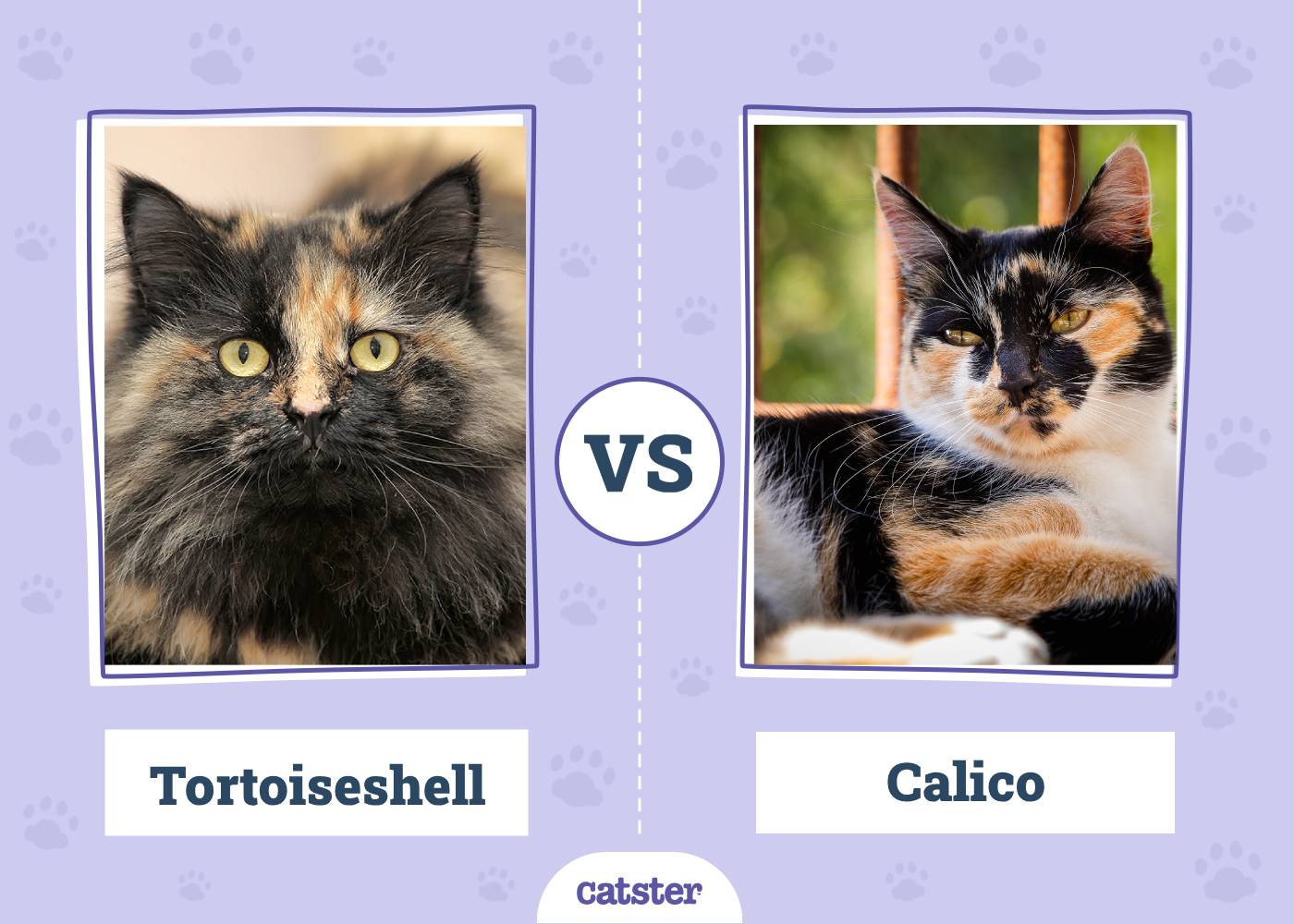
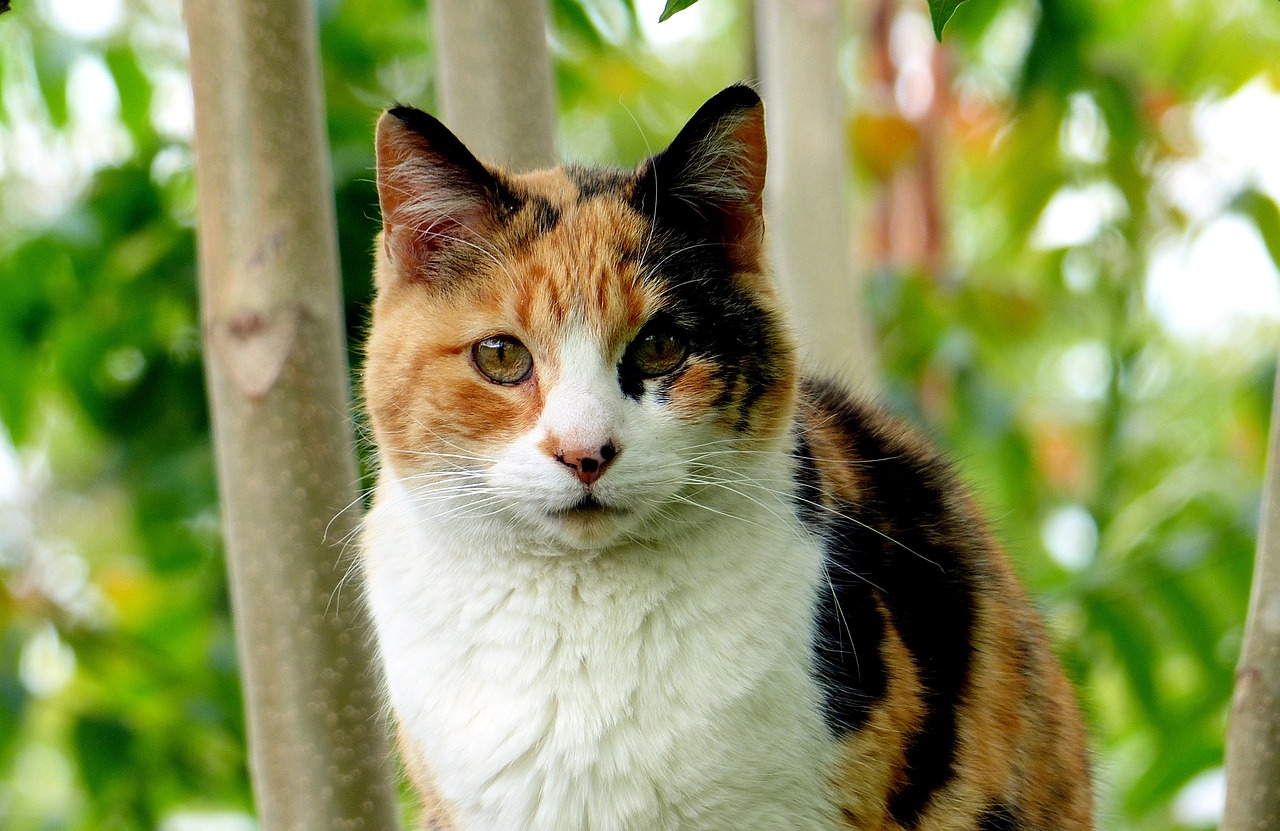
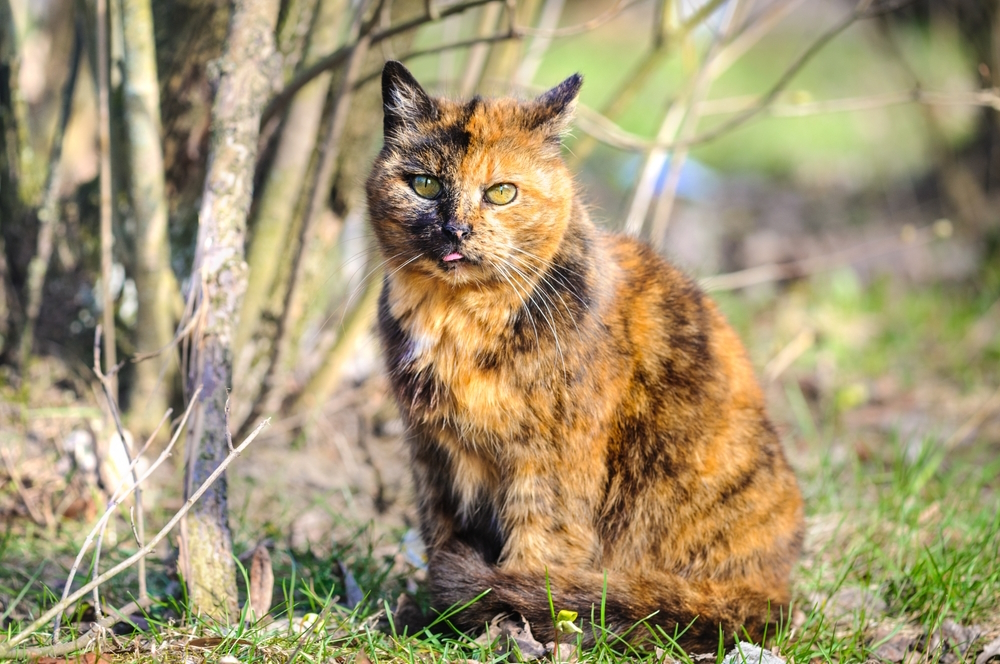
Tortoiseshell pattern cats have a mix of black-and-orange non-tabby fur caused by X-linked coat color genetics. The colors can be blended or appear in patches of black-and-orange tabby coloring. While they appear to be two colors, they aren’t considered true bicolor cats because they typically do not have white fur. Some tortoiseshell cats with some white spotting are considered calico cats.

Conclusion
We hope that you’ve enjoyed reading about these bicolor cat patterns and have learned more about your cats or those you know. Bicolor coat patterns can occur in various breeds, including mixed and purebred cats. The next time that you see a cat with a unique coat pattern mixed with white, you will be able to identify the type of white-spotting pattern present.
Featured Image Credit: L SANZ, Shutterstock

Expert cat care, straight to your inbox
Vet-reviewed advice, behavior tips, and the best of Catster. Free, and you can unsubscribe anytime.
By signing up, you agree to our Terms & Conditions and Privacy & Cookies Policy.
Jessica is a lifelong resident of Chicago who has shared her home with furry, feathered, and scaly pets for over 30 years. Animal enthusiast since childhood Jessica owned and operated a pet care company. Nowadays, Jessica is a full-time writer who loves to explore all animal topics while contemplating the birds and squirrels enjoying the oasis of her backyard.
Join the conversation
Ask a question, share your story, or send private feedback.