7 Vet-Verified Abyssinian Cat Colors: An Overview (With Pictures)


In this article
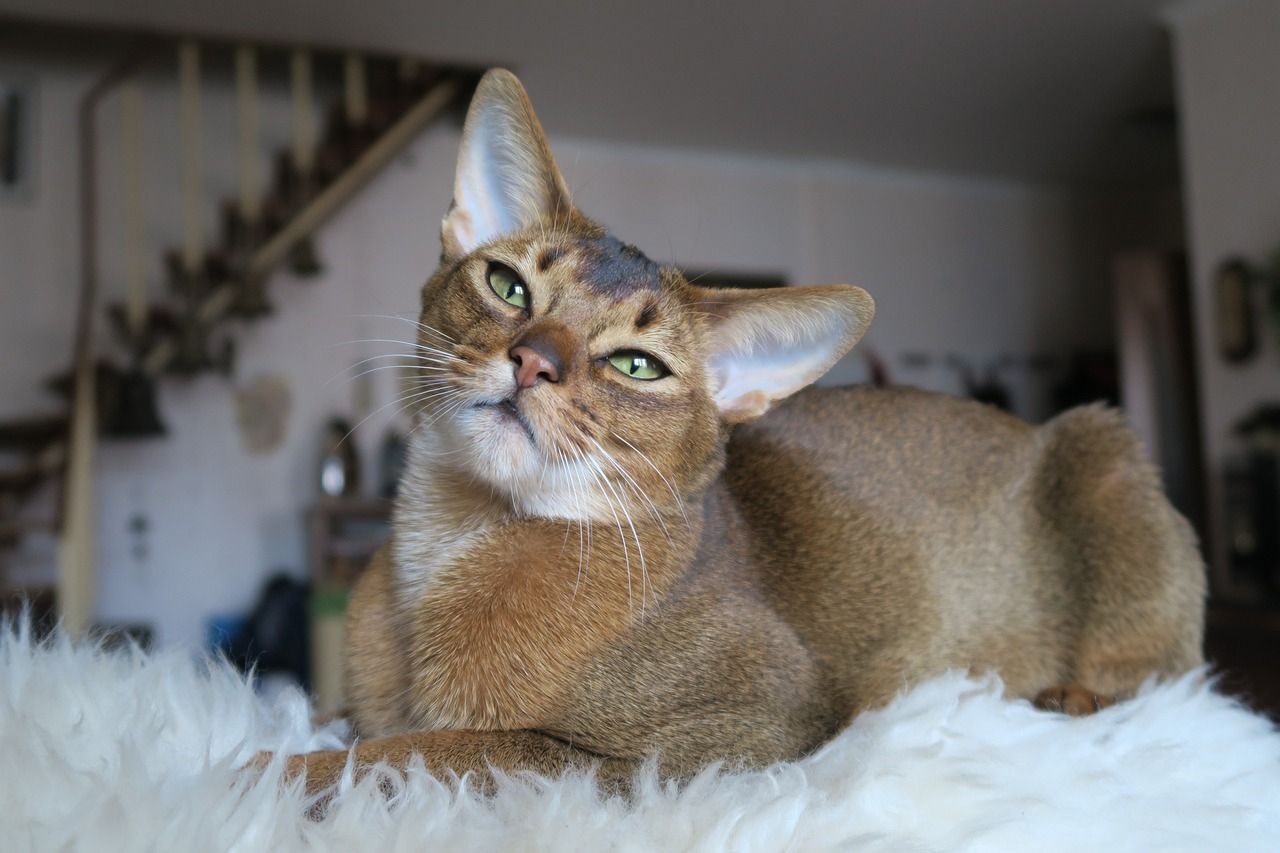
Abyssinians are known to be affectionate cats that are easy to care for, but perhaps they are best known for their beautiful, uniquely “ticked” coats. Their coat is short and thick with a distinctive ticked patterning, where each individual hair is banded with different colors. They do not reach their full, final coloring until around 18 months old, so their coloring as a kitten could change by the time that they reach adulthood.

The 7 Abyssinian Cat Colors

The 4 Standard Abyssinian Cat Colors
Abyssinians come in four main colors and they are the only four recognized by the Cat Fanciers' Association.
Those four colors are:
1. Ruddy Abyssinian

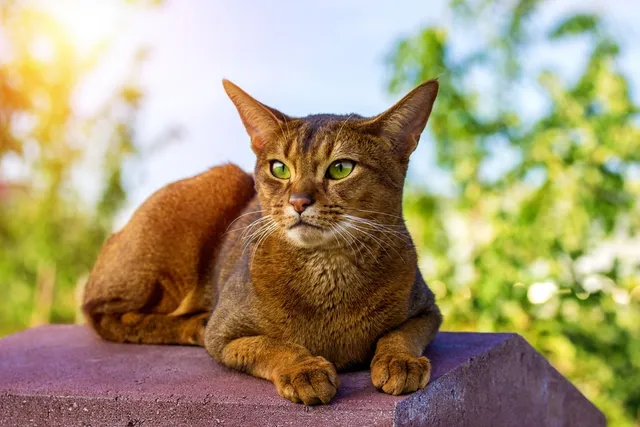
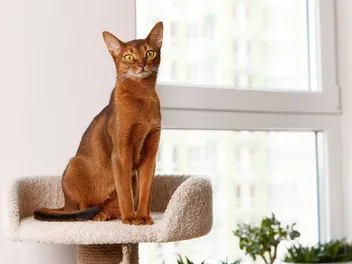
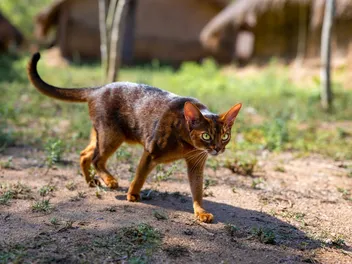
Also often referred to as “tawny” or “usual” coloring, ruddy is one of the most commonly found colorations among Abyssinians. Each hair is ticked with varying shades of brown and black, with a brown/orange shading closest to the base. The belly and insides of the legs should be unmarked and consist of this orange coloring only, with no markings, stripes, or white marks anywhere on the coat.
Abyssinians with this coat will typically have golden eyes, with hazel and green also being fairly common. They will typically have black-tipped ears with black paw pads and red noses.
2. Cinnamon Abyssinian

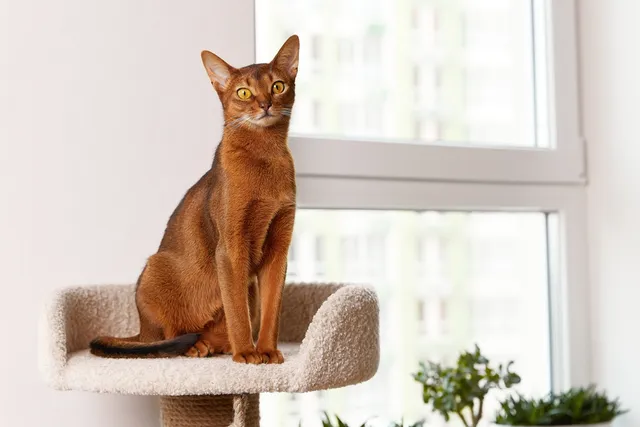
Another fairly commonly found coloring among Abyssinians is red or cinnamon. It is often described as a watered-down or diluted variation of the ruddy coloring and is typically a copper-red base shading with red/brown ticking. The stomach and inside of the legs are predominantly copper-red shading, with no patterns or stripes. These cats typically have pink paw pads and noses and amber, green, or yellow eyes.
3. Blue Abyssinian

A cat having a blue coat is somewhat of a misnomer, and their coat is usually a deep, steel-grey that appears blue overall. The blue Abyssinian cat has a dark, soft blue/grey coat ticked with a deeper blue. The base hair, the belly, and the insides of the legs are typically a pale cream color. They also often have a dark blue stripe that runs down their spine through to their tails, which is usually tipped in a deep blue coloration. They have blue/grey paw pads and noses with amber, green, or yellow eyes. Whether you see them as a blue or grey Abyssinian cat, this coloration is undeniably beautiful.
4. Fawn Abyssinian

Fawn is one of the rarest colorations found among Abyssinians and is characterized by a pale brown base hair coloration that extends throughout the belly and inside of the legs. This is ticked with bands of deep pink and light brown, giving an overall rose-colored appearance. The paw pads and nose are typically pink, and they usually have amber, green, or yellow eyes.
The 3 Unique & Uncommon Abyssinian Cat Colors
The above four colorations are the most commonly found among Abyssinians, and the only four recognized by the Cat Fanciers' Association. However, there are a few other less common colors that are just as beautiful and definitely worth mentioning. Some other associations recognize these colors in their registries, notably in the United Kingdom, where they are far more accepting of the following unique colorations.
5. Chocolate Abyssinian

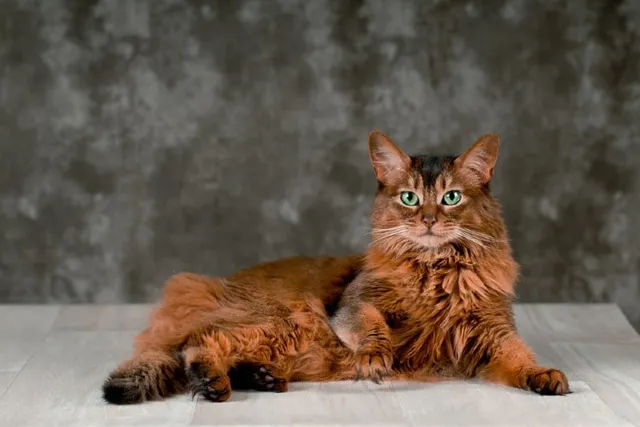
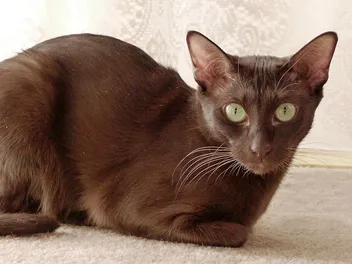
Chocolate Abyssinians are usually described as an intermediate between ruddy and sorrel, but they are uniquely beautiful all on their own. They typically have a rich copper-brown base that extends all around the belly and the inside of the legs and is ticked with dark chocolate and brown bands. The paw pads and nose are also a dark chocolate color.
6. Silver

Silver Abyssinians are often recognized as a separate group that includes usual silver, fawn silver, blue silver, and sorrel silver. Many breeders claim that these silver variations were some of the first and thus the oldest colorations in Abyssinians, although this is mostly conjecture and almost impossible to prove.
The four main variations of silver Abyssinians are:
7. Lilac
The name lilac is somewhat of a misnomer with this coloration, as the ticking is a light grey rather than lilac. However, the base color of pink/cream with the bands of grey creates an overall lilac effect. The paw pads and nose have a mauve/pink coloration, and the lilac Abyssinian is one of the rarest and most difficult-to-find variations.
Final Thoughts
Abyssinians are one of the oldest and most elegant cat breeds, and their distinctive ticked coats make them truly stand out. While the four CFA-recognized colors—ruddy, cinnamon, blue, and fawn—are the most common, breeders and enthusiasts have continued to develop new shades like chocolate, silver, and lilac. Regardless of color, all Abyssinians share the same hallmark look: a warm, glowing coat and an athletic, graceful build that reflects their lively and affectionate nature.
You might also like:
Featured Image Credit: tsapenkodg, Pixabay
Expert cat care, straight to your inbox
News, insights, and useful advice, delivered to you.

No spam — unsubscribe anytime.
By signing up, you agree to our Terms & Conditions and Privacy & Cookies Policy.
How useful was this post?
Click a star to rate. You can leave written feedback afterwards. (We read all feedback.)
Christian started writing for a local newspaper as a teenager, and he's been involved in the publishing industry for most of his adult life. Combining his love of writing with a passion for animals, he is currently the Director of Editorial at Pangolia and the Editor-in-Chief at Catster.
Christian lives in the Philippines with his wife, son, and four rescue cats: Trixie, Chloe, Sparky, and Chopper.