Diatomite vs Silica Cat Litter: Vet-Reviewed Differences Explained


In this article
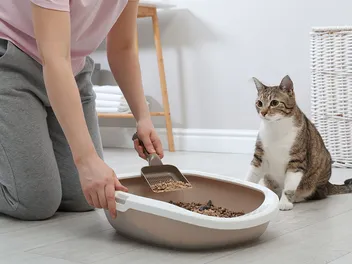
Every cat owner knows how important cat litter is to the proper running of the household. Without it, the house would become one giant cat bathroom, and no person would want to step foot in it! But sometimes, a house can smell like a cat bathroom even when a litter box is present, due to poorly performing litter. Two of the most popular types of cat litter available are diatomite and silica litter because they’re so good at keeping litter box smells to a minimum.
But how do they compare to one another? Which one works the best and which is the most affordable? Is one healthier than the other? Does either of them create dust? These are all great questions that deserve thorough consideration. So, let’s take a look at both diatomite and silica cat litter and determine how they compare!

Overview of Diatomite Cat Litter
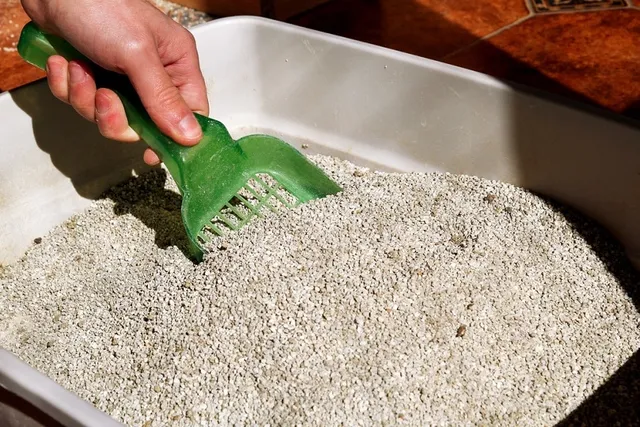
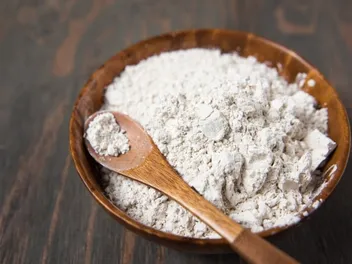
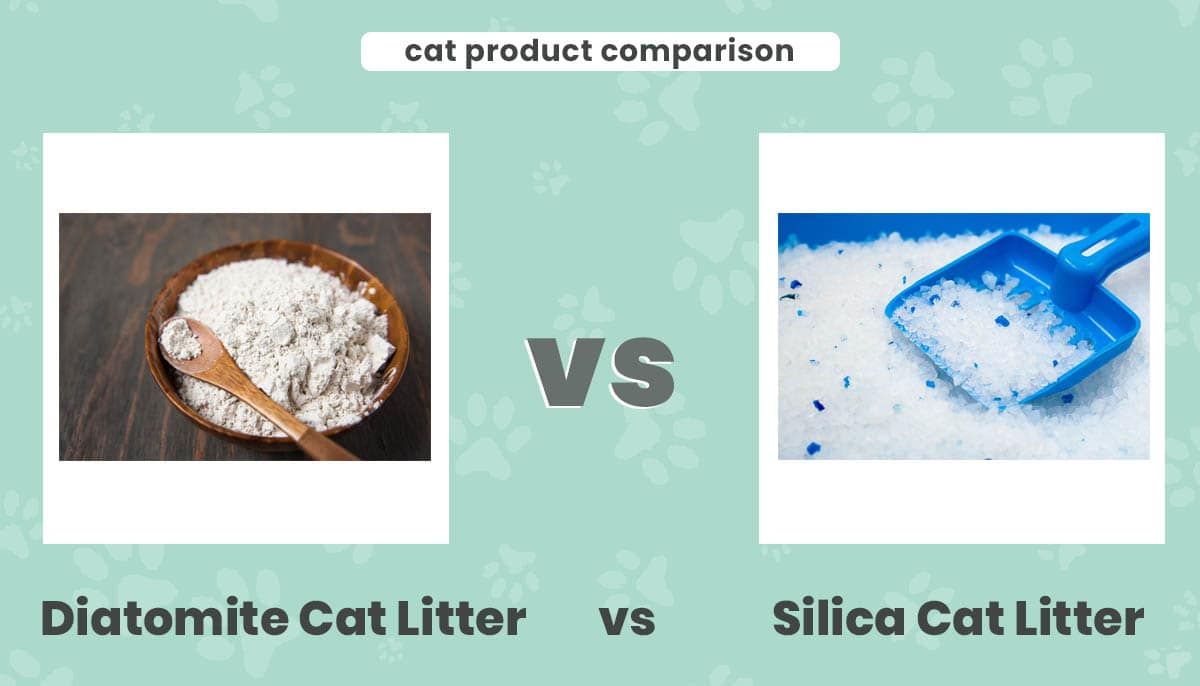
Diatomite cat litter is made of diatomaceous earth, which is a natural mineral made of crushed marine fossils. It quickly locks in odors and effectively absorbs up to one and a half times its weight in moisture. Diatomite cat litter does not clump, but it’s designed for dumping and replacing rather than scooping, so this shouldn’t be a problem.

How Diatomite Cat Litter Works
Diatomite cat litter works by absorbing liquid into its pores and holding it in. The odors that are in the liquid are also absorbed and locked in. The minerals stay intact because they can hold more than their weight in liquid, so the cat litter stays dry and usable for days before it needs to be replaced. The liquid absorbed by the minerals does not dissipate, though, so diatomite cat litter does not last for a lifetime.
It also does not clump, so there is no way to scoop it like you can with other commercial cat litter products. However, this type of litter tends to handle odors better than scoopable litter, so it doesn’t need to be replaced as often. It can get stuck on a cat’s paws and tracked around the house, though, so traditional precautions should be made to ensure that tracking is kept to a minimum.
What Diatomite Cat Litter Is & Isn’t Good For
Diatomite cat litter is great for multi-cat households and in homes where the litter box can’t be tucked away into a closet or unused room. It doesn't create dust like other litters do, so even heavy traffic won't result in the sneezing and smells that tend to come with clay litter dust.

Pros
- Highly effective at controlling odor
- Absorbs plenty of moisture for long-lasting action
- Certain options are just as affordable as clay options
Cons
- Highly effective at controlling odor
- Absorbs plenty of moisture for long-lasting action
- Certain options are just as affordable as clay options
Overview of Silica Cat Litter
Silica cat litter comes in two different versions: an all-natural one and one that is made synthetically. The synthetic version is designed to absorb up to 40 times its weight in liquid, while the natural version absorbs plenty of liquid but not as much.
Natural silica cat litter is mined from sodium silicate sand and quartz and then processed with oxygen and water.

How Silica Cat Litter Works
Silica litter works in a similar way to diatomite litter in that it is a porous large granule that immediately absorbs liquid and odors. Once the liquid is absorbed, it starts to evaporate but leaves the odor molecules trapped in the pores. Since this is a continuous process, the crystals can be used for up to a month before needing to be changed. Silica cat litter is also not clumping and will need to be replaced regularly. For the evaporation to work efficiently, the litter needs to be deep and raked daily. Solid deposits should be scooped out daily.
What Silica Cat Litter Is & Isn’t Good For
Silica cat litter is good for multi-cat households, just like diatomite cat litter. It also helps absorb most odors, so your home won’t end up smelling like a cat litter box even if it hasn’t been changed for a few days. However, if you are someone who can only change the cat litter box once a week or so, a clumping litter might be the best choice for you.

Pros
- Good for multi-cat households
- Long-lasting odor control
Cons
- Does not clump, so cannot be scooped or sifted
- Can track around the house

Other Factors to Consider
Aside from how well a cat litter absorbs liquid and odors, it is important to consider costs and your lifestyle. If you cannot commit to changing the cat litter box regularly, you may want to stick with a clumping variety so you can simply scoop out the mess quickly every couple of days. That said, if you do have the time to replace litter weekly, diatomite and silica cat litter are great options because they will help keep your home smelling good between changes.

Conclusion
Both diatomite and silica cat litters are worth considering. These litters are high quality and are superior when it comes to keeping bad odors to a minimum. However, these types of cat litter can't be scooped and must be completely replaced often. So, it's all up to your personal preferences and your performance expectations.
Featured Image Credit: (L) Anna Hoychuk, Shutterstock | (R) Valentina Zavrazhina, Shutterstock
Expert cat care, straight to your inbox
News, insights, and useful advice, delivered to you.

No spam — unsubscribe anytime.
By signing up, you agree to our Terms & Conditions and Privacy & Cookies Policy.
How useful was this post?
Click a star to rate. You can leave written feedback afterwards. (We read all feedback.)
Rachael has been a freelance writer since 2000, in which time she has had an opportunity to research and write about many different topics while working to master the art of fusing high-quality content with effective content marketing strategies. She is an artist at heart and loves to read, paint, and make jewelry in her spare time. As a vegan, Rachael is obsessed with helping animals in need both in her community and anywhere in the world where she feels she can make a difference. Animals also happen to be her favorite topic to write about! She lives off the grid in Hawaii with her husband, her garden, and her rescue animals including 5 dogs, a cat, a goat, and dozens of chickens.