Catster is reader-supported. When you buy via links on our site, we may earn an affiliate commission at no cost to you. Learn more.

Cat Health & Care

7 Safe Exercises for Cats With Arthritis: Vet-Approved Advice

By Jeff Weishaupt · Reviewed & fact-checked by Dr. Lauren DemosVet Approved
Dr. Lauren Demos
Reviewed & Fact-Checked byDr. Lauren DemosDVM (Veterinarian)
As a veterinarian, Lauren is eager to share her experience in emergency medicine and cats, with our readers. She loves sharing helpful, real life tips for having cats as part of your life, and what to do in critical situations with your pets.View authorThe information is current and up-to-date in accordance with the latest veterinarian research. Read about our vets
Share
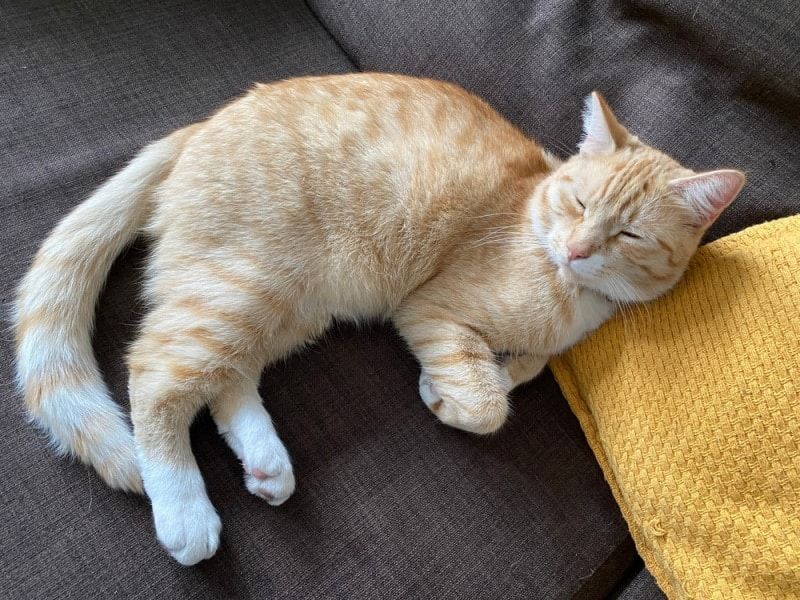
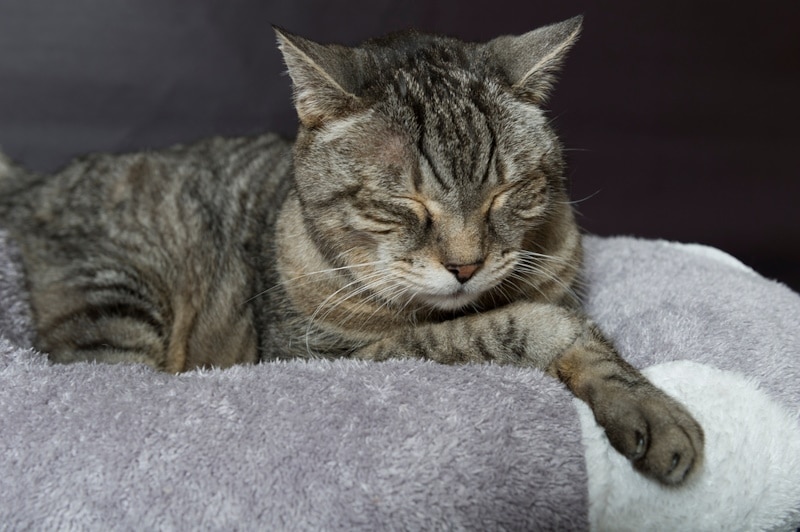
cat folding his paw while sleeping

Cats with arthritis need special care to overcome the pain and stay active. If your feline friend has been diagnosed with arthritis, they will become slower and won’t enjoy their playing time as much as before.

While the condition primarily affects senior cats, it can also impact felines from as young as age 2. Therefore, it’s important to observe your cat and consult a vet when you suspect any unusual behavior.

Expert veterinarians recommend safe workout sessions for cats with arthritis to keep them active and healthy. However, motivating your cat to exercise is more challenging than with dogs. They may show resistance in the beginning, but things will generally improve with some positive reinforcement.

Including environmental modifications and practicing safe exercises can help your cat manage their pain. These changes also improve their life quality and overall health. Let’s get into more details.

divider 3 paws

Safe Exercises for Cats With Arthritis

After making the necessary environmental modifications, it’s time to develop a workout session for your arthritic cat. Gentle exercises keep pets active and help them efficiently manage their pain.

1. Encourage Short Walks

While it’s painful for your arthritic cat to walk for too long, you should encourage them do it for shorter periods under your supervision in a space that they are comfortable in.


2. Consider Taking Them Swimming

Many owners think cats don’t like water, but some breeds actually like taking a dip in cold water occasionally.  It is also quite effective in pain management in arthritic cats.

Swimming relieves pressure from the cat’s inflamed joints and activates their stiff muscles. As a result, these felines learn how to overcome their pain and discomfort over time. However, some cats don’t like swimming, so make sure your pet does before pursuing water activities.

Photo Credit: Marie-Claude Lemay, Shutterstock

3. Gentle Feather Chase

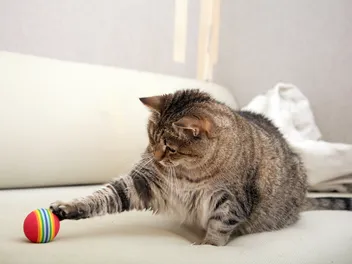
A feather tied to a string is a simple way to entice your cat to get moving. You should keep these play sessions short, but if they aren’t interested in walking or swimming, this is another option.

divider 3 paws

Environmental Modifications for Arthritic Cats

Environmental modifications can help you make your arthritic cat more comfortable at home. Here are some things you can try for your pal’s well-being.

4. Quick Access to Necessities

Over time, your arthritic cat gets weaker, so reaching specific spots becomes impossible for them. So, you must provide them with easy access to fulfill their necessities, including food, toys, water bowls, and beds. Here is how you can ensure your pet’s easy access:

  • Place Food and Water in an Accessible Area. The food and water come first. Since cats need both of these things throughout the day, they should be placed in an area your feline can access easily without jumping or climbing. Ensure that your pet doesn’t have to deal with going to the basement or up any stairs in general.
  • Allow the Cat Easier Access to Spend More Time With You. Some cats are more affectionate than others, so they like to cuddle and snuggle next to their owners in bed. Unfortunately, arthritis pain makes it unbearable for them to climb the bed. As a result, they start staying alone and become introverted. Thus, you can install a ramp next to your bed to make it easier for your pet to snuggle with you.
  • Offer Your Cat Plenty of Elevated Spaces. You can also install a ramp next to your cat’s favorite window to let them watch birds outside. Do the same with other elevated spaces as well. Doing so will keep your pet busy, and they won’t be destructive out of boredom.

5. Introduce Easily Accessible Litter Boxes

Start by making your cat’s litter box more accessible. Cats with arthritis suffer from severe joint pain, restricting their mobility and making them more vulnerable to accidents when exiting or entering litter boxes. Many cats don’t even try to squat in the box because it hurts them. Shop for litter boxes with lower openings that are still wide enough for your cat’s size. You can also offer a couple of different options to see which type they prefer so you know which one is easiest on their body.

Photo Credit: New Africa, Shutterstock

6. Add Non-Slippery, Stable Surfaces

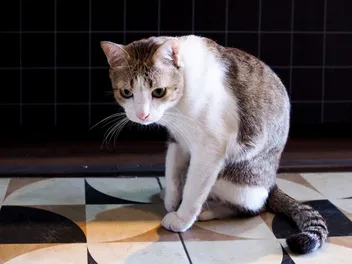
Cats with arthritis face difficulties in walking and standing on slippery surfaces like hardwood, vinyl, or tile. So, as a responsible pet owner, you can add matts and rugs to slippery areas to your home. It will make your cat feel more secure and reduce the chances of accidents.


7. Opt for Supportive Bedding

Your cat’s bed significantly ensures its comfort and relieves pain. Vets often recommend supportive orthopedic beds for cats with arthritis and other joint conditions. You can also opt for bedding made of memory foam to comfort the pet’s inflamed joints when they rest.

Cold weather brings more discomfort to arthritic cats. So, ensure your pet’s bed is warm and comfortable enough. You can also opt for a heated bed to relieve the feline’s pain.

If you’re unsure of which bed is right for a cat with arthritis, contact your vet for a recommendation.

divider 3 paws

Conclusion

Arthritic cats need special attention from their owners to manage their pain and live normal lives. You can always consult a vet and plan a safe exercise routine for your cat. However, the modifications and exercises on this list are a great place to start.

Sources

Featured Image Credit: Tatiana Burlutckaia, Shutterstock

The Catster Newsletter

Expert cat care, straight to your inbox

News, insights, and useful advice, delivered to you.

No spam — unsubscribe anytime.

By signing up, you agree to our Terms & Conditions and Privacy & Cookies Policy.

Click a star to rate. You can leave written feedback afterwards. (We read all feedback.)

Jeff Weishaupt
Authored by

Jeff Weishaupt

Leave a Reply

You're very welcome to leave a comment or question. Please know that all comments must meet our community guidelines, and your email address will NOT be published. Let's have a positive and constructive conversation.

How Do I Help My Cat With Arthritis? 10 Vet-Approved Home Care Tips

How Do I Help My Cat With Arthritis? 10 Vet-Approved Home Care Tips

Cats, particularly older ones, can suffer from arthritis. Technically known as osteoarthritis (OA), the condition involves progressive joint inflammation and d…

Lorre Luther
By Lorre Luther ·
Arthritis in Cats – Vet Approved Causes, Signs & Treatments

Arthritis in Cats – Vet Approved Causes, Signs & Treatments

If your cat seems a little less sprightly and active than usual, it can be a cause for concern. Some health issues could cause mobility issues in cats, but one…

Kit Copson
By Kit Copson ·
At What Age Do Cats Start Getting Arthritis? Vet Reviewed Early Signs & Recommendations

At What Age Do Cats Start Getting Arthritis? Vet Reviewed Early Signs & Recommendations

Being a cat owner includes dealing with various health conditions, particularly as they age. One common condition in senior pets is arthritis, which is often r…

Kathryn Copeland
By Kathryn Copeland ·
Will a Heating Pad Help My Senior Cat's Arthritis? Vet-Reviewed Facts & FAQs

Will a Heating Pad Help My Senior Cat's Arthritis? Vet-Reviewed Facts & FAQs

Even if our dearest wish would be that our four-legged companions accompany us for as long as possible, the passage of time spares no one, not even our feline…

Genevieve Dugal
By Genevieve Dugal ·

How to Massage a Cat With Arthritis: 4 Vet Approved Techniques & Tips

Cats are known for being good at hiding their pain. After all, they evolved in an environment where showing pain put them at higher risk of being attacked by a…

Kristin Hitchcock
By Kristin Hitchcock ·
How to Massage a Cat With Arthritis: 4 Vet Approved Techniques & Tips

Signs an Older Cat is in Pain: 8 Vet-Reviewed Indications

As the years have rolled on, you’ve probably seen your cat’s behavior change. They start off as kittens with tons of energy, running and catching anything that…

Keri-Beth Clur
By Keri-Beth Clur ·
Signs an Older Cat is in Pain: 8 Vet-Reviewed Indications

8 Products for Senior Cats to Make Your House Easier for Them

It seems that one minute, you have a sprightly little kitten jumping around, ripping down your curtains, and the next, you have a lazy old senior who prefers t…

Ashley Bates
By Ashley Bates ·
8 Products for Senior Cats to Make Your House Easier for Them

How to Make My Cat More Active: 10 Vet-Approved Exercises & Tips

Do you have a lazy cat? Are you trying to figure out how to make your cat more active? Cats are undoubtedly different from dogs in this department, and sometim…

Rachel Giordano
By Rachel Giordano ·
How to Make My Cat More Active: 10 Vet-Approved Exercises & Tips

How to Care for Senior Cats: 12 Vet-Approved Tips

As your cat becomes more senior, it may not be as energetic as he or she once was. You might also notice other behavioral and physical changes that indicate yo…

Christian Adams
By Christian Adams ·
How to Care for Senior Cats: 12 Vet-Approved Tips

Why Is My Cat Limping All of a Sudden? 7 Possible Reasons

Cats communicate differently than humans, so it’s helpful to observe and get to know your cat’s behavior. Understanding how your cat acts can help you catch an…

Jessica Kim
By Jessica Kim ·
Why Is My Cat Limping All of a Sudden? 7 Possible Reasons

How to Tell if My Cat is in Pain: 7 Vet-Reviewed Signs to Look For

Cats are notorious for hiding their illnesses. From an evolutionary standpoint, it makes sense. Cats hide their illnesses to ensure they are not seen as easy t…

Kristin Hitchcock
By Kristin Hitchcock ·
How to Tell if My Cat is in Pain: 7 Vet-Reviewed Signs to Look For

Senior Cat Grooming: Vet Approved Facts & Tips

Felines are fastidious creatures. They love to be clean and spend much of each day grooming themselves. As cats age, they sometimes have trouble grooming those…

Misty Layne
By Misty Layne ·
Senior Cat Grooming: Vet Approved Facts & Tips

Love Cats? So Do We! Join the Catster Community

Stay informed with expert cat care insights delivered straight to your inbox! Discover professional guidance on feline behavior, feeding tips, trusted product picks, and much more.

You may opt-out at any time. View our Privacy Policy for more information.

The Catster site on a phone