Get

In Your Inbox

Catster is reader-supported. When you buy via links on our site, we may earn an affiliate commission at no cost to you. Learn more.

How to Prevent Tick Bites on a Cat: 6 Vet-Approved Methods


Share

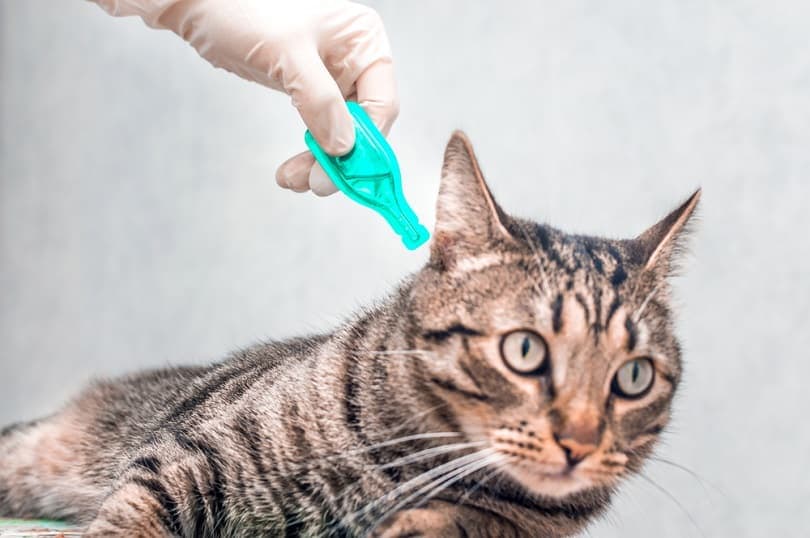
large kitten or cat getting tick or flea treatment

The winter season will soon be winding down, and the warmer temperatures will descend. If you have a cat, you know that spring and summer are prime tick seasons. It’s no fun having to get a tick off your cat and even less fun if you find one on your own body.

Not only are the pests disgusting and capable of spreading disease, but they are also tough to dislodge from your cat’s skin once they’ve taken hold. So, how do you prevent ticks from making a meal out of your cat’s blood? We’ll give you our favorite tips here.

divider 3 paws

The 6 Ways to Prevent Tick Bites on Cats

1. Oral Medications

You can use oral medication to keep ticks and fleas off your cat. Some brands feature chewable tablets that you can break up and add to the cat’s food. Since most cats will not swallow pills, chewable tablets are a preferred alternative.

close up hand giving cat a pill
Image by: Creative Cat Studio, Shutterstock

2. Shampoos, Treatments, Powders, and Sprays

There are also over-the-counter shampoos, on-spot treatments, powders, and sprays that you could use to prevent ticks on your cat. We recommend asking your vet for the best product recommendation for your cat and avoiding anything containing permethrin and pyrethrin, as these are toxic to cats. Since cats like to groom themselves, your first choice should be a spot-on treatment placed in the back of their neck, where they can’t reach.

Make sure you read the directions carefully before using any of these products on your pet, and keep them away from small children. Use gloves with application, and ensure that you dispose of all products safely and far away from water bodies.

If you need to speak with a vet but can't get to one, head over to PangoVet. It's an online service where you can talk to a vet online and get the advice you need for your pet — all at an affordable price!

PangoVet_Mention-in-Content for PangoVet2 save money


3. Tick Collars

Collars that repel ticks can also be helpful as an extra preventive method but don’t expect them to work solely on their own. When attaching this collar, you need to make sure it makes contact with the skin to be effective. It’s also essential to ensure you can easily slip two fingers between the cat’s neck and collar to make sure it is not too tight.

Watch for allergic reactions when you first put the collar on the cat, and if they begin scratching at it, remove it and use another preventative method.


4. Check Your Cat Regularly

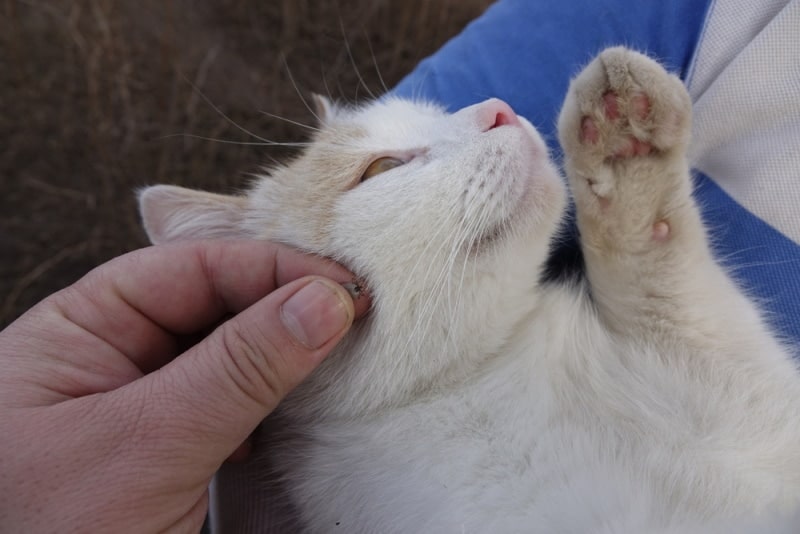
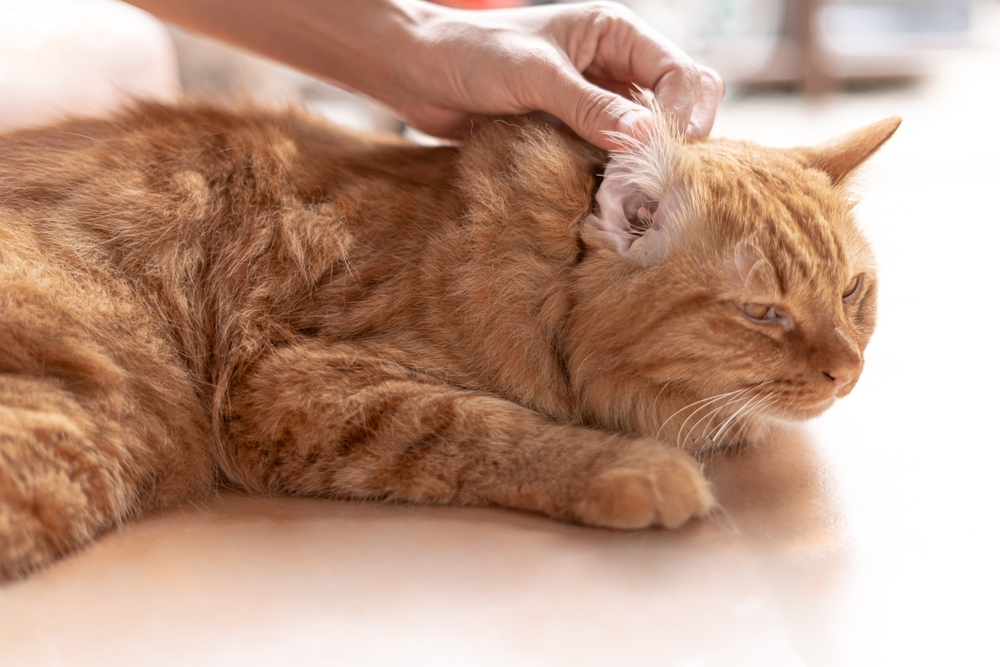
One of the best ways to prevent your cat from getting tick bites is to check them every time they come in from outside, especially when they’ve been in places where ticks are commonly found. Look inside the cat’s ears, between their toes, and on their neck and legs.

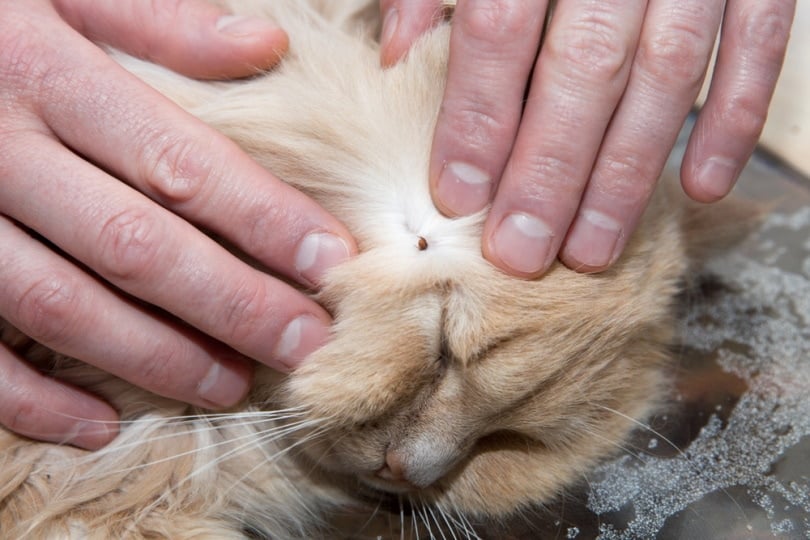
If you catch the tick before it starts to feed, you can save your cat from possibly getting a tick-borne disease. Remove the tick carefully and quickly once it is found. If the tick is attached, you will need to ensure that it lets go of your cat before attempting to remove it. Be sure to use tweezers and not your bare hands.

cat with tick
Image by: anastasiya parfenyuk, Shutterstock

5. Treat Your House and Yard

Another way to prevent your cat from getting a tick is by treating your house and yard for ticks. Keep your lawn, bushes, and trees trimmed so that ticks and fleas don’t make them their home. You need to be careful because pesticides can make other pets, people, and even fish sick, so read the directions carefully.

You can also hire a professional to treat your home and yard. Be sure to ask for the use of pet-safe products only.


6. Make Your Cat an Indoor Pet

While there’s no guarantee that your cat won’t pick up ticks from other animals coming in and out of your home, making your cat an indoor pet will go a long way toward keeping the feline tick-free.

If your cat has never been outside, don’t let them start now. If you have an outdoor cat, try to limit the time they’re outside instead, so you can at least keep a handle on them when checking for ticks.

Cats should be strictly indoor pets, anyway, as it’s safer for them for various reasons. You never know when your cat will become lost, get struck by a car, or get into a fight with another cat or dog, so it’s best to keep them indoors. It’s better to be safe than sorry in all instances with your furry friend.

divider 2 cats

Conclusion

The chances of an outdoor cat picking up a tick are high in the spring and summer months, and if you live in the south, you may also have to worry about it in the fall and winter.

These tips will help you prevent your cat from picking up ticks. Some of the tick preventatives may not work on every cat, and you need to be careful when using products that contain harsh chemicals. Watch your cat for allergic reactions to any new product you use, and keep all products away from small children.

Related Reads: 


Featured Image Credit: Anastasiya Tsaiasemnikava, Shutterstock

Want content like this delivered to you?

Sign Up For Our Newsletter

News, insights, expert advice, and everything cat

* By submitting, you agree to our Terms & Conditions and Privacy & Cookies Policy.


How useful was this post?

Click on a star to rate (you can leave written feedback after clicking submit)

Help us improve Catster for pet parents!

Your feedback really matters.

What did you like about this post? Also how can we improve it?

Join the conversation

Leave a Reply

You’re very welcome to leave a comment or question. Please know that all comments must meet our community guidelines, and your email address will NOT be published. Let’s have a positive and constructive conversation.


Catster's Digital Magazine is Back!

Vet-approved health & behavior advice

Real cat stories & community features

Chatting About the Rainbow Bridge, Euthanasia, and Laughter During Grief | Chatty Cattys, Episode 24

If you’ve ever felt the loss of a beloved cat, or are dreading the day when your pet crosses the rainbow bridge, you’ll...

The Simple Reasons Cats Refuse to Let Anyone Use the Bathroom Alone

Cats have an extraordinary talent for making themselves present in the most inconvenient places, and the bathroom ranks near the top of the...

A Paw-sitive Milestone: Canada Officially Becomes a Declaw-Free Nation

Canada has officially become a declaw-free nation. On May 25, 2026, a new regulation was filed in Ontario under the Provincial Animal Welfare...

The Surprisingly Simple Ways to Help a Cat With Hairballs

Cats spend an astonishing amount of time grooming. It is part hygiene routine, part comfort ritual, and part instinct that traces back generations....

More related

Tooth Resorption in Cats: Signs, Causes & Treatment (Vet Answer)

Everyone who has owned a cat has had the dreaded dental disease conversation with their vet. And it should be no surprise to...

A Certified Grief Coach Talks to Us About “Kitty Hospice”

Your sweet cat is nearing the end of her life, and you’re beside yourself with grief. What do you do? How long do...

Cat Laryngitis: Our Vet Explains Causes, Signs, & Treatments

Has your cat started to have an odd meow? Maybe it’s deeper or really squeaky, but there is no doubt about it: something...

Calvin T. Katz is the Most Interesting Cat in the World: An Exclusive

He has a cape that makes Batman jealous. He had 18 lives but gave some away. The world actually does revolve around him....

Keep reading

How to Calm a Cat Down: 8 Vet-Approved Ways

Anxiety or stress in cats is sometimes less apparent than in dogs. Cats can experience uncomfortable situations that bring about anxiety or hyperarousal, such as thunderstorms, fireworks, a move to a new home, a new family member, and other circumstances....

woman-with-ragdoll-cat

Hill’s Science Diet Cat Food Review in 2026: Recalls, Pros & Cons

Review Summary Today, Hill’s Pet Nutrition is an international pet food brand that’s known for selling scientifically developed foods that are intended to help our pets live their best lives. But that’s not how Hill’s was started. When the company...

Hill's Science Cat Food Review

Why Do Cats Use Litter Boxes? Vet-Verified Facts & FAQ

You might be quite impressed with your cat’s ability to check out a tub of litter one time and know exactly what to do with it. Why can’t dogs be like that? Even though we’re super impressed with our felines’...

Ginger cat sitting in a litter box

My Cat Drank Christmas Tree Water! What Should I Do? Vet Approved Advice

A real tree at Christmas time recalls memories of past holidays. Perhaps you even went to cut one down or remember decorating one when you were young. However, while they bring us warmth and joy during Christmas, a real tree...

tabby cat sitting behind the christmas tree

When to Switch From Kitten Food to Cat Food? Vet-Reviewed Facts & FAQ

Cats, like people, have different nutritional and dietary requirements at different stages of life. Kittens have seemingly boundless energy, and they need to consume the nutrients to match this. When they cross into adulthood, they will be burning off a...

little kitten sitting by a bowl of milk

Why Do Cats Sleep in a Ball? 3 Vet-Reviewed Reasons

There’s something delightful about watching your cat sleep while curled up into a tight fluff ball. They look so sweet and serene, and it’s amazing how their supple bodies can sleep comfortably in this position. If you have ever wondered...

cat sleeping on the patio

Female Cat Behavior After Spaying: Vet Reviewed Changes to Expect

One of the side effects of spaying a female cat is behavioral changes. Some are short-term and directly related to the pain your cat is likely in after surgery. Plus, some other side effects are common as well, which can...

cat and owner and vet

Say Goodbye to Fleas (and Hello to Happy Cats!)

If your cat has been scratching, biting, or losing fur, fleas could be the reason. These tiny pests can make your cat uncomfortable and quickly spread around your home. Fortunately, most flea problems can be solved with a few at-home...

vet holding magnifying glass searching cat fleas over a grey and orange cat

Love Cats? So Do We! Join the Catster Community

Stay informed with expert pet care insights delivered straight to your inbox! Discover professional guidance on animal behavior, feeding tips, trusted product picks, and much more.


Sign up for the Catster Email Newsletter

Stay informed with expert pet care insights delivered straight to your inbox! Discover professional guidance on animal behavior, feeding tips, trusted product picks, and much more.