


In this article
View 3 More +Tuxedo cats have a unique coat coloration that makes them appear like they’re wearing formal wear. If you are the proud owner of one of these gorgeous piebald cats, you likely have many questions about their longevity. How long do Tuxedo cats live? Are there variables that can affect your Tuxedo cat’s lifespan?
Let’s begin with the short answer. Tuxedo cats can live for 15 years on average.
Tuxedo cats are not a specific feline breed. As such, their breed is not considered as one of the main determining factors of their life expectancy (though it may still play a certain part in their overall life expectancy). For Tuxedo cats, aspects like their living environment, diet, exercise, and routine medical care are more likely to impact their life expectancy.
Read on for a more detailed answer about a Tuxedo cat’s lifespan. We will discuss why some cats live longer than others and also share a guide on how to tell your pet’s age.

What’s the Average Lifespan of a Tuxedo Cat?
The average life expectancy of Tuxedo cats varies among breeds. As mentioned earlier, a Tuxedo cat isn’t a reference to a specific breed of cat, but rather a coat color. As such, many cat breeds and crossbreeds can be found in this color. Because certain cat breeds have specific color requirements (for registration/show purposes), it’s thought that most Tuxedo cats are random crossbred individuals that don’t show these colors.
Therefore, a fair estimate of their age would be that of other crossbreed cats, which postulates an average lifespan of around 15 years.
Some individuals may definitely live into their late teens and early 20s with proper care and veterinary attention. Preventative care and routine veterinary checkups are among the top aspects that contribute to a longer life expectancy.


Why Do Some Tuxedo Cats Live Longer Than Others?
It’s no secret that some cats will live longer than others. Here is a detailed overview of the major things that can influence your cat’s longevity.
1. Nutrition
Diet is a critical factor that can influence your Tuxie’s life expectancy. Unsurprisingly, cats that eat species-appropriate complete and balanced diets appropriate for their life stage live longer.
An optimal diet should be nutrient-packed, moisture-rich, and suitable for your cat’s breed and activity levels. It must also provide the caloric and nutritional requirements of your furry friend based on their current life stage. An experienced veterinarian can be a great source of advice on how to feed your cat properly.
Need veterinary advice but can't get to the clinic? Catster recommends PangoVet, our online veterinary service. Talk to a vet online and get the answers and advice you need for your cat without having to leave your living room — all at an affordable price!

2. Environment and Conditions
Indoor Tuxies tend to live longer than their outdoor counterparts. This has nothing to do with their coat though, but instead is attributed to the risks of unsupervised roaming poses to cats.
Keeping a cat indoors ensures safety, a (usually) better diet, the opportunity for prompt veterinary care, and protection from environmental hazards. Your home also eliminates the risk of health problems or death caused by certain circumstances and perils like attacks from other animals and traffic accidents.
For an indoor Tuxie to have increased chances of living longer, don’t underestimate the need to provide social stimulation.
Companionship offered by other family members or pets can boost your furry friend’s overall well-being by alleviating stress and anxiety. Remember though that not all cats may appreciate the presence of other pets! The decision to adopt another pet should factor in your pet’s personality.
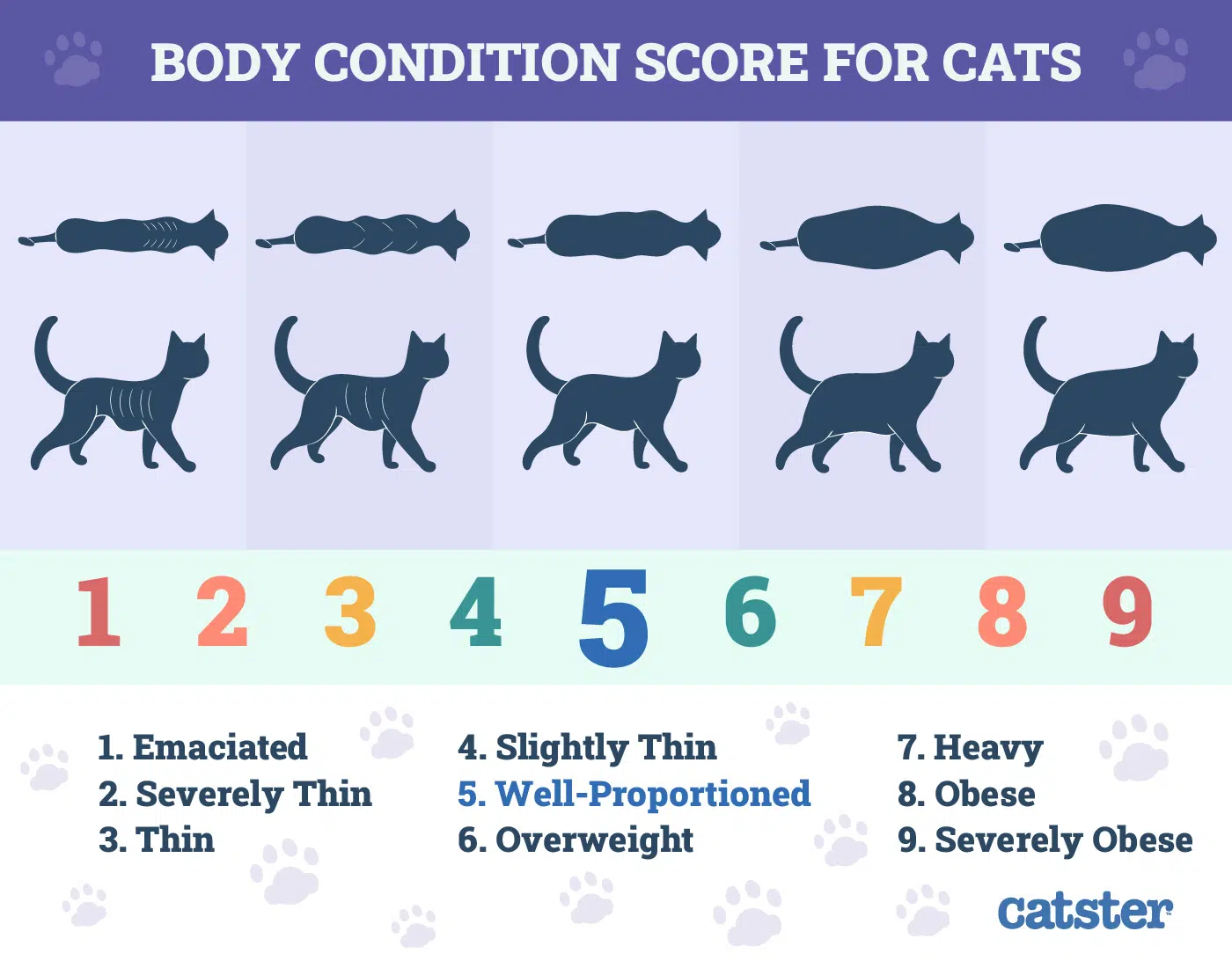
3. Weight/Body Condition Score
Unhealthy weight gain increases the risk of health problems like heart disease, diabetes, orthopedic concerns, and a myriad of other ailments (including some cancers).
Obesity itself is considered a disease as well, therefore, a cat can’t be “obese but healthy”.
Providing a proper diet and plenty of physical stimulation is the surest way to avoid weight-related health problems. You must do regular weight checks to ensure your pet remains within a healthy range based on their breed.
Weight loss in cats is much more complex when compared to dogs or humans, and therefore, you should never attempt to have your cat lose weight in the way you would want to modify your weight (or a pet dog’s weight). Fasting is extremely dangerous for cats. If you think your cat is overweight, you should consult your veterinarian for a customized weight loss plan made specifically for your cat.
4. Neuter Status
A study found that on average, neutered cats lived longer than their intact counterparts. The term “neuter” can sometimes be misleading, and many people tend to believe that it refers to desexing a male-only. However, it’s not specifically in reference to males only. Sex-specific terms include spaying or ovariohysterectomy (females) and castration or orchiectomy (males).
5. Genes
Generally, crossbred cats enjoy longer lives when compared to their purebred counterparts. It is thought that crossbreeding allows for greater genetic variance, which in turn minimizes the risk of a kitten inheriting breed-specific traits that are counterproductive towards a longer life (such as a genetic condition).
6. Healthcare
The quality of healthcare offered contributes largely to the chances of some Tuxedo cats living longer than others.
While preventative care increases their odds of dodging numerous health problems, routine vet visits increase the likelihood of early detection and treatment of potentially deadly diseases.


The 5 Life Stages of a Tuxedo Cat
Cats have five main life stages, and Tuxies are not an exception. Because different life stages tag along with specific physical and behavioral changes, knowing your pet’s age can help ensure you provide proper nutrition, physical stimulation, attention, and affection.
1. Kitten (0 to 3 Months)
Kittens grow rapidly and are highly energetic, playful, and boisterous. Kittens can usually be fully weaned when they are around 2 months old, though some people think it’s best to wait until they are around 3 months old before being adopted into their forever home.
2. Juvenile (6 Months to 1 Year)
Tuxedos in the juvenile life stage reach sexual and most of their physical maturity and settle into their personalities. When your kitty is a year old, they will be ready to transition from kitten food to adult food.
3. Adult (1 to 11 Years)
Some people like to break this part of a cat’s life down to “young adult” and “mature adult”—however, there’s generally no agreed-upon consensus as to what distinguishes the two. An adult cat is defined as a cat that isn’t growing much (if at all) physically but isn’t classified as a senior.

4. Senior (11 to 15 Years)
A cat is considered a senior when they are 11 years old. This part of their life often calls for more routine veterinary care and a closer look at subtle changes that could hint at an underlying health issue (such as litter box accidents).
Senior cats also tend to benefit from a nutritional adjustment. They don’t tend to absorb nutrients as well as their adult counterparts but are also often somewhat more sedentary. As such, they seem to do better with a nutrient-dense, highly digestible diet.
Senior Tuxies have a lower tolerance for disturbances because of their decreased energy levels. Fortunately, their bodies still allow them to enjoy considerable physical and mental stimulation.
It is common for senior cats to experience a drastic drop in their appetite. You can encourage your furry friend to eat by switching to kibbles for senior cats. Most importantly, you must schedule more regular health checkups as advised by your vet.
5. Geriatric (15 + Years)
Geriatric Tuxies are more likely to develop chronic conditions and require more routine veterinary care. They may also be more likely to face issues such as feline dementia. As part of the natural aging process, their bodies will gradually slow down till they reach an eventual endpoint.
Though age itself isn’t considered a disease in cats, it can be a risk factor for the development of certain pathologies.
How to Tell Your Tuxedo Cat’s Age
If you don’t have your cat’s birth certificate (or a record of their birth date), the best way to determine their age is by having a veterinarian look at their teeth to approximate their age. However, this is much easier for a kitten—the approximations for an adult are less specific and more of a generalization.
Though some people say that looking at the amount of plaque on your cat’s teeth is an indicator of their age, this isn’t true as both their diet and the rate at which they have their teeth brushed by their owners will definitely change the rate at which their teeth accumulate plaque and tartar. Likewise, the appearance of a cloudy eye doesn’t help identify a cat’s age either, as the ocular conditions which people sometimes mislabel as signs of seniority can also be seen in younger cats.

Final Thoughts
Tuxedo cats are not a breed of cat but rather a coat color. As such, the best approximation of their age is given by considering that of crossbred cats, which postulates an average lifespan of around 15 years.
Naturally, several factors play a part in determining both your cat’s potential lifespan and the odds of them attaining it (or exceeding it). However, you can’t go wrong with common sense practices of maintaining a healthy, stimulating environment, good nutrition, and routine veterinary care.
Featured Image Credit: Rosy_Photo, Pixabay








3 Responses
hi i have a tuxedo male that will be 23 in 2 months. I found him in a garbage can when he was newborn.
I raised him up.
I recently took him to the vet bec he can not walk. he eats and drinks and poops, but his legs cross and his paws fold under. his back legs spread out.
the vet sd it it arthritis and gave him an injection.
it did nothing. I feel he's reached the end of his life. he can't clean himself, so I shower him. he looks like a young cat, until u see he can't walk. he has gd teeth, ALL his whiskers, and a beautiful coat of shiny black and white.
my children think I should put him down, but I sd he's eating, just really hard to get up and walk.
I want to do whats best for him. I feel if it was me, I would still want to live. he gets love from me and I make sure he is clean.
but it bothers me that mabe he prefers to be put down. idk
can you advise what u think. really appreciate.
also I would like to bury him, but they charge 1900.
I just find it so hard to bring him and ge trust me and then give him the lethal shot
thanku
jc
Thanks for sharing your story, Jacqueline. Its clear that you love Tuxie, and I know how hard this decision is. Evaluating his quality of life is a good place to start—things like mobility, appetite, hydration, and overall comfort. Your described mobility loss signs he's struggling. He was already given an opportunity of a loving and good life with you, thanks for rescuing him from the garbage. Consider whether Tuxie is still able to enjoy the things he once did, if his good days are fewer than the bad, and if he's suffering more than thriving.
Euthanasia is a heartbreaking but compassionate option when it's clear a pet is no longer enjoying life. Speaking with an online vet at www.pangovet.com could offer some clarity, as they can explain you everything you need to know and consider. Here are also a few post you might find useful: Why Euthanasia Is A Gift: Dr. Karyn Explains – https://www.catster.com/felines-weekly/why-euthanasia-is-a-gift/
thank you either way. I honestly can't tell you what you should do,but if there's pain involved you must stop the pain.