Get

In Your Inbox

Catster is reader-supported. When you buy via links on our site, we may earn an affiliate commission at no cost to you. Learn more.

How to Identify a Turkish Angora Cat: Guide with Infographic
Share

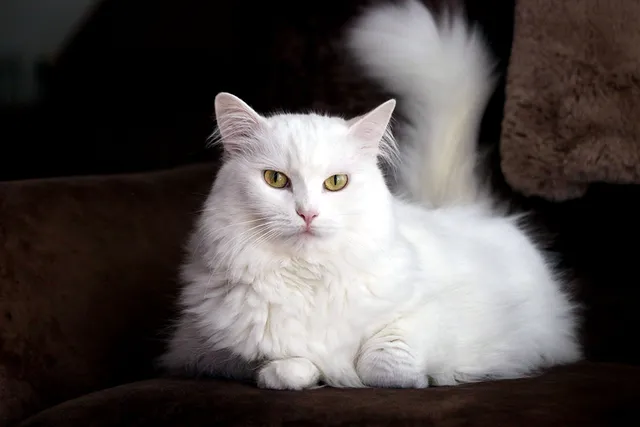
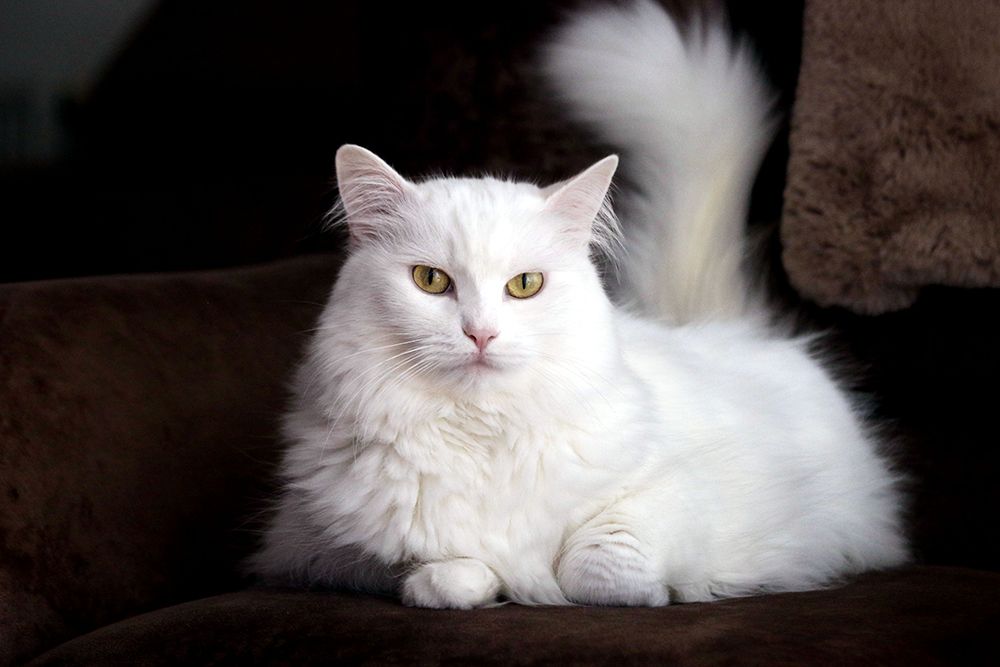
white Turkish angora cat on the couch

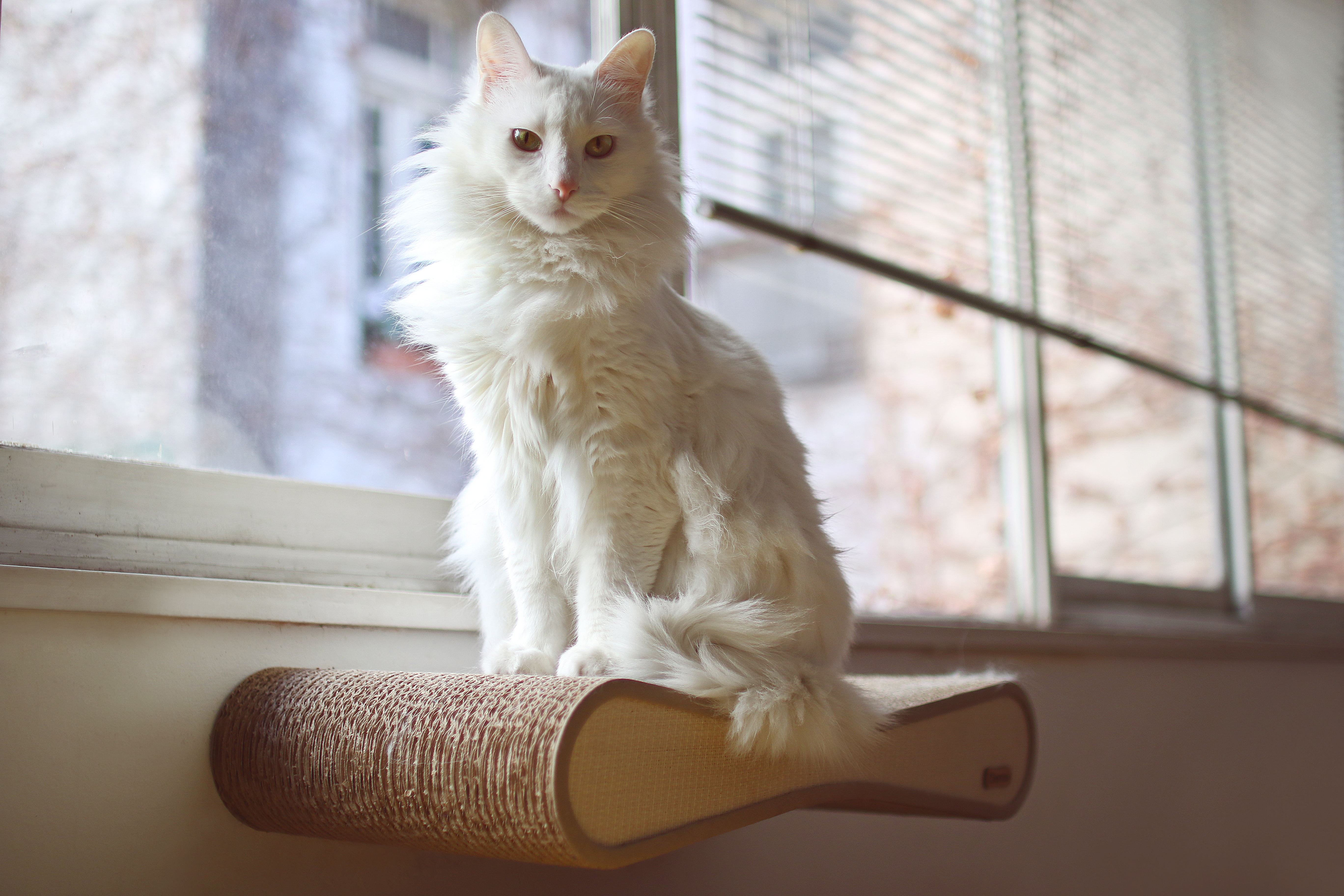
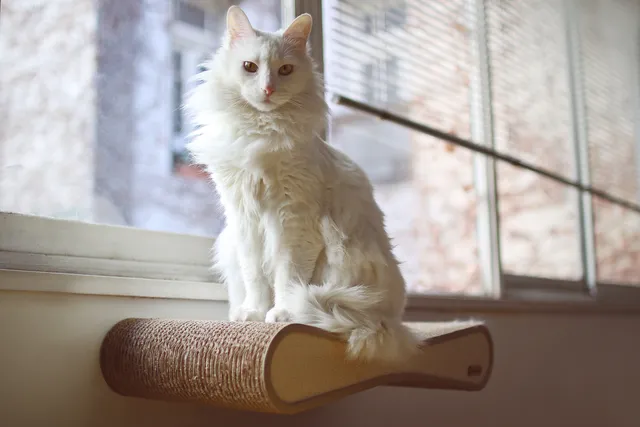
The Turkish Angora is beloved in Turkey, but these absolute stunners have effortlessly purred their way into the hearts of cat lovers worldwide, too. They can be easily mistaken for other cat breeds with medium-length or long hair, like the Persian and Turkish Van, so in this guide, we’ll tell you what to look for if you’re unsure your kitty is a true Turkish Angora!

divider 3 paws

The 6 Ways to Identify a Turkish Angora Cat

Okay, so you think your fluffy delight might be a Turkish Angora, but you can’t be 100% sure. No problem—follow this checklist to get to the bottom of the mystery.

1. Look at the Coat

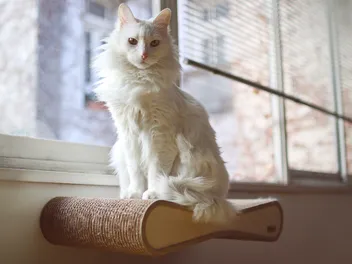
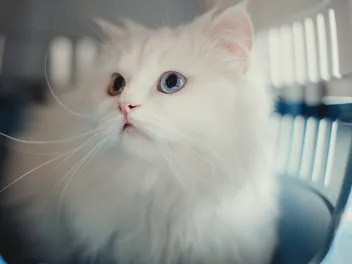
Turkish Angoras have very distinctive, single, medium-length to long coats with a wonderful texture—silky, soft, and often white in color. Nevertheless, other colors and patterns can’t be ruled out since a wide variety is possible for this breed, including (but not limited to) cream, red, blue, black, tabby, tortoiseshell, and calico.

15 Turkish Angora Cat Colors
You’re welcome to use our images, but we require you link directly to this site for credit: Image by Catster.com

2. Look at the Head Shape

The Turkish Angora has a small to medium-sized, wedge-shaped head. The head could also be described as almond-shaped, just like the eyes, which come in various colors, including blue, green, and amber, though some Turkish Angoras have heterochromatic (different-colored) eyes. The head is in good proportion to the rest of the body, the neck is slender, and the chin is slightly round.


3. Look at the Build

Turkish Angoras are medium in size, but they’re fairly small when compared with the breeds they’re sometimes mistaken for, like the Turkish Van and the Persian.

In addition, the body is slender, long, muscular, and graceful rather than bulky or big-boned, and this gives them a smooth and elegant gait. Turkish Angoras are typically between 9 and 14 inches tall, with hind legs longer than those up front, and they can weigh up to 15 pounds.

White Turkish Angora
Image Credit: Aymara Herrera, Shutterstock

4. Look at the Paws

Unlike some breeds that have larger, more bear-like paws, Turkish Angoras typically have little, delicate paws.


5. Look at the Ears

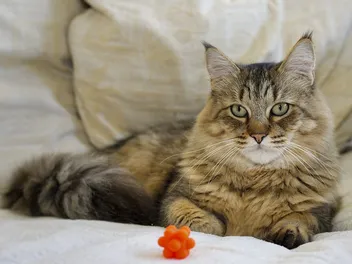
A Turkish Angora’s ears are long, wide-based, and triangular in appearance, whereas some breeds have more round-shaped ears.

Turkish Angora Cat
Image Credit: Deedee86, Pixabay

6. Look at the Tail

The long and plume-like or feather-duster-like tail is one of the Turkish Angora’s most distinguishing features. According to the Cat Fanciers Association’s breed standard, the tail is narrow at the end and wide at the base.

divider 3 paws

The Turkish Angora Temperament

One of the most exciting things about cats is that they’re a real mix-and-match when it comes to personality. Nevertheless, certain character traits are often linked to specific cat breeds, and the Turkish Angora is no different.

Turkish Angoras are known for being very intelligent, confident, and people-oriented and for simply loving being the center of attention! They’re generally not of the shy and retiring variety and won’t hesitate to put an unruly canine or feline companion in their place if necessary.

Angoras do well in homes with sensible and respectful children and thrive off of affection—and will give it back in no short supply. They often love to play and explore, so stock up on cat trees and climbing spots aplenty.

These are, however, just generalizations—it’s completely possible to get a Turkish Angora that’s a little more mellow and reserved around people.

white Turkish angora cat on the couch
Image Credit: TheCats, Shutterstock

divider 3 paws

Final Thoughts

To sum up, the gorgeous Turkish Angora has plenty of distinctive traits, but their luxurious silky coats, lithe and graceful bodies, pointed ears, delicate paws, feathery tails, and almond-shaped heads can help you tell them apart from similar-looking breeds. These cats are also renowned for their often companionable, spirited, and confident personalities, though every cat is unique in this area.


Featured Image Credit: TheCats, Shutterstock

Want content like this delivered to you?

Sign Up For Our Newsletter

News, insights, expert advice, and everything cat

* By submitting, you agree to our Terms & Conditions and Privacy & Cookies Policy.


How useful was this post?

Click on a star to rate (you can leave written feedback after clicking submit)

Help us improve Catster for pet parents!

Your feedback really matters.

What did you like about this post? Also how can we improve it?

Join the conversation

2 Responses

  1. my black and white cat has been labelled as DSH by the vet he was found and rescued, but he has long soft furry and fox like tail I think he is one of these

    1. Hi Charlotte, thanks for sharing your story, your cat sounds gorgeous; only DNA testing can confirm if it is a DSH or Turkish Angora, but they are both lovely. Consider enrolling your cat in our cat of the week contest: https://www.catster.com/submit-your-cat/.

Leave a Reply

You’re very welcome to leave a comment or question. Please know that all comments must meet our community guidelines, and your email address will NOT be published. Let’s have a positive and constructive conversation.


Catster's Digital Magazine is Back!

Vet-approved health & behavior advice

Real cat stories & community features

The Surprisingly Simple Ways to Help a Cat With Hairballs

Cats spend an astonishing amount of time grooming. It is part hygiene routine, part comfort ritual, and part instinct that traces back generations....

What a CATastrophe! A Tire-ing Ordeal For a Pony in the UK

As you would expect, our weekly news updates are usually centered around feline topics – we are a cat care website after all...

Ask Dr. Paola – Help! My Cat Has Stopped Eat His Wet Food! (June 1, 2026)

Welcome to our “Ask Dr. Paola” series, where every Monday we bring expert advice straight from Dr. Paola Cuevas (MVZ) to help our...

Chatting About Fake News in the Pet World, AI Again, and New Age Journalism | Chatty Cattys, Episode 23

Navigating the modern digital landscape requires a sharp eye to distinguish fact from fiction. In this episode of Catster’s podcast, Chatty Cattys, Nicole...

More related

What Is a Cat’s IQ? Vet-Verified Facts & How to Test Feline Intelligence

Just like people, cats seem to come from all ends of the intelligence spectrum. Some cats show amazing problem-solving and learning skills, while...

Feline Leukemia Day 2026: What It Is & How To Participate (Vet Verified)

There are many wonderful pet holidays every year, such as Walk Your Pet Day and Cuddly Kitten Day. These holidays can be fun...

Do Cats Get Annoyed? 10 Vet-Reviewed Signs & What to Avoid

Cats can get annoyed just like humans, although they usually express it differently than us. Even the most loving and content feline can...

Can British Shorthair Cats Be Left Alone? Vet-Verified Facts & Considerations

If you love cats but spend a lot of time away from home for work or other commitments, you may wonder if certain...

Keep reading

Can Cats Eat a Puppuccino (Pup Cups) From Starbucks? Vet-Verified Nutritional Info

With many baristas snapping pics of canine customers in the drive-through, treating your dog to a pup cup has taken the influencer world by storm. This free item from Starbucks’ “secret menu” is beloved by dog companions everywhere. Still, we...

Catster_Can Cats Eat a Puppuccino_v1_Jul 16 2024

21 Plants That Are Safe for Cats (Vet Approved)

If you love plants as well as cats, ensuring the two live harmoniously together can be a tricky business. Some plants simply don’t survive cats’ insatiable curiosity, and, in some cases, this can be dangerous as certain plant species are...

cat with plants-pixabay

Raw Paws Pet Food Review 2026: Pros, Cons, & Verdict

Raw Paws Pet Food is a company that makes dog and cat foods. They offer frozen food that comes in rolls, patties, or ground, freeze-dried food, as well as grain-free kibble for dogs. They also offer food toppers, chews, supplements,...

Raw Paws Cat Food Review

Is Borax Safe for Cats? Vet-Approved Safety and Usage Advice

Borax is a multipurpose cleaner that can be used for stopping an infestation of ants or cleaning mold. It’s even become popular as an ingredient for homemade slime recipes! You might also see it being suggested as a “natural” alternative...

Catster_Is Borax Safe for Cats

Can Hard Water Cause Urinary Crystals in Cats? Vet Approved Facts & Advice

Keeping your pet safe and in good health is an essential part of taking care of a cat. Unfortunately, there are times when your pet might become ill regardless of your best efforts. The chance of your cat dealing with...

cat drinks water

Can Stress Give a Cat Diarrhea? Vet Approved Signs, Causes & Treatment

Stress can undoubtedly cause cats to have gastrointestinal problems, including diarrhea. Although diarrhea can be triggered by stress, the condition can also be caused by various medical problems. Therefore, it is crucial to have the issue evaluated by a veterinarian...

Ginger cat in blue litter box

Why Do Cats Fake Sleep? 7 Vet-Reviewed Possible Reasons

Cats sleep an average of 12 to 16 hours a day, which may seem like a lot of time compared to humans, but the busy little felines need a lot of rest. However, have you ever noticed your cat stretched...

cat-sleeping-with-their-face-down

Are Emotional Support Vests Necessary for Cats? Vet-Verified Recommendations & FAQ

Emotional support animals (ESAs) are one type of assistance animals, however, they are different from service animals and, therefore, are subject to their own requirements and considerations. They are any animal species with no specific training that provide comfort and...

a woman and her cat with harness and leash sitting on the bench at the park

Love Cats? So Do We! Join the Catster Community

Stay informed with expert pet care insights delivered straight to your inbox! Discover professional guidance on animal behavior, feeding tips, trusted product picks, and much more.


Sign up for the Catster Email Newsletter

Stay informed with expert pet care insights delivered straight to your inbox! Discover professional guidance on animal behavior, feeding tips, trusted product picks, and much more.