Why Is My Cat’s Jaw Clicking? Vet-Approved Explanation!

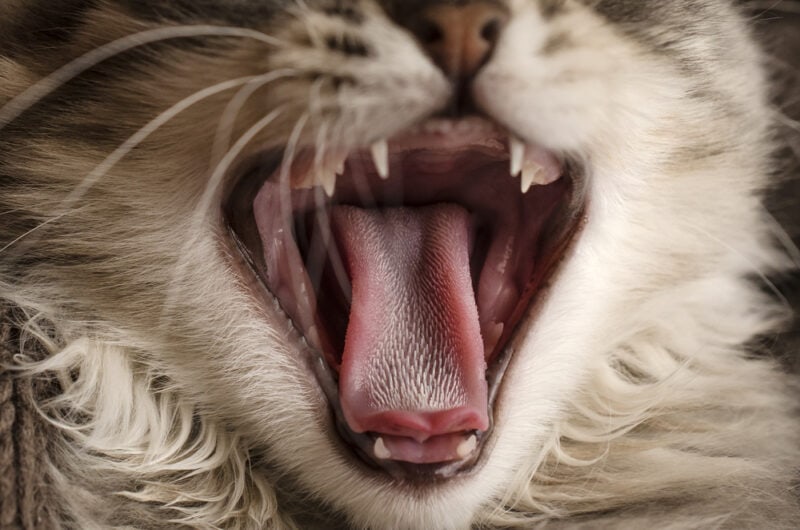
You have heard people claim that dogs are a man’s best friend, but what about cats? Yes, they are smaller than most dogs, but that does not change the fact that they can be just as loyal, loving, and important to their owners as dogs. Due to the special relationship between owners and their cats, it’s natural to worry when something doesn’t seem normal. Hearing an odd clicking sound from your cat’s jaw is one of those times.
You may be hearing clicking from your cat’s jaw for several reasons. While some of these issues are relatively common, when clicking is coupled with pain or refusal to eat, attention must be paid. Let’s learn more about jaw clicking, often called tooth grinding, to understand this issue and what the sound could mean for your cat’s health.
Jaw clicking or tooth grinding is generally caused by one of the following reasons:
Oral Issues
The Temporomandibular Joint

Oral Issues
When dealing with a noise from your cat’s mouth and jaw area, your first thoughts about the reason probably involve oral problems. Unfortunately, several oral diseases can make a cat’s jaw click, and some are more painful and dangerous than others. Let’s take a look at a few of them below.

1. Feline Tooth Resorption
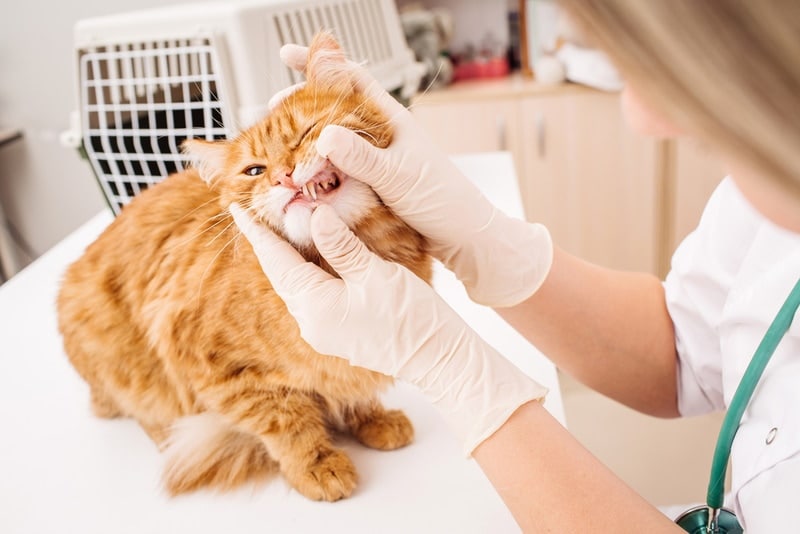
Feline tooth resorption can be a painful cause of jaw clicking. This occurs when dentin, the tissue found beneath a tooth’s enamel, begins to erode and is eventually destroyed. There are two types of feline tooth resorption, both of which can cause your cat pain. X-rays of your cat’s teeth usually detect this condition and often result in a tooth extraction.
Signs of this issue can be as follows:
2. Tooth Alignment
If your cat’s teeth are out of alignment, also known as malocclusion, you may hear a click come from their jaw.
3. Other Oral Issues
Issues such as ulcers, infections, or cancer in the mouth may make your cat click its jaws or grind its teeth. A visit to a veterinarian is the quickest way to determine if any other oral issues could be the problem.
The Temporomandibular Joint
Not only could your cat’s teeth be the problem, but it may also be the jaw. The temporomandibular joint is the hinged part of your cat’s jaw. It is formed by the mandible and temporal bones and is better known as the jaw joint or the TMJ.
A TMJ on each side of your cat’s face works together to help your cat chew and move their mouth correctly. If there is an issue with this area of the jaw, your cat may be unable to eat properly and an audible clicking sound may be heard.

Signs of Temporomandibular Joint Disorders
Unfortunately, Temporomandibular Joint Disorder (TMJ) is quite painful for cats and can significantly affect their health if untreated. Here are signs of TMJ that you should look for if you hear an odd clicking sound and feel something could be wrong with your cat’s jaw.
If you notice any of these signs of discomfort your cat should see a veterinarian immediately:

What Causes Temporomandibular Joint Disorder?
With TMJ disorders being such a scary condition for cats to deal with, you may be wondering what can cause these issues. Unfortunately, not all conditions of TMJ are explainable or fully understood. It all depends on what type of TMJ disorder your cat is dealing with.
Here are a few causes that you should be aware of so you can better understand this issue and help treat your cat:
When You Should Worry About Jaw Clicking
As with any condition your pets suffer from, knowing when to reach out to a veterinarian can be difficult with jaw-clicking. In most instances, it can be nothing. It can be a one-time occurrence or simply something your cat does. Then again, as you’ve seen above, jaw clicking can be a sign of painful issues that your cat needs you to step in and help take care of.
If your cat shows signs of discomfort, such as meowing or pawing at their face, the problem could be more severe. Also, monitor your cat’s appetite carefully. If jaw-clicking stops them from eating or drinking water, you should immediately contact a veterinarian. Not eating and drinking can lead to severe issues affecting your cat’s overall well-being.
Final Thoughts
As you can see, your cat may be clicking their jaw for several reasons. If this action worries you or you see any signs of discomfort or pain, you should contact a veterinarian. They can run the proper diagnostics to find the underlying cause and get your cat on the mend quickly. This will ease your worry and allow you to enjoy quality time with your pet once again.
Related Reads:
Featured Image Credit: Ukki Studio, Shutterstock
Expert cat care, straight to your inbox
Vet-reviewed advice, behavior tips, and the best of Catster. Free, and you can unsubscribe anytime.
By signing up, you agree to our Terms & Conditions and Privacy & Cookies Policy.
A native of East Tennessee, Melissa is an avid animal lover who enjoys writing in her notebooks and playing outside with her many pets. Currently, she has two cats, Princess and Pepper, who are total opposites that demand constant attention. Her three dogs, Jazzy, Whitey, and Demon, are spunky troublemakers.
Melissa is also a dedicated wife and mother to two children. Beyond her career as a freelance cat writer, she's a published Indie author under the pen name Rena Marin!
Join the conversation
Ask a question, share your story, or send private feedback.