Why Does My Cat Grab & Bite My Arm? 6 Vet-Reviewed Reasons & What to Do


In this article
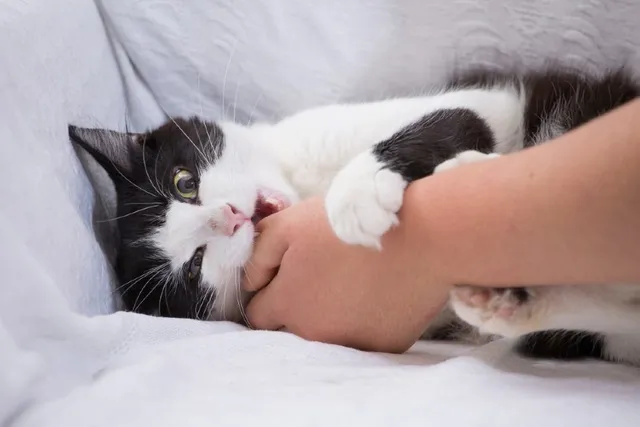
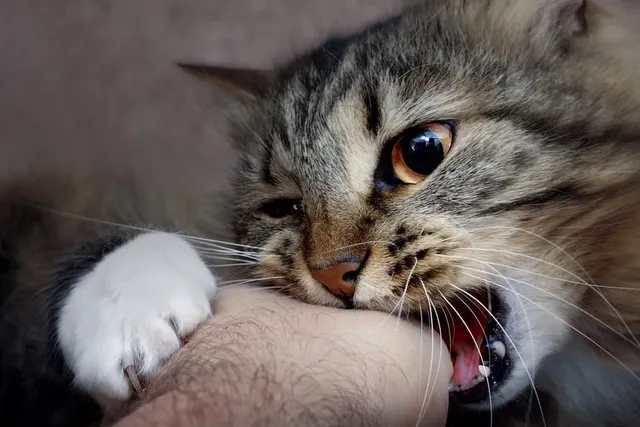
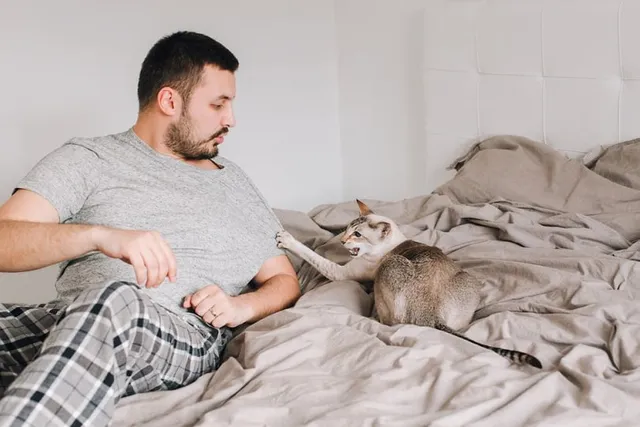
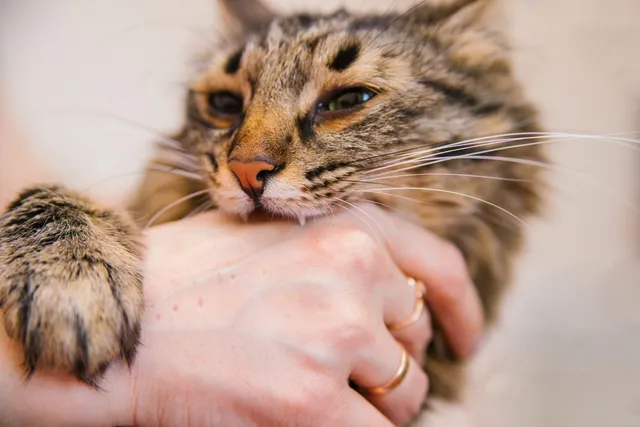
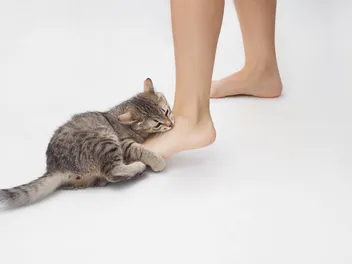
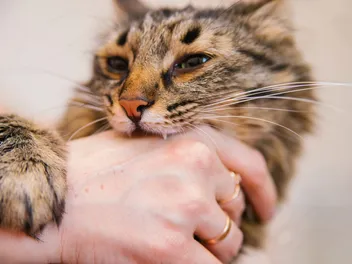
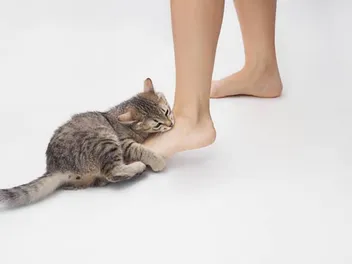
Cats are often unfairly stereotyped as moody and unpredictable animals. While many dedicated cat lovers would argue otherwise, our feline friends sometimes display behavior that’s hard to understand. For example, some cats seem like they enjoy petting but will quickly turn and bite your arm. If that scenario hits close to home, here are six common reasons a cat may grab and bite your arm, along with what to do about them.

The 6 Reasons Why Your Cat Grabs and Bites You
1. Something Hurts
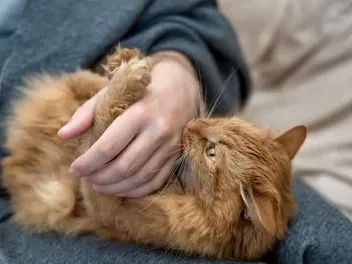
Your cat may suddenly bite your arm because you’ve touched a sensitive or painful area on their body. Most cats dislike having their bellies or the base of their tail scratched and petted because they are naturally more sensitive to touch.
Your cat could also have a hidden injury that you touched by accident. Cats can also develop a mysterious condition called feline hyperesthesia syndrome (FHS) or twitchy cat disease.1 One of the signs of FHS is sensitivity to petting and touch in certain areas.

What to Do
If you are concerned about the health and well-being of your pet, seek veterinary advice for the best course of action.
2. Trying to Play
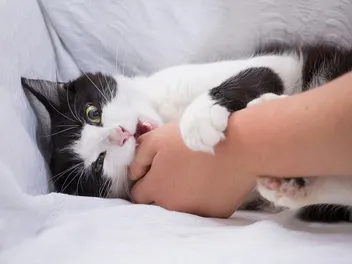
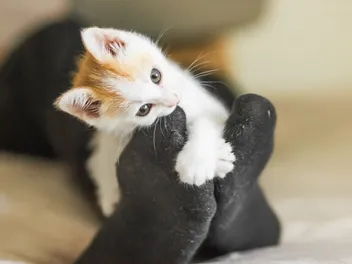
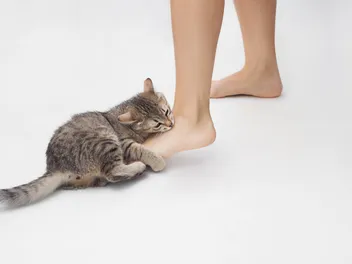
Another reason your cat may bite your arm is that they’re feeling playful and trying to use you as a toy. If you’ve ever watched two cats play together, you’ll notice behaviors such as biting and bunny-kicking are all part of the fun.
Your cat may nip you to draw you into a game. Play behavior in cats is typically a way to use their hunting and stalking instincts, but it can be painful when your arm becomes the prey.
What to Do
3. Redirected Aggression
Sometimes, your cat bites your arm because they can’t sink their teeth into their real target. Redirected aggression is when a cat is upset by something, such as a stray cat outside.
Because they can’t go after the source of their stress, they attack the next closest thing, in this case, your arm. A loud noise or a housemate they don’t like can also provoke this reaction in your cat.

What to Do
4. Grooming
Cats can lick and bite their owner’s arm as part of grooming behavior. Cats use grooming to keep clean, socialize, and communicate with each other. It doesn’t always mean your cat thinks you’re dirty.
Even though you may appreciate the gesture, try not to let your cat groom you to prevent transmitting bacteria or diseases from their mouth. Kids, pregnant people, the elderly, and anyone with a weak immune system should be especially cautious.
What to Do
5. Tired of Attention
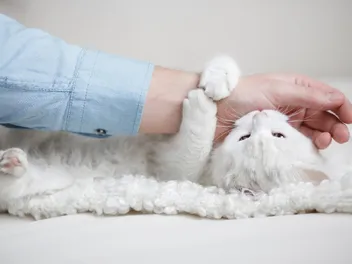
Often, a cat will bite an arm or hand suddenly because they are tired of attention and petting. While this may seem like an overreaction, cats generally give other warning signs before they turn to their teeth. Owners don’t always recognize them for what they are and keep petting their kitty.
If they're fed up with petting, the cat may eventually bite. Unfortunately, because this biting almost always causes humans to stop petting them, the cat’s behavior is immediately reinforced.

What to Do
6. Never Learned Biting is Wrong
Adult cats may bite their owners’ arms because they never learned the behavior was wrong when they were younger. Kittens generally learn bite inhibition, or how hard is too hard, as they socialize and play with their mother and littermates. Baby cats who leave their mother too early or who are bottle-fed miss out on this vital lesson and may grow up as biters.
If you adopt an adult cat, there’s no way to know how the previous owners handled biting behavior. They may have encouraged the kitty to play with their hands or arms. Because of that, the cat doesn’t understand that they’re doing anything wrong.
What to Do

How to Stop Your Cat from Biting
No matter why your cat is biting your arm, two techniques can help.
1. Redirection
The first is one we already mentioned: redirection. This training technique is helpful for problematic cat behaviors, including scratching furniture. The idea is that you distract the cat from biting or scratching something they shouldn’t by offering them something more appropriate.
For biting, that usually means keeping a toy within arm’s reach. As soon as the cat starts biting or trying to wrestle your arm, show them the toy and encourage them to play with it instead. A soft, stuffed toy or something similar is usually a good option.
Looking for toys that will cater to the many needs of your cat? The Hepper Hi-lo Cat Scratcher is one of our favorite cat products, and it will encourage your cat to get active. Its clever three-angle design offers multiple ways for your cat to climb, stretch, and exercise. Made of a sturdy plywood base and a replacement cardboard insert, this scratcher is an option that cats can enjoy for years to come. If your cat requires a little encouragement for self-play, the Hepper Catnip Mice Toy Set is a fantastic choice for their instinctual needs. Made with natural, bite-resistant hessian fabric and filled with organic catnip. Cats can satisfy their natural prey instincts while getting the physical activity they need to thrive.
| Image | Product | Details | |
|---|---|---|---|

|
Hepper Hi-Lo Cat Scratcher |
|
Check Price |

|
Hepper Catnip Mice Toy Set |
|
Check Price |
At Catster, we've admired Hepper for many years, and decided to take a controlling ownership interest so that we could benefit from the outstanding designs of this cool cat company!
2. Ignoring
The second technique to try is ignoring your cat’s biting. If their goal is attention, not reacting to the bite is the last thing your cat wants to see from you. Calmly remove yourself from your cat’s reach.
Later, when the cat is calm and relaxed, offer them interaction through play or petting. This helps your cat learn that there are right and wrong ways to get attention. This technique is most effective and least painful if you can learn to spot the signs your cat is about to bite before they happen and remove yourself.

Conclusion
If your cat regularly displays aggressive behaviors beyond just grabbing your arm and biting, it’s time to talk to your veterinarian. They can rule out any medical causes, such as pain or illness, for your cat’s behavior. Once that’s done, they can suggest behavior modification techniques or prescribe medication to help. They may even refer you to a behavioral specialist. Don’t encourage your cat to bite; try to deal with their problematic behavior before it gets out of control.
Related Reads:
Sources
Featured Image Credit: Anna Kraynova, Shutterstock
Expert cat care, straight to your inbox
News, insights, and useful advice, delivered to you.

No spam — unsubscribe anytime.
By signing up, you agree to our Terms & Conditions and Privacy & Cookies Policy.
How useful was this post?
Click a star to rate. You can leave written feedback afterwards. (We read all feedback.)
Elizabeth Gray is a lifelong lover of all creatures great and small. She got her first cat at 5 years old and at 14, she started working for her local veterinarian. Elizabeth spent more than 20 years working as a veterinary nurse before stepping away to become a stay-at-home mom to her daughter. Now, she is excited to share her hard-earned knowledge (literally--she has scars) with our readers. Elizabeth lives in Iowa with her family, including her two fur kids, Linnard, a husky mix and Algernon, the worldʻs most patient cat. When not writing, she enjoys reading, watching all sports, and spending time outdoors with her family.