Why Do Cats Hate Dogs? Vet-Reviewed Facts & Tips


In this article
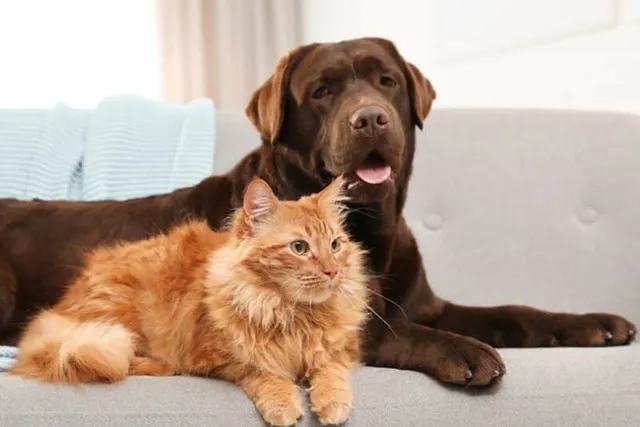
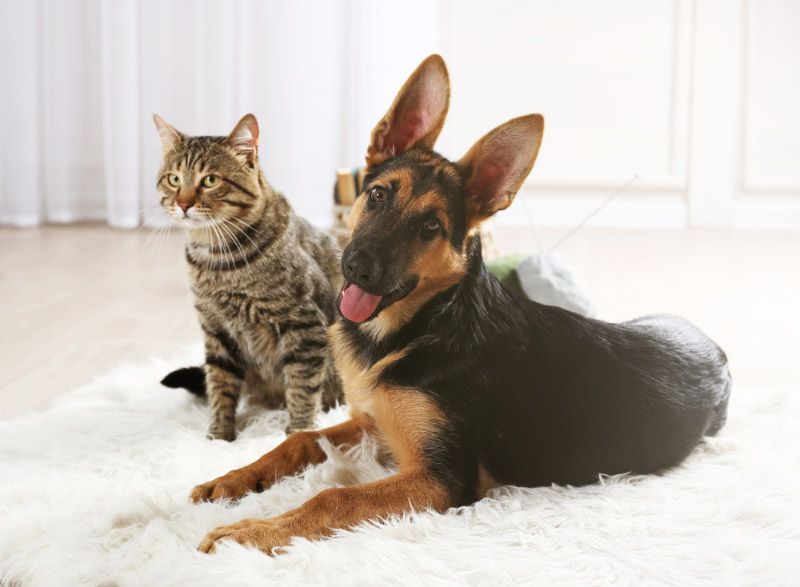
It’s a tale as old as time, depicted in innumerable movies, cartoons, and television shows: cats hissing at dogs, dogs chasing cats, both engaging in a skirmish that results in a ball of smoke from which violent sounds emanate and limbs and other objects protrude at random intervals. Okay, that last one might be from cartoons, but I digress. But do cats really hate dogs as much as we’ve all been led to believe they do? In reality, dogs and cats do not hate each other. They have different communication skills that might confuse one another but do not get into war as a natural behavior. Read on to learn more.

Why Do Cats and Dogs Hate Each Other?
As we alluded to in our introduction, cats and dogs don’t necessarily inherently hate each other. The problems that arise between the two species can be traced back to instinctual behaviors and differences in communication styles.
Instincts
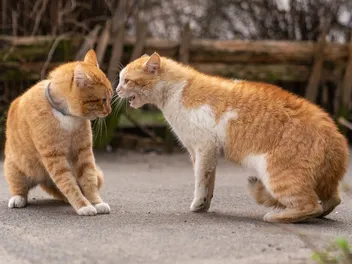
Dogs will naturally be inclined to chase smaller animals, especially when they flee. Cats are instinctually on the lookout for predators, and when they see a dog in their midst, they may believe they’re in danger and respond by running away or hissing. Some particularly strong-willed and sassy cats may try striking their canine counterpart, which can cause a full-blown brawl (and that aforementioned cartoon-style fight cloud).

Communication Styles
Cats and dogs communicate with themselves, other animals, and humans differently. The signals and behaviors they use to communicate can cause signs of aggression, fear, dominance, and friendship to be misinterpreted by the other species.
For example, dogs will wag their tails and give lots of sloppy kisses as a way to express themselves. Cats, on the other hand, tend to be more subtle in how they display their emotions. When cats swish their tails, we know that to mean that they’re annoying or irritated. A dog, however, may read that body language as an invitation to play.
Species Social Interaction Differences
Dogs are typically much more outgoing than their aloof feline counterparts. Cats place a lot of value in their personal space and boundaries. After all, they are territorial creatures. Whereas dogs are happy to interject themselves into any environment and are gregarious creatures used to living with others and sharing their space and resources according to a hierarchy. It is these differences in personality that can play a huge determining factor in whether your pets will get along or not.
Can Cats and Dogs Get Along?
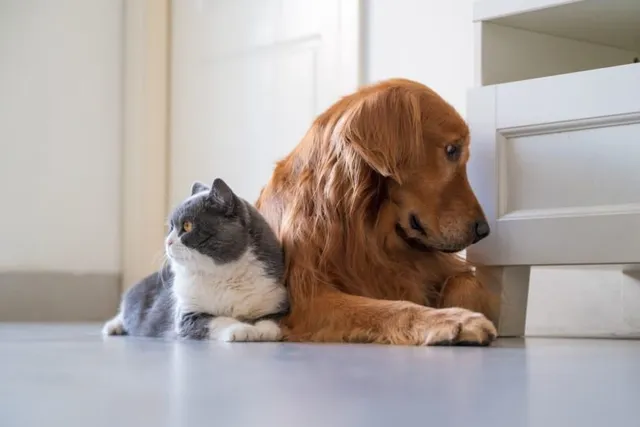
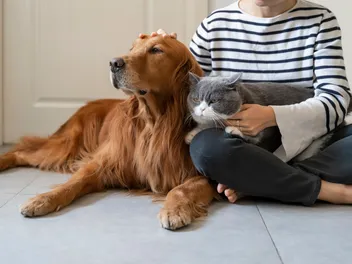
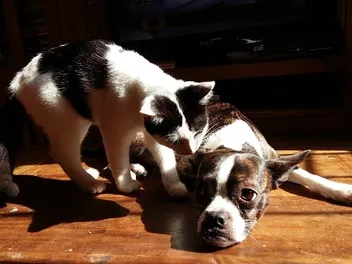
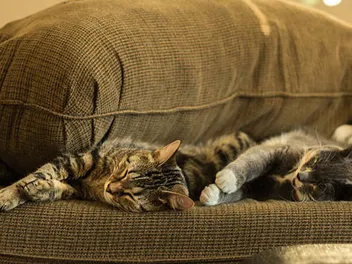
Yes! If you’re considering adopting a cat when you already have a dog (or vice versa), you should know that the two animals can absolutely get along with one another. Let’s take a look at some tips to help ensure success when introducing the two.

The 5 Tips for Cats and Dogs to Get Along
1. Do a Slow and Gradual Introduction
The worst thing you can do when introducing a cat and a dog is tossing the two animals together in the same room and hoping for the best. Introducing the two animals should be a very slow and deliberate process. They need to be acquainted with each other’s presence indirectly before even being allowed to see one another. For example, let them “meet” on opposite sides of a closed door. This way, they can get used to each other’s scent. You can also try feeding them at the same time so they’ll create a positive association with the smell of their soon-to-be best friend.
2. Give Them Both Their Own Space
A crucial aspect of living in a multi-species home is ensuring that both animals have their own space away from each other. This is especially important for your kitty, who likely values their time away from their hyper canine sibling. Since cats love being up high, a tall cat tree or even wall-mounted shelves are worth the investment for the peace they’ll bring.
It’s natural for multi-pet households to look at their fur brothers and sisters as competition, so don’t give your cat and dog an excuse to compete for their resources. Keep food and water bowls separate and ensure you have enough of each for all your pets. Keep a close eye on your dog’s and cat's behavior towards each other's food plates. Free feeding might not be the best option, as it might only add stress to the situation. In some cases, your pets might need to be fed simultaneously at set times. Additionally, your pets need food formulated for their species and life stage, so it’s not a great idea to let your cat eat from your dog’s dish and vice versa.

3. Don’t Punish
As hard as it may be to keep your cool if your large dog starts chasing your kitty around, punishing your pets can be extremely detrimental. Not only will punishments wreak havoc on the bond you’re creating with your pets, but they can also make them extremely stressed out.
Instead, use positive reinforcement when your pets are being good. For example, reward them with their favorite treats and lots of praise when they’re near each other and exhibiting calm behaviors. This can help them associate positive experiences (yummy treats) with one another.
4. Train
Training is a non-negotiable aspect of owning a dog, but it is especially important if you want your pup and kitty to live together harmoniously. You should, at the very least, teach them basic commands like “no”, “stop”, ”leave it”, and “stay” so you can more easily get your pup’s attention if (and when) their chasing instincts turn up.

5. Don’t Let Your Guard Down
Even animals that have lived harmoniously alongside each other for months may revert to aggressive reactions due to factors outside your control, such as illness or external stimuli. If there is any doubt in your mind that your cat and dog will get along in your absence, separate the two when you’re away at work or busy with something else in the house. This can prevent devastating accidents or fights that turn deadly.
Do Some Dog Breeds Get Along Better With Cats?
Almost all cats and dogs can learn to live together regardless of their breed. That said, certain dog breeds may be more at risk of tormenting your kitty. For example, Terriers have very strong hunting instincts, so some may be unable to live alongside a cat without trying to hunt them. Herding breeds, such as Border Collies or Australian Shepherds, have very strong herding instincts and may not be able to coexist alongside cats without trying to herd them.

Final Thoughts
Cats and dogs don’t always fight like, well, cats and dogs, despite all the cartoons and cliches telling us they do. The two species can absolutely live together harmoniously, though it may take some time and patience before they can even stand the sight of one another.
Before you adopt another pet, consider the personality of the one you currently have. Are they realistically capable of getting along with an animal of a different species? Are they aggressive toward you? Do they respect and listen when you try to correct bad behavior? Don’t let your yearning for another animal cloud your judgment here. If your pet is incompatible with another species, you’ll be doing both animals and you a huge disservice.
See also:
Featured Image Credit: Africa Studio, Shutterstock
Expert cat care, straight to your inbox
News, insights, and useful advice, delivered to you.

No spam — unsubscribe anytime.
By signing up, you agree to our Terms & Conditions and Privacy & Cookies Policy.
How useful was this post?
Click a star to rate. You can leave written feedback afterwards. (We read all feedback.)
For Chantelle, writing and animals are the two driving forces in her life. Growing up on the Canadian prairies surrounded by pets, she now shares her home with five cats, two guinea pigs, and a bearded dragon. Chantelle, her husband, and their child pride themselves on being dedicated pet parent, even spending a fortune on wall-mounted cat shelves to provide their cats with an indoor jungle gym. When she's not snuggling with her cats or photographing their humorous moments, Chantelle is exploring the Rocky Mountains, rewatching her favorite Netflix series, and reading up on various random subjects.