Catster is reader-supported. When you buy via links on our site, we may earn an affiliate commission at no cost to you. Learn more.

Cat Behavior

Why Does My Cat Wiggle Before They Pounce? 4 Vet-Reviewed Reasons

By Lorre Luther · Reviewed & fact-checked by Dr. Maja PlatisaVet Approved
Dr. Maja Platisa
Reviewed & Fact-Checked byDr. Maja PlatisaDVM MRCVS (Veterinarian)
Maja joined our team in March 2023 as one of our in-house veterinarians. She is passionate about animals and their health and loves to help the readers with any issues or questions they have regarding their four-legged friends and other animal companions. Her passion is small animal medicine and emergency work, while she also has a great interest in animal welfare.View authorThe information is current and up-to-date in accordance with the latest veterinarian research. Read about our vets
Share
a polydactyl cat ready to pounce

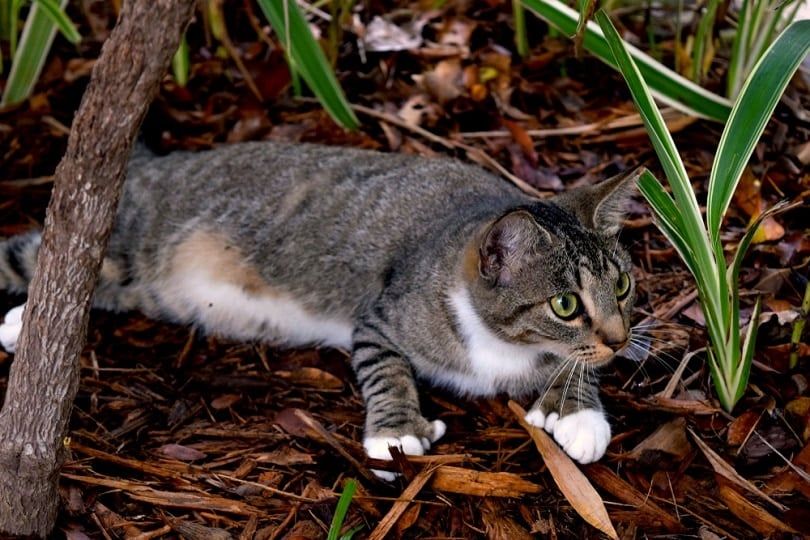
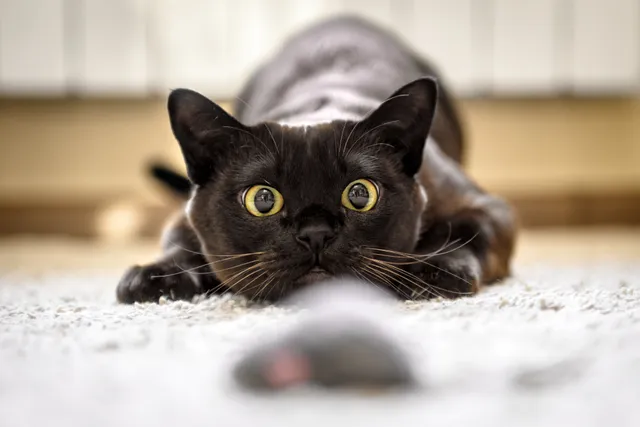
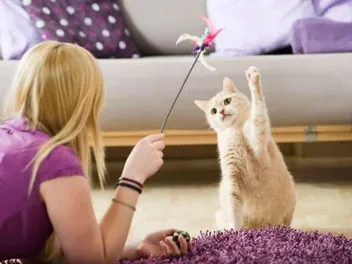
The little wiggle that cats display before pouncing might be one of the most adorable things that you’ll observe as a cat parent. Whether your pet is stalking a live critter or a catnip-infused plush toy, before your cat gets down to the attack, there's bound to be a bit of butt-wiggling.

Big cats like lions and tigers get in on the action too: They wiggle their mighty hindquarters before pouncing on prey, just like your pet! While it's a common prelude to an attack, some cats don't bother with the wiggling preliminaries, preferring to simply crouch and spring.

No one is entirely sure why some cats wiggle before pouncing and others don't. Nor is there consensus regarding why cats wiggle as a prelude to an attack at all. However, there are several theories, including one suggesting that cats wiggle their butts to test the ground and stay balanced before jumping. Read on to learn four common reasons that cats wiggle before they pounce.

divider cats oct 2024

The 4 Possible Reasons Cats Wiggle Before They Pounce

1. Testing for Solid Ground

side view of a blue tabby white maine coon cat jumping down from birch tree in the back yard
Image Credit: Nils Jacobi, Shutterstock

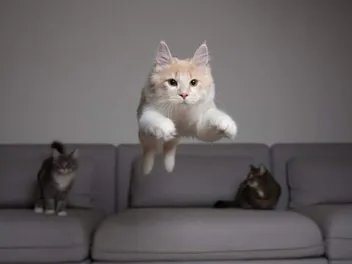
Cats alternate putting weight on their hind legs as they walk, while a pounce requires them to push off the ground with both hind legs at the same time. A cat getting ready to jump may use a wiggle or two to evaluate the floor under all four feet, particularly the hind paws, for firmness to ensure that there is sufficient resistance and traction to execute an intense pounce. Domestic cats are expert jumpers, with most able to spring more than 5 feet in a single pounce!


2. Balancing Themselves

The wiggle may give cats a chance to center and balance themselves. It also helps them determine how far they can jump from that surface. Cats have a fantastic sense of balance! But they are not just great at balancing themselves when it comes to pouncing; they’re also able to right themselves if they fall. Not only are cats incredibly flexible, which increases balance, but they're also able to use their sensitive vestibular systems to right themselves while falling.


3. Preparing Their Muscles for Action

Image Credit: Pixabay

Tennis players jump up and down when waiting to receive a serve to keep their muscles alert and firing. Some animal behavioral experts suggest that the feline pre-attack butt wiggle may serve the same purpose for cats as bouncing up and down does for athletes, ensuring muscles warm up. These quick movements may be your cat's way of getting their muscles firing and ready to spring into action.


4. Releasing Excess Energy

Cats' brains release dopamine, a powerful feel-good hormone, when they play and hunt. That little butt shake may be evidence of a burst of dopamine-related energy designed to shift cats into turbo mode in the moments right before a kill. Think of it as a sort of uncontrolled excitement that rushes through your pet's body in anticipation of a successful kill. Indoor cats respond to these dopamine rushes by stalking teasers and rabbit-kicking their plush toys.

divider cats oct 2024

Final Thoughts

Seeing that adorable butt wiggle up close and personal is one of the best things about living with a cat. It's sweet, endearing, and full of the wild, effortless athleticism that cats bring into our homes. Cats love to play by chasing, jumping, stalking, and pouncing, which explains why your pet wiggles their butt right before demonstrating mastery over their favorite plush toy. Playing with your cat in 15-minute sessions multiple times per day, as most veterinarians recommend, will give you plenty of opportunities to see the butt wiggle in action!

Sources

Featured Image Credit: LaurenMJohnson, Shutterstock

The Catster Newsletter

Expert cat care, straight to your inbox

News, insights, and useful advice, delivered to you.

No spam — unsubscribe anytime.

By signing up, you agree to our Terms & Conditions and Privacy & Cookies Policy.

Click a star to rate. You can leave written feedback afterwards. (We read all feedback.)

Lorre Luther
Authored by

Lorre Luther

Leave a Reply

You're very welcome to leave a comment or question. Please know that all comments must meet our community guidelines, and your email address will NOT be published. Let's have a positive and constructive conversation.

Cat Pouncing: Vet-Verified Behavior Explained & Solutions

Cat Pouncing: Vet-Verified Behavior Explained & Solutions

Cats love to pounce! While it's a normal activity that's linked to their hunting skills, there are times when your cat’s pouncing can become a bit too enthusia…

Lorre Luther
By Lorre Luther ·
Why Do Cats Pounce? Feline Instinctive Behavior Explained (Vet-Reviewed)

Why Do Cats Pounce? Feline Instinctive Behavior Explained (Vet-Reviewed)

Have you ever watched your cat bound around the house, seemingly jumping on random things? You may have wondered why they do it. The answer is simple: Cats lov…

Christian Adams
By Christian Adams ·
Why Does My Cat’s Tail Twitch? 6 Vet-Reviewed Reasons

Why Does My Cat’s Tail Twitch? 6 Vet-Reviewed Reasons

Cat ownership would be a lot easier if our pets could tell us their thoughts. However, until someone develops a cat-to-human translator, we have to use context…

Chantelle Fowler
By Chantelle Fowler ·
Why Do Cats Trill When They Jump? 4 Vet-Reviewed Reasons

Why Do Cats Trill When They Jump? 4 Vet-Reviewed Reasons

In the wild, cats remain fairly silent. Their purrs, hisses, growls, and yowls are mainly for communication, not something they do casually as they go about th…

Christian Adams
By Christian Adams ·

Why Is My Cat Stalking Me? Vet-Approved Behavior Explanation

Cats stalk their prey, stalk their toys, and sometimes even stalk their food. However, what concerns many cat owners is when their cats decide to stalk them. Y…

Patricia Dickson
By Patricia Dickson ·
Why Is My Cat Stalking Me? Vet-Approved Behavior Explanation

Why Do Cats Show You Their Butt? 6 Vet-Reviewed Reasons

Although cats have lived with humans for millennia, they still do many things that leave us feeling puzzled or confused. One behavior that can surprise or shoc…

Jessica Kim
By Jessica Kim ·
Why Do Cats Show You Their Butt? 6 Vet-Reviewed Reasons

Can Cats Control Their Tails? Vet-Verified Positions & Movement Explained

Cats use their tails to communicate to the world through body language. You can tell a lot about a cat’s disposition by what their tail is doing. With that bei…

Jordin Horn
By Jordin Horn ·
Can Cats Control Their Tails? Vet-Verified Positions & Movement Explained

How Do Cats Hunt? Vet-Approved Instincts & Methods Explanation

If you bring a cat into your home, you have to realize you’re bringing a predator right into your living room. While cats don’t go after big game like humans,…

Christian Adams
By Christian Adams ·
How Do Cats Hunt? Vet-Approved Instincts & Methods Explanation

7 Signs Your Cat Wants You to Play With Them: Vet Verified Cues to Look For

Cats love to play, just like dogs. Although it may seem vastly different from dogs, cats can show us signs letting us know they want to play. Knowing how to re…

Rachel Giordano
By Rachel Giordano ·
7 Signs Your Cat Wants You to Play With Them: Vet Verified Cues to Look For

How To Read a Cat's Body Language: 5 Vet-Reviewed Moods & Signals

While cats can't use words to tell us how they're feeling, most are expert communicators who rely on different types of vocalization, body language, and chemic…

Lorre Luther
By Lorre Luther ·
How To Read a Cat's Body Language: 5 Vet-Reviewed Moods & Signals

Why Do Cats Walk in Circles Before Lying Down? Vet-Verified Facts & FAQ

Cats are known for their weird yet fascinating behavior, which can sometimes leave owners shaking their heads. One of the most peculiar behaviors that many cat…

Christian Adams
By Christian Adams ·
Why Do Cats Walk in Circles Before Lying Down? Vet-Verified Facts & FAQ

How Do Cats Jump So High? Vet-Approved Facts & FAQ

Cats have a remarkable ability to jump high, often making it look like they’re almost flying. But how do cats jump so well? It turns out it’s a combination of…

Christian Adams
By Christian Adams ·
How Do Cats Jump So High? Vet-Approved Facts & FAQ

Love Cats? So Do We! Join the Catster Community

Stay informed with expert cat care insights delivered straight to your inbox! Discover professional guidance on feline behavior, feeding tips, trusted product picks, and much more.

You may opt-out at any time. View our Privacy Policy for more information.

The Catster site on a phone