Why Do Cats Move Their Ears? Vet Reviewed Science & Meanings Explained


In this article
Cats are incredibly expressive animals, and while they can’t mimic human words, they have a wide range of ways to convey feelings through their body language. As well as their eyes and tail, cats can portray a lot of emotion through their ears, while also using them for their intended purpose of hearing. While you might consider ear position and its meaning to be a mystery, you will start to recognize what certain movements mean and how your cat may be feeling.
Below, to help you determine how your cat is feeling and whether you need to take action to help.

Why Do Cats' Ears Move?
Generally, a cat’s ears move because they hear a noise, and they turn their ears in that specific direction to better detect the sound. The ears will essentially point toward the likely source of the noise so that the sound waves can be funneled into the ear and the cat can better identify whatever they are hearing. Cats have incredible hearing which, in the wild, they would use to locate prey and also to warn them of predators.
They are especially good at hearing high-pitched noises and can hear at a much higher level than humans and even dogs. This is likely so that they would be able to hear the high-pitched chattering of mice and other small animals. So, when you see your cat’s ears moving and pointing in a particular direction, the most likely cause is that your cat is honing in on a particular noise in a bid to identify its cause.
But that isn’t the only reason cats move their ears. They can relay a lot about your cat’s emotions if you know what you are looking for.
1. The Neutral Position

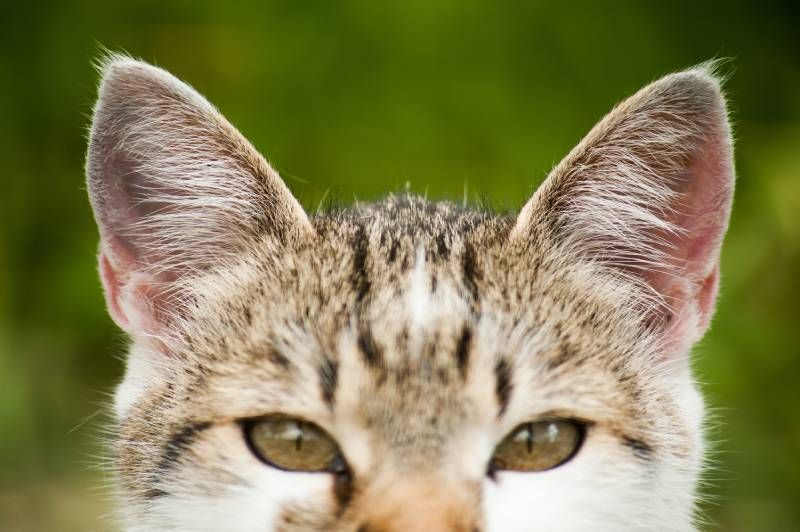
Cats are almost always alert. Even when they have their eyes closed and seem to be asleep, their ears are working. Although some cats do have different natural ear positions, the neutral position is upright but not pointed. This means that your cat has not heard any noise that needs closer attention and they are content and peaceful.
2. Pricked Up

When your cat is alert, their ears will become erect and they will likely be directed forward. This enables them to take in more sounds and potentially identify any alien or unexpected noises. Your cat may even point their ears in different directions, essentially letting them listen to what is going on all around them.
Your cat might be alert because they are feeling playful, has been startled, or is just taking in a change of circumstances or surroundings. This ear position does not necessarily mean your cat is alarmed; rather, they are just investigating.
3. Twitching

Twitching ears move quickly back and then forwards and this movement usually accompanies a hunting pounce. Watch for your cat to get flat on the ground and raise their rear end. Your cat is getting ready to spring.
House cats most often make this movement when they are ready to play or if they are going to chase and play-attack a toy, person, another cat, or the family dog. Grab a toy and make the most of your cat’s playful attitude with some healthy indoor exercise time. Just watch your fingers and be sure to direct the attention away from your feet!
On the other hand, twitching of the ears and sometimes other parts of the face, not accompanied by playing and pouncing, may indicate an underlying neurological issue, metabolic disorder, or other disorder, and it needs to be checked out by a veterinarian.
4. Itching

Cats groom themselves a lot, and as part of this natural process, they will occasionally scratch their ears. This may also include licking their paws and forelimbs and then rubbing them over their face and ears as a part of their usual facial washing routine. If your cat is scratching their ears more than usual, this can be a sign of fleas, ear mites, ear infections, or other issues within the ear canal. You will need to visit the vet to get a proper diagnosis and appropriate medication, and it’s crucial to keep up with routine preventative flea and anti-parasite treatments.
5. Flattened

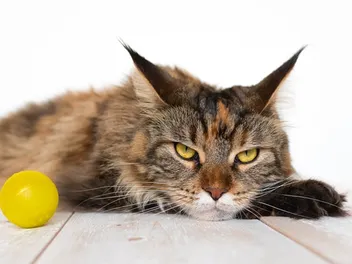
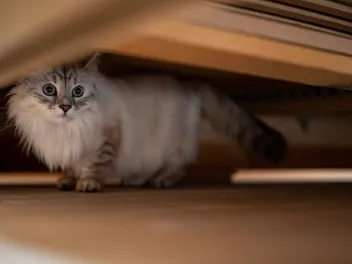
When a cat’s ears are flattened down, it is a sign that something is afoot. Flattened ears can mean that your cat is anxious or scared, or it may be a sign of warning from your cat when they feel threatened or cornered by another animal or a very scary situation.
If you have multiple cats or dogs and cats, you’re likely to have seen this ear position when your cat wants their own space. Unfortunately, dogs can’t always read the signs because they have different body language and don’t always recognize the subtleties of cat emotions—until it’s too late.
6. Flicking

Your cat might flick their ears rapidly if something has irritated one of the ears. Something might have blown into the ear or something might be flying around the ears. Flicking them is a way to try and get rid of the irritant. They may also do it if annoyed or if they are suffering from ear mites, fleas, or an ear infection.

Other Types of Feline Body Language
Cats' ears are very expressive, but they are just one part of the feline body that can be used to express a wide range of emotions. Below are some other common feline body language signs to help you better understand your cat.
Upright Tail
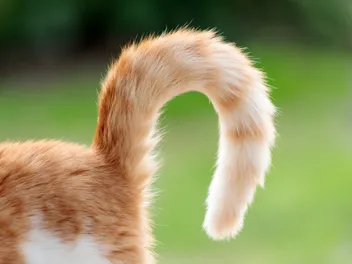
An upright tail is a relaxed position and one that your cat will usually adopt when greeting you. It may be preceded by a rub against your legs and the tip of the tail can be curled over to really show a relaxed or playful attitude.

Squinting Eyes
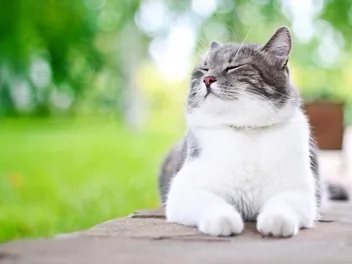
Eyes are windows to the soul, and this is especially true with cats. An alert cat’s eyes will be wide open so they can see more and better discern details. If your cat is very relaxed, they may have partially or completely closed eyes, and squinting or half-closed eyes can be a sign of affection and a sign that your cat is pleased to see you.
However, it’s important to differentiate between half-closed eyes as a sign of relaxation and happiness and squinting, with or without redness, inflammation, or discharge, which can indicate an eye issue that requires urgent veterinary attention.
Slow Blinking
Slow blinking is another sign of affection that cats show their humans. Cats slowly blink at one another as a sign of trust, and if you slowly blink at your cat and then turn away, this is a good way of showing that you are relaxed and do not pose a threat.
Rolling Around
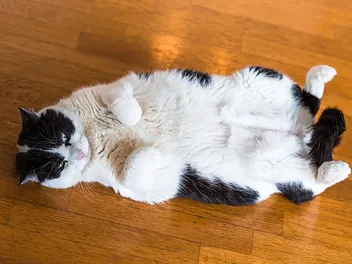
A cat generally has to be very relaxed around a person or other animal to show their tummy to them. Rolling on their back means that the cat is in a prone position so it must really trust you to adopt this position. Always approach a cat’s tummy carefully, however, because even if a cat is rolling on their back for you, they might still not appreciate having their belly tickled.

Wide Eyes
If your cat’s eyes are wide, this essentially means that they are fully open and your cat is instinctively forcing them wider with large, dilated pupils so they can take in more of what is happening. This is a sign of alert and it could mean that your cat is stressed about something that is happening or that they are scared of something nearby.
Arched Back
A cat with an arched back is attempting to make themself look bigger, and they adopt this position when under threat in a bid to try and ward off any would-be attacker. If the threat doesn’t go away, the cat may strike at or attack the threat to ensure they have the upper hand.

Fluffed Fur
An arched back is usually coupled with big, fluffed-out fur. Both of these actions make the cat appear bigger which makes it more of a physical threat. It is a defensive stance, rather than an aggressive one, but it can lead to scratches and bites if the target doesn’t respond appropriately.
Purring
We generally associate purring with a cat being happy and content, and this is often what it means. However, cats can also purr when they are nervous or anxious, kind of like nervous laughter in people. If your cat is at the vet or enduring anything else that might induce anxiety, this is the likely cause.
Conclusion
Cats are very expressive animals so while they can’t talk, they have a plethora of ways to get a message across. They use every bit of their bodies to let you and others around you know how they’re feeling, but because people and cats are very different, we don’t always understand these messages.
Above are various ways that you can tell how a cat is feeling by their ear position and ear movements, as well as other forms of body language.
Sources
Featured Image Credit: effective stock photos, Shutterstock
Expert cat care, straight to your inbox
News, insights, and useful advice, delivered to you.

No spam — unsubscribe anytime.
By signing up, you agree to our Terms & Conditions and Privacy & Cookies Policy.
How useful was this post?
Click a star to rate. You can leave written feedback afterwards. (We read all feedback.)
Nicole is a lover of all animals, especially of the feline variety. She's mom to four, three fur babies and a human baby. She and her husband, John, live on a large forest property down in New Zealand.
Their beautiful Burmese cat Baby (who is now 17 years old) was their first child, though he is now called Baby Cat since their human baby joined the party in 2022. The dogs Rosa and Mac also love cats, but the whole family agrees that King Baby Cat is enough cat for this household.
Nicole is the Director of Content Management at Catster and Pangolia. With a Bachelor's degree in Education and years of online experience, she shares her pet knowledge and the knowledge of other professionals with the world, aiming to improve pets and pet parents' lives.