What Is Cat Mirroring? Vet-Reviewed Facts & Why They Do It


In this article
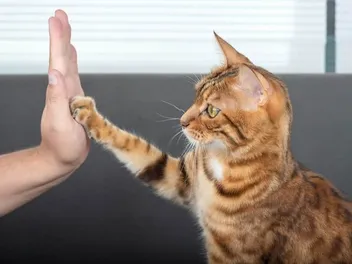
Cat mirroring refers to when cats do things in a similar way as humans or other animals in their environment. However, it can sometimes be misinterpreted as a way of cats being able to copy certain behaviors consciously, while it may just be something they do instinctively and without much thought. Other possibilities may include learned behavior through positive reinforcement training. Certainly, this is a very interesting topic that requires further scientific research.
Cat mirroring may be as simple as when cats follow their favorite humans from room to room and when kitties take over their owners' laptops.
You even see it between cats, as deeply bonded pairs will often mirror each other's behavior. And there's evidence suggesting that cats that live with humans may develop certain personality traits depending on their owners’ personalities and their relationships. Read on to learn more about cat mirroring and why cats do it.

Why Do Cats Mirror People and Other Animals
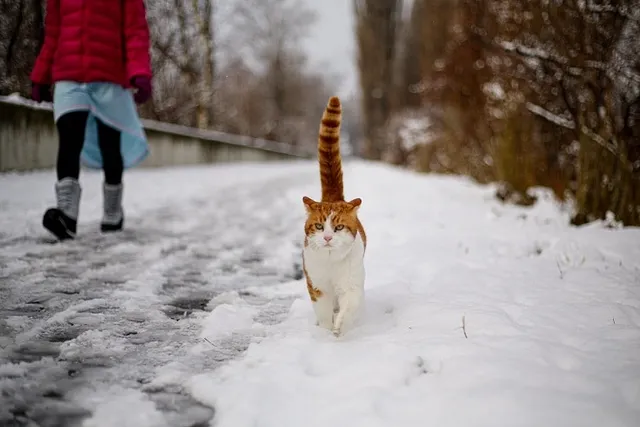
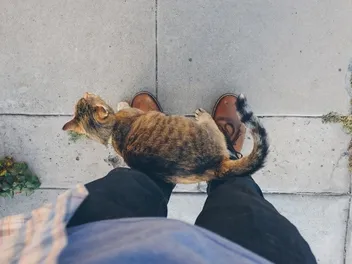
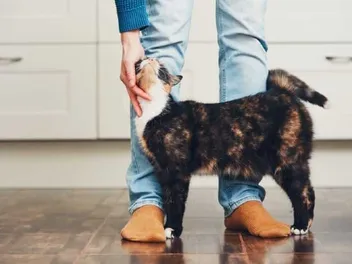
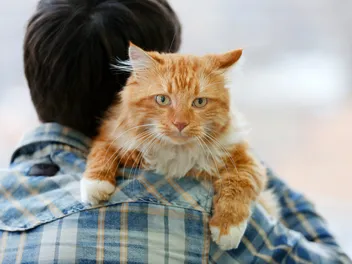
It is common for cats to follow people they live with who give them attention and food from room to room, and it's usually just a sign of affection or seeking attention. Most cats enjoy spending time with people. Some may choose to rather interact with their favorite person than gobble up a treat or play with a toy.
Cats may mirror when learning a new behavior. It's one of the primary ways kittens learn essential skills from their mothers. And if your cats are following each other around, grooming each other, playing together, and napping together curled up into one ball, mirroring behavior is just another sign of how deeply bonded they are.
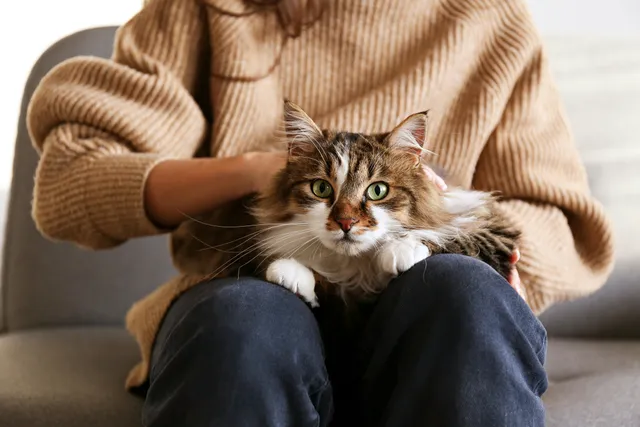
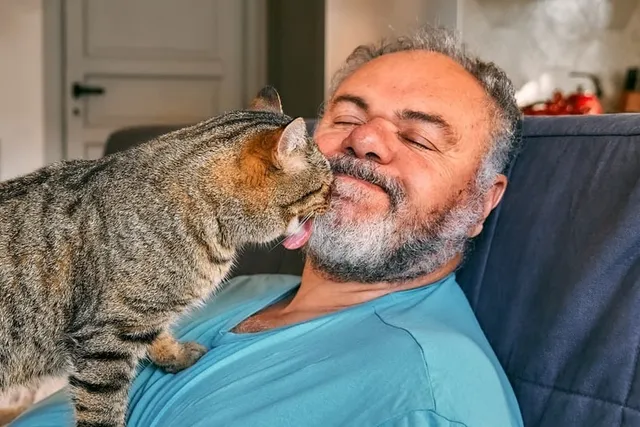
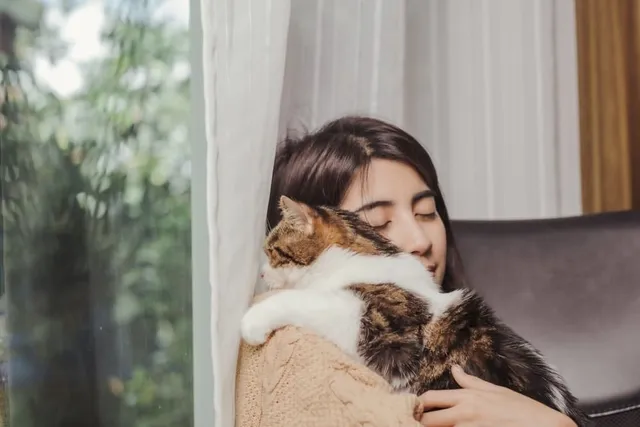
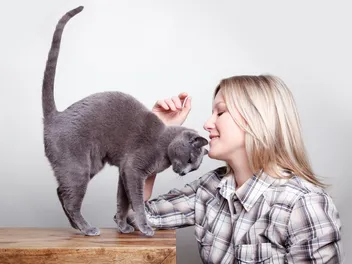
Cats sometimes attempt to do things such as sit behind their owner's laptops or on top of textbooks to engage with the same objects as their favorite human. When cats get up to this mirroring activity, they show how much they enjoy interacting with their humans. Mirroring is usually a sign that deep bonds of affection exist, tying the members of the animal-human pair together.
There is an interesting story of a cat called Ebisu from Japan who has been trained to repeat certain behaviors after their owner. The cat was shown two new behaviors and after hearing the command, was able to repeat it in 81% of the cases. This study suggested that cats may have imitative skills and the ability to recognize behavioral similarity, reproducing the actions of a human model. Of course, further studies are required to understand the mechanism and significance of these peculiar findings.

What About Emotional Mirroring?
A 2019 study looked at the impact of owners' personalities on feline health and temperament. The research team discovered that the humans' dominant personality traits undoubtedly influenced cats. Individuals with strong neurotic traits often had cats who weighed too much and suffered from stress-related illnesses.
Humans with high scores for conscientiousness often have well-adjusted socialized cats. The personality of a cat's owner appears to actively shape the cat's behavior, indicating just how tight the human-cat bond really is.
How Can I Keep My Cat from Following Me Around?
If having your cat follow you from room to room all day starts to get a bit old, there are a few things you can do to encourage your buddy to give you a bit of a break. Keep in mind that cats never respond to negative feedback, so getting a cat to change their behavior almost always involves presenting the cat with a better, more enjoyable alternative and wearing them out with a teaser.
Rule Out Medical Conditions
Some cats, like humans, may suffer from separation anxiety; alongside increased appetite, underlying health issues, and cognitive decline, particularly in older cats, anxiety may be one of the reasons they follow well-loved humans around a little bit too much.
If your cat has started following you around excessively daily or they are begging for food constantly, they should be checked out by your vet. There is a good chance they may have an underlying medical condition such as hyperthyroidism, diabetes, feline cognitive decline, or other, that may be the cause for this change in their behavior.
Provide Exercise and Enrichment
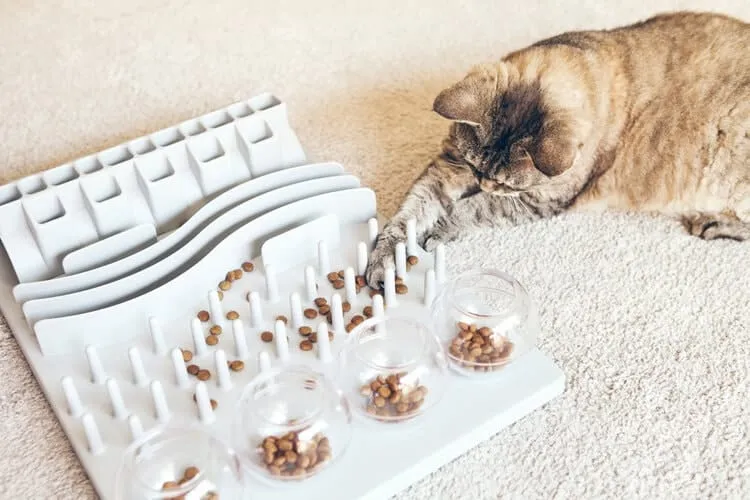
After medical issues have been ruled out by your vet, ensure you are providing your cat with plenty of physical exercise, environmental enrichment, and mental stimulation, to avoid or reduce their boredom and frustration. Exercise is one of the tried and true ways to reduce feline frustration, particularly when performed every day. There is a great selection of interactive cat toys, food puzzles, laser games, and more, alongside vertical perches, supervised cat outdoor time on a lead and harness, or in a secure catio, that will get your cat feeling fulfilled content, and tired.
Make sure your cat has a pleasant place to nap; two or three would be even better. Provide fun alternatives to following you around, like installing a cat bed on a high perch in front of a large window so they can observe the outdoors, playing cat-specific music, videos showing birds and rodents, or setting up the perfect cat bed in their favorite room.
Cats often follow owners out of boredom. They are looking for interaction, engagement, and mental stimulation. Cat enrichment activities such as food puzzles are great ways to provide your pet with mental stimulation while at the same time giving them something fun to do.
Regular playtime is critical for cats' health and important to developing strong human-animal bonds. If your cat is following you out of boredom, a bit of fun with food puzzles and more play time may result in a more content and engaged cat whose needs for mental stimulation are being met in various ways instead of just by interacting with you.
What to Do if Your Cat Interrupts You While Working
Cats need attention from their owners. Most enjoy hanging out with you more than treats or toys, so it can be quite challenging to keep a cat who loves being the center of your attention from interrupting while you work.
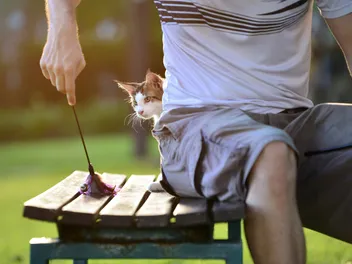
Consider giving your cat a teaser workout right before you get ready to sit down to work. If you start giving your cat lots of attention at specific times, your pet may mellow out and stop trying to get your attention when you’re trying to concentrate. Cats that receive mental stimulation during play sessions are often less likely to demand constant attention throughout the day.
Make sure your pet has a nice high perch to observe you somewhere near where you work or a nice warm bed under your desk where they can curl up close to you. Your cat may be less likely to interrupt your work if they have somewhere cozy and inviting to hang out.
Conclusion
Cats may be able to mirror each other, other animals, and even their favorite humans, but we don’t fully understand why, how, or to what extent. In some cases it may be a sign of love and affection. Cats are part of our families; we influence them just like our children and all other living creatures in our environments. Cats develop behavior and personality traits partly in response to how humans interact with them and their environment.
Creating fun places for your cat to perch and spending lots of time playing with them are great ways to encourage your cat to mellow out long enough for you to get a bit of work done. Content, exercised, and mentally stimulated kitties that have had a bit of catnip are often less likely to feel bored or frustrated.
Sources
Featured Image Credit: Svetlana Rey, Shutterstock
Expert cat care, straight to your inbox
News, insights, and useful advice, delivered to you.

No spam — unsubscribe anytime.
By signing up, you agree to our Terms & Conditions and Privacy & Cookies Policy.
How useful was this post?
Click a star to rate. You can leave written feedback afterwards. (We read all feedback.)
Lorre Luther is a writer who is firmly convinced that cats are smarter than humans. She left her law career in the United States and moved to the Netherlands to follow her dream of becoming a writer. Lorre currently lives in Rotterdam, she enjoys traveling and greatly appreciates the beauty of nature. Lorre has a spot for animals and admires the intelligence of cats.