Why Does My Cat Lick the Wall? 5 Vet-Reviewed Reasons for This Behavior


In this article
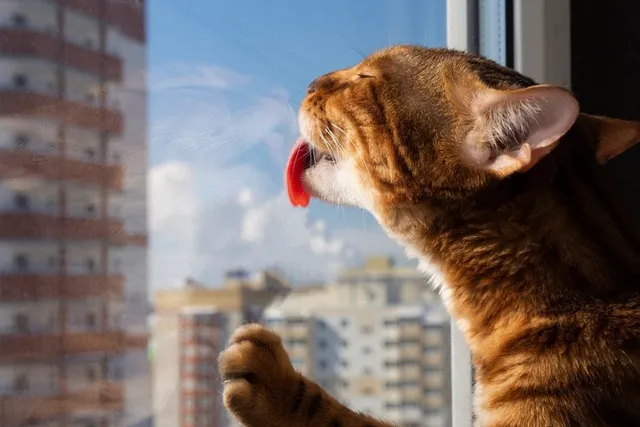
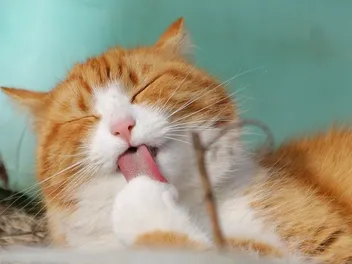
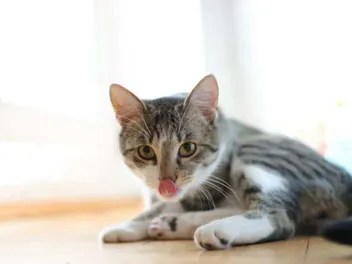
Typically, cats use their tongues to clean themselves and lap up water. However, you may have noticed that your feline has taken a liking to licking the wall. From our perspective, there is no point in licking the wall at all. It doesn’t provide any nutritional value and surely can’t be fun, right?
There are many reasons why your cat may be carrying out this odd behavior. We’ll look at all the different possible reasons, as well as some steps you can take to prevent your cat from licking the wall.

The 5 Reasons Why a Cat May Lick a Wall
1. Stress
Compulsive behaviors are often a sign of stress and anxiety. If your cat is licking the wall and you can’t seem to make them stop, then it could easily be because of stress.
Usually, compulsive behaviors, are a clear indication that your cat is in a bad mental state. Luckily with appropriate management, these behaviors can be extinguished. You should make a complete analysis of the diet, the habits, the living space, the social structure, and the environmental enrichment your cat lives in and has access to every day. The first step would be to get your cat checked by a veterinarian to rule out disease or pain as the cause of the compulsive behavior.
Speak about your cat’s diet to the vet because this behavior could be originated from a nutritional deficiency. Once a medical or nutritional reason is ruled out, you should try to evaluate any possible causes of stress and anxiety in your cat’s environment to make a target plan to eliminate them. Some cats benefit from the use of pheromone diffusers or calming sprays, others simply need a place where they feel safe or to be removed away from another very dominant cat or a scary dog or kid. Some cats’ extreme cases might need some prescription medication, so, after evaluation, a veterinarian should be able to decide if this is the case.
2. Boredom
Your cat may not have anything to do all day. This can result in some pretty weird behaviors, like licking the wall. This behavior is usually easy to interrupt since your cat is just looking for something to do.
You should always engage in play time with your cat, because sometimes these behaviors start developing from plain boredom. Make sure your cat has access to enrichment to keep their mind busy, like a window or an interactive toy. A laser pen session can do wonders; however, never try to start a playtime when the cat is presenting the undesired behavior, as this will only make it worse.

3. Nutritional Imbalances
If your cat seems interested in eating and licking non-food items, it could be a sign of pica. Pica is a medical condition that is characterized by craving non-food items, like walls. We don’t know precisely what causes pica, but some cats seem more prone to it than others. It may be caused by a nutritional deficiency, such as a lack of fat, fiber, or iron. The cat’s body attempts to make up for this deficiency by licking things that usually wouldn’t be considered food.
This makes sense in the wild, where there are mineral deposits for the cat to take advantage of. However, this is not the case in our homes.
4. Taste
Cats do not have the same sense of taste that we do. For this reason, they often find things tasty that we would never enjoy, like walls. Sometimes, your paint may taste good. Some cats enjoy the taste and texture of walls, which increases the odds that they will lick them.
Furthermore, gases that float around the room, like air fresheners and cleaning products, may stick to the walls and give them a unique taste. This may encourage your cat to lick the wall. If your cat seems interested in licking one particular wall, it may be because that wall is delectable.

5. Moisture
Often, walls will collect moisture and condensation. This is especially true if you live in a humid area. Your cat may try and lick up this moisture from the wall, especially if they think it tastes delicious.
Cats may also do this if they don’t have access to fresh water, even if they don’t necessarily like the taste.
How to Stop a Cat From Licking a Wall
The method you should use to make your cat stop licking the walls depends mostly on why the cat is licking it, to begin with. In many cases, you’ll probably have to try a few fixes until one works—unless you can figure out exactly why your cat is engaging in this strange behavior.
Luckily, nearly all of these are straightforward fixes.
1. Reduce Stress
Many cats will exhibit strange behaviors when they are stressed. In the wild, these may help the cat survive. However, in our homes, they usually aren’t beneficial. There are many ways you can reduce your pet’s stress.
Sometimes, you may be able to eliminate the cause of your pet’s stress directly. Perhaps you can give them a hide-away spot from the new dog. Or, perhaps you can provide your cat with a hiding place when your friends come over.
Often, we can’t directly control the source of our cat’s stress. Maybe they really don’t like the new kitten. Or, perhaps they’re stressed by a change of routine. In these cases, you’ll have to get creative with your cat’s stress reduction.
You can utilize pheromones, which can reduce your cat’s stress. For example, they make pheromone collars as well as pheromone dispensers that plug into outlets. These can help reduce your cat’s stress. Of course, there are also medications and supplements as well that can reduce anxiety in cats.
2. Visit Your Vet
A variety of underlying disorders can cause pica, or it can be caused by nothing at all. We don’t entirely understand pica quite yet, including all of its causes. However, pica may occur because of an underlying medical condition. Hyperthyroidism, anemia, leukemia, dental disease, and diabetes are all the most common medical causes of pica. However, other underlying conditions can be the cause as well.
You will have to visit your vet to get most of these conditions ruled out. Cats are usually very good at hiding their sickness. Therefore, you may not get many signs that your cat is feeling poorly.

3. Switch Your Cat’s Food
Dietary problems may also cause pica. In these cases, you’ll need to switch your cat’s food to one that better meets its nutritional needs. We recommend talking to a vet, especially if your cat has an underlying condition that may affect their nutritional needs. Sometimes, lower-quality foods don’t have the nutrition that your feline needs. You should choose high-quality food whenever possible.
4. Ensure Your Cat Always Has Access to Fresh Water
Your cat should always have access to fresh water and should be encouraged to drink it. If your cat has an underlying condition that requires them to increase their water intake, you should consider using wet cat food instead.
You may want to consider using a cat fountain if your feline seems to turn their nose up to a water bowl. Many cats will not drink from stagnant water, which comes from years of evolutionary history. Instead, they require fresh, flowing water, which a cat fountain can provide.

5. Invest in Interesting Toys
If your cat is likely bored, you should invest in some exciting toys to keep them entertained. For brilliant cats, you can try puzzle toys. They make some that are very easy, as well as a few that are very hard. You can utilize these toys to keep your cat entertained throughout the day while you’re away.
Furthermore, having various toys available throughout your home can also prevent your cat from getting bored. For instance, having some catnip-stuffed mice and a few exciting balls around your home will provide your feline with plenty of “hunting” opportunities throughout the day.
If you need to step up your toy game considerably, consider investing in a motorized toy. These move by themselves or move when they are interacted with. They can keep cats entertained for an extended period.
Conclusion
If your cat is licking the wall, they may attempt to lick other non-food items as well. This can include everything from your houseplant to toxic cleaning supplies. You don’t want your cat thinking the bleach you just used to clean your bathtub tastes good, so ensure that you’re being careful about locking up after you clean sometimes.
Don’t put getting into the cabinet past your cat. If a cat smells something they like, it isn’t a big jump for them to crawl into a cabinet and lick all your coffee grounds. If a cat is determined, they will bite and tear into packages as well, so consider using child locks on your cabinets that contain things your pet shouldn’t have.
See Also:
Featured Image Credit: Goran Horvat, Pixabay
Expert cat care, straight to your inbox
News, insights, and useful advice, delivered to you.

No spam — unsubscribe anytime.
By signing up, you agree to our Terms & Conditions and Privacy & Cookies Policy.
How useful was this post?
Click a star to rate. You can leave written feedback afterwards. (We read all feedback.)
Kristin is passionate about helping pet parents create a fulfilling life with their pets by informing them on the latest scientific research and helping them choose the best products for their pets. She currently resides in Tennessee with four dogs, three cats, two fish, and a lizard, though she has dreams of owning chickens one-day!