How to Stop a Cat From Scratching Carpet: 6 Vet-Verified Tips & Solutions



In this article
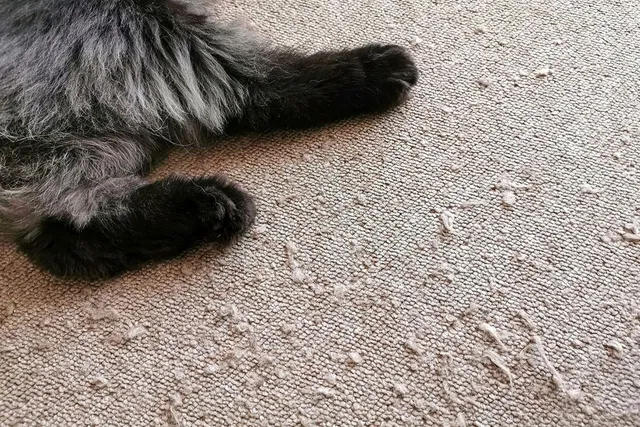
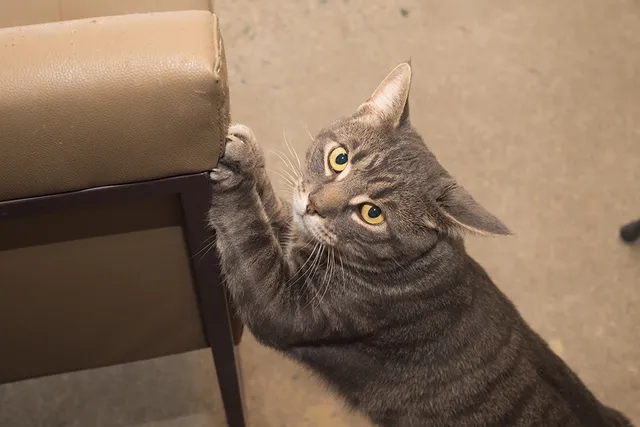
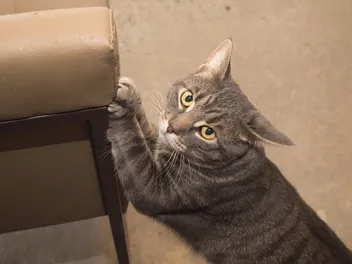
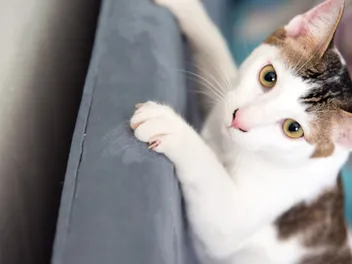
One of the most significant downsides of owning a cat is their claws. Not only can they scratch you, but they can also scratch up your stuff, including your carpets. Some cats enjoy scratching more than others. Occasionally, a cat will hardly scratch at all. Most of the time, cats will scratch at least sometimes, though some cats will scratch a lot.
Learning how to stop cats from scratching the carpet can be difficult, or it can be straightforward. It depends mostly on why your cat is scratching in the first place and how much time you're willing to put in.
In this article, we'll look at why cats scratch carpets, as well as different strategies to stop the destruction of your flooring.

Why Do Cats Scratch?
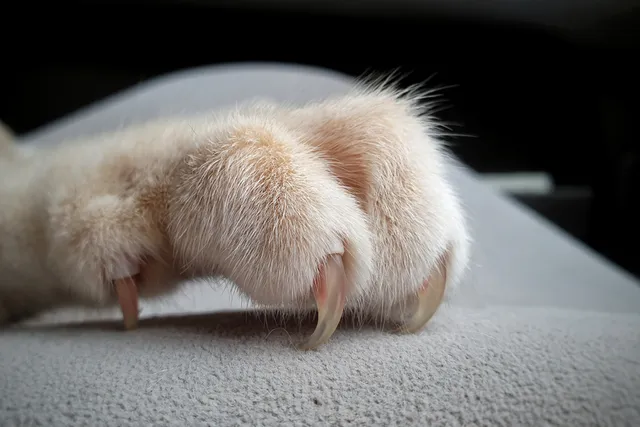
Cats scratch for a variety of reasons. However, it is vital to understand that scratching is a need—not something your cat does to annoy you. All cats need to scratch at least a little bit to keep their claws groomed. Like our fingernails, a cat's claws continuously grow. If they grow too much without getting worn down, then they can become uncomfortable. To keep them short, cats will wear them down by scratching.
Claw Maintenance

Furthermore, with regular use, the claw's outer layer can become cracked and start to come off. Cats may speed this process along by scratching on things, which loosens the outer layer. The scratching behavior is often merely a cat grooming their claws. By scratching on things, your cat keeps its claws healthy and new.

- Complete Set - These cat nail clippers include both a large and small pair, meaning it works well as a kitten claw trimmer when they're a small kitty, and then before you know it, as a cat nail cutter
- Razor Sharp Stainless Steel - The most comfortable cat nail clippers for indoor cats provide a fast and clean cut. And for rough residuals remaining, the free cat nail file included can smooth it all.
- Safety First - With a safety nail guard and locking spring, you can make sure every grooming cut is stress free for you, and pain free for your purry pal
Trimming your cat's nails at home can be hard, but having a professional do it can be expensive. With the help of great tools like Hepper's Cat Nail Clipper Set, you can easily and quickly trim your cat's nails at home. This set includes two pairs of stainless steel clippers with safety guards and locking mechanisms, plus a built-in nail file and a convenient pouch.
At Catster, we’ve admired Hepper for many years and decided to take a controlling ownership interest so that we could benefit from the outstanding designs of this cool cat company!
Marking Their Territory
Some cats also scratch to mark their territory. This will vary from cat to cat, as some are more territorial than others. Some may never scratch to mark their territory, while others may mark every day. This behavior can wane and increase depending on the time and situation. When you get a new cat, all the cats in the household may increase their scratching behavior.
Because cats will often mark areas they like, this can include your carpet. If your cat likes to lay on a particular spot on the floor, don't be surprised if they start scratching on it as well.
Playtime
Cats will also scratch while playing. This is a regular occurrence, though it likely isn't as common as the other reasons. When playing, a cat may run up to an area and scratch for a moment before running off again. Some cats may also climb up stuff while playing, which can sometimes look a lot like scratching.
Besides these significant reasons, there are also a few minor, rare reasons why your cat may scratch. Females about to give birth may scratch, for instance. Some cats scratch when they are excited. Others may scratch when they are anxious and frustrated, like a nervous tick. Many cats may scratch a particular spot out of pure habit, even if they don't need to for any other reason. This is heavily dependent on your cat's personality and their life experiences.
Knowing why your cat is scratching can help you prevent it from happening. Many of the methods listed below rely on your cat scratching for a particular reason. Not all of these methods will work for everyone, as the reason behind your cat's scratching can vary. Choose the method that lines up with your cat's reason for the best results.

The 6 Tips on How to Stop Cats from Scratching the Carpet
1. Add Alternative Scratching Solutions

All cats need to scratch for health reasons; there is no way around that. The best way to prevent your cat from scratching at the wrong location is to provide them with plenty of appropriate options. Scratching posts are the most obvious example of this. However, there are plenty of wacky scratching shapes available on the market today. Some cats may like certain scratching places more than others, so you may need to experiment slightly.
You should have places for your cat to scratch around the house—not just one scratching post in a corner somewhere. Cats will likely not seek out the scratching post when they need to scratch, so it is essential to have one readily available near their location at all times. This doesn't mean you need to purchase dozens of scratching posts, though. And there are a variety of options on the market.
For example, there are scratching posts that look like sunflowers, some that hang on the wall, and others that double-function as beds. Since your cat likes to scratch on the carpet, you may want to purchase a flat scratching platform designed to be placed on the floor. These are one of the most inexpensive options as well, so you're in luck!
Many cat trees also include places to scratch if you're looking to go all-out for your feline. If your cat likes to climb and tends to scratch while they do so, it may be in your best interest to purchase a cat tree.
When choosing a product for your cat, be sure to choose one that is durable. Your cat is going to scratch on it. Preferably, you want it to stand up to quite a bit of scratching. You can also choose an inexpensive option that you don't mind replacing regularly. Either way, be sure to consider the cost-effectiveness.

- Premium Materials - Hepper's cardboard scratcher is made with dense, B-flute cardboard, and a metal core. Encased in a 1/2" plywood frame with gloss coating. Stable and beautiful, use after use
- High, Low and Lower - A single cat scratch pad won't keep your cat engaged. 3 unique positions keeps them coming back, and back, and back again. Finally, something to get them away from the couch!
- Activates Muscles - The Hi Lo isn't just a cat nail file to stop the chief cat couch scratcher. The deep cat scratcher wave encourages maximum musculoskeletal activation for a healthier workout
We're quite fond of cardboard as a material in cat scratchers, which is why we love the Hepper Hi-Lo Cat Scratcher. Encased within a well-constructed, modern birch plywood frame, this scratcher is designed with both cats and their owners in mind. It offers three versatile configurations to keep your feline friend active and entertained while enticing them to fulfill their natural scratching instincts (and away from scratching things they shouldn't). For more details, click here!
At Catster, we’ve admired Hepper for many years, and decided to take a controlling ownership interest, so that we could benefit from the outstanding designs of this cool cat company!
2. Cover the Area
If you've added scratching surfaces and your cat still uses the carpet, your best bet is to cover it up. Often, cats will continue to scratch in the same spot out of habit, completely ignoring the new scratching surfaces you've added throughout your home. To break these habits, your best bet is to cover up the area if you can.
You can do this by literally moving a piece of furniture over the area so your cat literally cannot scratch the carpet. Alternatively, flat, horizontal scratching posts can also be helpful, as they can be placed directly over the carpet. You can also use scratching posts to cover up the spot, though these can be tall and unsuitable for hallways.
This doesn't altogether remove the habit, but it does save your carpet. It is one of the least frustrating options since it eliminates the chance of your feline scratching. It may not be the best long-term solution, though, as your cat will likely continue using the carpet after the scratching post is removed.
3. Reduce Your Cat's Anxiety
Often, cats will scratch more when they are anxious about something. You can reduce this by eliminating your cat's anxiety and nervousness. If you've recently adopted a new cat, be sure you introduce them properly. Your new cat should not be allowed to roam your house right away, as this can produce territorial feelings on both sides. Instead, you'll need to introduce them slowly.
Your best bet is to keep your new cat in one area of your home. Allow both cats to smell each other by switching out blankets and bedding between them. Then, you can allow your cat to roam a larger area of your home. We do recommend having a "safe space" for your older cat to escape to. If you make one for them, you won't have to worry about them trying to make one for themselves, which will usually result in a lot of scratching.
You can also take other steps to reduce your cat's anxiety. For instance, you can use a pheromone spray to reduce your feline's anxiety. They make collars that always release the pheromones, which is a good option if one of your cats is explicitly doing the scratching. If a particular area seems to blame, they make plug-ins that act almost like air fresheners, but they only release pheromones. Humans can not smell these pheromones, so you don't have to worry about disliking the smell. To us, you can't smell them at all!
For more advice on reducing your cats anxiety, we suggest speaking to a vet.
4. Trim Your Cat's Claws
The rate a cat's claws grow can vary. Some don't grow very fast at all, which may be why some cats hardly seem to scratch at all. At the same time, other cats' claws grow very quickly. These cats may work overtime to keep their claws from overgrowing. Some may not even be able to keep their claws at a healthy length by themselves.
For this reason, you may need to trim your cat's nails regularly. While many cats don't need their claws trimmed, others do. If your cat seems to be going through scratching posts quickly and scratches all the time, you should consider trimming their claws.
This can be a bit difficult when you first start. The trick is to accept that the first few attempts will be less than perfect. Instead, shower your cat with attention and treats so that they enjoy the claw-trimming time. Once they enjoy it and relax, it is much easier to trim their claws.
5. Prevent Habits From Forming
If you've recently adopted a new cat, be sure to provide plenty of scratching surfaces and encourage your cat to use them. If your feline gets used to scratching on a scratching post, they will likely not suddenly switch to scratching on the carpet unless anxiety is involved. Habits can be hard to kick, but they can also be your best friend if they are good habits.
Prevention is often the best medicine in this case, so we highly recommend encouraging your cat to scratch on appropriate places from day one. While little kittens have little nails and can't do much damage, they will one day be a big cat that can.

6. Make the Carpet Smelly
There are many smells that cats don't like, including citrus and lavender. Most cats will avoid these scents like the plague, which means they will also stop scratching areas that smell like them. You can discourage scratching by adding the smells to the carpet areas that often get torn up.
You can use dry citric peels or citrus juice in a spray bottle. However, they also make commercial sprays that are designed to smell bad to cats.
Some cats are more sensitive to these smells than others. For this reason, this method may work the first time for some cats. However, others won't be phased by it. It's one of those things you have to try to figure out if it'll work for you.
If you don't want to spray your carpet directly, you can soak cotton balls in the scent and leave them near where you don't want your cat to scratch.
You won't have to leave these smelly things there forever—just until your cat breaks the habit of using the carpet and switches to using the scratching post instead.
What About Declawing?
If you're a first-time cat owner, your first response to excessive scratching may be to get your cat declawed. However, this is not recommended. You aren't merely removing your cat's claws but the tips of their fingers. It is a painful, unnecessary procedure. Scratching is a natural, healthy behavior that comes with the territory of owning a cat.
Cats that have been declawed must re-learn how to walk. Imagine getting the tips of your toes cut off. Your balance would be off, and you would need time to adjust. Furthermore, you will likely never have as much balance as you once did. Our felines are no different. It is hard and even impossible for a cat to do cat things, like climbing, without claws.
Declawing does not treat the underlying problem, either. If your cat were scratching to mark their territory, they would adjust to marking it in different ways, like urinating outside the litter box. Your scratched carpet may become a pee-stained one.
Because cats rely on their claws for defense, a cat without claws is at a severe disadvantage. A cat without claws is more vulnerable to other pets and will be in danger if they ever get outside. Due to losing their biggest weapon, many cats become more aggressive and are faster to run. They may feel insecure and scared, which means they will often bite and may not be as friendly as they once were.
Many countries have banned declawing for a good reason. Many vets in the US refuse to do the procedure, as it is not suitable for cats by any means.

Plastic Soft Caps
Plastic soft caps are small plastic pieces that are glued to a cat's nail. They soften the nail so that the cat can't do any clawing. This reduces the amount of damage their claws can do to almost nothing. They are often used as an alternative to declawing.
Downsides of Nail Caps
However, soft plastic caps aren't a one-size-fits-all solution. Many of the downsides of declawing apply to nail caps. For example, a cat with nail caps will not defend themself and may become insecure and aggressive. This isn't always true and may be less common than declawing, but it is still possible.
Nail caps can be pulled off and eaten, which can be potentially deadly for cats. Some cats don't like them and will figure out a way to get them off. Furthermore, cats are unable to take care of their claws properly with nail caps on. This can cause discomfort and may result in your feline attempting to scratch more or pull the caps off.
They are not a permanent solution, as they will come off in time. They will need to be replaced every 4-6 weeks. This can be difficult to do with some cats and may warrant a vet visit. Proper application is a must, or it can cause serious problems.
Soft caps also affect how cats walk and balance. They will need a period of adjustment, though some cats never quite figure out how to walk with them. It isn't entirely unusual for some cats to refuse to walk with them on.
Clipping or Trimming Is Always Better
Instead of applying nail caps, it is almost always better to clip your cat's nails. If you're already going through the trouble of messing with your cat's claws, trimming is better for the cat and faster. Plus, you won't have to buy new nail caps or worry about improper application.
Conclusion
All cats scratch. It's a biological necessity. However, if the cat is scrtaching up your carpet, you understandably will want them to do this elsewhere. There are many small changes you can make to prevent this, though.
Firstly, you will need to provide other appropriate scratching surfaces. It is a need they will fulfill somehow. Secondly, you may need to make their usual scratching spot undesirable, or you may decide to place the new scratching post on top of it. Either way, the habit will usually need to be broken until they begin using the scratching post regularly.
Once they are using the scratching post, you can remove the smelly stuff or put your furniture back where it goes. Once a new habit is formed, your cat will typically keep using the new scratching post as long as it is replaced when it starts to wear down.
See also:
Featured Image Credit: Maliflower73, Shutterstock

Expert cat care, straight to your inbox
Vet-reviewed advice, behavior tips, and the best of Catster. Free, and you can unsubscribe anytime.
By signing up, you agree to our Terms & Conditions and Privacy & Cookies Policy.
Christian started writing for a local newspaper as a teenager, and he's been involved in the publishing industry for most of his adult life. Combining his love of writing with a passion for animals, he is currently the Director of Editorial at Pangolia and the Editor-in-Chief at Catster.
Christian lives in the Philippines with his wife, son, and four rescue cats: Trixie, Chloe, Sparky, and Chopper.
Join the conversation
Ask a question, share your story, or send private feedback.